

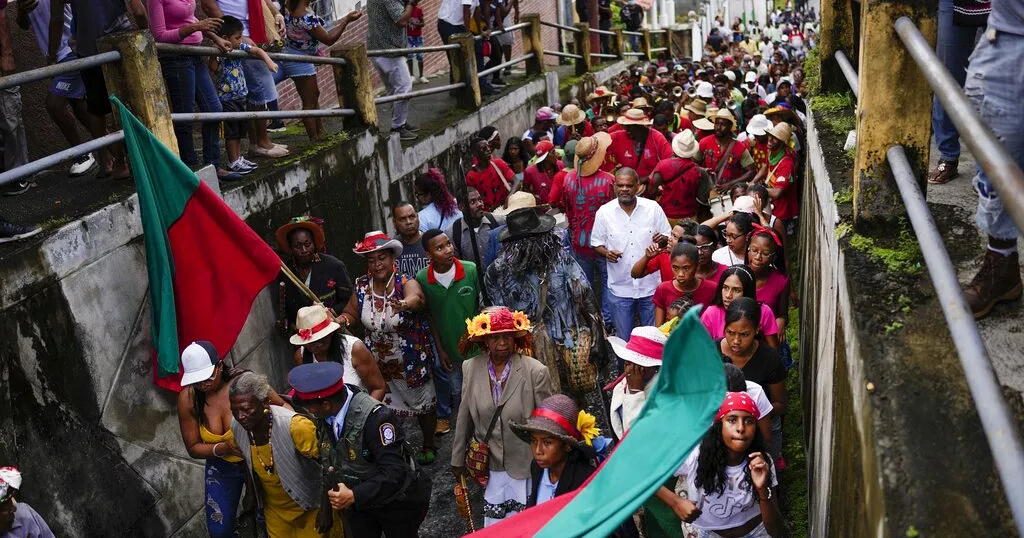
This week, revelers all around Venezuela celebrated the Feast of the Holy Innocents in vibrant attire.
The religious holiday in Caucagua has evolved into a celebration of the emancipation of slaves and has acquired unique significance.
The celebration began more than 200 years ago when plantation owners observed the Feast of the Holy Innocents by giving their slaves the day off.
The feast commemorates the slaughter of Israel’s children carried out at King Herod’s command while he searched for the infant Jesus.
With time, the employees began to take advantage of the day off to party, dressing up as their spouses and bosses to make fun of them.
In the Holy Innocents’ Bandos and Parrandas today, women are integral, assuming leadership roles as a sign of empowerment.
They show that they are now in charge by dressing in coats that resemble those owned by plantation owners.
People of all ages get together for the festival in order to honor the customs that were passed down from their enslaved ancestors.
The Bandos and Parrandas of the Holy Innocents of Caucagua were designated as World Heritage earlier this month by UNESCO.
“For us, this is something that fills us with infinite joy. We are showing the world that there is an ancestral culture here,” said local Parranda leader Alicia Lucía Mata.