

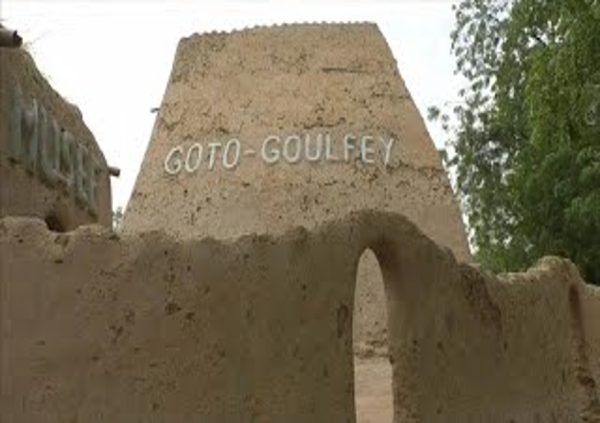

The architecture of the Goto-Goulfey tower only serves to confirm the military dexterity and strategy laid in mud walls to protect Cameroon’s Kotoko subjects. They were subjected to numerous military incursions and attacks, but the clever design of their fortress allowed them to survive the incursions and launch counterattacks on their adversaries.
After erecting the tower, the people of Kotoko were able to wean themselves off of raging attacks for the next five centuries. The high mud walls provided them with a bird’s-eye view advantage of where attacking neighbors were stationed, allowing them to predict their war strategy to diffuse it before they launched their campaign.
According to adf magazine, the UNESCO-designated war tower has been converted into a museum to preserve the weaponry used by the Kotoko warriors and their mastery of military strategies. The Kotoko people used bows and spears to fight and maim their opponents after anticipating their movements. These weapons were made of iron and were intended to counter any insurgency.
One such attack was launched in 1800 by Sudanese warlord Rabah, who was on a jihadist mission to convert residents of neighboring countries to Islam. He was not pleased with the Kotoko people’s traditional cult practices, which are thought to provide spiritual protection. The warlord was notorious for enslaving people, killing people, and forcing kingdoms to submit to the Bornu empire.
When the Kotoko people saw the approaching warlord’s army, they grabbed their weapons, exited the tower, and attacked the jihadists. The war tower provided a distraction for the people, allowing them to successfully neutralize the attack on them.
Guided museum tours In his research, Mahamat Abame discovered that the Kotoko people lacked modern weapons but were never defeated in civil strife. All they had were stick clubs and bows and arrows, which they used as weapons.
Because of the civil unrest in Northern Cameroon, the war museum has not attracted many visitors recently. No one, according to Abame, would argue that a lot went into designing the architecture and structure in the aftermath of the many wars at the time. Its ability to withstand centuries of warfare demonstrates the tower’s fortification and the inhabitants’ trust in it.
The war museum, a 12-meter-tall clay wall, symbolizes the depth and masterful planning that went into ensuring the safety of every inhabitant.
According to Africa News, it has become a learning center for historians and the younger generation interested in the Kotoko people’s rich culture. The city arose during the 16th and 18th centuries, when Arab invasions were common in the African region. Rabat, the people’s leader, is regarded as the Goulfey’s founder. They won many wars against the Arabs with the help of the French.
The Kotoko people have always been praised orally for their mastery of war techniques and warfare.