

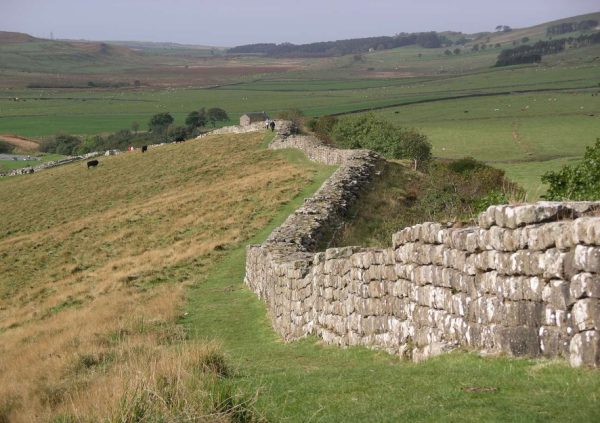

Africans have been present in Britain since soldiers from North Africa manned a Roman fort in Burgh-by-Sands. According to Cumbria County History, the Aurelian Moors were the name given to the North African army in honor of the Roman Emperor Marcus Aurelius.
They were thought to have been recruited from the Berber population of Mauretania, which is modern-day West Algeria and Morocco. Their responsibility was to watch over a fort that the Romans called Aballava that was situated near Burgh-by-Sands along Hadrian’s Wall.
According to historians, the African soldiers lived there and eventually started having families there. Some died and were buried there as well. The Roman altar, which the soldiers’ commander, Caelius Vibianus, had dedicated to Jupiter, was discovered in a hamlet close to Beaumont in 1934. The discovery demonstrated the African regiment’s importance. Additionally, it demonstrated that African Americans were not the only individuals of African descent in Roman Britain.
People from many walks of life, including soldiers and commoners with ties to the Roman Empire, lived along Hadrian’s Wall, which separated Scotland from England in the second half of the third century. The names of the troops that guarded the forts and other important structures in the enclave demonstrate the diversity. At the Wall, archaeologists also discovered traces of North African civilisation. According to history, they discovered flat plates for use on a brazier and casserole pots with designs like those from North Africa. One Victor, a former slave who originated from the same region of North-West Africa as the group at Burgh-by-Sands, is commemorated on a tombstone.
Today, St Michael’s Church in Burgh-by-Sands, near Carlisle, is on the site of the third century Roman fort of Aballava. In 2016, a plaque was unveiled in the churchyard, which reads: “The first recorded African community in Britain guarded a Roman fort on this site. 3rd century AD.”
“This celebration of the first black community known of in Britain is witness to our inclusive, multi-cultural past, present and future,” the Revd Tudor Boddam-Whetham, Priest-in-Charge of St Michael’s, said at the time.
“Here at St Michael’s Church, all can worship Jesus, our creator and eternal King, who was born as a Jew to save people from all nations.
“So it is very fitting that here, where soldiers from many nations were stationed, we continue to warmly welcome thousands of visitors each year from all around the world, and this plaque and the publicity around it will, we hope, bring even more to enjoy that history, and the church’s welcome.”