

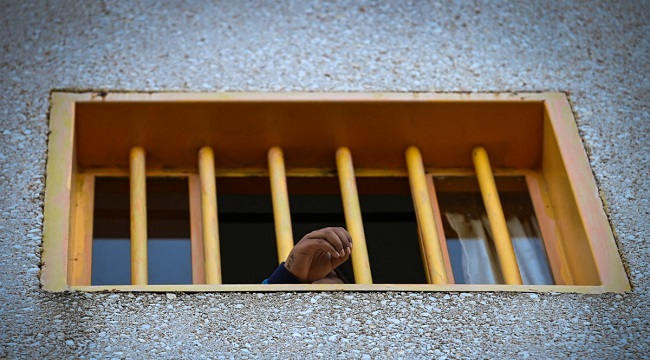
On Tuesday, the UK was set to release a second batch of 1,000 offenders early as the government initiated a sentence review to alleviate chronic prison overcrowding.
The controversial strategy had already resulted in the release of 1,700 convicts early last month.
Justice Secretary Shabana Mahmood promised that previous errors that resulted in the wrongful release of 37 unsuitable criminals had been “ironed out”.
The assessment will look into stiffer non-custodial sentences for some convicted criminals in order to make sure there is enough prison room to house serious offenders.
They include “nudge” technology, which uses watches or apps to persuade criminals to comply with imposed terms, as well as home detention curfews.
Some so-called nonviolent offenders who have met with certain conditions have been released after serving only 40% of their sentence, as opposed to the standard 50%.
Former Justice Secretary David Gauke, who is chairing the study, stated that the jail population, which is currently about 89,000, is increasing by 4,500 every year, with 90 percent of those sentenced to custody being reoffenders.
Mahmood claimed that the government was forced to implement the early release policy due to a jail problem left over from the previous Conservative government.
She stated that after taking power in early July, ministers in the new Labour government discovered a jail system that was on the verge of “collapse” and might have resulted in “the breakdown of law and order in this country”.
“In August of this year, we were down to fewer than 100 places across the whole of the country,” she told Sky News during an interview.
As a Conservative justice minister in 2019, Gauke stated that there was a “very strong case” for removing jail terms of six months or less, with exceptions for violent and sexual offenses.
He stated that jails were “clearly…not working” based on existing reoffending statistics.
“This review will explore what punishment and rehabilitation should look like in the 21st century, and how we can move our justice system out of crisis and towards a long-term, sustainable future,” according to him.