Africa’s billionaires include an interesting mix of industrialists, financiers, and cultural influencers. Only a few individuals have direct or relevant connections to luxury brands, such as ownership, significant interests, or establishing luxury companies.
This list features the continent’s wealthiest individuals associated with luxury goods and lifestyle firms that have a worldwide or premium market presence.
1. Johann Rupert (South Africa)
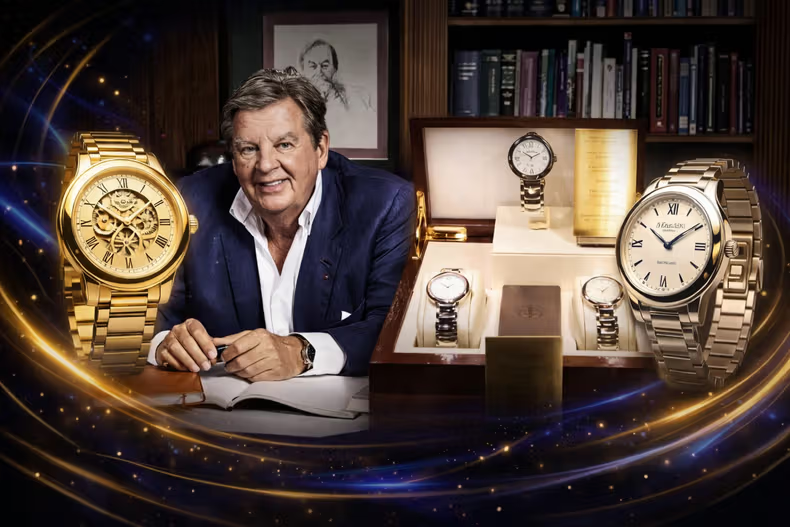
Johann Rupert is the most prominent African billionaire in the luxury business. He is the founder and chairman of Compagnie Financière Richemont, the Swiss luxury goods company that owns some of the world’s most prominent brands.
Richemont’s portfolio includes iconic brands such as:
- Cartier — luxury watches and jewellery
- Montblanc — premium writing instruments and leather goods
- Van Cleef & Arpels — high jewellery
- IWC Schaffhausen, Jaeger-LeCoultre, Piaget, and Vacheron Constantin — renowned luxury watches
Under Rupert’s leadership, Richemont has become one of the top global players in luxury goods, placing his name firmly on the worldwide luxury map.
2. Nassef Sawiris (Egypt)

Despite not owning traditional luxury fashion firms, Egyptian billionaire Nassef Sawiris has a major minority investment in Adidas, a German sportswear and lifestyle brand noted for its premium partnerships and global cultural influence.
Adidas is not positioned as ultra-luxury as Cartier, but its limited releases and designer collaborations (with high-end fashion houses and celebrities worldwide) place it in the premium and aspirational fashion market, making Sawiris a prominent figure in global lifestyle branding.
3. Folorunsho Alakija (Nigeria)
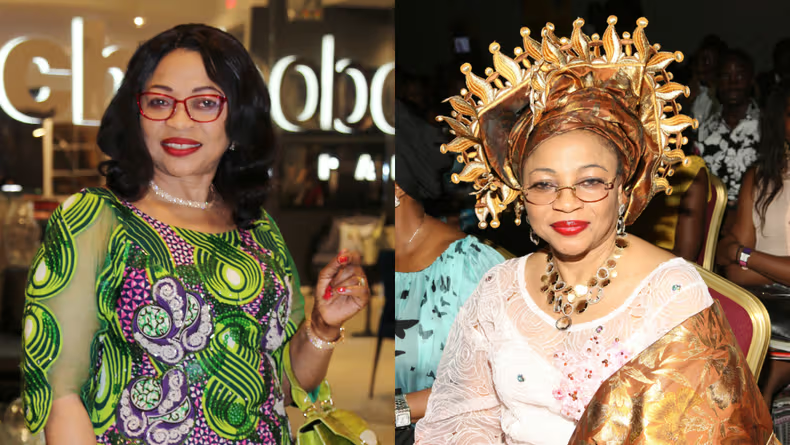
Nigerian millionaire Folorunsho Alakija previously owned a luxury apparel firm. Prior to her success in oil and energy, she started Supreme Stitches, a tailoring and fashion label for affluent customers. This ultimately grew into the Rose of Sharon House of Fashion, a prominent Nigerian luxury clothing brand.
Alakija studied fashion design in London and founded Supreme Stitches in the 1980s. Her designs attracted affluent Nigerian clients, including political and social leaders.
Alakija’s early luxury fashion house is still a part of her entrepreneurial legacy, despite her current income being from oil through Famfa Oil.
4. Patrice Motsepe (South Africa)

Patrice Motsepe is one of South Africa’s most well-known billionaires, thanks to his mining and investment empire.
Although Motsepe does not own a luxury brand, his wife, Dr. Precious Moloi-Motsepe, a fashion entrepreneur and founder of African Fashion International (AFI), has a significant impact in the luxury fashion industry.
AFI conducts high-profile fashion events, sponsors luxury designers, runs an e-commerce and luxury retail network, and portrays itself as a luxury fashion facilitator across Africa.
Motsepe, a millionaire brand owner, does not personally own AFI, which is a large luxury fashion ecosystem in Africa driven by his immediate family’s investments and leadership.
5. Aliko Dangote (Nigeria)

Aliko Dangote is Africa’s richest billionaire, with the Dangote Group’s interests in cement, sugar, flour, and oil refinery.
In May 2025, Alterra Capital, led by Nigerian billionaire Aliko Dangote, announced the acquisition of Pollman’s Tours in Kenya as part of a $500 million investment in Africa.
The Kenya Competition Authority accepted the purchase without limitations, determining that there were no competition issues because the purchasing firm and Pollman operate in different parts of the tourism value chain.
The acquisition marks a new chapter in Pollman’s lengthy history as a renowned Kenyan tourist brand since the 1950s and a member of the Africa Travel Group. It also shows an increasing trend of long-term private capital investment in East Africa’s consumer-focused, experience-driven businesses.
6. Salwa Idrissi Akhannouch (Morocco)
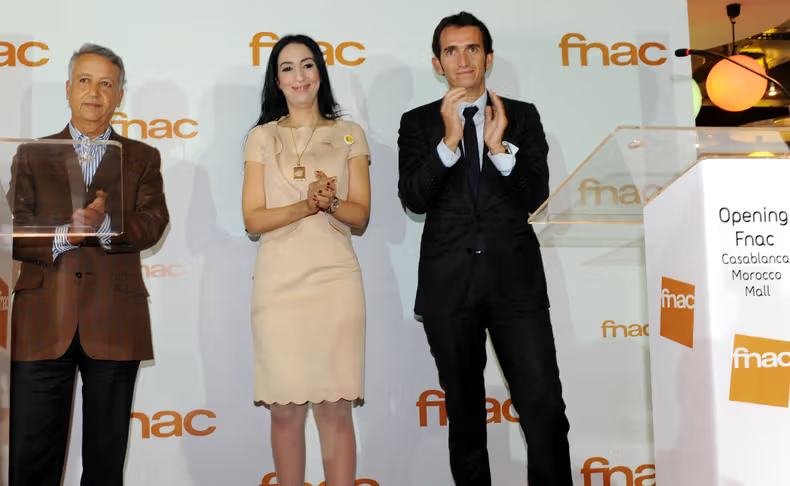
Salwa Idrissi Akhannouch, a Moroccan businesswoman, is one of Africa’s most notable billionaires, having amassed her riches mostly through luxury retail and lifestyle enterprises. She is widely considered as a trailblazer in North African fashion and hospitality, having had a significant impact on how global luxury businesses operate in the region.
She is the founder and CEO of the AKSAL Group, a diverse Moroccan conglomerate that has franchises for some of the world’s most prominent luxury brands, including Louis Vuitton, Gucci, Fendi, Dior, Zara, and Galeries Lafayette in Morocco.
Through these collaborations, Idrissi Akhannouch has established Morocco as a prominent luxury shopping destination, combining worldwide brands with local cultural aesthetics.
Beyond fashion retail, her business empire includes luxury hotels, malls, and real estate, cementing her billionaire status and influence in Africa’s luxury industry. Her achievement has elevated her to the ranks of the continent’s most powerful female entrepreneurs, serving as a symbol of Africa’s expanding presence in the global luxury industry.