

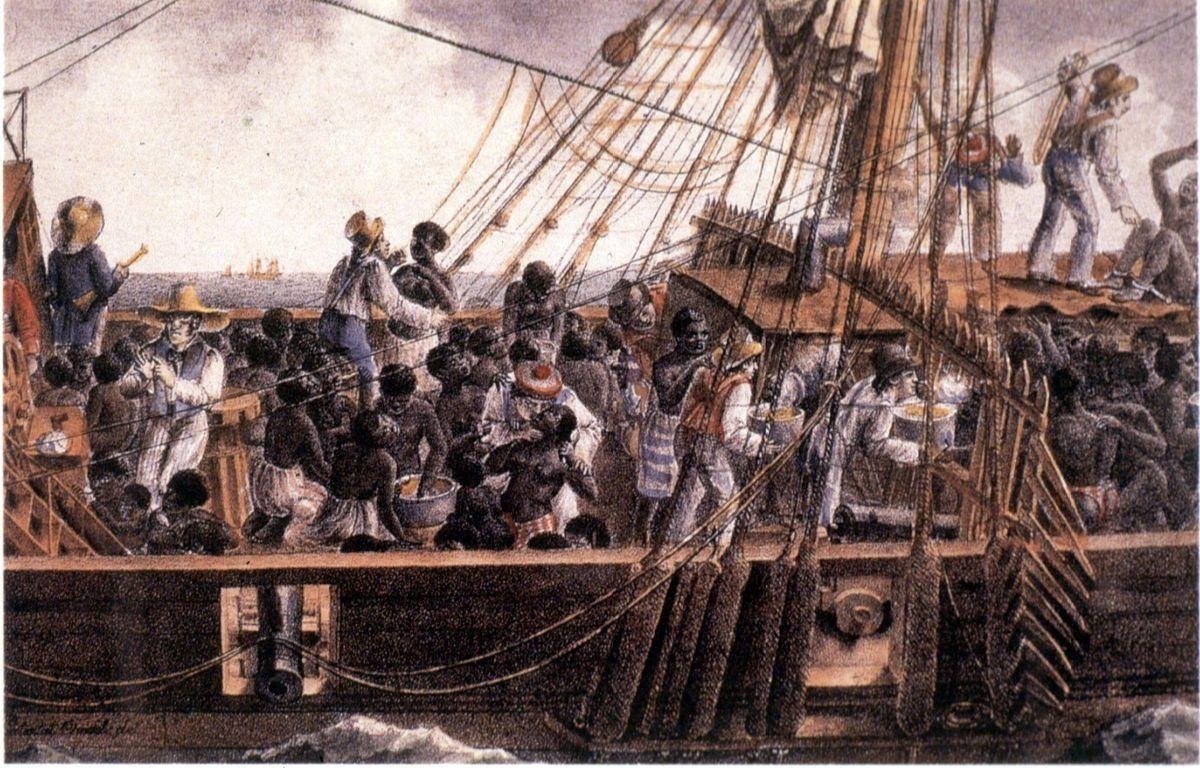
For more than three centuries, millions of Africans were caught in one of the most brutal systems of human exploitation in history. Torn from their families, transported across the Atlantic Ocean in horrific conditions and sold like commodities, generations of African men, women and children were forced to build the economic foundations of America while being denied basic human rights. Their story is one of unimaginable suffering, resistance, survival and the enduring struggle for freedom.
Introduction
The history of Black slavery in America is one of the darkest chapters in human history. It is a story of greed, racial discrimination, colonial expansion, political compromise and the systematic exploitation of millions of innocent people whose lives were transformed by an international trade in human beings.
Long before the United States became one of the world’s most powerful nations, European colonial powers had established an economic system that depended heavily on enslaved African labour. Men, women and children were captured in different parts of Africa, transported across the Atlantic Ocean against their will and forced to work on plantations, farms, in households, mines and other economic establishments.
For many of these Africans, the journey to America meant permanent separation from their families, communities, languages and cultural identities. They were stripped of their freedom, subjected to physical violence and treated as property that could be purchased, inherited, rented or sold.
Although slavery existed in different parts of the world before the transatlantic slave trade, the enslavement of Africans in the Americas developed into a particularly extensive system of racialised, hereditary chattel slavery. Under this arrangement, a person’s enslaved status could be passed from mother to child, while laws denied enslaved Africans and their descendants fundamental legal protections.
One important historical distinction is often overlooked: although approximately 12.5 million Africans were forced aboard ships during the transatlantic slave trade, about 10.7 million survived the Middle Passage and reached the Americas. Of those survivors, approximately 388,000 were transported directly to mainland North America. The overwhelming majority were taken to the Caribbean and South America. The enslaved Black population in what became the United States subsequently grew through generations of forced reproduction, alongside the expansion of the domestic slave trade.
Understanding this history therefore requires looking beyond the plantations and slave auctions of the American South. It requires examining how the trade began, how Africans were captured, the role of European merchants and African political authorities, the horrors of the Middle Passage, the development of slavery in colonial America, and the resistance movements that eventually helped bring the institution to an end.
1. How the Transatlantic Slave Trade Began

The transatlantic slave trade developed during the European age of exploration and colonial expansion, particularly from the 15th century onward.
European powers, including Portugal, Spain, Britain, France and the Netherlands, increasingly sought overseas territories, commercial opportunities and access to valuable natural resources. Their expansion into the Americas created enormous demand for labour, particularly after European colonisation introduced large-scale plantation agriculture.
The discovery and colonisation of the Americas exposed European settlers to opportunities for producing sugar, tobacco, rice, coffee and other profitable commodities. However, plantation owners needed large numbers of workers to cultivate, harvest and process these crops.
Indigenous populations were initially subjected to forced labour, violence and enslavement in many colonial territories. Disease, warfare, displacement and exploitation caused devastating population losses among Indigenous communities. As European colonial economies expanded, enslaved Africans became an increasingly important source of forced labour.
Portugal played a pioneering role in developing the Atlantic slave-trading system. Portuguese traders established commercial relationships along the West African coast, built fortified trading posts and transported enslaved Africans to European-controlled territories, including islands in the Atlantic and eventually Brazil.
As European colonies expanded, other European powers joined the trade, transforming it into an international commercial enterprise involving shipping companies, merchants, plantation owners, financial institutions, insurers and colonial governments.
The trade was not simply a series of isolated kidnappings. It became an organised economic system supported by commercial networks, political authorities, maritime technology and laws that protected the ownership and exploitation of human beings.
The growing profitability of plantation agriculture encouraged European merchants to expand their operations, while the demand for enslaved labour continued to increase across the Americas.
By the 17th and 18th centuries, the transatlantic slave trade had become one of the largest forced migrations in human history.
2. How Millions of Africans Were Captured and Sold
One of the most disturbing aspects of the transatlantic slave trade was the manner in which innocent Africans were captured and separated from their families.
Contrary to the impression that every enslaved African was captured directly by European slave traders, the process involved different groups, including African rulers, local merchants, military leaders, intermediaries and European commercial interests.
In several parts of West and Central Africa, people were captured during wars between kingdoms, military raids, political conflicts and attacks on villages. Others were kidnapped by organised groups of slave raiders who targeted communities, particularly those located far from heavily protected settlements.
Some African merchants and political authorities participated in selling captives to European traders. Others opposed the trade, resisted European interference or became victims of the same violent system.
The historical reality is that Africa was not a single political entity. It consisted of hundreds of kingdoms, states, communities and independent societies with different political interests. Consequently, the involvement of African authorities in the slave trade varied considerably from one region to another.
European traders, however, provided an expanding international market for enslaved Africans. Their ships, commercial networks, financial resources and demand for human labour helped transform existing forms of captivity into an enormous Atlantic trafficking system.
The major African regions affected
Enslaved Africans transported to the Americas originated from different parts of the continent, particularly West and Central Africa.
Some of the major regions included:
Senegambia: Covering areas around present-day Senegal, The Gambia and neighbouring territories.
Gold Coast: Corresponding largely to present-day Ghana.
Bight of Benin: Covering coastal areas around present-day Benin and neighbouring regions.
Bight of Biafra: Encompassing parts of present-day southeastern Nigeria and Cameroon.
West-Central Africa: Including present-day Angola, the Democratic Republic of Congo and the Republic of Congo.
Windward Coast: Covering parts of present-day Liberia and Côte d’Ivoire.
West-Central Africa supplied a particularly large proportion of the people transported across the Atlantic.
The Bight of Biafra is especially significant to African history because it connected the slave-trading networks with territories in what is now southeastern Nigeria and neighbouring parts of Central Africa. This means that some of the ancestors of African Americans were taken from communities whose historical territories are located in present-day Nigeria.
However, historical regional names do not always correspond neatly to modern national boundaries, and it is not possible to assign every enslaved person’s origin to a particular modern country.
For the people captured, the consequences were devastating. Parents lost their children, husbands were separated from wives, and entire communities were disrupted.
Many captives were marched over long distances to coastal trading centres, where they were imprisoned in holding facilities until European ships arrived to purchase them.
Some died during these journeys because of exhaustion, disease, hunger and physical abuse.
Others were held for weeks or months in overcrowded coastal compounds, uncertain about their future and unable to communicate with people from different linguistic backgrounds.
The slave trade was therefore not merely a commercial transaction. It was a human catastrophe that destroyed families, weakened communities and permanently altered the demographic and social development of several African societies.
3. The Middle Passage: The Horrific Journey Across the Atlantic
After being captured and sold, Africans faced another terrifying experience: transportation across the Atlantic Ocean.
This journey became known as the Middle Passage, referring to the middle section of the triangular Atlantic trading routes connecting Europe, Africa and the Americas.
European slave ships transported manufactured goods and other trading commodities to African coastal markets, acquired enslaved people, and carried them across the Atlantic. Ships then transported American plantation products and other commodities into international markets. Although commonly represented as a triangular journey, actual trading routes varied.
The Middle Passage was characterised by extreme overcrowding, disease, violence, malnutrition and death.
Enslaved Africans were chained together and confined in specially constructed compartments below the decks of ships. The spaces were often so narrow that captives could barely sit upright, stretch their legs or move freely.
Men, women and children were frequently confined in separate sections. In some cases, people were chained together in pairs, while others were forced to remain in extremely cramped spaces for extended periods.
According to the National Park Service, the voyage typically lasted approximately 80 days. Insufficient ventilation, overcrowding and inadequate supplies of drinking water created conditions in which infectious diseases spread rapidly. Approximately 15 per cent of captives became sick and died during the journey, according to the account provided by the agency.

Disease, starvation and death aboard slave ships
The conditions aboard these vessels were so horrific that many Africans died before reaching their destinations.
Dysentery, smallpox, fever and other diseases spread rapidly among the captives. The absence of adequate sanitation made the situation worse.
Enslaved Africans were frequently denied sufficient food and clean drinking water. Some were subjected to physical punishment when they refused to eat or resisted the demands of the ship’s crew.
The stench below deck was unbearable. The combination of human waste, sweat, vomit, blood and decaying bodies created an environment that exposed captives to further illness.
Some people became so desperate that they attempted to jump into the ocean rather than continue the journey into an unknown future of enslavement.
Others resisted through revolts against the ship’s crew. Such uprisings were dangerous because European sailors often responded with extreme violence.
The experiences of survivors were documented in personal accounts that later became important evidence in the international campaign against slavery.
One notable account came from Olaudah Equiano, an African who described his kidnapping, enslavement and eventual freedom in his autobiography, published in 1789.
Equiano recalled the terror he experienced when he first entered a slave ship and saw hundreds of Africans chained together.
His account remains one of the important historical testimonies about the human suffering caused by the transatlantic slave trade.
By the time the ships reached their destinations, countless lives had already been lost.
The survivors faced another frightening reality: being sold into permanent bondage in a foreign land.
4. Arrival in America: Sold Like Property

For Africans who survived the Middle Passage, reaching American shores did not mean their suffering was over.
Upon arrival, they were often taken to holding facilities, warehouses, slave pens and commercial centres where slave traders prepared them for sale.
They were examined by prospective buyers, who assessed their physical condition, age, health, strength and ability to perform particular types of labour.
Men considered physically strong were often marketed for agricultural and other demanding work. Women were sold for plantation labour, domestic service and other tasks. Children were also bought and sold, sometimes at very young ages.
The sale of enslaved people took place in public markets, hotels, warehouses, courthouses and private establishments.
Slave traders advertised human beings in newspapers and printed notices, describing them using commercial language that reduced their lives to prices, physical characteristics and supposed labour value.
In some instances, enslaved people were forced to stand before prospective buyers while their bodies were inspected.
Families were particularly vulnerable to separation.
A husband could be sold to one plantation, his wife to another and their children to completely different owners. These transactions were frequently conducted without consideration for the emotional consequences.
The Smithsonian’s National Museum of African American History and Culture documents the sale of 99 enslaved people in Charleston, South Carolina, in 1859. The surviving auction document includes men, women, children and infants, with annotations describing their ages, physical conditions and perceived commercial value.
Such historical records demonstrate how deeply human trafficking had become embedded in American commercial and legal institutions.
For enslaved Africans, the auction block represented the loss of control over nearly every aspect of their lives.
They could be transferred to new owners, inherited by relatives, used as collateral for loans or sold to settle outstanding debts.
Their children could inherit their enslaved status, ensuring that generations of Black Americans remained trapped in the system.

5. The Arrival of Africans in Virginia in 1619
The year 1619 occupies a significant place in the history of slavery in what would become the United States.
In late August of that year, a group of approximately 20 African captives arrived at Point Comfort, in present-day Hampton, Virginia, aboard an English privateer vessel known as the White Lion.
The Africans had originally been captured from a Portuguese slave ship, the São João Bautista, which was transporting them from West Central Africa to Spanish territories in the Americas.
The English privateers attacked the Portuguese vessel and seized some of its captives. They subsequently brought the Africans to Virginia, where they exchanged them for provisions.
Historical research identifies the captives as people from the Kingdom of Ndongo, in present-day Angola.
An English colonist, John Rolfe, recorded their arrival in a letter, describing the group as “20 and odd Negroes” who were exchanged for food supplies.
This event is widely recognised as the first documented arrival of enslaved Africans in the English colony of Virginia. However, it is important to understand that Africans had already been present in Spanish-controlled territories of the Americas, including parts of what is now the United States, before 1619.
Furthermore, Virginia did not immediately possess the fully developed system of hereditary racial slavery that would later dominate the American South. The legal institution developed gradually over subsequent decades.

How slavery became legal in Virginia
During the early years of English colonisation, the legal status of Africans in Virginia was not always clearly defined.
Some Africans worked under arrangements resembling indentured servitude, while others experienced lifelong enslavement.
However, as the colony’s plantation economy expanded, lawmakers increasingly established legal distinctions between Black people and white servants.
One of the most consequential laws was passed in 1662.
The Virginia General Assembly enacted legislation declaring that children born to enslaved women would inherit their mother’s condition.
This meant that if an enslaved African woman gave birth to a child, that child would also be considered enslaved, regardless of the father’s status.
The legislation effectively made slavery hereditary through the maternal line.
In 1667, Virginia passed another law declaring that Christian baptism did not automatically free an enslaved person.
These laws helped establish a legal framework that protected slaveholders’ interests and ensured the continued expansion of hereditary bondage.
By the early 18th century, racial slavery had become deeply established in the English colonies.
The system eventually spread across the Southern colonies and remained an important part of the economic and political structure of the emerging United States.
6. How Slavery Built America’s Wealth

One of the most important aspects of American slavery was its contribution to the country’s economic development.
Enslaved Africans and their descendants provided labour that supported major agricultural industries, commercial enterprises and international trade.
Their work was particularly important in the production of tobacco, rice, indigo and cotton.
In Virginia and Maryland, tobacco plantations depended heavily on enslaved labour.
In South Carolina and Georgia, enslaved Africans performed demanding agricultural work in rice plantations. Their agricultural knowledge and expertise, including knowledge of rice cultivation and water management, contributed to the development of the plantation economy.
As the American economy expanded, cotton became increasingly important.
The invention of the cotton gin in the late 18th century made it easier to separate cotton fibres from seeds. This technological development increased the profitability of cotton production and encouraged plantation owners to expand cultivation.
However, the expansion of cotton agriculture also increased demand for enslaved labour.
Enslaved people were forced to work for long hours under dangerous conditions, often facing punishment for failing to meet the demands of plantation owners.
Their labour generated enormous profits for plantation owners, merchants, manufacturers and financial institutions.
The Smithsonian’s National Museum of American History reports that enslaved people’s labour helped produce approximately half of American exports and supplied much of the financial capital and raw materials that supported industrialisation.
By 1860, the estimated value assigned to enslaved African Americans as property had reached approximately $2.7 billion, an extraordinary sum at the time.
Northern America also benefited from slavery
Although slavery became particularly concentrated in the Southern states, its economic benefits were not restricted to the South.
Northern merchants, shipping companies, banks, insurance businesses and manufacturers also participated in or profited from the wider slave economy.
Cities such as Boston were involved in the transatlantic slave trade, while northern industries benefited from raw materials produced by enslaved labour.
The National Park Service documents Boston’s involvement in slave trading and the sale of enslaved Africans, including commercial activities connected to Faneuil Hall.
This history challenges the assumption that slavery was exclusively a Southern institution.
It was part of a much wider economic system that connected different regions of the United States to international markets.
7. The Domestic Slave Trade: Millions Traded Within America
Another disturbing chapter in the history of American slavery was the domestic slave trade.
In 1808, the United States prohibited the legal importation of enslaved people from foreign countries.
However, this legislation did not abolish slavery or prohibit the buying and selling of enslaved people within the country.
The domestic slave trade continued to flourish, particularly as cotton production expanded across the Deep South.
Plantation owners in states such as Virginia, Maryland and the Carolinas increasingly sold enslaved people to traders who transported them to growing agricultural territories in states such as Alabama, Mississippi and Louisiana.
This internal movement became known as the Second Middle Passage.
Between 1820 and 1860, approximately one million enslaved people were forcibly relocated from their homes and transported westward and southward.
Many were marched over long distances in chains, while others were transported by boats, ships and other means.
Families were frequently separated during these transactions.
Parents lost children, husbands were separated from wives, and siblings were sold to different plantation owners.
According to the Smithsonian’s National Museum of African American History and Culture, generations of enslaved Black Americans were sold at auctions, transferred through inheritance, used to settle debts or given as gifts.
The domestic slave trade became a highly profitable industry, involving professional slave traders who operated holding facilities and organised the transportation of enslaved people between states.
The expansion of slavery also contributed to the rapid growth of the enslaved population.
In 1790, fewer than 700,000 enslaved people lived in the United States. By 1830, the number had exceeded two million. On the eve of the Civil War, the figure had reached nearly four million.
These figures demonstrate that the growth of slavery in America was not dependent solely on the arrival of new Africans from overseas. Generations of American-born Black people were also trapped in the system through hereditary enslavement.
8. Life Under Slavery: Violence, Exploitation and Denial of Freedom
For millions of enslaved African Americans, everyday life involved forced labour, discrimination, physical punishment and the denial of basic human rights.
Plantation owners exercised enormous control over the lives of enslaved people.
They determined where they worked, where they lived, whom they could visit and, in many cases, whether family members could remain together.
Enslaved workers were frequently subjected to physical punishment, including whipping, beatings, imprisonment and other forms of abuse.
Women experienced additional forms of exploitation, including sexual violence by enslavers and other white men. Enslaved women had little legal protection against such abuse.
Children born to enslaved women inherited their mothers’ condition and could be sold away from their parents.
Education was also restricted. In several Southern states, laws prohibited or discouraged teaching enslaved people to read and write because slaveholders feared that education would encourage resistance and demands for freedom.
Despite these restrictions, enslaved Africans and their descendants developed strong family networks, religious communities and cultural traditions.
They preserved aspects of African music, storytelling, food, spirituality, language and artistic expression.
Christianity also became an important source of hope and community, although enslaved people often interpreted religious teachings differently from slaveholders who used Christianity to justify their authority.
Their cultural survival was itself an important form of resistance.
Even under conditions designed to strip them of their identities, enslaved Africans maintained traditions that would eventually become significant elements of African American culture.
9. Resistance: Africans and African Americans Never Accepted Slavery
From the moment Africans were captured, many fought against their captors.
Some resisted by attempting to escape from slave ships. Others organised revolts during the Middle Passage.
After arriving in America, enslaved people continued to resist through different methods, including running away, refusing to work, slowing down production, damaging equipment and organising rebellions.
Some established independent communities in remote areas where they could escape the control of slaveholders.
Others sought assistance from free African Americans and sympathetic white abolitionists who helped them escape through networks that became known as the Underground Railroad.
Nat Turner’s rebellion
One of the most significant armed uprisings occurred in 1831, when Nat Turner, an enslaved preacher in Virginia, led a rebellion against slaveholders.
The uprising resulted in the deaths of more than 50 white people and was followed by violent retaliation against Black communities.
The rebellion terrified slaveholders and contributed to the introduction of harsher restrictions on enslaved and free Black people in several Southern states.
Harriet Tubman and the Underground Railroad
Another important figure in the struggle against slavery was Harriet Tubman.
After escaping slavery herself, Tubman repeatedly returned to slaveholding territories to help other enslaved people reach freedom.
She became one of the most celebrated conductors of the Underground Railroad, a network of individuals and safe houses that assisted freedom seekers.
Her courage demonstrated that enslaved people were not passive victims of oppression.
Frederick Douglass and the abolitionist movement
Frederick Douglass was another influential figure.
Born into slavery in Maryland, Douglass eventually escaped and became an internationally recognised abolitionist, writer and public speaker.
Through his speeches, books and newspaper publications, he exposed the cruelty of slavery and challenged the racial arguments used to justify it.
His autobiography, Narrative of the Life of Frederick Douglass, an American Slave, published in 1845, became an important account of the realities of enslavement.
Other prominent abolitionists, including Sojourner Truth, also campaigned against slavery and demanded equal rights.
The Library of Congress estimates that approximately 400,000 enslaved people had escaped from slavery by 1860, illustrating the scale of freedom-seeking efforts.
These resistance movements weakened the institution of slavery and helped strengthen the abolitionist movement across the United States and internationally.
10. The American Civil War and the End of Slavery
The conflict over slavery became increasingly intense during the 19th century.
As the United States expanded westward, political disagreements emerged over whether slavery should be permitted in newly acquired territories.
Slaveholding Southern states feared that restrictions on slavery would threaten their economic interests and political influence.
These disagreements, alongside other sectional conflicts, eventually contributed to the secession of Southern states and the outbreak of the American Civil War in 1861.
The war was fought between the Union, which remained loyal to the United States government, and the Confederacy, formed by Southern states that had seceded.
Although preserving the Union was initially the principal declared objective of President Abraham Lincoln’s administration, the conflict increasingly became a struggle over slavery and the future of freedom in America.
Enslaved African Americans played an important role in transforming the war into a fight for emancipation.
Thousands escaped plantations and sought protection behind Union military lines. Others provided intelligence and assistance to Union forces, while Black men eventually joined the Union Army and Navy to fight against the Confederacy.
The Emancipation Proclamation of 1863

On January 1, 1863, President Abraham Lincoln issued the Emancipation Proclamation.
The proclamation declared freedom for enslaved people in areas still in rebellion against the United States.
It was a major turning point in American history because it transformed the Civil War into an explicit struggle against slavery in the Confederacy and allowed Black men to enlist in the Union military.
However, the proclamation did not immediately abolish slavery throughout the entire country.
It did not apply to loyal border states that remained within the Union, and certain areas under Union control were also exempted.
Consequently, a constitutional amendment was still necessary to abolish slavery nationwide.
The 13th Amendment: The legal abolition of slavery
The final constitutional step came with the 13th Amendment.
Congress passed the amendment on January 31, 1865, and it was ratified on December 6, 1865.
The amendment abolished slavery and involuntary servitude throughout the United States, except as punishment for a crime following conviction.
Its ratification formally ended the legal institution of chattel slavery in the country.
For millions of African Americans, this represented the culmination of generations of struggle, resistance and sacrifice.
However, the end of slavery did not automatically guarantee equal rights, economic opportunities or social acceptance.
11. After Slavery: The Struggle for True Freedom Continued
The abolition of slavery in 1865 marked a historic victory, but the challenges facing formerly enslaved African Americans were far from over.
Many people emerged from slavery without land, savings, formal education or the financial resources needed to establish independent lives.
Families that had been separated through slave sales began searching for missing relatives.
Newly freed people also sought to establish schools, churches, businesses and independent communities.
The federal government created the Freedmen’s Bureau in 1865 to assist formerly enslaved people and other displaced populations.
Among its responsibilities were helping families reunite, providing relief and supporting educational opportunities.
However, resistance to Black freedom remained widespread.
Southern states introduced Black Codes designed to restrict the rights and economic independence of formerly enslaved people.
Sharecropping became widespread, forcing many Black families to cultivate land owned by white landowners in exchange for a portion of their harvest.
Although sharecropping was not legally identical to slavery, exploitative contracts, debt and unequal economic arrangements trapped many Black families in conditions of severe dependency.
The end of Reconstruction in 1877 was followed by the expansion of Jim Crow laws, racial segregation, voter suppression and organised racial violence.
These developments demonstrated that although slavery had been abolished, the struggle for racial equality in America was far from complete.
12. The Lasting Legacy of African Slavery in America

The legacy of slavery continues to shape American society, politics, economics and culture.
African Americans have made enormous contributions to the development of the United States despite generations of oppression.
Their contributions can be seen in agriculture, music, literature, sports, education, science, business, entertainment, politics and technology.
Many aspects of American culture have deep African roots, including musical traditions, religious practices, food, dance and storytelling.
The experiences of enslaved Africans and their descendants also shaped important movements for human rights and social justice.
The American civil rights movement of the 20th century, led by influential figures such as Martin Luther King Jr. and Rosa Parks, drew upon generations of resistance to racial oppression.
The movement challenged segregation, discrimination and the denial of voting rights, helping bring about important legislative changes.
Today, museums, historical institutions, universities and research organisations continue to document the history of slavery, preserving the stories of people whose identities and experiences were often ignored in traditional historical accounts.
The Smithsonian’s National Museum of African American History and Culture in Washington, D.C., is among the institutions dedicated to preserving and explaining this history.
The transatlantic slave trade also remains an important subject of historical discussion between African countries, European nations and the United States, particularly regarding historical responsibility, remembrance, reparations and the long-term consequences of forced migration.
Conclusion
The history of Black slavery in America is far more than a story of plantations, slave ships and auctions. It is the history of millions of human beings whose freedom was stolen through an international system built on greed, exploitation and racial discrimination.
From the villages of West and Central Africa to the coastal slave-trading centres, from the overcrowded ships of the Middle Passage to the plantations of the American South, generations of Africans endured unimaginable hardship.
They were separated from their families, stripped of their identities, denied education and forced to work without receiving the benefits of their labour.
Yet, despite these atrocities, they never completely surrendered their humanity.
They resisted enslavement, preserved elements of their cultures, built families, maintained religious traditions, organised rebellions and fought for freedom.
Their descendants went on to become influential contributors to American society, transforming a nation that had once denied them basic human rights.
Perhaps one of the most important lessons from this history is that the wealth and development of a nation cannot be understood without examining the human cost behind its economic achievements.
The story of African slavery must therefore remain an essential part of global historical education, not simply as a reminder of what happened in the past but as a warning about the dangers of racism, human trafficking, exploitation and the denial of human dignity.
Millions of Africans were taken from their homeland, but their history did not end with captivity. Their resilience, cultural contributions and struggle for freedom became an inseparable part of America’s identity and the wider history of humanity.