

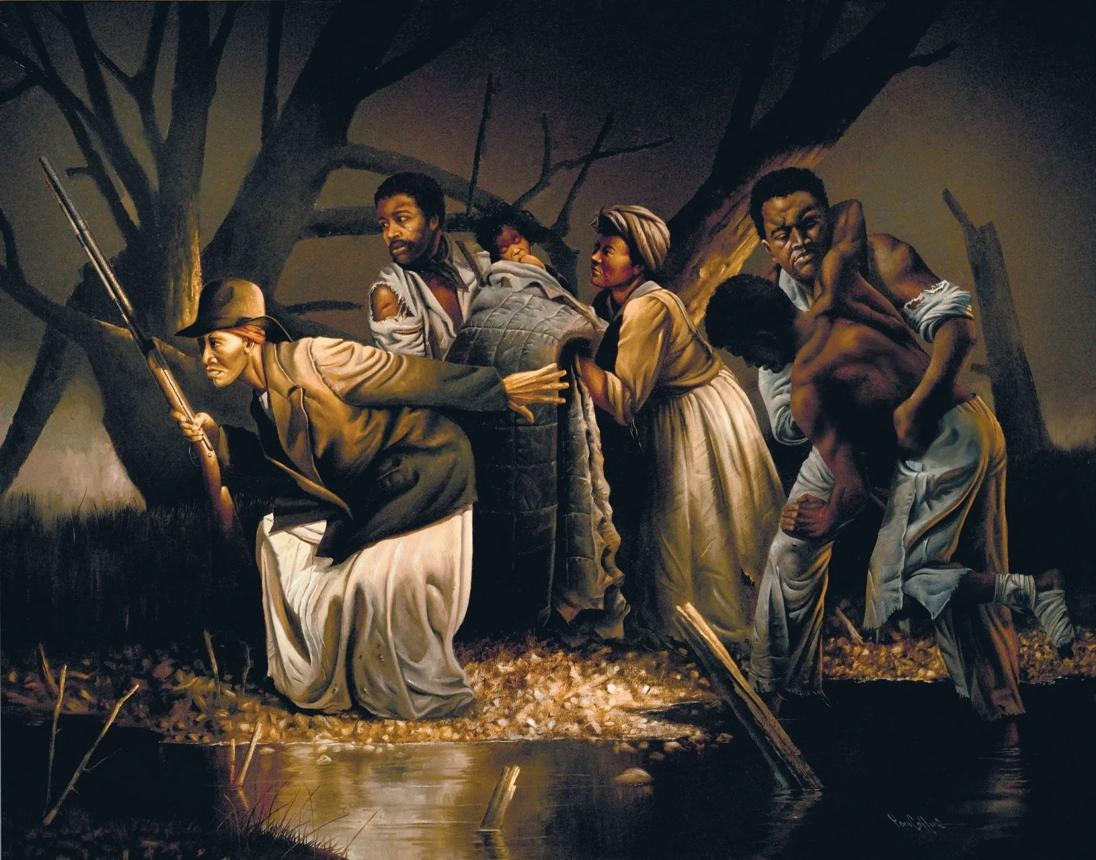
The history of slavery in the United States is filled with heartbreaking stories of oppression, forced labour, family separation, racial discrimination and unimaginable cruelty. For millions of Black Americans, freedom was a distant dream under a system that treated human beings as property, denied them basic rights and subjected them to generations of exploitation. Yet, despite the brutality of slavery, enslaved African Americans never stopped fighting for their freedom.
One of the most remarkable examples of this resistance was the Underground Railroad, a secret network of people, safe houses, churches, farms and hidden routes that helped enslaved Black Americans escape bondage. Operating through courage, secrecy and cooperation, the network became one of the most significant resistance movements against slavery in American history.
Between the late 18th century and the end of the American Civil War in 1865, thousands of enslaved African Americans risked their lives in desperate attempts to escape slavery. Some travelled hundreds of miles on foot, crossed dangerous rivers, hid in forests, boarded ships and endured hunger, exhaustion and extreme weather conditions in pursuit of freedom. Others depended on sympathetic individuals who provided food, shelter, transportation and directions to safer destinations.
However, the Underground Railroad was more than a transportation network. It represented the determination of enslaved Black Americans to reclaim their humanity, protect their families and challenge a system that considered them property rather than human beings.
Its story is also a reminder that the struggle against slavery was not fought exclusively by politicians, abolitionists or military forces. Enslaved people themselves were active participants in their liberation, often demonstrating extraordinary courage in the face of almost impossible circumstances.
What Was the Underground Railroad?
The Underground Railroad was not an actual railway system, nor did it operate beneath the ground. Rather, it was a loosely connected and largely secret network of individuals and communities that helped enslaved African Americans escape from slaveholding states to places where they could seek freedom.
The network involved free Black Americans, formerly enslaved people, abolitionists, religious groups and some sympathetic white Americans who opposed slavery. They provided different forms of assistance, including temporary accommodation, food, clothing, transportation, financial support and guidance.
The name emerged from the railway terminology that was becoming popular in America during the 19th century. Participants adopted railway-related expressions to conceal their activities and communicate without openly revealing their plans.
Some of the commonly used expressions included:
Conductors: Individuals who guided freedom seekers along escape routes.
Stations: Houses, churches, barns and other locations where escapees could hide and rest.
Stationmasters: People responsible for providing shelter and protection at safe houses.
Passengers: Enslaved individuals escaping bondage.
Stockholders: People who contributed money, food, clothing and other resources to support escape operations.
These expressions helped create the impression of an ordinary transportation system while concealing the dangerous activities taking place.
However, the Underground Railroad did not have a central leadership, headquarters or national administrative structure. Some operations were carefully coordinated, while others emerged from spontaneous acts of kindness by people who encountered freedom seekers along their journeys.
Importantly, many enslaved people escaped without assistance. The Underground Railroad provided a valuable support system, but the determination and initiative of the people seeking freedom remained central to the movement.
According to the National Park Service, efforts by enslaved African Americans to escape slavery existed long before the Underground Railroad became a recognized term.
Why Did Enslaved Black Americans Risk Their Lives to Escape?
To understand the importance of the Underground Railroad, it is necessary to examine the conditions that forced enslaved African Americans to consider escape, despite the enormous risks involved.
Slavery in the United States was built around the exploitation of Black people, whose labour, freedom and personal lives were controlled by enslavers. Enslaved individuals were denied the right to determine where they lived, whom they married, how they worked and, in many circumstances, whether they could remain with their children.
Their experiences differed depending on the location, period and enslaver. Nevertheless, the institution systematically denied them personal freedom and treated them as property.
Several factors encouraged enslaved Black Americans to escape.
1. Physical abuse and brutal working conditions
Enslaved people were subjected to exhausting labour, particularly on plantations where they worked in cotton, tobacco, rice and sugar production.
Many worked from sunrise until sunset under extremely difficult conditions. They were often beaten, whipped, threatened and punished for failing to meet expectations or attempting to resist their enslavers.
Women were also exposed to sexual exploitation and violence, while children could be forced into labour at an early age.
For many enslaved people, escaping represented the only opportunity to remove themselves from a life of physical and psychological suffering.
2. Family separation
One of the cruelest aspects of American slavery was the separation of families.
Enslaved parents could lose their children through auctions and forced sales. Husbands and wives could be sold to different plantations, sometimes hundreds of miles apart.
Because enslaved people had little legal control over their family relationships, an enslaver could separate relatives whenever financial circumstances or personal decisions demanded it.
The fear of losing loved ones motivated many people to escape. Some attempted to flee with their children, while others first escaped alone and later returned to help their relatives gain freedom.
Harriet Tubman’s determination to rescue members of her family became one of the most powerful examples of this struggle.
3. The desire for personal freedom and dignity
Beyond physical suffering, slavery denied Black Americans the opportunity to live as independent human beings.
Enslaved people could not freely choose their occupations, travel without restrictions or make important decisions about their futures.
Education was also restricted in many slaveholding states, particularly literacy among enslaved people, because slaveholders feared that education could encourage resistance and independence.
For many freedom seekers, escaping was therefore about more than finding a safer location. It was about reclaiming their dignity, identity and right to control their own lives.
How Did the Underground Railroad Operate?
The Underground Railroad operated through a combination of secret routes, trusted relationships and safe locations.
Although the experiences of freedom seekers varied, many journeys involved several stages.
First, enslaved individuals had to plan their escape. This could involve secretly gathering information about nearby roads, rivers, towns and locations where sympathetic people might offer assistance.
Some waited for opportunities when their enslavers were absent, while others escaped during the night or used disguises to avoid attracting attention.
Second, they had to travel through dangerous territories. Many freedom seekers travelled on foot, sometimes covering considerable distances without adequate food, water or appropriate clothing.
Others used wagons, boats, trains and ships, depending on the available transportation and the level of assistance they could obtain.
Third, they sought temporary shelter. Safe houses were essential because escapees needed somewhere to rest, eat, recover and plan their next movement.
These locations could be private homes, churches, barns, farms and businesses. People providing assistance often understood that revealing the presence of an escapee could expose everyone involved to serious consequences.
Finally, freedom seekers continued towards destinations where they hoped to establish independent lives.
For many, this meant travelling to northern states where slavery had been abolished. Others continued to Canada, Mexico, the Caribbean and other locations outside the jurisdiction of American slave laws.
The routes were not fixed. They changed depending on the activities of slave catchers, the availability of assistance, geographical conditions and the personal circumstances of those escaping.

The Dangerous Routes: What Freedom Seekers Endured
Escaping slavery was an extremely dangerous undertaking. Unlike modern travel, freedom seekers could not depend on reliable transportation, public protection or guaranteed accommodation.
Every stage of the journey presented possible threats.
Slave patrols and bounty hunters
Slaveholders were determined to prevent enslaved people from escaping because their forced labour represented enormous financial value to them.
They employed slave catchers and relied on patrols to search for people who had escaped.
Newspapers sometimes carried advertisements describing escaped enslaved individuals and offering financial rewards for their capture.
These advertisements often included physical descriptions, clothing details, names and information about the individuals’ family backgrounds.
The financial rewards encouraged some members of the public to participate in capturing freedom seekers.
Dangerous weather and difficult terrain
Many escapees travelled through forests, swamps, mountains and unfamiliar countryside.
Some crossed rivers in dangerous conditions, while others endured freezing temperatures during winter journeys.
Hunger, dehydration, exhaustion and injuries were constant concerns.
Those travelling without assistance could spend several days hiding in secluded locations to avoid being discovered.
The threat of betrayal
Trust was another major challenge.
A person offering assistance could potentially be an informant, slave catcher or someone willing to betray an escapee for financial rewards.
Consequently, freedom seekers often had to exercise extreme caution when deciding whom to trust.
Even when they reached northern states, their safety was not guaranteed.
The possibility of being returned to slavery
Perhaps the greatest danger was capture.
A person who was caught could be returned to their enslaver, separated from family members and subjected to severe punishment.
Some escapees were also sold to different enslavers to prevent them from attempting another escape.
The danger extended to people who provided assistance. Conductors and other Underground Railroad participants risked arrest, financial penalties, imprisonment and physical violence.
Despite these dangers, thousands continued to pursue freedom.
The Fugitive Slave Acts: Laws That Made Escape Even More Dangerous
One of the biggest challenges facing freedom seekers was that American law often protected slaveholders’ interests even in states where slavery had been abolished.
The Fugitive Slave Act of 1793 established procedures for capturing and returning people who escaped from slavery.
It also provided penalties for individuals who interfered with the capture of alleged fugitives.
This meant that reaching a free state did not necessarily guarantee permanent freedom.
The situation became considerably worse in 1850 when Congress passed a stricter Fugitive Slave Act as part of the Compromise of 1850.
The law strengthened the federal government’s role in capturing and returning freedom seekers. It imposed penalties on people who assisted them and denied accused escapees important legal protections, including the right to a jury trial.
Federal commissioners were empowered to decide whether accused individuals should be returned to slavery. The law also created financial incentives that favoured decisions supporting slaveholders’ claims.
As a result, free Black Americans living in northern states faced increased danger.
Even individuals who had never been enslaved could be kidnapped and falsely identified as escaped slaves. Some were forcibly transported south and sold into slavery.
The 1850 law encouraged many freedom seekers to continue beyond the northern United States into Canada, where American slaveholders could not legally enforce their claims.
It also increased resistance among abolitionists and strengthened the activities of Underground Railroad networks.
The National Park Service notes that approximately 1,000 African Americans were returned to the South under the 1850 law between 1850 and 1861.
Harriet Tubman: The Woman Who Became a Symbol of Freedom

No discussion of the Underground Railroad would be complete without recognising the extraordinary contributions of Harriet Tubman.
Born Araminta Ross around 1822 in Dorchester County, Maryland, Tubman experienced slavery from childhood.
She endured physical abuse and dangerous working conditions. During her early life, she suffered a serious head injury after an enslaver struck her with a heavy object. The injury reportedly caused recurring headaches and episodes of unconsciousness throughout her life.
Tubman also experienced the painful separation of enslaved families. Three of her sisters were sold away from their family during her childhood.
In 1849, fearing that she might also be sold, Tubman made the courageous decision to escape.
She travelled north to Philadelphia, where she finally experienced freedom.
However, Tubman was not satisfied with securing freedom for herself alone.
She was determined to help other enslaved people escape, particularly members of her family.
Over approximately a decade, Tubman returned to Maryland on around 13 separate trips to guide enslaved people towards freedom.
According to the National Park Service, she personally helped approximately 70 people escape and provided instructions to another 50 to 60 people to assist their own escapes.
Her operations required extraordinary secrecy because returning to Maryland placed her directly in danger of capture.
Tubman used trusted contacts, careful planning and her knowledge of the local geography to guide people along dangerous routes.
She became known as Moses, a reference to the biblical figure who led the Israelites out of bondage.
Her reputation grew because of her determination to return repeatedly to slaveholding territory despite the possibility of being captured or killed.
During the American Civil War, Tubman also served the Union forces as a nurse, cook, scout and spy.
Her contributions extended beyond the Underground Railroad, making her one of the most influential African American women in the struggle against slavery and racial oppression.
Tubman’s story demonstrates that freedom was not simply something she wanted for herself. She believed that her family and fellow African Americans deserved the same opportunity to live without bondage.
William and Ellen Craft: The Couple Who Used a Disguise to Escape Slavery
Another extraordinary story from the Underground Railroad is that of William Craft and Ellen Craft.
The couple were enslaved in Georgia and desperately wanted to live together as free people.
However, escaping from the slaveholding South was extremely difficult, especially for a married couple travelling together.
In December 1848, they developed an unusual plan that required creativity, courage and considerable preparation.
Ellen had a light complexion because her father was a white slaveholder and her mother was enslaved. The couple decided to use this appearance to their advantage.
Ellen disguised herself as a wealthy, sickly white male slaveholder, while William pretended to be her enslaved servant.
The disguise was carefully constructed.
Ellen wore men’s clothing, cut her hair, used glasses and wrapped bandages around her face. She also carried her arm in a sling to avoid having to sign documents because she could not write.
The idea was to convince other travellers and officials that she was a white slaveholder travelling with an enslaved man.
Their journey began on December 21, 1848, when they left Macon, Georgia.
They travelled through several cities using trains and steamships, eventually reaching Philadelphia and later Boston.
During the journey, they faced several frightening encounters that could have exposed their identities.
At one point, Ellen encountered someone who knew her from her previous life. She avoided suspicion by pretending to be deaf.
The couple eventually reached freedom, but the passage of the Fugitive Slave Act of 1850 created another serious threat.
Even in Boston, they were not safe from slave catchers who might attempt to return them to Georgia.
To protect themselves, William and Ellen eventually escaped to England, where they continued speaking against slavery.
Their story remains one of the most remarkable examples of the ingenuity and determination displayed by freedom seekers.
It also demonstrates that even reaching a northern state did not necessarily guarantee safety under American law.
The Important Role of Free Black Americans in the Underground Railroad
Although some white abolitionists played important roles in the Underground Railroad, free Black Americans were central to its operations.
They provided shelter, transportation, financial support and protection to people escaping slavery.
Many were formerly enslaved individuals who understood the dangers freedom seekers faced and were determined to help others avoid the suffering they had experienced.
One prominent figure was William Still.
Still was born in New Jersey in 1821 to parents who had escaped slavery.
He became an important abolitionist and worked with the Philadelphia Vigilance Committee, an organisation that assisted African Americans facing kidnapping and helped freedom seekers obtain protection.
Still provided assistance to many people escaping slavery and carefully documented their experiences.
His records included personal accounts, letters and descriptions of escape journeys.
In 1872, he published The Underground Rail Road, a historical collection documenting the experiences of people who sought freedom and those who helped them.
His work became an important source of information about the Underground Railroad because many participants had deliberately concealed their activities during slavery.
Free Black churches and community organisations also played important roles.
African Methodist Episcopal congregations and other religious communities provided meeting places, support networks and assistance to freedom seekers.
In cities such as Philadelphia, New York and Boston, Black vigilance committees organised efforts to protect African Americans from slave catchers and kidnappers.
These activities demonstrate that the Underground Railroad was not simply a collection of white abolitionists helping enslaved Black people. It was also a movement sustained by Black communities determined to defend their people and challenge racial oppression.
The Library of Congress identifies African Americans as important organisers, conductors and supporters of the Underground Railroad.
Where Did the Underground Railroad Take Enslaved People?
Although many people associate the Underground Railroad exclusively with journeys from the American South to the northern states, its routes extended across several regions.
The geographical destinations depended on the escapees’ circumstances and the level of assistance available.
Some important destinations included:
1. Pennsylvania: Its proximity to slaveholding Maryland and other southern territories made it an important destination for freedom seekers. Philadelphia became a significant centre of abolitionist activity.
2. Ohio: The Ohio River served as an important geographical boundary between slaveholding Kentucky and the free state of Ohio. Communities along the river helped people cross into free territory.
3. New York: The state became an important centre for abolitionist organisations and Black communities supporting freedom seekers.
4. Boston, Massachusetts: Boston had an active free Black population and abolitionist community. Many escapees found support there.
5. Canada: Canada became one of the most important destinations, particularly after the Fugitive Slave Act of 1850. British legislation had abolished slavery in most of the British Empire in 1834, making Canada a comparatively safer destination for people escaping American slavery.
6. Mexico and other destinations: Some freedom seekers travelled west or south rather than north, seeking safety in Mexico, the Caribbean and other locations.
These routes demonstrate that the Underground Railroad was a broad network of escape possibilities rather than a single pathway leading to one destination.
The Contributions of Other Underground Railroad Heroes
Beyond Harriet Tubman, William Still and the Craft couple, several other individuals played significant roles in helping enslaved African Americans escape.
Among them was John Parker.
Parker was a formerly enslaved Black man who settled in Ripley, Ohio. He helped freedom seekers cross the Ohio River from Kentucky into free territory.
His work was particularly dangerous because the river represented an important boundary between slavery and freedom, and slaveholders were determined to prevent people from crossing it.
Another important figure was Levi Coffin.
Coffin, a white Quaker abolitionist, became known for assisting freedom seekers in Indiana and Ohio. His home in Newport, Indiana, became an important refuge for people escaping slavery.
His efforts demonstrated how religious convictions and opposition to slavery encouraged some white Americans to risk their safety to help enslaved people.
There was also John Rankin of Ripley, Ohio, whose home became an important shelter for freedom seekers crossing the Ohio River.
These individuals, together with countless unnamed Black and white supporters, contributed to the network’s ability to operate despite the laws and threats surrounding it.
Did Everyone Who Escaped Through the Underground Railroad Become Permanently Free?
Although reaching a free state or Canada represented an important achievement, the journey did not always end the difficulties faced by freedom seekers.
Some escaped individuals struggled to find employment, secure housing and establish stable lives.
Others continued to experience racial discrimination, segregation and hostility.
Even in northern states where slavery had been abolished, Black Americans were often denied equal opportunities and subjected to racial violence.
The Fugitive Slave Act of 1850 made the situation particularly frightening because it exposed freedom seekers to the possibility of being captured and returned to slavery.
Some people who reached northern communities eventually moved to Canada because they believed their safety could not be guaranteed in the United States.
The experiences of William and Ellen Craft illustrate this reality. Despite reaching Boston, they eventually travelled to England because the threat of being returned to slavery remained serious.
Nevertheless, many freedom seekers established new lives, reunited with family members and became active participants in the abolitionist movement.
Some also used their experiences to educate the public about the realities of slavery and encourage further resistance.
How Did the Underground Railroad Contribute to the End of Slavery?
The Underground Railroad did not single-handedly end slavery in America, but it played an important role in challenging the institution and exposing its contradictions.
First, it demonstrated that enslaved people were not passive victims of slavery. They actively resisted their oppression and pursued freedom despite the consequences.
Second, it helped strengthen the abolitionist movement.
The stories of people escaping slavery exposed the cruelty of slaveholding practices and encouraged more Americans to question the morality of the institution.
Third, the network contributed to growing political tensions between slaveholding and free states.
The Fugitive Slave Act of 1850 generated considerable opposition among northern communities, particularly those who believed that helping another human being escape slavery was a moral responsibility.
The rescue of freedom seekers, public demonstrations and resistance to slave-catching activities intensified disagreements over slavery.
One example was the 1858 rescue of John Price in Ohio. Residents of Oberlin and Wellington resisted efforts to return him to slavery, leading to arrests and a major confrontation over the Fugitive Slave Law.
These events reflected the growing national conflict over the future of slavery.
Eventually, the American Civil War broke out in 1861.
As the Union fought the Confederacy, enslaved African Americans continued escaping to Union-controlled territory. Their actions challenged the Confederacy’s labour system and helped transform the war into a struggle increasingly centred on emancipation.
In 1863, President Abraham Lincoln issued the Emancipation Proclamation, declaring enslaved people in designated areas rebelling against the United States to be free.
The legal abolition of slavery throughout the United States came with the ratification of the 13th Amendment in December 1865.
The Underground Railroad’s activities continued during the Civil War and came to an end as legal slavery was abolished.
The Legacy of the Underground Railroad in Modern America
More than a century and a half after the abolition of slavery, the Underground Railroad remains one of the most important chapters in African American history.
Its legacy is preserved through museums, historical landmarks, educational programmes, monuments and research institutions across the United States and Canada.
One notable institution is the National Underground Railroad Freedom Center in Cincinnati, Ohio. The institution explores the history of slavery, the struggle for freedom and the continuing importance of human rights.
The Harriet Tubman Underground Railroad National Historical Park in Maryland also preserves important aspects of Tubman’s life and the landscape associated with her work.
These historical sites help younger generations understand the courage of enslaved African Americans and the contributions of those who supported their struggle.
The Underground Railroad also provides an important lesson about the power of collective action.
It demonstrates how ordinary individuals and communities can challenge unjust systems through solidarity, courage and a commitment to human dignity.
Most importantly, its history reminds the world that enslaved Black Americans were not merely people who waited for others to liberate them. They were individuals who fought for their own freedom, organised resistance, protected their families and took enormous risks to determine their destinies.
Conclusion
The Underground Railroad represents one of the most courageous chapters in the history of the fight against slavery.
For the enslaved African Americans who participated, freedom was worth risking everything. They endured dangerous journeys, escaped violent slaveholders, crossed unfamiliar territories and confronted laws designed to return them to bondage.
Some travelled alone, while others depended on the generosity and bravery of people willing to risk their own safety to help them.
Figures such as Harriet Tubman, William and Ellen Craft, William Still and John Parker demonstrated that the fight against slavery involved determination, intelligence, sacrifice and collective resistance.
Their contributions helped expose the injustice of slavery and strengthened the wider movement for emancipation.
Although the Underground Railroad did not immediately bring an end to racial discrimination or guarantee equality for African Americans, it helped establish an important foundation for the struggle for freedom and civil rights in the United States.
Today, its story remains a powerful reminder that freedom is precious, injustice must be challenged and the determination of ordinary people can help transform the course of history.
The men and women who risked their lives on the Underground Railroad were not simply escaping slavery. They were making a statement to the world that no human being should be owned, controlled or denied the right to live freely.
Their courage remains an enduring part of American history and a testament to the resilience of Black people in the face of oppression.