

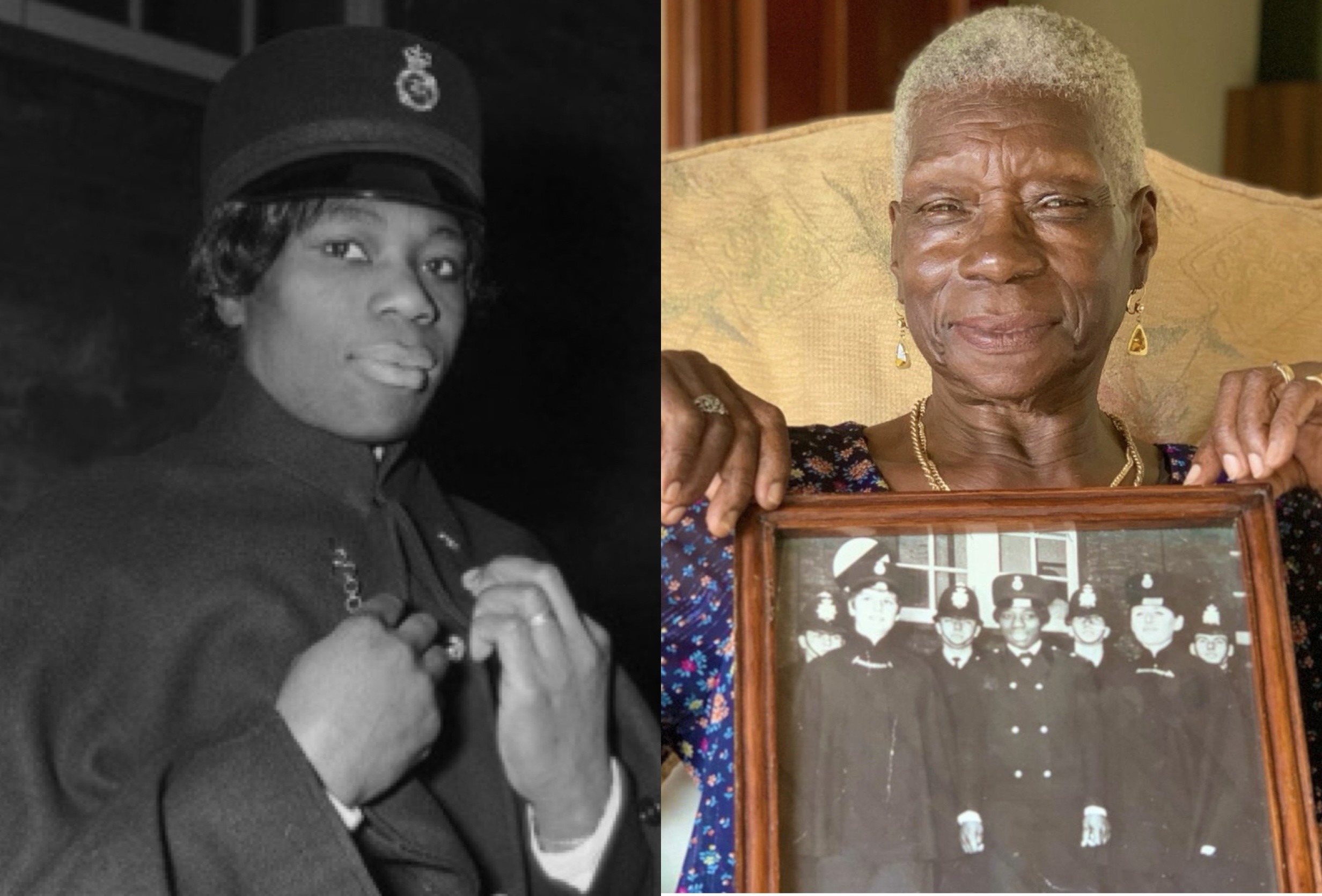
At a time when Black people faced discrimination in employment and public life, Allen stepped into a profession in which women were underrepresented and Black officers were exceptionally rare. Her achievement was more than a personal career milestone. It challenged prevailing attitudes about who could wear a police uniform, exercise authority and serve the public.
Before joining the Metropolitan Police, Allen worked as a nurse. After seeing a recruitment advertisement, she decided to pursue a different career, eventually becoming a pioneering officer whose name would be remembered decades after she left Britain.
Her policing career took her through Croydon, Scotland Yard’s Missing Persons Bureau and Norbury before she returned to Jamaica in 1972, where she continued her work in law enforcement.
Although she died in Jamaica on 5 July 2021, aged 83, her contribution to British policing has continued to receive recognition. In 2020, she received a lifetime achievement award from the National Black Police Association. In 2022, the College of Policing named its Sislin Fay Allen Centre in her honour, helping ensure that future generations of police officers would learn about her pioneering contribution.
Her story remains an important reminder that progress often begins when someone enters a space where people like them have rarely been welcomed.
Who Was Sislin Fay Allen?
Sislin Fay Allen was a Jamaican-born British policing pioneer whose historic achievement transformed the representation of Black women in the United Kingdom’s police service.
She was born in Jamaica in 1938 and later moved to Britain, where she initially pursued a career in nursing. Her early professional experience placed her in a position of public service, requiring compassion, discipline, responsibility and the ability to work with people from different backgrounds.
Nursing was a demanding profession, but Allen eventually decided to explore another path. When she came across an advertisement recruiting women for the Metropolitan Police, she saw an opportunity to make a significant career change.
That decision would establish her place in British history.
In 1968, Allen became the first Black woman police constable in the United Kingdom. Her appointment was particularly significant because it challenged two forms of exclusion at once: the racial barriers confronting Black people in British institutions and the gender restrictions that shaped opportunities for women in law enforcement.
Her achievement did not mean that discrimination disappeared overnight. Rather, it demonstrated that Black women could enter the profession, perform its duties and contribute to public safety at a time when their presence was far from ordinary.
Allen’s story is therefore not simply about being the first. It is about the courage required to enter an institution in which representation was limited and to create a legacy that others could follow.
From Nursing to Policing: The Career Change That Made History
Before becoming a police officer, Allen worked as a nurse. Her decision to leave nursing for policing illustrates how an unexpected opportunity can redirect a person’s life and, in some circumstances, influence an entire institution.
Both professions involve public service, although they demand different skills and responsibilities. Nursing requires patient care, observation, emotional resilience and the ability to respond to difficult situations. Policing involves maintaining public order, investigating incidents, protecting vulnerable people and enforcing the law.
Allen’s previous experience in nursing gave her a background in serving members of the public. While it would be inappropriate to assume precisely how that experience influenced her policing methods without further evidence, her professional transition demonstrates her willingness to take on a different set of responsibilities.
The Metropolitan Police recruitment advertisement she encountered became a turning point. At the time, women were already serving in British policing, but Black women’s representation remained exceptionally limited.
For a Jamaican woman living in Britain during the 1960s, entering the police service meant stepping into a profession in which she could not easily look to people with similar backgrounds for examples of what was possible.
Her decision required a willingness to pursue an opportunity despite the historical and social barriers surrounding it.
Allen’s career change also illustrates an important lesson about professional development: previous experience does not have to determine the limits of a person’s future. People can develop new skills, change industries and contribute to society in ways they may not initially have imagined.
In Allen’s case, that transition became a landmark in the history of British policing.
1968: The Year Sislin Fay Allen Broke a Historic Barrier
The year 1968 marked a defining moment in Allen’s life and in the history of the United Kingdom’s police service.
When she joined the Metropolitan Police, she became the first Black woman police constable in the country. The milestone carried significance beyond her individual appointment because it challenged long-standing assumptions about race, gender and authority.
A police uniform represents public responsibility. Officers are expected to enforce laws, respond to emergencies, protect members of the community and exercise authority fairly. Historically, however, access to such positions has not been equally available to everyone.
Allen’s appointment demonstrated that a Black woman could occupy a role traditionally associated with white male authority and participate in the everyday work of law enforcement.
The importance of the achievement becomes clearer when considered against the broader British social environment of the 1960s.
Britain was experiencing significant changes in its population, politics and social relationships. Migration from the Caribbean and other parts of the Commonwealth had helped reshape British cities, workplaces and communities. Yet the presence of people from different backgrounds did not automatically produce equality.
Black Britons and Caribbean migrants continued to encounter racial prejudice in housing, employment and other aspects of public life. Public institutions also faced questions about whether their workforce reflected the communities they served.
Within that context, Allen’s appointment was an important step towards a more representative police service.
It is important, however, to distinguish between a historic breakthrough and the complete removal of structural barriers. One person’s appointment could not resolve the broader inequalities experienced by Black communities or guarantee equal treatment for every future officer.
Nevertheless, Allen’s entry into the Metropolitan Police created a precedent. It established a fact that could not easily be dismissed: Black women belonged in British policing and could contribute to the profession.
Her achievement also provided a point of reference for later conversations about recruitment, inclusion and equal opportunities within law enforcement.
Working for the Metropolitan Police
Following her historic appointment, Allen began her policing career with the Metropolitan Police, the force responsible for policing much of London.
Her work included postings in Croydon, at Scotland Yard’s Missing Persons Bureau and in Norbury.
These assignments placed her within different parts of the police service and formed part of her contribution to its daily responsibilities.
Croydon, in south London, was one of the areas in which she served. Like other urban communities, it required officers to respond to incidents, assist residents and maintain public order.
Allen also worked at Scotland Yard’s Missing Persons Bureau. Missing-person investigations are an important part of policing because they involve locating people whose whereabouts are unknown and helping establish whether they may be vulnerable, endangered or victims of crime.
Such work requires attention to detail, the careful handling of information and cooperation between police personnel and members of the public.
Allen’s posting to the bureau is a notable part of her career because it connects her story to the wider responsibility of police services to protect people whose circumstances may make them particularly vulnerable.
She subsequently served in Norbury, another area of south London.
Although the available biographical information does not establish a complete account of every case she handled, her postings show that her contribution extended beyond the symbolic significance of her appointment. She was part of the police service and worked within its operational structure.
This distinction matters. Historical pioneers are sometimes remembered primarily for the barriers they broke, while the practical work they performed receives less attention.
Allen deserves recognition for both her groundbreaking entry into policing and her service as an officer.
Her career also highlights the importance of documenting the experiences of early Black officers. Without careful historical records, the everyday work of pioneering individuals can disappear behind the headline of being the first.
Preserving those details helps future generations understand not only how institutions changed, but also the people whose working lives formed part of that change.
The Challenges She Faced as a Black Woman in British Policing
Allen’s historic appointment did not mean that everyone welcomed her into the profession. Her experience reflected the racial and gender barriers that confronted people from underrepresented communities in Britain during the 1960s.
When she applied to join the Metropolitan Police, Allen took the unusual step of explicitly stating on her application form that she was a Black woman. She wanted the recruitment authorities to know her racial background before inviting her for an interview.
Her decision was significant because it demonstrated her awareness that her race might influence how her application was received. Rather than allow the issue to emerge unexpectedly, she made her identity clear from the beginning. <Cite refs={[“turn959163search7″,”turn959163search11”]}/>
According to accounts of her experience, some people doubted that she would be accepted into the police service. One friend reportedly questioned whether the force would admit a Black person. Allen eventually proved those doubts wrong when she received confirmation that she had been accepted.
Her appointment also attracted attention from the media and members of the public. The sight of a Black woman in a police uniform was unusual enough to make her a subject of considerable curiosity.
But curiosity was not the only reaction. Reports indicate that the Metropolitan Police received racist correspondence following her appointment. Allen was informed about some of the hostile letters, although her superiors reportedly shielded her from their contents. <Cite refs={[“turn959163search2″,”turn959163search3”]}/>
These incidents reveal the difficult circumstances surrounding her achievement. Allen was entering a profession that required her to represent the authority of the state while navigating prejudices directed at her own identity.
Her experience also challenges the idea that institutional progress is always welcomed by everyone. When people from excluded groups enter traditionally inaccessible professions, their achievements can expose deeply rooted assumptions about who is considered suitable for positions of authority.
Allen’s persistence helped challenge those assumptions.
She did not need to make public speeches or become a political activist to have a historical impact. By qualifying for the position, putting on her uniform and performing her duties, she demonstrated that Black women could serve in British policing.
Her example is particularly important because the contributions of women in history are sometimes overlooked when their achievements do not involve holding high political office or leading a public campaign.
Allen changed the historical record through her professional work. Her achievement deserves recognition on those grounds alone.
Breaking Barriers Without Setting Out to Become a Trailblazer
One of the most striking aspects of Allen’s story is that she did not initially set out to become a historical figure.
Her decision to join the police was motivated by a desire for a change in career, alongside an interest in policing. The historic significance of her appointment became apparent as she entered a profession where Black women were rarely represented.
This distinction makes her story especially relatable.
People do not always recognise the historical importance of their decisions when they make them. A person may accept a job, pursue an education or enter an unfamiliar profession simply because it feels like the right next step.
Yet that decision can have consequences beyond the individual’s immediate circumstances.
Allen’s achievement demonstrated that trailblazers are not necessarily people who set out to change the world. Sometimes, they are people who pursue an ordinary ambition in circumstances where society has made that ambition unusually difficult to realise.
Her story also shows that representation is not merely about statistics. It is about visibility and possibility.
When a young Black woman sees someone from a similar background serving as a police officer, a judge, a doctor or a senior public official, the experience can challenge the belief that certain careers are beyond her reach.
Allen’s presence in the Metropolitan Police helped create that possibility.
Her achievement did not guarantee that every Black woman who followed would receive equal treatment. However, it established a historic precedent and helped expand the public understanding of who could become a police officer.
The distinction between being the first and being the only is important. Being the first means that an individual has crossed a previously unbroken barrier. Ensuring that others can follow requires institutions to continue changing their recruitment practices, workplace cultures and approaches to equality.
Allen’s story therefore represents both a historic accomplishment and a reminder of the work that institutions must continue to undertake.
The Significance of Her Work in Scotland Yard’s Missing Persons Bureau
One of the most notable stages of Allen’s career was her posting to Scotland Yard’s Missing Persons Bureau.
After spending approximately a year in Croydon, she moved to the bureau before later being transferred to Norbury police station. Her service between these postings formed part of her four years with the Metropolitan Police, from 1968 to 1972. <Cite refs={[“turn959163search0″,”turn959163search3”]}/>
The Missing Persons Bureau dealt with an essential aspect of police work: helping establish the whereabouts of people whose disappearance had raised concerns.
Missing-person cases can involve children, vulnerable adults, people experiencing personal difficulties and individuals whose circumstances place them at risk. Investigations may require the careful examination of reports, communication with relatives and coordination between officers.
Although there is no basis for attributing particular investigations or outcomes to Allen without supporting records, her posting to this bureau demonstrates that her police service included work beyond her initial public-facing assignment.
The bureau’s role also provides a useful perspective on the wider responsibilities of law enforcement. Policing is not limited to making arrests or responding to crimes. It includes protecting vulnerable people, assisting families and working to establish what has happened when someone disappears.
Allen’s contribution to the institution should be understood within this broader context of public service.
Her professional history also illustrates why women officers’ experiences deserve more detailed historical documentation. Accounts of pioneering women often concentrate on the moment they broke a barrier, but their routine assignments, professional development and daily responsibilities are equally important to understanding their careers.
Recognising Allen’s work in different police settings helps place her achievement within the operational history of the Metropolitan Police rather than treating it solely as a symbolic event.
Why Her Appointment Mattered to Black Communities in Britain
Allen’s achievement occurred during a period of significant change in British society.
Caribbean migrants and their descendants were contributing to Britain’s economy, public services, cultural life and communities. Yet racial prejudice continued to affect opportunities and relationships across different areas of society.
The Windrush generation and other Commonwealth migrants helped reshape modern Britain, but their contributions were not always met with equal acceptance. Many people encountered barriers in employment, housing and everyday life.
Allen’s appointment was particularly meaningful because the police occupy a distinctive position in society. Officers exercise legal authority and are expected to protect the public regardless of background.
A police service that excludes sections of the population from its workforce risks appearing disconnected from the communities it serves. Representation alone cannot guarantee fair treatment, but it can challenge assumptions about who belongs in public institutions.
Allen’s presence in uniform provided a visible example of a Black woman exercising public authority in Britain.
Her achievement also had significance for Caribbean communities, whose members were building lives in the United Kingdom while navigating the challenges of migration and social integration.
For Black women in particular, Allen’s career challenged the combined effects of racial and gender expectations. Women already faced restrictions in many professions, while Black women also had to confront assumptions connected to their race.
Allen’s success showed that these barriers were not insurmountable.
Her story should not be used to suggest that discrimination was simply a matter of individual determination or that anyone could overcome structural inequality through hard work alone. Institutional conditions matter, and a single person’s success does not erase the obstacles facing others.
Rather, her achievement demonstrates the importance of recognising individual courage alongside the need for broader institutional change.
Her place in British history is a reminder that the inclusion of previously excluded people can alter how public institutions are perceived and how future generations imagine their own opportunities.
Her Return to Jamaica and Continued Policing Career
In 1972, after four years with the Metropolitan Police, Allen left the force and returned to Jamaica with her family.
Her departure was connected to family commitments rather than an end to her involvement in law enforcement. After returning to Jamaica, she joined the Jamaica Constabulary Force and continued her policing career. <Cite refs={[“turn959163search0″,”turn959163search4”]}/>
This stage of her life is an important part of her story because it demonstrates that her professional contribution was not confined to Britain.
Jamaica was her country of origin and the birthplace of her personal history. Returning there allowed her to reconnect with her Caribbean roots while continuing to work in the profession she had chosen.
Her move also illustrates the experiences of people whose lives connect more than one country. Migrants often establish careers, families and communities abroad while maintaining strong relationships with their countries of origin.
Allen’s career bridged Britain and Jamaica. She entered British policing at a historic moment, then took her experience back to the Caribbean and continued serving in law enforcement there.
Her return was therefore not simply the conclusion of her British police career. It was the beginning of another chapter in her professional life.
She also received recognition in Jamaica. Reports of her life describe a congratulatory letter from then Jamaican Prime Minister Michael Manley following her return, acknowledging her achievement in British policing. <Cite refs={[“turn959163search3″,”turn959163search7”]}/>
This recognition reflected the significance of her accomplishment beyond the country in which it occurred.
Allen’s story consequently belongs to both British and Jamaican history. It highlights the contributions of Caribbean people to British public life while recognising the continued connections between Caribbean migrants and their countries of origin.
Recognition Arrived Decades After Her Historic Achievement
Although Allen made history in 1968, significant public recognition of her contribution continued to develop many decades later.
In 2020, she received a lifetime achievement award from the National Black Police Association at a ceremony celebrating Black, Asian and minority ethnic women in policing.
At the time, she was 82 and living in Jamaica. The award acknowledged her pioneering role in opening doors for other women from minority backgrounds. <Cite refs={[“turn959163search1″,”turn959163search4”]}/>
The recognition was especially meaningful because it came more than five decades after her historic appointment.
Allen expressed humility and appreciation when discussing the award, reflecting on the length of time that had passed since her achievement. Her response underscored a broader issue in historical recognition: people who break barriers do not always receive widespread acknowledgement during the early stages of their careers.
Their importance may become clearer as institutions reflect on their past and recognise how earlier generations helped create opportunities for those who followed.
The National Black Police Association’s recognition also connected Allen’s personal history with the experiences of other officers from underrepresented communities.
By celebrating her achievement, the organisation helped preserve a story that might otherwise have remained unfamiliar to many members of the public.
The award was not simply a tribute to an individual. It was also an acknowledgement of the courage required to enter a profession in which racial and gender representation was limited.
Allen’s recognition illustrates why institutions should document the contributions of pioneers while they are still alive whenever possible. Personal testimony provides valuable insight into the circumstances surrounding historic events, allowing future generations to hear directly from the people who experienced them.
Her interviews offered opportunities to understand her motivations, her memories of entering the police and her reflections on the progress that had taken place.
That testimony forms part of her enduring historical value.
The Sislin Fay Allen Centre: A Lasting Tribute to Her Legacy
One of the most significant honours associated with Allen’s legacy came in 2022, when the College of Policing named a training centre after her.
The College of Policing announced the naming of the Sislin Fay Allen Centre on 27 October 2022. The centre was intended to support the training of officers and staff across different levels of policing. <Cite refs={[“turn959163search0″,”turn959163search22”]}/>
The decision was particularly important because it connected Allen’s history with the education and professional development of future police personnel.
Training institutions play a significant role in shaping how officers understand their responsibilities, the communities they serve and the history of their profession.
Naming a centre after a pioneering Black woman creates an opportunity to introduce recruits and serving officers to a figure whose achievement challenged the boundaries of British policing.
It also ensures that her story is associated with the future of the profession rather than remembered only during anniversaries or Black History Month.
The College of Policing’s recognition reflects the principle that institutional history should include the contributions of people from different backgrounds.
For many years, public accounts of policing have often focused on prominent commissioners, senior officers, major investigations and significant organisational changes. Those subjects are important, but they do not tell the entire story.
The experiences of people who entered institutions when their communities were underrepresented are also part of that history.
Allen’s name at a police training centre helps make that history visible.
It sends a message that the contributions of Black women are part of the institution’s story and that their achievements deserve to be remembered alongside those of other influential figures.
The centre also provides an opportunity to discuss the continuing importance of fairness, professional integrity and public trust.
A name on a building cannot, by itself, eliminate discrimination or guarantee equal opportunities. The lasting value of such a tribute depends partly on whether the institution uses it to encourage meaningful reflection and action.
Nevertheless, the naming represents an important formal recognition of Allen’s place in British policing.
What Sislin Fay Allen’s Story Means for Modern Policing
Allen’s legacy remains relevant to contemporary discussions about diversity, recruitment and public confidence in law enforcement.
Police forces operate most effectively when they have the trust of the communities they serve. Building that trust requires professional conduct, accountability, fairness and a willingness to understand the different experiences of the public.
Representation can contribute to these objectives by demonstrating that policing is open to people from a broad range of backgrounds. However, a diverse workforce must also be supported by fair recruitment, appropriate training, transparent leadership and effective procedures for addressing discrimination.
Allen’s story illustrates the importance of opening professional opportunities to people who were previously underrepresented.
Her achievement also reminds modern institutions that progress often depends on individuals who are willing to take opportunities despite uncertainty.
For police recruiters, her history offers a reason to encourage applications from talented people across society. Recruitment campaigns can communicate that public service is not restricted to one gender, race or cultural background.
For police leaders, her experience reinforces the importance of creating environments in which officers can perform their duties without facing racial hostility or unfair treatment.
For members of the public, her story offers a broader understanding of how institutions change over time.
It also demonstrates why historical recognition should be accompanied by a commitment to examining current practices. Celebrating a pioneer is meaningful, but the strongest tribute is to ensure that future officers have fair opportunities to enter the profession and develop their careers.
Allen’s contribution therefore remains relevant not only as a historical milestone but also as a point of reflection for institutions that serve increasingly diverse communities.
Her Legacy for Young Black Women and Future Generations
For young Black women considering careers in policing, public service or other traditionally underrepresented professions, Allen’s life offers an example of what can happen when someone pursues an ambition despite doubts and barriers.
Her story does not suggest that every career journey will be straightforward. Nor does it imply that determination alone can overcome every obstacle.
Instead, it shows that individual decisions can challenge prevailing expectations and expand the possibilities available to others.
Allen entered British policing in 1968, when the prospect of a Black woman becoming a police constable was unfamiliar to many people. Today, her achievement forms part of the historical record and is formally commemorated by a national policing institution.
That change in recognition is significant.
Young people can learn from her willingness to explore a new career, complete the recruitment process and continue with her work despite the attention surrounding her appointment.
They can also learn that historical importance does not always come from seeking fame. Allen wanted a change of direction in her working life, yet her decision became a milestone in British social history.
Her experience offers lessons for employers and educational institutions as well. When organisations create opportunities based on ability and professional standards rather than restrictive assumptions, they can benefit from talent that might otherwise be overlooked.
The people who follow pioneers also have responsibilities of their own. They must continue developing their skills, supporting colleagues and helping ensure that the opportunities created by earlier generations remain available.
Allen’s story is therefore both an inspiration and a reminder that progress requires continued effort.
Remembering Sislin Fay Allen’s Life and Death
Sislin Fay Allen died at her home in Ocho Rios, Jamaica, on 5 July 2021, aged 83. News of her death prompted tributes recognising her role as Britain’s first Black woman police constable. <Cite refs={[“turn959163search4″,”turn959163search8”]}/>
Her death marked the end of a life that had connected two countries and two stages of public service. She had made history in Britain before returning to Jamaica, where she continued her policing career.
The tributes that followed her death highlighted the opportunities her achievement helped create for women and people from minority backgrounds.
Her family also helped preserve her memory, while reporting and historical accounts brought her story to a wider audience.
The recognition she received during her lifetime, followed by the naming of the Sislin Fay Allen Centre, has helped secure her place in the history of policing.
Yet remembering Allen should involve more than repeating the fact that she was the first Black woman police constable in Britain.
Her life also tells a story about professional ambition, migration, family responsibilities, public service and the relationship between individual achievement and institutional change.
She was a nurse before becoming a police officer. She was a Jamaican woman who built a career in Britain and later continued her work in Jamaica. She was a mother whose professional achievements formed part of a wider family history.
These details make her story more complete and more human.
They also help ensure that historical figures are remembered as people who lived full lives rather than as symbols detached from their experiences.
Conclusion: Sislin Fay Allen’s Place in British History
Sislin Fay Allen’s achievement in 1968 remains an important milestone in the history of British policing. By becoming the UK’s first Black woman police constable, she challenged racial and gender barriers and demonstrated that a Black woman could serve in a profession where representation was limited.
Her journey from nursing to the Metropolitan Police reflected her willingness to pursue a new opportunity. Her postings in Croydon, Scotland Yard’s Missing Persons Bureau and Norbury formed part of her professional service before she returned to Jamaica in 1972 and continued her policing career.
The lifetime achievement award she received in 2020 recognised her contribution decades after her groundbreaking appointment. The naming of the Sislin Fay Allen Centre in 2022 further established her legacy within the professional training of police officers and staff.
Her life also offers an important lesson about the meaning of historical progress. Change is not always initiated by people who intend to become famous. Sometimes, it begins when an individual refuses to accept that a particular career or opportunity is beyond their reach.
Allen did not need to lead a public campaign to change British history. Her decision to apply, qualify and serve as a police officer was itself a historic act.
Her achievement did not end racism or resolve every challenge facing women in law enforcement. But it established a precedent, expanded the public imagination and helped make it possible for others to follow.
Today, her story deserves to be taught in schools, remembered during Black History Month and included in discussions about the development of Britain’s public institutions.
Most importantly, it deserves to be remembered throughout the year as part of the wider history of the people who helped shape modern Britain.
Sislin Fay Allen’s name stands for courage, professional service and the importance of representation. Her legacy is not confined to the year she made history. It lives on in the officers who follow her path, the institutions that acknowledge her contribution and the young people who learn that their background should not determine the limits of their ambitions.
She broke a barrier in 1968, and generations later, Britain continues to recognise why that achievement mattered.