

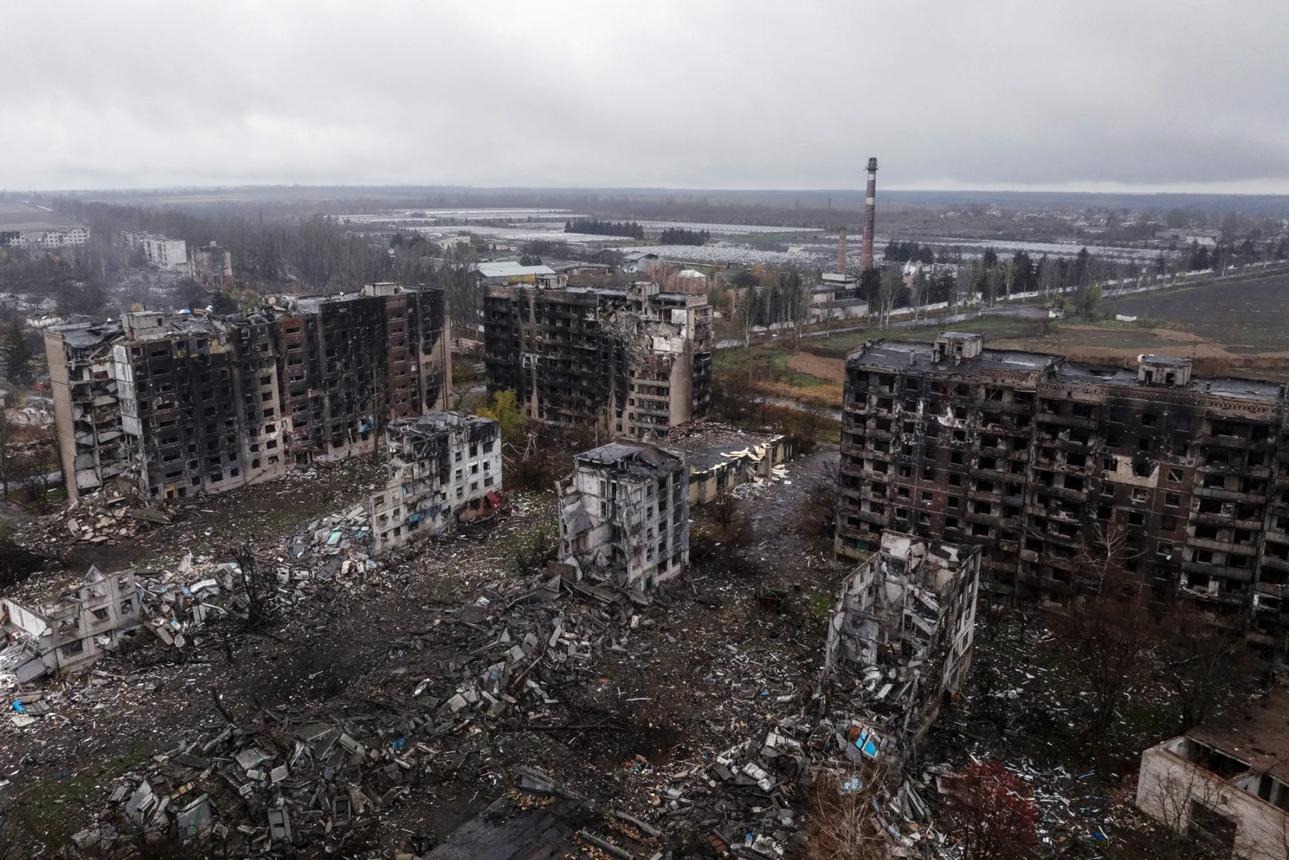
Although the world often associates the conflict with Russia’s full-scale invasion of Ukraine on February 24, 2022, the war began in 2014, when Russia occupied and annexed Crimea and fighting erupted between Ukrainian forces and Russian-backed separatists in eastern Ukraine.
The conflict is rooted in a complicated history involving the collapse of the Soviet Union, Ukraine’s independence, Russia’s regional ambitions, disagreements over NATO expansion, competing visions of European security, and Ukraine’s determination to choose its own political and international future.
Since 2022, the war has evolved into a prolonged conflict involving ground battles, missile and drone attacks, artillery exchanges, cyber operations, economic sanctions, military assistance from foreign governments, and repeated diplomatic efforts to find a resolution.

Understanding the Russia–Ukraine war requires examining how it started, why it escalated, what has happened on the battlefield, how international powers have responded, and what the conflict means for the future of Ukraine, Russia and the wider world.
Editorial note: This article explains the conflict’s established historical background and major developments. Because the war remains ongoing, claims about the latest battlefield positions, casualty figures, negotiations and territorial control should be checked against current reporting. I cannot independently verify live developments for October 22, 2026, in this response.
1. How the Russia–Ukraine War Started

To understand the war, it is necessary to look beyond 2022 and examine the political and historical developments that brought Russia and Ukraine into confrontation.
The collapse of the Soviet Union
Ukraine was one of the republics of the Soviet Union, a state that existed from 1922 until its dissolution in 1991. When the Soviet Union collapsed, Ukraine declared independence, which was confirmed by a nationwide referendum on December 1, 1991.
Ukraine became an independent country with internationally recognised borders, its own government and control over its domestic and foreign policy.
Russia also emerged as an independent state and inherited the Soviet Union’s central international role, including its permanent seat on the United Nations Security Council.
Although the two countries share historical, cultural, linguistic and family connections, their political paths increasingly diverged. Many Ukrainians supported closer relations with the European Union and Western institutions, while Russia sought to maintain significant influence over its neighbouring countries.
This disagreement eventually became one of the central issues behind the conflict.
Ukraine’s political crisis in 2013 and 2014
In November 2013, Ukrainian President Viktor Yanukovych abandoned plans to sign an association agreement with the European Union, choosing instead to strengthen economic ties with Russia.
The decision triggered large demonstrations, particularly in Kyiv. The protests became known as Euromaidan.
Demonstrators demanded closer European integration, government accountability and an end to corruption. The government responded with security measures that intensified public anger.
Violence escalated in early 2014. In February, Yanukovych left Kyiv and subsequently fled Ukraine. Parliament voted to remove him from office, and a new political administration took shape.
Russia described the change as an unconstitutional seizure of power. Many Ukrainians and Western governments viewed it as the outcome of a popular uprising against an increasingly unpopular government.
The competing interpretations deepened the political divide between Moscow and Kyiv. Russia then moved to take control of Crimea.

Russia’s annexation of Crimea
Crimea is a strategically important peninsula in the Black Sea. It had an autonomous status within Ukraine and was home to Russia’s Black Sea Fleet under an agreement with the Ukrainian government.
In late February 2014, Russian military personnel took control of key sites across the peninsula. Russian forces secured government buildings, airports and other strategic locations.
A referendum was held in March 2014 on Crimea’s status. Russian authorities said the vote supported joining Russia, but Ukraine and most of the international community rejected the referendum as illegitimate because it took place under military occupation and without Ukraine’s constitutional approval.
Russia formally annexed Crimea in March 2014.
The United Nations General Assembly affirmed Ukraine’s territorial integrity and called on states not to recognise changes to Crimea’s status resulting from the referendum.
The annexation became a turning point in relations between Russia and the West. The United States, the European Union and other governments introduced sanctions against Russian individuals and entities.
Russia retained control of Crimea, while Ukraine continued to consider it part of its sovereign territory.
The conflict in Donbas
The crisis spread to eastern Ukraine, particularly the Donetsk and Luhansk regions, collectively known as Donbas.
Armed separatist groups, supported by Russia, took control of parts of the two regions. They proclaimed separate entities and fought Ukrainian government forces.
Russia denied some allegations of direct military involvement, but Ukraine and Western governments repeatedly accused Moscow of supplying weapons, personnel and other support to the separatists.
The fighting killed thousands of people before the full-scale invasion in 2022. Civilians living near the front line endured shelling, displacement, damaged infrastructure and disrupted access to essential services.
The Minsk agreements, negotiated in 2014 and 2015, attempted to establish ceasefires and a political settlement. They included provisions concerning security, the withdrawal of foreign armed formations and arrangements for the status of parts of Donbas.
However, the agreements were never fully implemented. Ceasefires repeatedly broke down, and the dispute over political control and security remained unresolved.
By the end of 2021, Ukraine and Russia were already involved in an eight-year conflict, even though the scale of fighting was substantially smaller than what followed in 2022.
2. Why Russia Invaded Ukraine in February 2022

The full-scale invasion resulted from several overlapping political, military and historical disputes. No single explanation captures every factor, and Russia’s stated justifications must be distinguished from the assessments of independent observers and the Ukrainian government.
NATO expansion and Russia’s security concerns
The North Atlantic Treaty Organization, commonly known as NATO, is a military alliance founded in 1949. After the Cold War, NATO expanded to include several countries that had previously belonged to the Soviet-led Warsaw Pact or been part of the Soviet sphere of influence.
Russian leaders repeatedly opposed the possibility of Ukraine joining NATO. Moscow argued that the alliance’s expansion toward Russia’s borders threatened Russian security.
In December 2021, the Kremlin demanded security guarantees from the United States and NATO, including restrictions on further NATO expansion and military activity in Eastern Europe.
The United States and its allies rejected Russia’s demand that Ukraine be permanently excluded from NATO, maintaining that sovereign countries should be able to choose their own security arrangements.
Nevertheless, NATO membership for Ukraine was not imminent when the invasion began. Ukraine was a NATO partner, not a member protected by the alliance’s collective-defence commitment.
Russia’s security concerns formed an important part of the diplomatic confrontation, but they do not legally justify invading a neighbouring country.

Vladimir Putin’s view of Ukraine
Russian President Vladimir Putin has repeatedly argued that Russians and Ukrainians share deep historical and cultural roots. In speeches and essays, he has questioned aspects of Ukraine’s separate historical and national identity.
His government has also opposed Ukraine’s movement toward Western political, economic and military institutions.
Ukraine, however, is an internationally recognised sovereign state with its own national identity, elected institutions and right to determine its foreign policy.
Many analysts interpret Russia’s actions as an effort to preserve regional dominance and prevent Ukraine from becoming firmly integrated with Western institutions.
Russia’s objectives may have evolved during the war, but its invasion demonstrated that Moscow was prepared to use large-scale military force to pursue its aims.
Russia’s stated reasons for the invasion
On February 24, 2022, Putin announced what the Kremlin called a special military operation.
He claimed Russia needed to protect people in Donbas, demilitarize Ukraine, and remove what he described as Nazi influence.
The Ukrainian government rejected these arguments. Ukraine’s president at the time of the invasion, Volodymyr Zelenskyy, was democratically elected, and Russia’s broad claims that Ukraine was governed by Nazis were not supported by the country’s political reality.
The United Nations did not accept Russia’s claims as a legal basis for the invasion.
On March 2, 2022, the UN General Assembly adopted a resolution deploring Russia’s aggression against Ukraine and demanding that Russian forces withdraw.
The distinction is important: understanding the Kremlin’s stated reasons is not the same as accepting those reasons as factual or legally valid.
3. Russia’s Full-Scale Invasion on February 24, 2022
The invasion began with missile strikes, air attacks and ground advances from several directions.
Russian forces entered Ukraine from Russia, Belarus and Crimea. Attacks targeted military installations, airports, infrastructure and cities across the country.
The apparent scale and direction of the assault suggested that Moscow expected to achieve its objectives rapidly, although the Kremlin’s precise initial war plan has not been fully established publicly.
Kyiv, Ukraine’s capital, became a principal strategic target.
The battle for Kyiv
Russian forces advanced toward Kyiv from the north, including through the area around the Hostomel airport.
Ukraine’s military and civilian population resisted the invasion. Ukrainian forces defended approaches to the capital, while volunteers supported territorial defence units and civilians organised supplies, medical assistance and evacuations.
Russia failed to capture Kyiv. By late March and early April 2022, Russian forces withdrew from the capital region and other northern areas.
The failure to seize the capital quickly was a major setback for Moscow. It also demonstrated that Ukraine’s government and armed forces could survive the initial assault.
The discovery of civilian killings in Bucha
After Russian forces withdrew from areas near Kyiv, Ukrainian authorities and journalists documented bodies of civilians and evidence of killings in Bucha and neighbouring communities.
Images from Bucha prompted international outrage and calls for investigations into possible war crimes.
Ukraine and international investigators documented alleged executions, torture and other abuses in areas that had been occupied by Russian forces. Russia denied responsibility for atrocities and disputed Ukrainian and Western accounts.
The incidents became a central part of the international debate over accountability for alleged crimes committed during the war.
Investigations and legal proceedings are essential to establishing individual responsibility and distinguishing verified evidence from competing claims.
The siege and fall of Mariupol
Mariupol, a major port city on the Sea of Azov, suffered extensive destruction during the early months of the invasion.
Russian forces surrounded the city, while Ukrainian defenders held out in increasingly desperate conditions. Residents faced shortages of food, clean water, electricity and medical care.
The Azovstal steelworks became the final major defensive position. Ukrainian fighters remained there until May 2022, when the defenders surrendered or were evacuated under arrangements that placed many in Russian custody.
Russia’s capture of Mariupol created a land connection between Russian-controlled territory in eastern Ukraine and Crimea.
The city’s destruction became one of the clearest examples of the enormous civilian cost of the invasion.
4. Major Battles and Turning Points of the War

The battlefield has changed repeatedly since February 2022. Neither side has achieved all its strategic objectives, and control of territory has often come at a substantial human cost.
The Battle of Kharkiv
Kharkiv, near the Russian border, faced heavy bombardment and attempted Russian advances during the opening phase of the invasion.
Ukrainian forces prevented Russia from taking the city. In September 2022, Ukraine launched a major counteroffensive in the northeastern Kharkiv region.
Russian positions collapsed or were abandoned in several areas, allowing Ukrainian forces to recapture substantial territory in a relatively short period.
The counteroffensive demonstrated the importance of intelligence, mobility, logistics and concentrated attacks against vulnerable positions.
The Battle of Severodonetsk and Lysychansk
During the summer of 2022, Russia concentrated its offensive on the Donbas.
Severodonetsk and neighbouring Lysychansk became key objectives. Russian forces employed heavy artillery and other firepower to wear down Ukrainian defences.
Ukraine eventually withdrew from both cities. Their capture allowed Russia to consolidate control over much of the Luhansk region, although fighting continued elsewhere in Donbas.
The battles illustrated the destructive nature of an artillery-heavy war in densely populated urban areas.

Ukraine’s liberation of Kherson
In November 2022, Russian forces withdrew from the city of Kherson to the east bank of the Dnipro River after months of Ukrainian pressure.
Kherson was the only regional capital Russia had captured since the full-scale invasion began.
Ukraine’s return to the city was an important military and symbolic victory. It also forced Russian troops to reorganise their defensive positions along the river.
However, the withdrawal did not end the threat to Kherson. The city and surrounding areas continued to face shelling and other attacks.
The Battle of Bakhmut
Bakhmut, in Donetsk region, became the site of one of the war’s longest and bloodiest battles.
Russian forces, including fighters from the Wagner mercenary organisation, spent months attempting to capture the city. Ukrainian troops defended it at considerable cost.
Russia announced that it had captured Bakhmut in May 2023. Ukraine subsequently continued fighting in surrounding areas.
The city’s strategic importance was debated because its destruction far exceeded the value of its remaining infrastructure. Nevertheless, both sides viewed the battle as important for exhausting enemy forces, securing positions and demonstrating military resolve.
Ukraine’s 2023 counteroffensive
In June 2023, Ukraine launched a major counteroffensive intended to break through Russian defensive lines in the south and east.
Ukraine had received Western-supplied armoured vehicles, artillery systems and other equipment in preparation for the operation.
However, Russian forces had constructed extensive defensive positions, including minefields, trenches, anti-tank obstacles and fortified strongpoints.
The counteroffensive achieved some local advances but did not produce the large territorial breakthrough Ukraine had hoped for.
The experience highlighted the difficulty of offensive operations against well-prepared defences, particularly when the attacking force faces dense minefields, surveillance drones, artillery and limited air superiority.

The war of attrition
Following the failure of major breakthroughs to produce a decisive result, the conflict increasingly resembled a war of attrition.
Both sides attempted to weaken the other’s military capacity through artillery, drones, missiles, fortified defensive positions and attacks on supply routes.
Russia maintained pressure across parts of eastern Ukraine, while Ukraine sought to exploit weaknesses in Russian logistics and use long-range weapons to strike military and industrial targets.
Attrition has made ammunition supplies, troop recruitment, training, industrial production, medical care and international assistance increasingly important to the course of the war.
5. The Role of Crimea and the Donbas in the War

Crimea gives Russia access to strategically important Black Sea facilities and has served as a major military base for operations against Ukraine. Ukraine has sought to weaken Russia’s military presence there through attacks on military installations, naval assets and supporting infrastructure.
The Kerch Strait Bridge, which connects Crimea to Russia’s mainland, has also been targeted during the war. Its importance lies in its role as a transport and supply route.
Donbas, which includes Donetsk and Luhansk, has been the scene of fighting since 2014. Russia’s military campaign has concentrated heavily on gaining and retaining territory there.

In September 2022, Russia declared the annexation of Donetsk, Luhansk, Kherson and Zaporizhzhia regions following referendums held under occupation. Ukraine and the overwhelming majority of UN member states rejected these claims.
Russia does not exercise uncontested control over all the territory it claims to have annexed. International recognition of Ukraine’s borders has not changed simply because Moscow announced the annexations.
Territorial control remains one of the biggest obstacles to peace negotiations. Russia has demanded recognition of its claims, while Ukraine has insisted that its sovereignty and territorial integrity must be respected.
6. The Leaders at the Centre of the Russia–Ukraine War

Putin ordered the full-scale invasion in February 2022. His government has maintained that Russia has security interests in Ukraine and has demanded territorial and political concessions. His decisions have placed Russia in a prolonged military confrontation with Ukraine and much of the Western-led international community.

Zelenskyy became the public face of Ukraine’s resistance. His government has sought international military assistance, financial support, diplomatic backing and security guarantees. He has argued that any settlement must protect Ukraine against renewed aggression.

Trump’s administration has played a significant role in shaping military assistance, sanctions policy and diplomatic efforts. In October 2026, Washington has pursued renewed negotiations while facing disagreements with Kyiv and European partners over pressure on Russia, territorial concessions and the terms of a potential settlement.
Other important figures include senior military commanders, European leaders, NATO officials, Ukrainian government ministers and Russian security officials. Their decisions influence the availability of weapons, the direction of military operations, economic restrictions and diplomatic opportunities.
The war is not simply a personal confrontation between two presidents. It also involves competing national objectives, military institutions, domestic politics, economic resources and international alliances.
7. How the United States and NATO Have Supported Ukraine
Western assistance has been essential to Ukraine’s ability to continue fighting.
Military assistance
The United States and European countries have supplied Ukraine with various forms of military equipment, including:
Artillery systems and ammunition.
Air-defence systems and interceptor missiles.
Anti-tank weapons.
Armoured vehicles and tanks.
Intelligence and surveillance support.
Training, communications equipment and logistical assistance.
Certain long-range strike capabilities, subject to national policies and restrictions.
The exact weapons supplied, their availability and the conditions attached to their use have changed over time.
Air defence has been particularly important because Russian missile and drone attacks threaten Ukrainian cities, electricity networks, military facilities and industrial infrastructure.
Ukraine’s reliance on foreign ammunition, equipment and intelligence has also made the continuity of international support a major strategic issue.
NATO’s role
NATO countries have provided substantial assistance, but NATO as an alliance has not formally entered the war as a combatant against Russia.
Ukraine is not a NATO member, meaning the alliance’s collective-defence clause does not automatically extend to Ukraine.
NATO members have strengthened their own eastern defences, expanded military deployments in parts of Europe and increased attention to ammunition production, air defence and readiness.
The alliance has also faced the challenge of supporting Ukraine while avoiding a direct military confrontation between NATO and Russia, two nuclear-armed powers.
Changing US policy in October 2026
As of October 22, 2026, diplomatic relations between Washington and Kyiv are under pressure.
Recent reporting indicates that US-mediated negotiations are being discussed again, while disagreements persist over sanctions, energy transactions, military support and the conditions for ending the war.
Ukraine’s president has publicly welcomed the restoration of important US intelligence-sharing functions, particularly early warning of ballistic missile attacks, following a period of reported disruption and disagreement.
These developments matter because US assistance affects Ukraine’s ability to defend its cities, sustain its forces and negotiate from a position of strength.
However, military support is not the only factor determining the war’s outcome. Ukraine’s manpower, domestic production, European assistance, Russian military capacity and political decisions in Moscow will also shape the conflict.
8. Russia’s Relationship With China, Iran and North Korea
Russia has sought support from countries outside the Western alliance system. The degree and nature of assistance vary by country and have changed throughout the war.
China
China has maintained extensive economic relations with Russia despite Western sanctions. Trade in goods, energy and industrial products has helped Russia sustain important parts of its economy.
Western governments have also raised concerns about Chinese companies supplying Russia with dual-use goods and technologies that may support its military-industrial sector.
Beijing has presented itself as a supporter of political dialogue and has called for negotiations, while declining to join Western sanctions against Russia.
China has not publicly positioned itself as a direct combatant in the war. Its relationship with Moscow remains important because of China’s economic weight and influence in international diplomacy.
Iran
Iran and Russia have developed closer military cooperation during the conflict.
Russia has used Iranian-designed Shahed-type attack drones and related technology in its campaign against Ukraine. These weapons can be produced or adapted in different configurations and have become part of Russia’s broader strategy of sustained aerial attacks.
The cooperation has raised concerns among Ukraine and its partners about the transfer of military technology and the international consequences of expanding defence ties between Moscow and Tehran.
North Korea
North Korea has emerged as another significant partner for Russia.
Reports from Ukraine, Western governments and international observers have described North Korean ammunition supplies and military cooperation with Russia. North Korean troops have also been reported to have participated in operations connected with the wider war.
Such cooperation can help Russia address shortages in ammunition and personnel, while providing North Korea with potential economic, technological or military benefits.
The involvement of external partners demonstrates that the war has consequences well beyond Europe. It also illustrates how regional rivalries and arms relationships can influence a prolonged conflict.
9. Ukraine’s Use of Drones and Long-Range Weapons

One of the defining characteristics of the Russia–Ukraine war has been the widespread use of unmanned systems.
Drones have transformed battlefield surveillance, artillery targeting, reconnaissance and attacks on military equipment. Both countries use inexpensive small drones as well as longer-range systems capable of striking targets far behind the front line.
Why drones are so important
Traditional military operations often depend on locating enemy positions before deploying artillery or other weapons.
Drones can provide continuous observation, making it more difficult for troops to move undetected. They can also identify vehicles, monitor defensive positions and assess the results of attacks.
First-person-view drones, commonly called FPV drones, have become widely used against vehicles and exposed personnel.
At the same time, electronic warfare systems can disrupt communications, navigation and control links, creating a constant competition between drone operators and their opponents.
Long-range attacks inside Russia
Ukraine has increasingly used long-range drones to attack targets within Russia, including military installations, fuel depots and oil-refining infrastructure.
The purpose of such attacks can include disrupting fuel supplies, damaging military logistics, imposing economic costs and forcing Russia to divert air-defence resources.
Russia has also conducted extensive attacks on Ukrainian cities, energy infrastructure and military targets using drones, cruise missiles and ballistic missiles.
On October 21, 2026, Reuters reported a major exchange involving Russian missile attacks on Kyiv and Ukrainian drone operations directed toward Moscow. The report also described renewed discussions about US-mediated negotiations.
Drone warfare has therefore become both a tactical and a strategic element of the conflict.

10. The Humanitarian Crisis: Deaths, Injuries and Displacement
The human consequences of the war are immense, and its true death toll remains uncertain.
Military casualty figures are particularly difficult to verify. Russia and Ukraine release incomplete information about their own losses and make competing claims about enemy casualties. Independent estimates also differ because of varying definitions, methods and access to information.
By late 2026, the conflict has caused enormous military losses on both sides. Civilian deaths, injuries and displacement have added to the devastation.
Civilian casualties
Ukrainian civilians have been killed and injured in missile strikes, drone attacks, artillery bombardments, landmine incidents and other forms of violence.
Hospitals, residential buildings, schools, transport networks and energy facilities have been damaged or destroyed.
Russia has also reported civilian casualties from Ukrainian attacks on Russian territory and Russian-controlled areas. Each incident requires careful investigation to establish the circumstances and responsibility.
The United Nations has documented civilian casualties in Ukraine throughout the conflict, while warning that verified totals are likely to understate the actual number because some areas remain inaccessible.
Refugees and internally displaced people
Millions of Ukrainians have fled their homes since 2022.
Some have sought protection in Poland, Germany, the Czech Republic and other European countries. Others have moved to safer regions within Ukraine.
Displacement has disrupted education, employment, family life and access to healthcare. Many families remain separated, and some people have been unable to return because their homes have been destroyed or their communities remain under occupation or close to active fighting.

Children affected by the war
Children have suffered from bereavement, displacement, interrupted education, injuries and psychological trauma.
The United Nations and humanitarian organisations have also raised serious concerns about the transfer of Ukrainian children from occupied areas to Russia or Russian-controlled territory.
The International Criminal Court issued arrest warrants in 2023 for Putin and Russian official Maria Lvova-Belova over alleged war crimes relating to the unlawful deportation and transfer of children from occupied areas of Ukraine to Russia. The warrants are judicial allegations, not convictions.
Prisoners of war and missing persons
Both countries have held prisoners of war, and exchanges have taken place throughout the conflict.
Families on both sides have also struggled to obtain information about missing soldiers and civilians.
Prisoner exchanges and the return of human remains can become important humanitarian measures and, in some circumstances, help create an opening for further negotiations.
In October 2026, Reuters reported an exchange of war dead involving 252 Russian and 25 Ukrainian personnel, described amid renewed diplomatic contacts.
11. Alleged War Crimes and International Law
The Russia–Ukraine war has raised major questions about the laws governing armed conflict.
International humanitarian law, including the Geneva Conventions, places obligations on parties to protect civilians and people who are no longer participating in hostilities.
The rules prohibit deliberate attacks on civilians, torture, certain forms of mistreatment of prisoners, and other serious violations.
Investigators have examined allegations involving executions, unlawful deportations, attacks affecting civilian infrastructure, mistreatment of prisoners and other conduct by Russian forces. Allegations concerning Ukrainian forces must also be investigated impartially wherever credible evidence exists.
Responsibility for specific crimes depends on evidence, individual conduct and the applicable law.
The International Criminal Court
The International Criminal Court, based in The Hague, investigates and prosecutes individuals for crimes within its jurisdiction, including war crimes, crimes against humanity and genocide.
Ukraine has accepted the court’s jurisdiction over crimes committed on its territory, and the court has opened investigations relating to the conflict.
The ICC’s arrest warrants concerning Putin and Lvova-Belova attracted worldwide attention because they concern alleged unlawful deportation and transfer of children.
The court depends on state cooperation to execute arrest warrants. Issuing a warrant does not mean that a suspect has been convicted.
The United Nations
The UN General Assembly has repeatedly affirmed Ukraine’s sovereignty and territorial integrity and condemned Russia’s invasion.
The Security Council has faced significant limitations because Russia is a permanent member with veto power.
This institutional reality illustrates one of the challenges of international conflict resolution: a state accused of violating international peace and security can prevent certain Security Council measures from being adopted.
12. Economic Sanctions Against Russia
Since 2014, and especially after the 2022 invasion, Western countries and their partners have introduced extensive sanctions against Russia.
The restrictions have targeted financial institutions, individuals, technology imports, military-related industries, selected energy activities and other sectors.
The purpose is to reduce Russia’s ability to finance the war, limit access to technologies needed for advanced weapons and increase the economic cost of continued aggression.
How sanctions have affected Russia
Sanctions have restricted certain Russian banks’ access to international financial systems and complicated trade in controlled technologies.
Some Western businesses have left Russia, while others have reduced their operations. Russian companies have sought alternative suppliers and markets.
Russia has redirected significant energy exports toward countries willing to continue purchasing them, although trade patterns, shipping arrangements and discounts have changed over time.
Sanctions have imposed costs, but they have not caused the Russian economy to collapse or forced Moscow to end the war.
Russia has also adapted by expanding domestic production in some areas, using alternative trade channels and strengthening economic relationships with non-Western partners.
The changing sanctions debate in 2026
The sanctions debate remains politically important.
The Associated Press reported on October 17, 2026, that President Trump had put restrictions associated with the Lindsey Graham Act on hold, prompting criticism from Ukrainian President Zelenskyy and supporters of tougher measures against Moscow.
This illustrates how sanctions policy can shift with changes in political leadership and negotiations.
Supporters of sanctions argue that easing pressure without a credible settlement could give Russia additional resources to continue the war. Critics of extensive sanctions have raised concerns about energy prices, trade disruption and the effectiveness of restrictions in achieving political change.
The central question is whether economic pressure can change Russia’s calculations enough to support a durable settlement.
13. How the War Has Affected the Global Economy
The Russia–Ukraine war has affected international markets because both countries play important roles in energy, agriculture, metals, fertilisers and other commodities.
Oil and natural gas
Russia is a major energy producer, and the conflict has altered global oil and gas trade.
European countries have reduced their dependence on Russian energy in various ways, while Russia has expanded or redirected sales to other markets.
Changes in sanctions, shipping arrangements, production decisions and political tensions can affect oil and gas prices.
For countries that import most of their fuel, price increases can contribute to higher transport costs, electricity costs and inflation.
Food security and grain exports
Ukraine and Russia are major participants in global agricultural markets, particularly wheat and other grains. Russia is also a major fertiliser supplier.
The invasion disrupted Ukrainian farming, port operations, shipping and exports. The Black Sea became a major area of strategic competition.
International arrangements, including the Black Sea Grain Initiative that operated from 2022 to 2023, temporarily helped facilitate Ukrainian agricultural exports.
Disruptions to grain and fertiliser supplies have threatened food security in countries that depend heavily on imported commodities.
The impact on Nigeria and Africa
For Nigeria and other African countries, the war has had several potential consequences.
Higher food prices: International wheat prices and shipping costs can influence the price of imported wheat and wheat-based products. Domestic harvests, exchange rates and transport expenses also affect local prices.
Fuel and transport costs: Changes in international oil prices can influence Nigeria’s import costs, domestic fuel markets and government revenue. The final effect depends on domestic pricing arrangements, refining capacity, exchange rates and other economic conditions.
Fertiliser availability: Disruptions to international fertiliser markets can raise costs for farmers, potentially affecting agricultural output and food prices.
Foreign exchange pressure: Commodity-price changes and global financial uncertainty can influence currency markets and trade balances.
The impact has not been identical across Africa. Oil-exporting countries may benefit from higher crude prices in some circumstances, while fuel- and food-importing economies may face greater pressure on household budgets.
14. Russia’s Nuclear Threats and the Risk of a Wider War
Russia and the United States possess the world’s largest nuclear arsenals. This makes the conflict especially dangerous.
Russian officials have repeatedly used nuclear rhetoric during the war, while Moscow has revised aspects of its nuclear doctrine and warned against certain forms of Western involvement.
The United States and NATO have responded by supporting Ukraine while attempting to prevent the conflict from becoming a direct war between Russia and the alliance.
Could the war become a nuclear conflict?
A nuclear exchange is not inevitable, but the risk cannot be dismissed.
Potential dangers include miscalculation, escalation following an attack on sensitive military assets, or a breakdown in communication between nuclear-armed states.
The Zaporizhzhia nuclear power plant, Europe’s largest nuclear power station, has also been a major safety concern. The facility came under Russian control in 2022, and fighting and military activity in its vicinity have raised fears about the risks to nuclear safety.
The International Atomic Energy Agency has repeatedly stressed the need to protect the plant and prevent an accident.
Nuclear threats have therefore shaped the conflict even though neither side has used a nuclear weapon in the war.
15. Peace Negotiations: Why Has Ending the War Been So Difficult?

Diplomatic efforts have repeatedly attempted to stop the fighting, but the main obstacles remain unresolved.
The disagreement over territory
Russia has demanded recognition of its control over Crimea and its claims to other Ukrainian territories.
Ukraine rejects these demands, arguing that territorial concessions under military pressure would reward aggression and expose the country to future attacks.
The territorial dispute is one of the most difficult issues because it concerns sovereignty, national identity, security and the future political status of millions of people.
Security guarantees for Ukraine
Ukraine wants assurances that a ceasefire or peace agreement would not simply give Russia time to rebuild its military and launch another invasion.
Possible arrangements discussed in international diplomacy have included security guarantees, military assistance, monitoring mechanisms and various proposals for future relations with NATO.
Russia has opposed arrangements it considers threatening to its security, particularly those involving Western military integration.
The question of how to protect Ukraine without triggering a wider confrontation remains central to negotiations.

Ceasefire versus lasting peace
A ceasefire can stop or reduce fighting without resolving the underlying conflict.
A lasting settlement would need to address territorial control, security arrangements, prisoners of war, displaced people, reconstruction, sanctions and accountability for alleged crimes.
The parties would also need mechanisms to monitor compliance and respond to violations.
Even if an agreement were reached, implementing it could take years.
The latest diplomatic developments
As of October 22, 2026, there are renewed indications of possible US-mediated negotiations.
Reporting published on October 21 described a meeting between Putin and US envoy Steve Witkoff in St Petersburg, after which Russia signalled willingness to resume direct trilateral talks involving the United States and Ukraine. Ukraine has also been involved in discussions with US and European representatives.
These contacts may create an opportunity for diplomacy, but they do not establish that a ceasefire or peace agreement has been reached.
The core disagreements over territory, security guarantees and the conditions for ending hostilities remain substantial. Any proposed settlement would need to be assessed against its actual terms, the consent of the parties and the likelihood of lasting implementation.

16. What Could Happen Next in the Russia–Ukraine War?
Several broad scenarios could shape the conflict’s future. These are possibilities, not predictions.
Scenario 1: A negotiated ceasefire
Russia and Ukraine could agree to stop or reduce hostilities, potentially through US-mediated talks and international monitoring. Such an arrangement might freeze current military positions without immediately resolving the territorial dispute.
Scenario 2: A prolonged war of attrition
If neither side accepts the other’s conditions, fighting could continue for an extended period. Both countries would need to sustain troop recruitment, weapons production, financial resources and public support.
Scenario 3: A broader diplomatic settlement
A more comprehensive agreement could address security guarantees, territorial arrangements, prisoner exchanges, reconstruction and sanctions. Achieving this would require difficult compromises and credible mechanisms for enforcement.
Scenario 4: Further escalation
Intensified attacks, a breakdown in diplomacy or incidents involving neighbouring countries could widen the confrontation. This is a risk rather than an inevitable outcome.
The eventual outcome will depend on battlefield developments, the political decisions of Russia and Ukraine, foreign military assistance, economic pressures and whether negotiators can agree on enforceable terms.
17. Who Is Winning the Russia–Ukraine War?
There is no single answer because military success can be measured in different ways.
Russia possesses a larger population and a substantial military-industrial base. It has also maintained control over significant portions of Ukrainian territory.
Ukraine, meanwhile, has prevented Russia from achieving several apparent early objectives, including capturing Kyiv and quickly forcing the Ukrainian government to surrender. Ukrainian forces have retaken territory in several operations and developed long-range drone capabilities that have imposed costs on Russia.
A useful assessment separates several measures:
Territory: Which areas each side controls and whether those positions are changing.
Military capacity: The ability to recruit, train, equip and sustain forces.
Economic endurance: The capacity to finance military operations while maintaining essential public services.
International support: Access to weapons, intelligence, financing and diplomatic backing.
Political objectives: Whether either side is achieving its declared goals.
Civilian resilience: The ability of communities and infrastructure to withstand continued attacks.
A country can gain territory while suffering enormous losses, and a side can remain in the fight without achieving its original objectives.
The Council on Foreign Relations’ October 21, 2026, assessment described Russia as occupying roughly one-fifth of Ukraine while the conflict continued without a ceasefire. It also highlighted the importance of Ukraine’s long-range strikes and the persistence of disputes over territory and security guarantees.
The most accurate conclusion is that Russia has retained significant territorial and military advantages, while Ukraine has demonstrated considerable defensive resilience. Neither side has secured a comprehensive victory or a durable peace.
18. The Long-Term Consequences of the War
Even if the fighting stopped soon, the consequences would continue for decades.
For Ukraine, rebuilding destroyed homes, hospitals, schools, power stations, roads and industrial facilities would require enormous financial resources. The country would also need to support veterans, survivors, displaced families and people suffering from long-term physical and psychological injuries.
For Russia, the war has brought military losses, international isolation in some areas, sanctions-related restrictions and a deeper strategic confrontation with Western countries. Its long-term economic and political consequences will depend on how the war ends and how Russia’s international relationships evolve.
For Europe, the conflict has transformed defence planning. Governments have reassessed military spending, energy security, ammunition production, infrastructure protection and the risks of conventional and hybrid warfare.
For the international system, the war has renewed debate about national sovereignty, territorial conquest, the limits of international institutions and the effectiveness of economic sanctions.
It has also encouraged countries around the world to reconsider their reliance on foreign suppliers for energy, food, semiconductors, defence equipment and other strategic goods.
Conclusion: What the Russia–Ukraine War Means for the World
The Russia–Ukraine war is far more than a territorial dispute between two neighbouring countries. It is a conflict over sovereignty, security, national identity, regional power and the principles governing relations between states.
Russia’s full-scale invasion in February 2022 transformed a conflict that had been ongoing since 2014 into a major international crisis. Ukraine’s resistance prevented a rapid Russian victory, while prolonged fighting has inflicted enormous human and economic costs on both countries.
The war has also reshaped European defence policy, changed global energy and agricultural markets, increased the importance of drone warfare and exposed weaknesses in international mechanisms for preventing aggression.
For millions of civilians, the most urgent issues remain survival, shelter, reliable electricity, family reunification, healthcare and the opportunity to live without fear of attack.
Diplomatic efforts may eventually produce a ceasefire or a broader settlement. But ending the shooting is only one part of the challenge. A lasting peace will also require credible security arrangements, difficult decisions about territory, humanitarian measures and a framework capable of preventing renewed conflict.
Ultimately, the future of the Russia–Ukraine war will depend not only on who controls the battlefield, but also on whether the parties and the international community can establish a settlement that reduces the risk of another devastating war.