

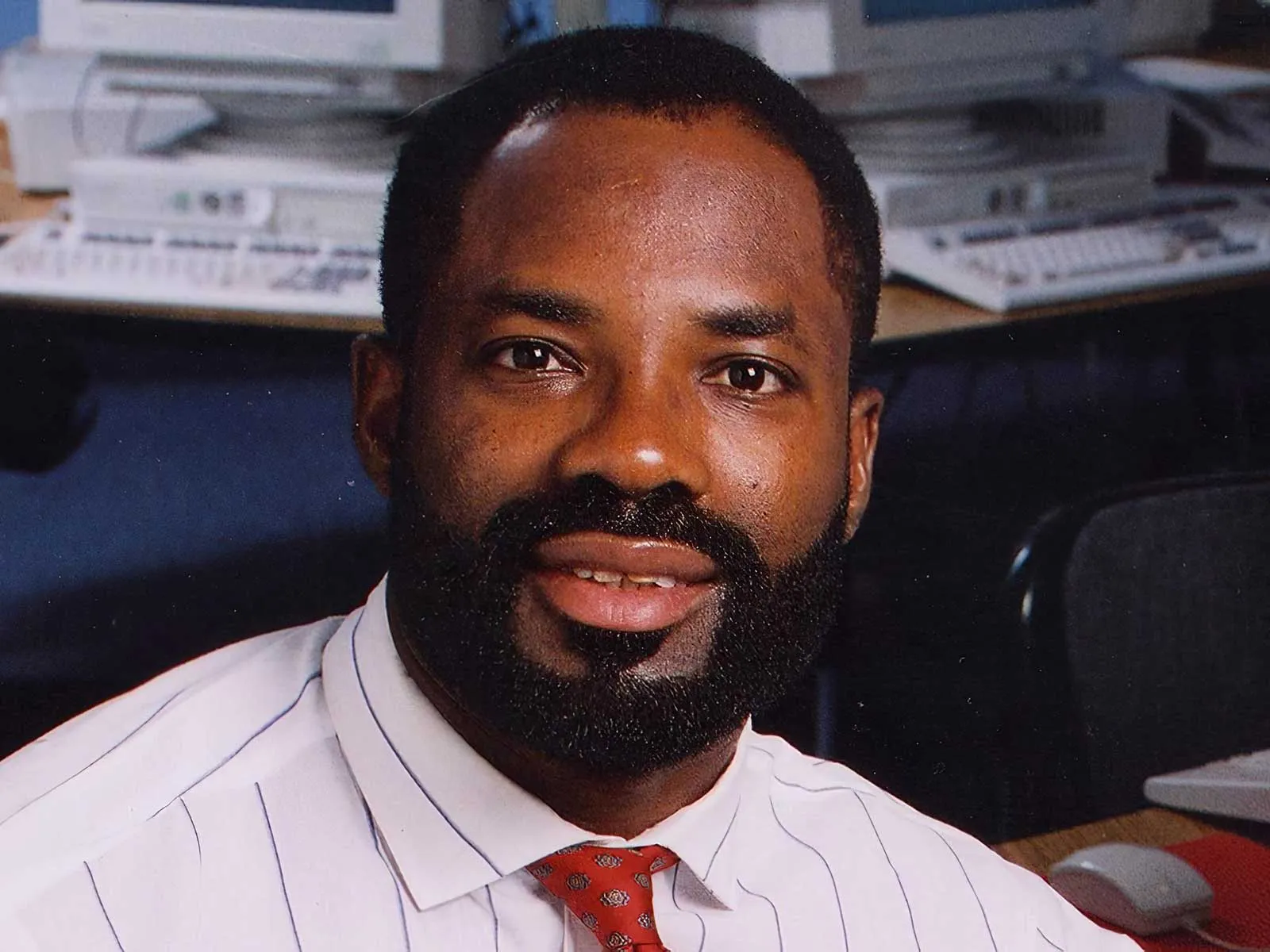
From overcoming the disruptions of the Nigerian Civil War to becoming a prominent figure in high-performance computing in the United States, Philip Emeagwali’s journey represents the determination, intellectual curiosity and scientific ambition that have helped place African talent on the global technology map.
In the history of modern computing, scientific breakthroughs have often emerged from the efforts of researchers determined to solve problems that conventional technology could not adequately address. Among the individuals associated with important developments in high-performance computing is Philip Emeagwali, a Nigerian-born computer scientist and mathematician whose work on parallel computing attracted international attention.
Emeagwali’s story is particularly significant because it connects scientific innovation with the experiences of an African intellectual who pursued his ambitions despite considerable personal and educational challenges. His journey from Nigeria to the United States, where he developed his scientific career, has inspired conversations about the capacity of Africans to participate in advanced scientific research and contribute to technological progress.
Although his name is sometimes associated with exaggerated claims about the invention of the internet, his most defensible contribution is in the field of parallel computing. His work demonstrated how large numbers of processors could be coordinated to perform complex mathematical calculations, an approach that remains important in modern high-performance computing.
His life is therefore worth examining not simply as the story of an individual scientist, but also as an example of the importance of mathematics, persistence, scientific education and African participation in global innovation.
Early Life: Growing Up in Nigeria Amid War and Hardship
Philip Emeagwali was born Chukwurah Emeagwali on August 23, 1954, in Akure, Ondo State, Nigeria, to James and Agatha Emeagwali. Although he was born in southwestern Nigeria, his family had connections to the southeastern part of the country.
From an early age, Emeagwali demonstrated an exceptional interest in mathematics and intellectual problem-solving. He developed a reputation for his mathematical abilities, showing an unusual enthusiasm for numbers and scientific ideas.
However, his childhood and educational development were interrupted by one of the most devastating events in Nigerian history: the Nigerian Civil War, also known as the Biafran War, which lasted from 1967 to 1970.
The conflict, which resulted from the attempted secession of Nigeria’s southeastern region as the Republic of Biafra, caused widespread destruction, displacement, hunger and loss of lives. Thousands of families were forced to abandon their homes, while many children lost access to formal education.
Emeagwali was among those whose childhood was significantly affected by the conflict. His education was interrupted, and in 1969, he was drafted into the Biafran army.
At a time when many children were expected to concentrate on schoolwork, he experienced the realities of war and the difficulties of survival. His exposure to these circumstances would become an important part of the story behind his determination to pursue education and build a career in science.
Following the end of the war in 1970, Emeagwali returned to the challenge of educating himself. Rather than allowing the disruption of his schooling to permanently derail his ambitions, he undertook independent studies and completed a high-school-equivalent education.
He also pursued correspondence studies through the University of London before receiving an opportunity that would change the direction of his life.
According to The HistoryMakers’ ScienceMakers educational biography, Emeagwali received a mathematics scholarship that enabled him to move to the United States in the early 1970s.
His departure from Nigeria marked the beginning of a new chapter, one that would eventually take him into the world of advanced mathematics, engineering and computer science.
Educational Journey: From Nigeria to American Universities
Upon arriving in the United States, Emeagwali continued developing his interest in mathematics and scientific research.
He enrolled at Oregon State University, where he pursued mathematics and graduated in 1977 with a Bachelor of Science degree.
His educational experience was important because it provided him with the mathematical foundation that would later become central to his work in computational science.
Mathematics is fundamental to computer science, particularly in areas involving algorithms, numerical analysis, mathematical modelling and the development of computational systems.
Emeagwali’s academic interests extended beyond conventional mathematics. He developed an interest in applying mathematical principles to practical engineering challenges, especially problems that required enormous computational resources.
His professional journey also included work as a civil engineer with the Wyoming Bureau of Land Reclamation and research work with the United States National Weather Service.
These experiences exposed him to scientific problems involving complex systems, environmental processes and mathematical calculations.
He subsequently pursued graduate studies, including work at George Washington University and the University of Maryland. He also enrolled in a doctoral programme in civil engineering at the University of Michigan in 1987.
His studies and research at Michigan placed him in an environment where he could explore the possibilities of high-performance computing and the application of advanced mathematical techniques to engineering problems.
It was during this period that he undertook the research that would earn him international recognition.
Discovering the Potential of Parallel Computing
One of the most important aspects of Philip Emeagwali’s scientific work was his contribution to the practical application of parallel computing.
To understand the significance of his achievement, it is important to understand what parallel computing means.
Traditional computing approaches often rely on a processor carrying out a sequence of operations. When a problem becomes extremely complicated, the processor may require substantial time to complete all the necessary calculations.
Parallel computing offers another approach.
Instead of assigning an entire computational task to a single processor, the problem is divided into smaller sections. Multiple processors then work on different sections simultaneously, exchanging information and coordinating their results.
When properly designed, this approach can significantly reduce the time required to solve complicated computational problems.
For example, imagine a construction project that requires one person to complete every task. The project may take months or years. However, if several qualified workers are assigned different responsibilities and coordinate their activities effectively, the work can be completed much faster.
Parallel computing applies a similar principle to computers.
However, making thousands of processors work together is not as simple as connecting them. Each processor must receive the correct instructions, process its assigned information and communicate efficiently with other processors.
Poor coordination can create delays and reduce the overall performance of the system.
This was one of the major challenges that researchers working on massively parallel computers faced during the 1980s.
Emeagwali became particularly interested in addressing this challenge. He explored how large numbers of processors could cooperate to solve difficult mathematical and engineering problems.
His work demonstrated the practical value of developing algorithms that could distribute calculations across numerous interconnected processors while managing the communication required between them.
This research became the foundation of his most recognised scientific achievement.
The 1989 Gordon Bell Prize: A Major Breakthrough in High-Performance Computing
Philip Emeagwali’s international recognition reached a significant milestone in 1989 when he won the prestigious Gordon Bell Prize in the price/performance category.
The Gordon Bell Prize recognises important achievements in applying high-performance computers to scientific and engineering challenges.
It is one of the most respected awards in the field of supercomputing.
Emeagwali received the award for his work on algorithms used to simulate the behaviour of petroleum reservoirs.
His research involved programming the Connection Machine CM-2, a massively parallel computer capable of using as many as 65,536 processors.
The computer had been developed by Thinking Machines Corporation and was designed to perform large numbers of calculations simultaneously.
Emeagwali’s achievement was not inventing the Connection Machine itself. Rather, his contribution involved developing and optimising computational methods that enabled the machine to tackle a challenging real-world engineering problem.
The central challenge was finding ways to make thousands of processors work together efficiently.
His research produced impressive computational results. The 1989 Gordon Bell Prize committee report documented performance of approximately 3.1 billion floating-point operations per second for his two-dimensional reservoir model and approximately 2.9 billion for the three-dimensional model.
These results were particularly significant because the calculations involved complex mathematical models and enormous quantities of data.
His achievement attracted attention because it demonstrated the potential of massively parallel computing for solving problems that were difficult to handle using conventional computing approaches.
The award also demonstrated that a researcher could make an important contribution to advanced computing by developing effective algorithms and finding innovative ways to use existing computer hardware.
Understanding His Oil Reservoir Simulation Research
One of the most interesting aspects of Emeagwali’s research was its practical application to the petroleum industry.
Oil reservoirs are underground geological formations containing petroleum, natural gas and other substances trapped within porous rocks.
Extracting oil from these formations is a complicated engineering process.
Petroleum engineers need to understand how oil, water and gas move through underground rock structures. They also need to determine where wells should be drilled, how quickly oil should be extracted and whether water or other substances should be injected into the reservoir to improve recovery.
Making these decisions without accurate mathematical models can be expensive and inefficient.
This is where computer simulation becomes important.
A reservoir simulation model uses mathematical equations to estimate the movement of fluids through underground geological formations.
However, developing accurate simulations is computationally demanding because engineers must account for several variables, including pressure, temperature, fluid movement, rock characteristics and the interaction between different substances.
Emeagwali approached this challenge by using parallel computing to distribute the enormous calculations across thousands of processors.
Instead of requiring one processor to handle the entire mathematical problem, his approach allowed different processors to work on separate portions of the simulation.
The Gordon Bell Prize committee report described two major models in his research.
One was a two-dimensional model involving approximately eight million grid points, while another was a more realistic three-dimensional model involving approximately one million grid points.
These models allowed researchers to investigate how fluids moved through underground formations.
The importance of this work extended beyond computer speed.
Improved reservoir simulations could help petroleum engineers make better decisions about oil extraction, reduce unnecessary drilling and improve the efficiency of oil recovery operations.
The research also demonstrated how high-performance computing could be applied to practical industrial problems rather than being limited to theoretical scientific exercises.
The Gordon Bell Prize therefore represented recognition of a genuine computational achievement with potential economic and engineering applications.
Why His Work Matters to the Development of Modern Computing
Emeagwali’s work attracted attention because it illustrated the potential of massively parallel computing at a time when the technology was still developing.
The importance of parallel computing has continued to grow as scientific and technological challenges have become more demanding.
Modern computers and supercomputers rely heavily on parallel processing to perform tasks that would otherwise require enormous amounts of time.
Applications include weather forecasting, climate modelling, scientific research, engineering simulations, artificial intelligence, medical research and the analysis of large datasets.
For example, climate scientists use powerful computing systems to simulate atmospheric conditions and estimate how environmental changes might affect different parts of the world.
Medical researchers use advanced computing to analyse biological processes, investigate diseases and support the development of treatments.
Artificial intelligence systems also depend heavily on parallel processing because training sophisticated models requires enormous numbers of mathematical operations.
Although these modern developments have involved the contributions of thousands of researchers, engineers and technology companies, they illustrate why the broader principles of parallel computing remain important.
Emeagwali’s research is part of the history of efforts to demonstrate how large computational problems could be divided into smaller tasks and processed simultaneously.
His work should therefore be understood as a contribution to the practical application of parallel computing rather than an isolated invention that created modern computer technology.
Philip Emeagwali and the Internet: Separating Facts from Exaggerated Claims
One aspect of Emeagwali’s public profile that requires careful explanation is his association with the invention and development of the internet.
Over the years, several publications and online accounts have described him as one of the fathers of the internet. Some accounts have gone further, suggesting that he invented the technology or architecture that made the internet possible.
However, such descriptions can exaggerate his documented contribution.
The internet did not emerge from one individual’s invention. It developed through decades of scientific research involving computer networking, packet switching, communication protocols and the connection of different computer networks.
According to the United States Defense Advanced Research Projects Agency (DARPA), the roots of the modern internet can be traced to research that began in the 1960s.
The ARPANET, an early computer network, transmitted its first computer-to-computer message between UCLA and the Stanford Research Institute on October 29, 1969.
Further developments involved researchers such as Vint Cerf and Robert Kahn, who played important roles in developing the Transmission Control Protocol and Internet Protocol, commonly known as TCP/IP.
By January 1983, the ARPANET had evolved into the internet through the interconnection of different networks.
These developments took place before Emeagwali received the Gordon Bell Prize in 1989.
It is therefore inaccurate to describe him as the inventor of the internet or to attribute the creation of its fundamental networking protocols to his parallel computing research.
It is equally important to distinguish between parallel computing and internet networking.
Parallel computing involves multiple processors working together to solve a computational problem. Internet networking involves connecting independent computer networks so that information can be exchanged across geographical distances.
Although both technologies involve interconnected systems, they serve different purposes.
Emeagwali’s research was focused on using multiple processors to perform complex scientific calculations, particularly oil reservoir simulations.
The fact that his work involved interconnected processors does not mean that he invented the internet.
Furthermore, the Connection Machine itself was developed by Thinking Machines Corporation, with computer scientist Danny Hillis playing a central role in its original design.
Recognising these distinctions does not diminish Emeagwali’s documented achievement. Instead, it provides a more accurate understanding of his contribution to computer science.
His Gordon Bell Prize-winning research remains an important part of his professional story without requiring exaggerated claims about internet invention.
Academic Controversy and the Importance of Historical Accuracy
A complete account of Emeagwali’s academic journey should also distinguish his scientific recognition from his educational qualifications.
He enrolled as a doctoral precandidate at the University of Michigan in 1987 and received a fellowship to support his studies.
Although he won the Gordon Bell Prize during his time at the university, he did not ultimately receive a PhD from the institution.
A 1999 Michigan Court of Appeals decision concerning his dispute with the University of Michigan Board of Regents documented that he failed his doctoral qualifying examinations in May and July 1991.
The university subsequently reviewed his dissertation and concluded that it did not meet the requirements for the doctorate.
Emeagwali challenged the university’s actions, alleging racial discrimination and breach of contract. However, the appellate court affirmed the dismissal of his claims.
This part of his history is important when presenting his qualifications accurately.
It does not erase his Gordon Bell Prize or the computational work for which he received recognition. Rather, it demonstrates why biographies of prominent scientists should distinguish between documented professional achievements, academic qualifications and claims that require additional evidence.
Recognition and Influence Beyond the Scientific Community
Despite the complexities surrounding some descriptions of his achievements, Philip Emeagwali became a recognisable figure in discussions about African contributions to science and technology.
His Gordon Bell Prize attracted attention from scientific communities and the wider public.
His work was also highlighted in educational materials designed to introduce young people to African American and diaspora scientists.
In 2000, former United States President Bill Clinton referred to Emeagwali as one of the great minds of the Information Age.
He was also featured in the BBC’s Digital Giants series in 2010, which explored individuals whose work and experiences were connected to the development of digital technology.
His story has continued to attract attention in Nigeria and other African countries, particularly among young people interested in mathematics, engineering and computer science.
For many Nigerians, his journey represents an example of someone who experienced the disruption of war and educational hardship but continued pursuing scientific knowledge until he achieved international recognition.
His success has also contributed to conversations about the representation of Africans and people of African descent in global scientific institutions.
For a continent that continues to work towards expanding its technological and industrial capacity, stories of African participation in advanced research are particularly important.
His Legacy: Inspiring African Participation in Science and Technology
Perhaps one of the most significant aspects of Philip Emeagwali’s story is its potential influence on the next generation of African scientists.
Africa has a large population of young people, many of whom possess the curiosity, creativity and intellectual ability required to participate in advanced scientific research.
However, talent alone is not enough.
The development of scientific innovation requires access to quality education, research facilities, modern computing infrastructure, scholarships, laboratories and institutions that encourage experimentation.
Emeagwali’s experience highlights the importance of educational opportunities and access to advanced scientific resources.
His movement from Nigeria to the United States gave him access to an environment where he could pursue advanced studies and work with sophisticated computing equipment.
His experience also raises important questions about the availability of similar opportunities within African countries.
If more African universities and research institutions had access to high-performance computing facilities, adequate research funding and international scientific partnerships, more African researchers could participate directly in solving global technological challenges.
Nigeria, in particular, has an opportunity to strengthen its position in mathematics, computer science, engineering and artificial intelligence.
Investing in science education from primary and secondary school levels, supporting university research programmes and encouraging young people to pursue careers in technology would help build the foundation for future achievements.
Emeagwali’s story offers an important lesson: scientific innovation is not restricted by geographical origin or nationality. With appropriate education, determination and access to research opportunities, talented individuals from Africa can participate in solving some of the world’s most complicated problems.
His experience should encourage young Nigerians to take mathematics and computer science seriously, explore scientific questions and develop the technical skills required in an increasingly digital world.
Conclusion
Philip Emeagwali’s journey from a childhood disrupted by the Nigerian Civil War to international recognition in high-performance computing is a remarkable story of determination and intellectual ambition.
His 1989 Gordon Bell Prize for price/performance recognised his work on parallel computing and the application of massively parallel processors to oil reservoir simulation.
Although his name has sometimes been associated with exaggerated claims about the invention of the internet, his documented contribution to computational science remains significant and deserves recognition on its own merits.
His experience demonstrates the importance of mathematical knowledge, scientific experimentation and the ability to apply theoretical concepts to real-world problems.
More importantly, his story provides an opportunity to celebrate African participation in global scientific innovation while encouraging a more accurate understanding of technological history.
For young Africans aspiring to become mathematicians, engineers, computer scientists and researchers, Emeagwali’s journey offers an important message: difficult beginnings do not have to determine the limits of one’s ambitions.
His contribution is best remembered not as the invention of the internet, but as an example of how mathematical thinking and innovative programming can help push the boundaries of high-performance computing.
His story remains a reminder that Africa has the intellectual potential to contribute meaningfully to the scientific and technological developments shaping the modern world.