

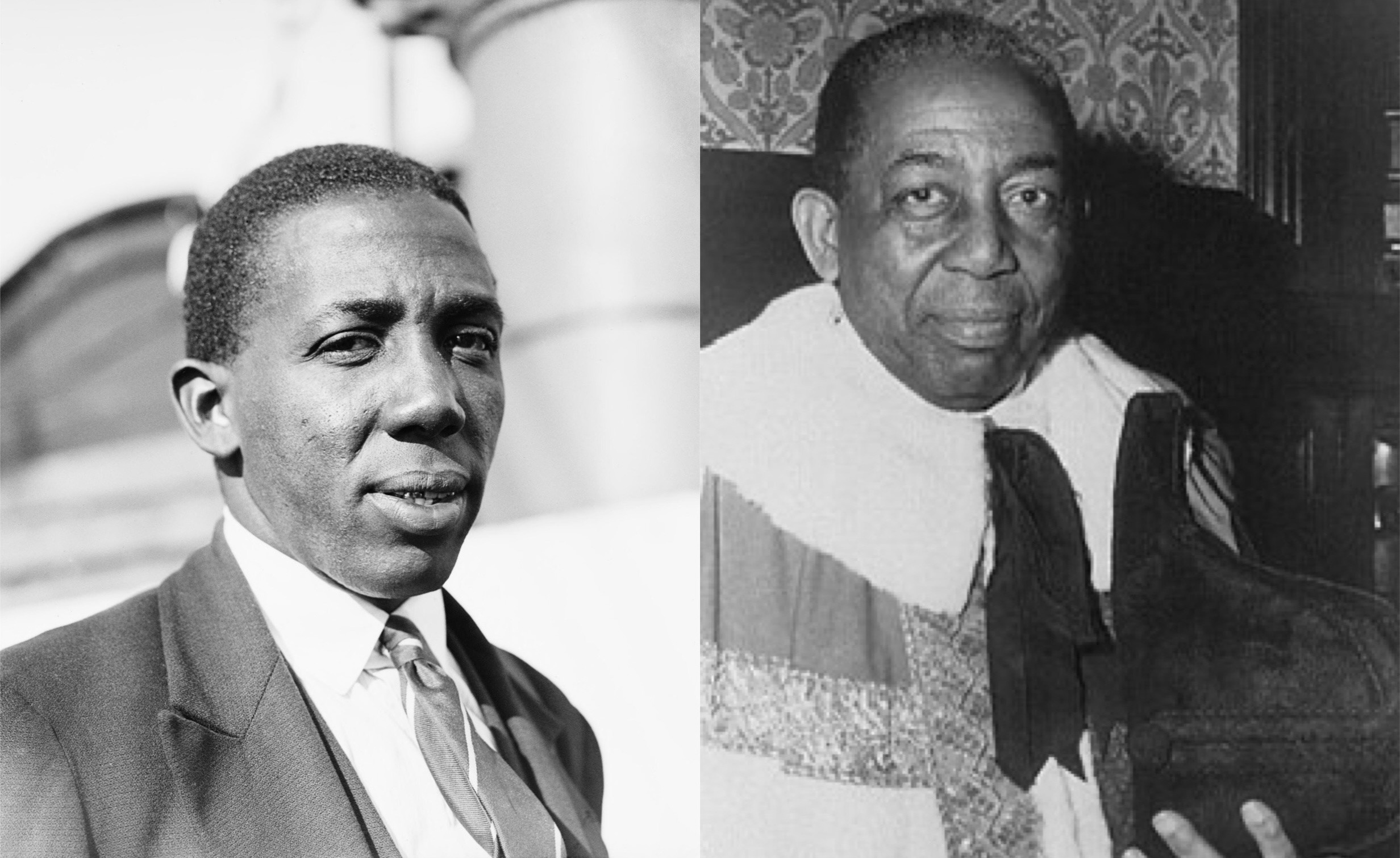
Long before the fight against racial discrimination became a major feature of civil rights movements across the world, a remarkable Trinidadian sportsman was already challenging racism through courage, determination and the power of the law.
His name was Learie Nicholas Constantine, a celebrated West Indian cricketer, lawyer, political activist and one of the most influential Black Caribbean figures of the 20th century.
Although millions remember him for his extraordinary performances on the cricket field, Constantine’s legacy extends far beyond sport. He was a man who refused to accept racial humiliation, whether in a hotel, on a cricket ground or within the wider British society of his time.
In 1943, during the Second World War, he challenged a London hotel that had treated him and his family differently because they were Black. Rather than quietly accepting the humiliation, he took the establishment to court and won.
His victory became an important moment in British legal history, demonstrating that even when specific laws against racial discrimination did not exist, existing legal principles could still be used to challenge racist treatment.
But the story of Learie Constantine is much bigger than one hotel dispute. It is the story of a gifted young man from Trinidad who became an international cricket superstar, confronted colonial racism, fought for equality, represented his country in public life and helped lay the foundations for a more inclusive Britain.
Early Life: Born in Trinidad Into a Family With a Cricketing Legacy
Learie Nicholas Constantine was born on September 21, 1901, in Petit Valley, Diego Martin, near Maraval, Trinidad, then a British colonial territory.
He came from a family with a strong connection to cricket. His father, Lebrun Samuel Constantine, was a respected cricketer who represented the West Indies on tours of England in 1900 and 1906. His father also worked as an overseer on a cocoa estate.
Learie’s family history was deeply connected to the African experience in the Caribbean. His mother and father were descendants of enslaved people, and his maternal grandfather, Ali Pascall, was of Yoruba origin from West Africa.
Growing up in a household where cricket was part of everyday life, Learie developed an early passion for the sport. He played with family members on their cocoa estate and quickly demonstrated exceptional natural ability.
He attended school in Trinidad, where he captained the St Ann’s School cricket team in 1916 and 1917. However, he left school at the age of 15, without the opportunity to pursue the kind of formal education that might have opened other professional doors.
Cricket would eventually become his passport to international recognition.
His journey was not simply about becoming a famous sportsman. Growing up in a colonial society divided by race, class and privilege, Constantine became increasingly conscious of the inequalities that affected Black people, including talented Black athletes.
He would later use his sporting success to challenge the very racial attitudes that shaped the society in which he grew up.
The Rise of a West Indian Cricket Superstar
Learie Constantine’s cricketing career began to attract serious attention in the early 1920s.
He was selected to represent Trinidad in 1921 and subsequently became part of the West Indies cricket team.
His international breakthrough came during the West Indies’ historic first Test tour of England in 1928.
One of the performances that announced him to English cricket supporters took place at Lord’s Cricket Ground in a match against Middlesex.
Constantine produced a remarkable all-round display, scoring 86 in the first innings, taking seven wickets for 57 runs and then smashing 103 runs in approximately one hour in the second innings.
His explosive batting, aggressive fast bowling and exceptional fielding made him one of the most entertaining cricketers of his generation.
He was not simply a player who accumulated runs and wickets. He could change the direction of a match within a short period.
The International Cricket Council (ICC) later described him as one of the finest fielders of his era, while recognising his ability to influence matches with both bat and ball.
Constantine made his Test debut against England on June 23, 1928, at Lord’s.
Between 1928 and 1939, he played 18 Test matches for the West Indies, scoring 635 runs and taking 58 wickets. Although his Test statistics were relatively modest by the standards of some celebrated players, his impact on the game was far greater than the numbers suggested.
He was particularly influential in two important West Indian victories over England.
In 1930, when the West Indies defeated England for the first time in Test cricket, Constantine took four wickets for 35 runs in one innings and five for 87 in another.
In 1935, he contributed 90 runs and five wickets in a match-winning performance that helped the West Indies level the series against England.
His fearless approach helped establish the West Indies as a team capable of challenging the traditional cricketing powers.
Constantine was also among the players who helped change how international audiences viewed Caribbean cricket. His performances demonstrated that West Indian players possessed the skill, intelligence and athleticism to compete at the highest level.
In 2021, the ICC formally inducted him into its Cricket Hall of Fame, recognising his extraordinary contribution to the sport.
His Historic Move to England and the Nelson Cricket Years
In 1929, Constantine accepted a professional contract with Nelson Cricket Club in Lancashire, England.
The move would transform his career and make him a household name in English league cricket.
He reportedly signed for £500 per season, in addition to expenses and performance-related bonuses. At the time, this was an extraordinary sum for a professional cricketer.
He played for Nelson for nine seasons, becoming one of the most celebrated players in the Lancashire League.
His performances were remarkable. During his time with the club, he scored 6,353 runs at an average of 37.65 and took 776 wickets at an average of 9.90.
Nelson won the league eight times during his ten-season association with the club.
Crowds reportedly turned out in their thousands to watch him play. His entertaining style, powerful hitting, fast bowling and spectacular fielding made him a major attraction.
His success also encouraged other West Indian cricketers to pursue professional opportunities in northern England.
However, life in England was not always welcoming.
Despite his popularity, Constantine experienced racial prejudice both within cricket and in wider society. There were individuals who admired his sporting abilities but were uncomfortable with the idea of a Black man enjoying the same social standing and professional opportunities as white people.
Racism also affected the structure of cricket itself. West Indian teams were frequently captained by white men, and racial segregation influenced social activities surrounding international matches.
Constantine later wrote about these experiences, exposing the contradictions of a sporting culture that celebrated Black talent while often refusing to recognise Black people as equals.
His friendship with Trinidadian writer, journalist and political thinker C. L. R. James also helped deepen his understanding of cricket’s wider social and political significance.
James recognised that Constantine’s performances represented something greater than individual sporting achievement: they challenged the assumptions of colonial superiority.
Together, their experiences helped shape an important conversation about cricket, race, class and Caribbean identity.
The 1943 Imperial Hotel Incident: When Racism Became a Courtroom Battle

One of the most defining moments of Learie Constantine’s life occurred in July 1943, during the Second World War.
By this time, he was no longer simply a professional cricketer. He was also working for Britain’s Ministry of Labour and National Service as a welfare officer.
His responsibility was to look after the welfare of West Indian and West African workers who had travelled to Britain to support the country’s wartime industrial effort.
Many of these men worked in factories, producing essential materials and equipment for the war.
Constantine understood the difficulties they faced, particularly the racial discrimination they encountered in accommodation, public spaces and social establishments.
During the war, Britain had welcomed American military personnel, including white servicemen from the United States. However, many of these servicemen came from a country where racial segregation was deeply embedded in public life.
Some attempted to impose those attitudes on British establishments, creating additional difficulties for Black British subjects and other Black people living in Britain.
It was against this background that Constantine experienced the hotel incident.
In July 1943, he travelled to London with his family and two friends for a charity cricket match at Lord’s.
He had arranged accommodation at the Imperial Hotel in Russell Square, London, and had a signed agreement for four days of accommodation.
According to the historical accounts, the hotel management initially agreed to accommodate him and his party. However, after their arrival, they were informed that they could stay for only one night.
The hotel reportedly feared that their presence would offend white American servicemen staying at the establishment.
In effect, Constantine and his party were being treated as unwelcome guests because they were Black.
The incident was particularly insulting because Constantine was a respected international sportsman and a British subject from Trinidad, which was then part of the British Empire.
He had contributed to British society through his sporting achievements and, by this time, was also helping the country through his wartime welfare work.
Yet none of those contributions protected him and his family from racial discrimination.
For many people, such treatment might have resulted in silent frustration or a decision to find alternative accommodation.
Constantine chose a different path.
He refused to accept the hotel’s decision and decided to challenge the management legally.
Taking the Imperial Hotel to Court
The legal challenge was significant because Britain did not yet have a comprehensive law specifically prohibiting racial discrimination in hotels and other public accommodation.
Rather than relying on a modern anti-discrimination statute that did not exist, Constantine’s legal case centred on breach of contract.
He argued that the hotel had agreed to provide accommodation for four days but had failed to honour that agreement.
The matter attracted considerable public attention and became an example of the racial colour bar operating in wartime Britain.
The controversy even reached the British Parliament.
On September 23, 1943, members of Parliament raised questions about the treatment of Constantine and other Black colonial subjects.
The Home Secretary, Herbert Morrison, acknowledged that hotels providing accommodation to travellers were subject to a common-law obligation not to exercise arbitrary discrimination or refuse a traveller when accommodation was available without a reasonable justification.
He also condemned racial discrimination against British subjects.
This parliamentary intervention was important because it demonstrated that the incident had developed into a national debate about the treatment of Black people in Britain.
The legal proceedings eventually went in Constantine’s favour.
In 1944, the High Court found in his favour and awarded him five guineas in nominal damages.
Although the financial award was small, the significance of the case was enormous.
Constantine had demonstrated that a hotel could not simply disregard its contractual obligations because of a guest’s race.
The judgment also exposed the inadequacy of the legal protections available to Black people in Britain at the time.
It was not a comprehensive victory against racism, but it was an important legal and moral achievement.
Most importantly, Constantine had refused to allow a racist establishment to dictate his dignity.
He Continued Fighting Racism After Winning the Case
What makes Constantine’s story even more remarkable is that the Imperial Hotel case did not end his involvement in the fight against racial discrimination.
If anything, it strengthened his determination to speak out.
In 1944, he experienced another incident of racial hostility at a London public house known as the Black Horse, near Oxford Street.
Two white American servicemen entered the establishment with their female companions and reportedly objected to sharing the premises with him.
Following their complaints, the publican made it clear that Constantine could leave if he did not like the situation.
One of the American servicemen then used a deeply offensive racial slur against him.
Constantine was outraged, particularly because he believed the British authorities were not doing enough to protect Black people from such treatment.
On May 8, 1944, he wrote a formal letter to the Ministry of Labour and National Service, expressing his concerns.
He warned that the government’s reluctance to confront racial discrimination was dangerous and could eventually push Black people towards taking matters into their own hands.
His letter revealed that racism was not simply an isolated problem affecting hotels. It was a broader social issue involving public houses, dance halls, accommodation providers and other establishments.
Constantine believed that Black people who had served Britain or contributed to its wartime economy deserved equal treatment.
His position was particularly powerful because he was not speaking as an outsider making demands of British society. He was a British subject insisting that his rights and dignity be respected.
Learie Constantine: The Writer Who Exposed Britain’s Colour Bar
Beyond cricket and the courtroom, Constantine was also a gifted writer who believed that education, public discussion and personal testimony were essential weapons against racism.
He published several books during his lifetime, using his experiences to examine cricket, colonialism, race relations and the challenges facing Black people.
Some of his notable publications include:
Cricket and I (1933): An account of his cricketing experiences and reflections on the game.
Cricket in the Sun (1947): A book reflecting on cricket and the West Indian experience.
Colour Bar (1954): His influential examination of racial prejudice and discrimination, particularly in British society.
Of these publications, Colour Bar became particularly important.
Published in 1954, the book challenged the widespread assumption that Britain was a tolerant society free from the racial problems associated with countries such as the United States and South Africa.
Constantine argued that discrimination was deeply embedded in British institutions and everyday social interactions.
He discussed the difficulties Black people encountered when looking for accommodation, employment and acceptance in British society.
His arguments were informed by personal experience. He had been a celebrated international cricketer, had contributed to Britain’s wartime efforts and had taken a hotel to court. Yet he continued to encounter racial hostility.
His writing helped bring these experiences to a wider audience.
The book also demonstrated that Constantine was not interested in simply celebrating his personal achievements. He wanted to use his influence to improve conditions for other Black people.
He Became a Barrister at the Age of 52
Another remarkable aspect of Constantine’s life was his determination to pursue education and a legal career despite already enjoying international fame.
After his cricketing career and wartime work, he studied law and qualified as a barrister in 1954, at approximately 52 years old.
This achievement was particularly significant because he had left school at just 15.
He had already established himself as an internationally respected sportsman, but he was determined to acquire the professional knowledge and qualifications necessary to contribute more directly to the struggle for equality.
His legal training also gave him another way to challenge injustice.
Constantine understood that fighting discrimination required more than public speeches and expressions of outrage. It required knowledge of the law, political participation and the determination to challenge unfair institutions.
His life demonstrated that education and personal development need not end because someone has already achieved success in another profession.
Returning to Trinidad: From International Cricketer to Politician
In 1954, Constantine returned to Trinidad, where he became increasingly involved in political activities.
He joined the People’s National Movement (PNM), the political organisation led by Eric Williams, who would later become Trinidad and Tobago’s first Prime Minister.
Constantine eventually became a member of the country’s political leadership and served as Minister of Works and Transport.
His involvement in politics reflected his belief that Caribbean people needed greater control over their political and economic future.
Trinidad was still under British colonial rule, and the movement towards independence was gaining momentum.
Constantine was among the influential personalities who believed that the Caribbean needed leaders who understood the experiences of ordinary people and could represent their interests on the international stage.
His political career was another demonstration of his versatility.
He had been a sportsman, writer, welfare officer and barrister. Now he was contributing to the development of his country through public administration.
In 1962, Trinidad and Tobago achieved independence from Britain, marking a historic turning point in its national history.
Trinidad and Tobago’s First High Commissioner in Britain
Following Trinidad and Tobago’s independence in 1962, Constantine was appointed the country’s first High Commissioner to the United Kingdom.
The appointment was particularly meaningful because Britain had once been the colonial power governing his homeland.
Now, the same country was receiving him as an official diplomatic representative of an independent Caribbean nation.
It was a remarkable journey from being a young Trinidadian cricketer confronting racial prejudice in England to representing his sovereign country at the highest diplomatic level.
As High Commissioner, Constantine worked to strengthen relations between Trinidad and Tobago and Britain.
However, he remained outspoken on issues concerning racial equality.
One of the most important controversies during his diplomatic career involved the Bristol Bus Boycott of 1963.
His Support for the Bristol Bus Boycott

In 1963, Bristol became the centre of an important struggle against racial discrimination in employment.
The Bristol Omnibus Company was accused of refusing to employ Black and Asian people as bus crews because of their race.
A group of young activists, including Roy Hackett, Paul Stephenson, Guy Bailey and others, organised a campaign against the discriminatory employment policy.
Their protest became known as the Bristol Bus Boycott.
The campaign involved members of the local Caribbean community refusing to use the buses until the company changed its discriminatory employment practices.
Constantine supported the struggle and attracted attention to the issue.
His involvement was particularly significant because he was serving as Trinidad and Tobago’s High Commissioner in London.
He understood that racial discrimination affecting Caribbean migrants in Britain was not merely a domestic British issue. It also affected the dignity and interests of Caribbean nations whose citizens were living and working in the United Kingdom.
The boycott lasted approximately four months and eventually contributed to the company’s decision to end its discriminatory employment policy.
The campaign became a landmark in the history of Britain’s civil rights movement.
Constantine’s support, however, created tensions with Trinidad and Tobago’s Prime Minister, Eric Williams, who was concerned about the diplomatic implications of his involvement.
Their disagreement contributed to the difficulties surrounding Constantine’s position, and he resigned as High Commissioner in 1964.
Nevertheless, his involvement demonstrated that he remained committed to challenging racial discrimination even when doing so carried professional and political consequences.
His Contribution to Britain’s Race Relations Movement
Constantine’s work continued to influence discussions about racial equality in Britain.
In 1965, Britain passed its first Race Relations Act, making certain forms of racial discrimination unlawful in specified public settings.
The legislation prohibited discrimination on grounds of colour, race, ethnic or national origins in areas including public places and services.
However, the law had significant limitations, particularly concerning employment and housing.
Constantine became a member of the Race Relations Board, an organisation established to help implement the legislation and consider complaints of racial discrimination.
He was therefore involved not only in campaigning for equality but also in the institutions responsible for addressing discrimination.
His contribution formed part of a much wider movement involving Caribbean migrants, African activists, Asian communities and British campaigners who were demanding equal treatment.
It is important to recognise that Constantine was not the only person fighting racism in Britain. Figures such as Dr Harold Moody, Claudia Jones and other Black British activists had also made important contributions.
However, Constantine’s unusual combination of sporting fame, legal knowledge, diplomatic experience and political influence gave him a distinctive position in that struggle.
He could speak to sports audiences, politicians, journalists and ordinary citizens with the authority of someone who had personally experienced the discrimination he was challenging.
First Black Man of African Descent to Become a Member of Britain’s House of Lords

One of the greatest honours of Constantine’s life came in 1969.
He was awarded a life peerage and became Baron Constantine of Maraval and Nelson, making him the first person of African descent to sit in Britain’s House of Lords.
The appointment was historic.
For a man whose life had been shaped by the struggle against racial discrimination, becoming a member of one of Britain’s most prestigious political institutions represented an extraordinary achievement.
He had once been denied accommodation at a London hotel because he was Black.
Now he was a member of the British legislature, with the opportunity to contribute to national discussions on public policy and society.
His appointment also reflected the growing recognition of the contributions made by Black people to British public life.
In March 1971, he delivered his maiden speech in the House of Lords.
He spoke about the experiences and position of West Indians in Britain, referring to the idea of the West Indian as a Black Englishman.
Unfortunately, his time in the House of Lords was short. He died just four months after delivering that speech.
Other Historic Achievements and Recognition
Constantine’s achievements extended beyond cricket, politics and the fight against racism.
Throughout his lifetime, he received several honours and held important public positions.
Among his notable achievements were:
1. Member of the Order of the British Empire (MBE), 1946: He received the honour in recognition of his wartime welfare work.
2. Barrister, 1954: He qualified as a barrister after years of legal studies.
3. Knight Bachelor, 1962: He was knighted in recognition of his public service and contributions.
4. High Commissioner, 1962: He became Trinidad and Tobago’s first High Commissioner to the United Kingdom.
5. Rector of the University of St Andrews, 1967: He became rector of the Scottish university, another significant recognition of his public standing.
6. BBC Governor: He served on the BBC’s Board of Governors, contributing to the governance of one of Britain’s most important broadcasting institutions.
7. Member of the Race Relations Board: He participated in Britain’s efforts to address racial discrimination.
8. Life peer, 1969: He became Baron Constantine, making history as the first person of African descent to sit in the House of Lords.
His recognition by sporting institutions continued after his death. In 2021, he was inducted into the ICC Cricket Hall of Fame.
English Heritage also commemorated him with a blue plaque at 101 Lexham Gardens, London, where he lived between 1949 and 1954 and wrote Colour Bar.
His Death and State Funeral in Trinidad
Learie Constantine died on July 1, 1971, in London, aged 69.
He had been experiencing health difficulties, including chest problems, and had indicated that he wanted to return to Trinidad rather than spend another winter in Britain.
Sadly, he died before he could make that return permanently.
His death was a major loss to Trinidad and Tobago, the Caribbean and the international sporting community.
His body was returned to Trinidad, where he received a state funeral on July 8, 1971.
A memorial service was also held at Westminster Abbey in London, reflecting the enormous respect he commanded in Britain.
The Trinidad and Tobago government subsequently awarded him the country’s highest national honour at the time, the Trinity Cross, posthumously.
His funeral and the public tributes that followed demonstrated that his influence had extended far beyond the cricket field.
The Legacy of Learie Constantine: A Man Who Refused to Be Defined by Racism
The story of Learie Constantine deserves to be remembered as one of the most extraordinary examples of courage, ambition and determination in Caribbean and British history.
He lived at a time when racial prejudice was deeply entrenched in many institutions.
Black people could be celebrated for their sporting achievements and economic contributions while simultaneously being denied equal treatment in everyday life.
Constantine experienced this contradiction personally.
He could entertain thousands of spectators with his extraordinary cricketing abilities, yet a hotel could decide that his presence was unwelcome because of his skin colour.
He could represent the West Indies internationally, yet encounter people who believed that his race made him socially inferior.
He could contribute to Britain’s wartime economy, yet still face discrimination in public establishments.
But he refused to allow those experiences to define his worth.
Instead, he used his sporting achievements to challenge racial stereotypes, his legal knowledge to fight injustice, his writing to expose discrimination and his political influence to advocate for equality.
The Imperial Hotel case remains especially important because it demonstrated how an individual could use the law to challenge discrimination even before comprehensive anti-racism legislation existed.
It also helped bring the question of racial discrimination in hotels and public establishments into British parliamentary debate.
The eventual introduction of the Race Relations Act in 1965 represented a further step towards legal protection, although much more work remained to be done.
Today, Constantine’s story forms an important part of the history of Black achievement, Caribbean identity, British cricket and the struggle for racial equality.
His life also challenges the idea that sporting greatness should be measured only through trophies, statistics and records.
His cricketing achievements made him famous, but his courage, intellect, public service and determination to challenge injustice made him extraordinary.
Learie Constantine was more than a cricket legend. He was a pioneer, a freedom fighter in his own way, a diplomat, a lawyer, a writer and a man who understood that personal success means even more when it is used to open doors for others.
His message remains relevant today: dignity should never be negotiable, equality should never depend on someone’s skin colour, and injustice should never be accepted simply because it has become normal in society.
Historical significance: Why Learie Constantine’s story still matters
For cricket: He helped establish the international reputation of West Indian cricket and inspired generations of Caribbean players.
For Black history: He challenged racial prejudice at a time when discrimination was widely accepted in many parts of British society.
For British law: His successful hotel lawsuit exposed the limitations of existing legal protections and helped bring racial discrimination into parliamentary debate.
For Caribbean independence: He contributed to Trinidad and Tobago’s political development and represented the newly independent nation internationally.
For civil rights: His involvement in the Bristol Bus Boycott demonstrated his willingness to challenge discrimination beyond his personal experiences.
For future generations: He showed that sporting talent, education, political involvement and courage could combine to produce lasting social change.
A final lesson from his life: Learie Constantine did not wait for society to become fair before demanding fair treatment. He challenged the system as it existed, used the opportunities available to him and helped make it possible for others to demand more.
His name deserves to stand alongside the great pioneers who used their influence to challenge racial injustice around the world.