

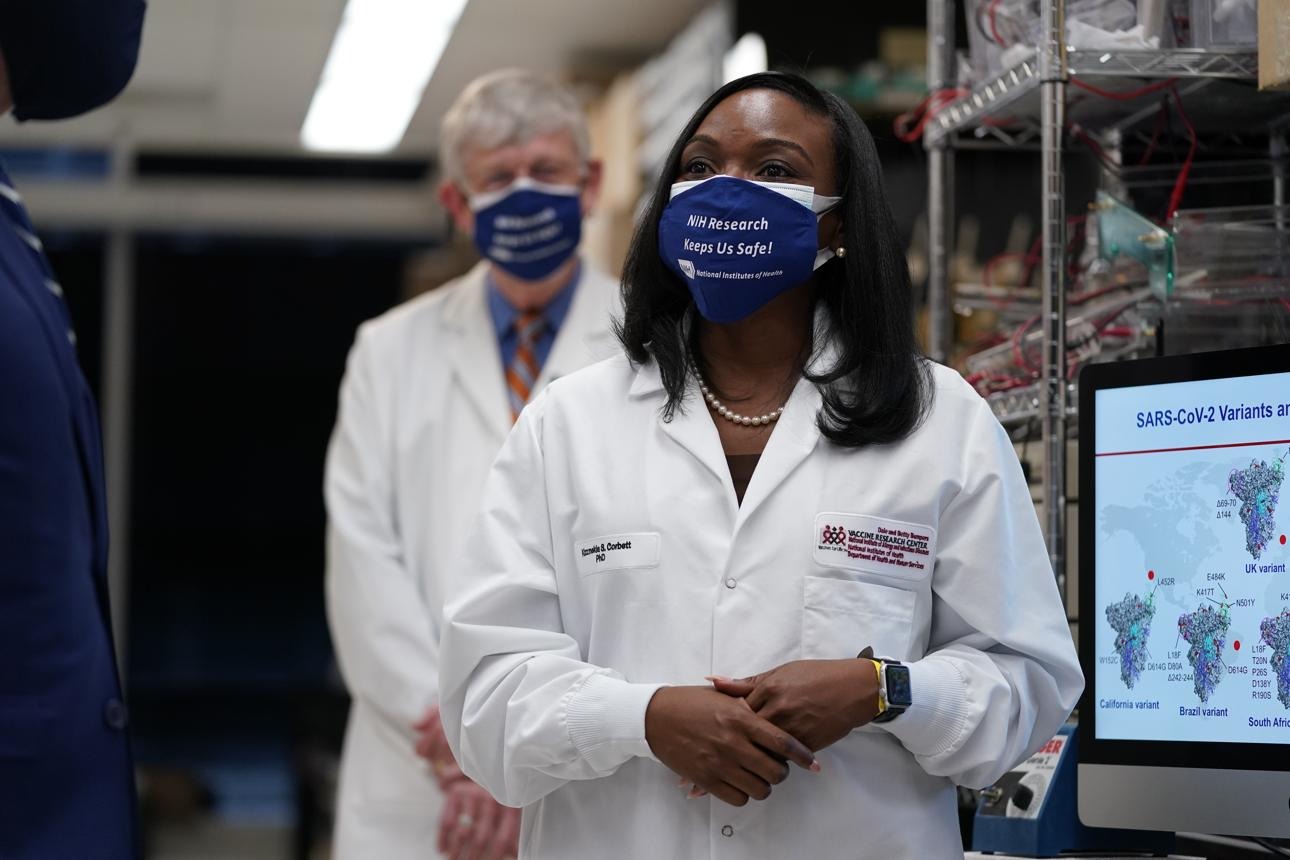
Throughout history, scientists have made remarkable contributions to medicine, technology and human development. However, some of their achievements have received less recognition than they deserve. One scientist whose work has attracted international attention is Dr Kizzmekia Shanta Corbett, an American viral immunologist whose research played an important role in the development of the Moderna COVID-19 vaccine.
Known for her contributions to coronavirus research, vaccine development and infectious disease prevention, Corbett became one of the prominent scientific figures during the COVID-19 pandemic. Her work helped demonstrate how years of dedicated scientific research could be translated into a vaccine during a global health emergency.
Beyond her scientific achievements, Corbett has become an important example of Black excellence, women’s leadership and the growing influence of Black researchers in global medical science.
Her story is not simply about developing a vaccine. It is about years of education, scientific curiosity, determination and a commitment to protecting human lives through research.
1. Early Life and Educational Background

Dr Kizzmekia Corbett was born on January 26, 1986, in Hurdle Mills, North Carolina, United States. From an early age, she demonstrated an interest in science and developed ambitions to pursue a career in scientific research.
Her educational journey began with an undergraduate degree in biological sciences, alongside a secondary major in sociology, from the University of Maryland, Baltimore County (UMBC), which she completed in 2008.
During her undergraduate years, she benefited from academic opportunities through the Meyerhoff Scholars Program and the National Institutes of Health undergraduate scholarship programme. These experiences helped prepare her for a career in advanced scientific research.
She subsequently attended the University of North Carolina at Chapel Hill, where she earned a PhD in microbiology and immunology in 2014.
Her doctoral research focused on immune responses to dengue virus, particularly how human antibodies respond to infection and how genetic factors influence disease severity.
This early research experience became an important foundation for her later work on emerging infectious diseases, including coronaviruses.
Her academic journey demonstrates the importance of quality education, research opportunities and mentorship in developing the next generation of scientists.
2. Her Career at the National Institutes of Health
After completing her doctorate, Corbett joined the National Institutes of Health (NIH), specifically the National Institute of Allergy and Infectious Diseases (NIAID), as a research fellow at its Vaccine Research Center.
The Vaccine Research Center is an important scientific institution dedicated to developing vaccines and treatments for infectious diseases.
At the NIH, Corbett became involved in research on several viruses, including:
Coronaviruses, including those responsible for SARS and MERS.
Dengue virus, a mosquito-borne infectious disease.
Respiratory syncytial virus (RSV), which can cause serious respiratory infections.
Influenza viruses, responsible for seasonal flu and occasional pandemics.
Her research focused on understanding how viruses interact with the human immune system and how that knowledge could be used to develop effective vaccines.
She eventually became the scientific lead of the Coronavirus Vaccines and Immunopathogenesis Team at the Vaccine Research Center.
This position placed her at the centre of important research efforts aimed at preparing for future coronavirus outbreaks.
One of the most significant advantages of her work was that she and her colleagues had already spent years studying related coronaviruses before COVID-19 emerged. Their earlier research helped provide the scientific foundation for a rapid response when the new virus appeared.
3. Her Groundbreaking Contribution to the Moderna COVID-19 Vaccine

Perhaps the most widely recognised achievement of Dr Kizzmekia Corbett is her contribution to the development of the Moderna COVID-19 vaccine, officially known as mRNA-1273.
When COVID-19 began spreading internationally in late 2019 and early 2020, scientists faced an urgent challenge: developing a vaccine that could help protect people against the new coronavirus.
Corbett and her colleagues at the NIH were among the researchers who responded to this challenge.
Their previous studies on coronavirus spike proteins proved particularly valuable.
Understanding the coronavirus spike protein
The coronavirus responsible for COVID-19, SARS-CoV-2, uses spike proteins on its surface to attach to and enter human cells.
These spike proteins became a major target for vaccine research because they provide the immune system with an identifiable feature of the virus.
Corbett’s research team worked on designing a stabilised version of the spike protein that could help the immune system recognise the virus and produce a protective response.
How the Moderna vaccine was developed
The NIH team collaborated with biotechnology company Moderna to translate the vaccine design into an mRNA vaccine.
Messenger RNA, commonly known as mRNA, carries genetic instructions. In this vaccine, those instructions teach the body’s cells to temporarily produce a harmless version of the coronavirus spike protein.
The immune system then recognises that protein and develops an immune response, including antibodies and other immune defences.
If the vaccinated person subsequently encounters the virus, the immune system can respond more effectively.
An important achievement was the speed with which the research moved from laboratory design to clinical testing.
According to Harvard, the vaccine concept designed by Corbett’s NIH team was transferred to Moderna for clinical development, with the Phase 1 clinical trial beginning just 66 days after the viral genetic sequence was released.
The Moderna vaccine subsequently demonstrated 94.1% efficacy against symptomatic COVID-19 in its original Phase 3 trial, under the conditions studied.
On December 18, 2020, the United States Food and Drug Administration authorised the vaccine for emergency use.
This achievement represented an important milestone in the global response to the COVID-19 pandemic.
It is important to recognise that the Moderna vaccine was not the work of one individual. It resulted from collaboration among scientists at the NIH, Moderna researchers, clinical investigators and many other contributors. Corbett was one of the key scientific figures whose research helped make the vaccine possible.

4. Her Research and Contributions Beyond COVID-19
Although the Moderna vaccine brought Corbett international recognition, her scientific contributions extend beyond COVID-19.
She has spent more than 15 years studying viral infections and developing scientific approaches that could support future vaccines and treatments.
Some of her important research areas include:
A. Coronavirus vaccine research
Before COVID-19, Corbett was already studying coronaviruses, including the viruses responsible for SARS and MERS.
This research contributed to the scientific knowledge that enabled researchers to respond quickly to SARS-CoV-2.
B. Universal coronavirus vaccines
Corbett’s research and patent portfolio include vaccine concepts intended to provide broader protection against different coronaviruses.
The long-term goal of this research area is to develop vaccines that could protect against multiple related viruses rather than targeting only one strain.
C. Influenza vaccine development
Influenza continues to pose a global public health challenge because the viruses responsible for seasonal flu can change over time.
Corbett has also worked on universal influenza vaccine concepts, which aim to provide broader and longer-lasting protection against different influenza strains.
D. Therapeutic antibody development
Antibodies are proteins produced by the immune system to recognise specific targets, including viruses.
Corbett’s research portfolio also includes novel therapeutic antibody concepts. Such research could contribute to the development of treatments that help the body fight infectious diseases.
These research interests show that her scientific ambitions go beyond responding to one pandemic. She is interested in improving the world’s ability to prepare for and respond to future infectious disease threats.
5. Her Work at Harvard University

In May 2021, Harvard T.H. Chan School of Public Health announced that Corbett would join its faculty to continue her research into vaccine development and infectious diseases.
She officially joined the institution on June 14, 2021.
At Harvard, she became an assistant professor in the Department of Immunology and Infectious Diseases and also received an appointment at the Harvard Radcliffe Institute.
Her current academic title is Melvin J. and Geraldine L. Glimcher Associate Professor of Immunology and Infectious Diseases at Harvard T.H. Chan School of Public Health, with a Radcliffe assistant professorship.
Her research continues to focus on viral immunology, vaccine development, antibody therapies and pandemic preparedness.
Through her laboratory, she contributes to the scientific community by investigating how the immune system responds to emerging and re-emerging viruses.
Her position at Harvard also gives her opportunities to mentor young researchers and encourage students interested in careers in medicine, biotechnology and scientific research.
6. Promoting Black Representation in Science
One of the most significant aspects of Corbett’s public influence is her visibility as a Black woman working at the highest levels of scientific research.
For many years, Black scientists and women in STEM fields have faced barriers involving representation, access to opportunities and professional recognition.
Corbett’s achievements have helped challenge the perception that advanced scientific research is limited to a particular race, gender or background.
Her public recognition during the COVID-19 pandemic also provided encouragement to young Black girls and other underrepresented groups who aspire to become scientists.
Her work demonstrates that Black women are not simply participants in global scientific advancement; they are also researchers, innovators and leaders contributing to solutions to some of humanity’s biggest challenges.
She has written about the importance of mentorship, visibility and representation in scientific careers, highlighting the responsibility successful researchers can have in encouraging the next generation.
This message is particularly important in countries where young people may have limited access to scientific resources, research institutions and professional mentorship.
7. Her Commitment to STEM Education and Community Engagement

Beyond laboratory research, Corbett has used her public platform to promote science education and increase awareness about vaccines.
During the COVID-19 pandemic, vaccine misinformation and hesitancy became major public health challenges.
Some communities, particularly historically underserved populations, expressed concerns about vaccine safety, medical institutions and the speed of vaccine development.
Corbett recognised the importance of addressing these concerns through education, transparency and public engagement.
She participated in conversations with community organisations, churches and other groups to explain how vaccines work and why vaccination matters.
Her approach helped encourage people to ask questions, understand scientific evidence and make informed health decisions.
She has also supported STEM education and mentorship, helping to inspire young people who want to pursue careers in science, technology, engineering and mathematics.
Her efforts show that scientific advancement is not only about discovering new things in laboratories. It is also about making scientific knowledge understandable and accessible to the people who need it.
8. Awards and International Recognition
Corbett’s contributions have earned her several awards and honours from scientific organisations, academic institutions and public bodies.
Some notable recognitions include:
Golden Goose Award (2020): Recognition for scientific research that has produced significant benefits for society.
NIAID Merit Award (2020): Recognition connected to her contributions to COVID-19 vaccine research.
Theodore Roosevelt Government Leadership Award (2020): Recognition of her public-sector scientific leadership.
Rosa Parks Hidden Figure Award (2021): Recognition highlighting her achievements and representation.
Johns Hopkins Bloomberg School of Public Health Dean’s Medal (2021): Recognition of her contributions to public health.
Benjamin Franklin NextGen Award (2021): Recognition of her scientific achievements and influence.
Clinton Global Citizen Award (2021): Recognition of her contributions to global challenges.
These honours reflect the scientific and social significance of her work, particularly her contributions to vaccine development and public health.
9. Her Scientific Publications and Research Legacy
Corbett has contributed to scientific literature through research publications that have helped advance understanding of viruses, vaccines and immune responses.
One of her most important publications is the 2020 research paper titled:
SARS-CoV-2 mRNA Vaccine Design Enabled by Prototype Pathogen Preparedness.
Published in the scientific journal Nature, the research explains how previous studies of related coronaviruses helped scientists develop an mRNA vaccine against SARS-CoV-2.
The publication is particularly significant because it demonstrates the value of investing in scientific research before a public health emergency occurs.
Rather than beginning from scratch when COVID-19 emerged, researchers were able to build on years of existing knowledge about coronavirus structures and immune responses.
The paper also highlights the collaborative nature of vaccine development, involving researchers from the NIH, Moderna and other scientific institutions.
This research has become an important reference in the history of modern vaccine development.
10. Lessons the World Can Learn from Kizzmekia Corbett
Dr Kizzmekia Corbett’s journey offers several important lessons for young people, researchers, governments and institutions around the world.
1. Education can transform lives.
Her journey from a young student in North Carolina to an internationally recognised scientist demonstrates the importance of education and academic opportunities.
2. Research investment is essential.
The rapid development of the Moderna vaccine was possible partly because researchers had spent years studying related coronaviruses before the pandemic.
3. Collaboration produces scientific breakthroughs.
Her work demonstrates that major scientific achievements often require cooperation between universities, research institutions, pharmaceutical companies and governments.
4. Representation matters.
Her visibility as a Black woman in medical research has encouraged more young people, particularly girls from underrepresented communities, to consider careers in science.
5. Science should serve humanity.
Her commitment to vaccine awareness and community education demonstrates that scientific knowledge becomes even more valuable when it reaches ordinary people.
Conclusion
Dr Kizzmekia Corbett has established herself as an important figure in modern medical research through her contributions to coronavirus vaccine development, viral immunology and public health.
Her involvement in the scientific work behind the Moderna COVID-19 vaccine helped demonstrate how years of research, innovation and international collaboration could produce solutions during a global health crisis.
However, her achievements extend beyond the COVID-19 pandemic. Her ongoing research into coronavirus vaccines, influenza, therapeutic antibodies and emerging infectious diseases continues to contribute to scientific efforts aimed at protecting future generations.
For Black communities, young women and aspiring scientists around the world, her story represents an important reminder that talent and innovation can emerge from any background.
Kizzmekia Corbett’s legacy is therefore not only about the vaccine that helped fight a global pandemic. It is also about opening doors, inspiring future researchers and demonstrating the importance of investing in science for the benefit of humanity.
Her journey deserves recognition as part of the wider story of Black excellence and the contributions of women to global scientific advancement.
Editorial note: Harvard’s current faculty profile identifies Corbett as an Assistant Professor, not an Associate Professor. Her achievements should also be described as contributions to a collaborative vaccine-development effort rather than claiming she single-handedly invented the Moderna vaccine.