

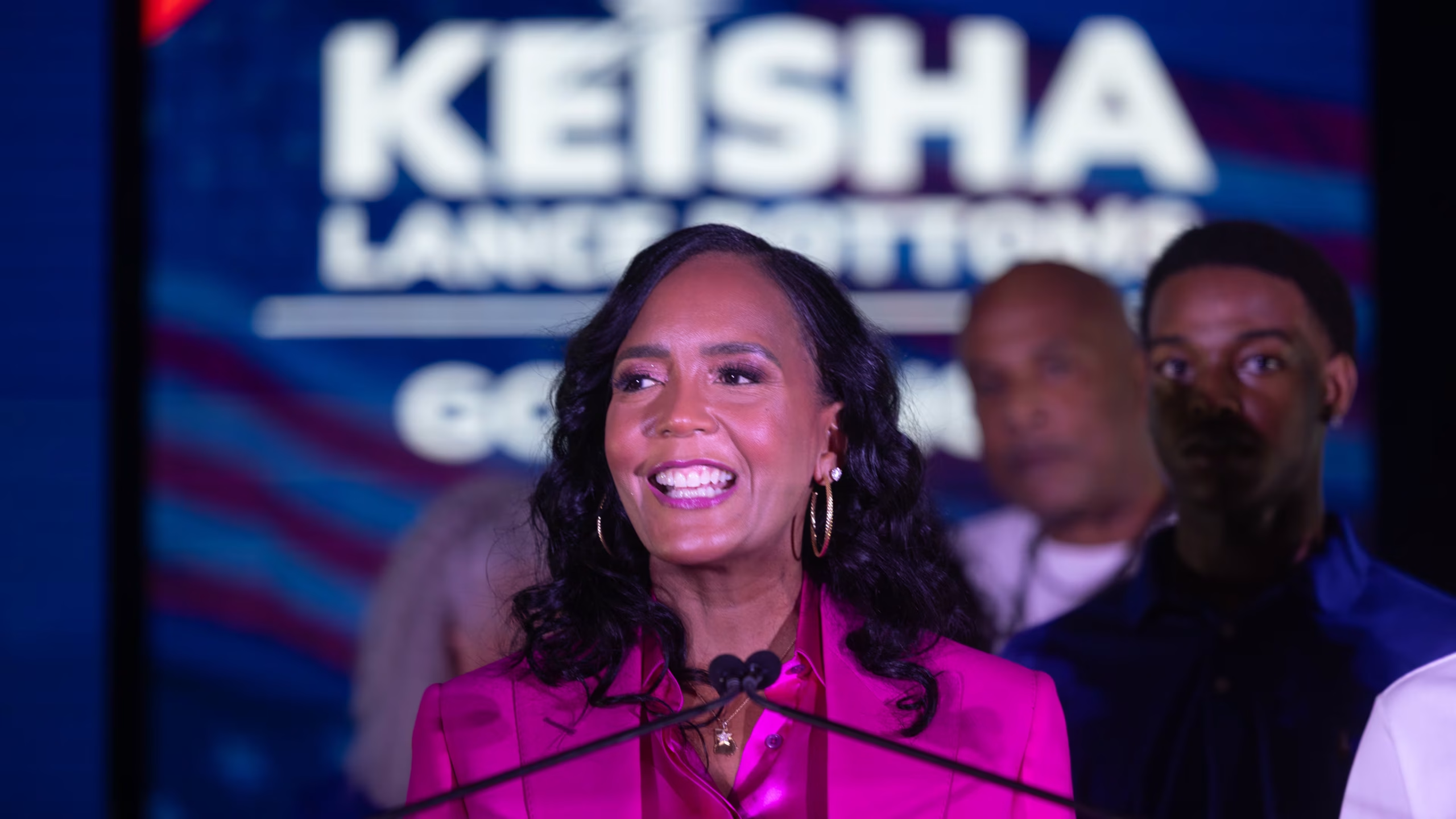
Democrat Keisha Lance Bottoms has made American political history after winning Georgia’s gubernatorial election, becoming the first Black woman ever elected governor of a US state. Her victory marks a significant milestone for women’s political representation and signals a major political shift in Georgia, a state that has been under Republican gubernatorial leadership for more than two decades.
Democratic candidate Keisha Lance Bottoms has secured a historic victory in Georgia’s gubernatorial election, defeating Republican businessman Rick Jackson to become the first Black woman elected governor in the history of the United States.
Bottoms’ victory in the November 3, 2026, election represents a landmark achievement in American politics, particularly for Black women who have historically faced significant barriers to attaining the highest levels of political leadership.
The former mayor of Atlanta emerged victorious after a closely watched contest against Jackson, a wealthy healthcare executive who invested more than $200 million of his personal fortune in his campaign.
According to reported election results, Bottoms secured approximately 54.3 per cent of the votes, while Jackson received 45.7 per cent. She won by a substantial margin of approximately 360,000 votes, demonstrating strong support among Georgia voters.
The victory also represents a major political breakthrough for the Democratic Party, ending a prolonged period of Republican control of Georgia’s governor’s office and positioning the state for a new chapter in its political history.
Speaking after her victory, Bottoms delivered a message of unity, promising to represent every resident of Georgia regardless of political affiliation.
“No matter who you voted for tonight, I will be a governor for all of Georgia,” she said.
She further declared that voters had delivered a clear message about the kind of leadership they wanted, adding that Georgia needed someone prepared to put the interests of its people first and challenge the political uncertainty coming from Washington, DC.
Her remarks reflected an attempt to reach beyond traditional party divisions and establish herself as a leader capable of bringing together communities with different political beliefs.
A Historic Breakthrough for Black Women in American Politics
Bottoms’ election is much more than a victory for the Democratic Party. It represents a groundbreaking moment for Black women in the United States, particularly those who have spent decades advocating for greater representation in political leadership.
For generations, Black women have played important roles in American politics, civil rights movements, community development and public administration. However, despite their contributions, their representation in the highest executive offices has remained limited.
The position of governor is among the most influential political offices in the United States. Governors oversee state administrations, influence economic development, shape education policies, manage public resources and work with state legislatures to implement laws.
By becoming the first Black woman elected governor of a US state, Bottoms has broken a significant political barrier and created a new historical reference point for women and minority communities across the country.
Her achievement is particularly significant because Georgia is located in the American South, a region with a complicated history of racial discrimination, segregation and political exclusion.
The state was once at the centre of the American civil rights movement, and Atlanta, where Bottoms previously served as mayor, remains one of the most important centres of Black political, cultural and economic influence in the country.
Her election therefore carries considerable historical and symbolic significance.
It also follows several important milestones in American politics, including the election of Black political leaders to prominent national and state offices.
Former Vice President Kamala Harris, for instance, made history as the first woman, first Black American and first South Asian American to serve as vice president of the United States.
Bottoms’ achievement adds another important chapter to the continuing struggle for broader political representation in America.
From Atlanta Mayor to Georgia Governor
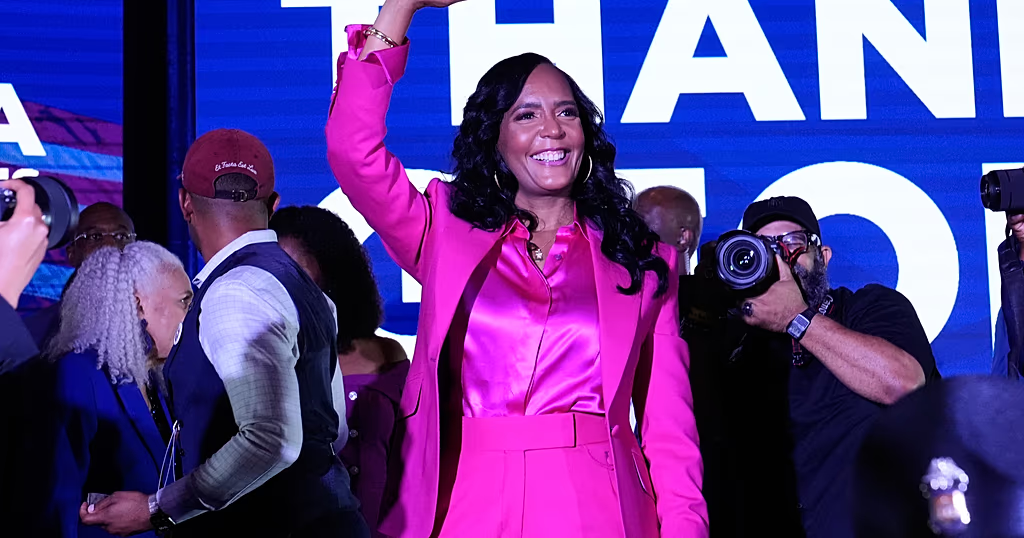
Keisha Lance Bottoms is not a newcomer to American politics. Before her historic gubernatorial victory, she built an extensive career in public service, law and political administration.
Born and raised in Atlanta, Georgia, Bottoms developed her political identity through years of involvement in local government and community affairs.
She studied journalism at Florida Agricultural and Mechanical University before obtaining her law degree from Georgia State University.
Her legal background provided a foundation for her entry into public service, and she subsequently became involved in local government.
Bottoms served as a member of the Atlanta City Council from 2010 to 2017, representing District 11. During her time in the council, she developed experience in local policymaking, community representation and urban administration.
Her political career reached a major turning point in 2017 when she won the Atlanta mayoral election.
She officially assumed office on January 2, 2018, becoming the 60th mayor of Atlanta.
As mayor, she was responsible for overseeing one of the most influential cities in the southeastern United States, managing its public administration, infrastructure, economic development and social programmes.
Her administration faced several major challenges, including the COVID-19 pandemic, economic uncertainty, racial justice demonstrations and public safety concerns.
Despite these difficulties, Bottoms maintained a focus on affordable housing, economic opportunities, civil rights and strengthening public services.
Her administration also pursued initiatives aimed at improving government transparency, supporting small businesses and creating opportunities for underserved communities.
According to her political biography, her government maintained balanced city budgets throughout her four-year tenure, even during the economic difficulties associated with the pandemic.
Her experience as Atlanta’s mayor helped establish her reputation as a political leader with an understanding of the practical challenges facing urban communities.
She left the mayor’s office in January 2022 after serving one term.
Her Experience in Joe Biden’s White House
Following her departure from Atlanta’s mayoral office, Bottoms moved into national politics.
In June 2022, former President Joe Biden announced her appointment as a senior adviser to the president for public engagement.
She subsequently served as director of the White House Office of Public Engagement, a position that placed her at the centre of efforts to strengthen communication between the federal government and different communities across the United States.
Her responsibilities included engaging with civil society organisations, business leaders, minority communities, labour groups and other stakeholders.
The experience exposed her to national policymaking and provided an opportunity to work within the federal government’s political and administrative structures.
Her appointment also demonstrated the confidence the Biden administration placed in her political experience and ability to connect with different sections of American society.
Having previously managed a major American city, Bottoms brought local government experience to her White House responsibilities.
Her time in the Biden administration further strengthened her national political profile and positioned her for a possible return to elected office.
That opportunity eventually came through the Georgia gubernatorial election.
How Bottoms Defeated Republican Rick Jackson
The 2026 Georgia gubernatorial contest attracted considerable national attention because of the political importance of the state and the financial resources invested in the campaign.
Bottoms emerged as the Democratic candidate after winning her party’s primary, setting up a general election confrontation with Republican businessman Rick Jackson.
Jackson, a wealthy healthcare executive and political newcomer, secured the Republican nomination after defeating Lieutenant Governor Burt Jones in the party’s primary runoff.
Jones had received the endorsement of President Donald Trump, making Jackson’s victory in the Republican contest a significant development.
Jackson subsequently entered the general election with substantial financial resources.
He reportedly invested more than $200 million of his personal wealth in his campaign, making his candidacy one of the most financially significant gubernatorial campaigns in the country.
His strategy focused on presenting himself as a successful businessman capable of applying private-sector experience to government administration.
He also campaigned on issues including economic growth, tax reductions, public safety and reducing government bureaucracy.
However, his considerable financial advantage was not enough to defeat Bottoms.
The Democratic candidate successfully built a coalition of voters who supported her message on affordability, healthcare, education and economic opportunities.
Her campaign also benefited from her previous political experience and familiarity with Georgia’s political landscape.
Bottoms’ victory demonstrated that substantial campaign spending does not automatically translate into electoral success.
It also highlighted the importance of voter mobilisation, political organisation, public confidence and a candidate’s ability to communicate a convincing vision for the future.
Affordability, Healthcare and Education at the Centre of Her Campaign
Beyond the historic nature of her candidacy, Bottoms’ campaign focused heavily on everyday economic and social issues affecting Georgia residents.
One of her major priorities was making healthcare more affordable and accessible.
She advocated expanding Medicaid coverage in Georgia, arguing that more residents should have access to affordable healthcare.
Her healthcare agenda also included supporting rural hospitals, improving access to medical services and addressing the rising cost of prescription drugs.
This issue was particularly important because healthcare accessibility remains a major concern for many families, especially those living in rural communities.
Housing affordability was another important component of her campaign.
Like many parts of the United States, Georgia has experienced growing concerns about housing costs, rental prices and access to homeownership.
Bottoms proposed initiatives aimed at increasing the availability of affordable housing, supporting first-time homebuyers and providing assistance to renters.
She also emphasised the importance of improving educational opportunities.
Her proposals included fully funding public schools, expanding early childhood education, improving literacy and making technical and community college education more accessible.
She also advocated universal childcare and measures to support teachers, including eliminating state income taxes for educators.
On workers’ welfare, her campaign supported raising Georgia’s minimum wage to $15 per hour and improving compensation for public employees.
These proposals formed part of her broader argument that economic growth should translate into improved living conditions for ordinary residents.
Her administration will now face the challenge of turning these campaign promises into practical policies.
Georgia’s Political Landscape Changes After More Than Two Decades
Another major consequence of Bottoms’ victory is the change in political leadership in Georgia.
The state’s governor’s office had been controlled by Republicans since 2002, making the Democratic victory a significant political development.
Outgoing Republican Governor Brian Kemp was unable to seek another consecutive term because of constitutional term limits.
His departure created an open-seat contest that attracted significant attention from both political parties.
Georgia has increasingly become one of the most closely watched battleground states in American politics.
Its growing metropolitan population, particularly in the Atlanta metropolitan area, has contributed to changing electoral dynamics.
The state also played a decisive role in the 2020 presidential election, when Democrat Joe Biden defeated Republican Donald Trump in Georgia.
Democrats subsequently strengthened their position in the state through a combination of urban, suburban and minority voter support.
Bottoms’ victory demonstrates the continuing importance of these voting coalitions.
However, winning the governorship does not necessarily mean that Democrats will have complete control of Georgia’s political institutions.
The governor must work with the state legislature, which has its own political composition and legislative priorities.
Consequently, Bottoms will need to build relationships across party lines if she hopes to implement major reforms.
Her promise to govern for all Georgians will therefore be tested by the political realities of governing a state with competing interests and ideological divisions.
What Her Victory Means for the Future of American Politics
Bottoms’ election could have implications that extend far beyond Georgia.
For the Democratic Party, her victory provides an important opportunity to demonstrate that candidates with diverse backgrounds can successfully compete and win in politically competitive states.
It also offers encouragement to Black women seeking leadership positions in American politics.
For many young women, particularly those from minority communities, seeing someone who shares aspects of their background attain the governorship of a major American state could serve as a powerful source of inspiration.
Her achievement also reinforces the importance of political participation and representation.
However, the significance of her victory will ultimately depend not only on the historic nature of her election but also on the quality of governance she delivers.
Georgia residents will expect improvements in areas such as employment, education, housing, healthcare, infrastructure and public safety.
They will also expect her to demonstrate the ability to manage the state’s economy and work effectively with lawmakers, local governments and business leaders.
Her administration will therefore be judged by both its symbolic importance and its practical achievements.
Conclusion
Keisha Lance Bottoms’ election as Georgia’s next governor marks an extraordinary moment in American political history.
By becoming the first Black woman elected governor of a US state, she has broken a longstanding political barrier and established a historic milestone for women and minority communities.
Her journey from Atlanta City Council member to mayor, White House senior adviser and now governor-elect demonstrates a career shaped by public service and political experience.
Her victory over Republican businessman Rick Jackson also represents a major Democratic breakthrough in a state that has been governed by Republicans for more than two decades.
Nevertheless, the real test of her leadership begins with the transition from campaigning to governing.
Georgia residents will be looking for practical solutions to the economic and social challenges affecting their communities.
For Black women across America and beyond, however, her achievement has already secured a place in history.
Her election sends a powerful message about the changing possibilities of political leadership in the United States and the importance of ensuring that opportunities for public service are not limited by race or gender.
As Georgia prepares for a new administration, Keisha Lance Bottoms stands at the beginning of a historic chapter, carrying the expectations of millions of people who see her victory as both a personal achievement and a broader symbol of political progress.