

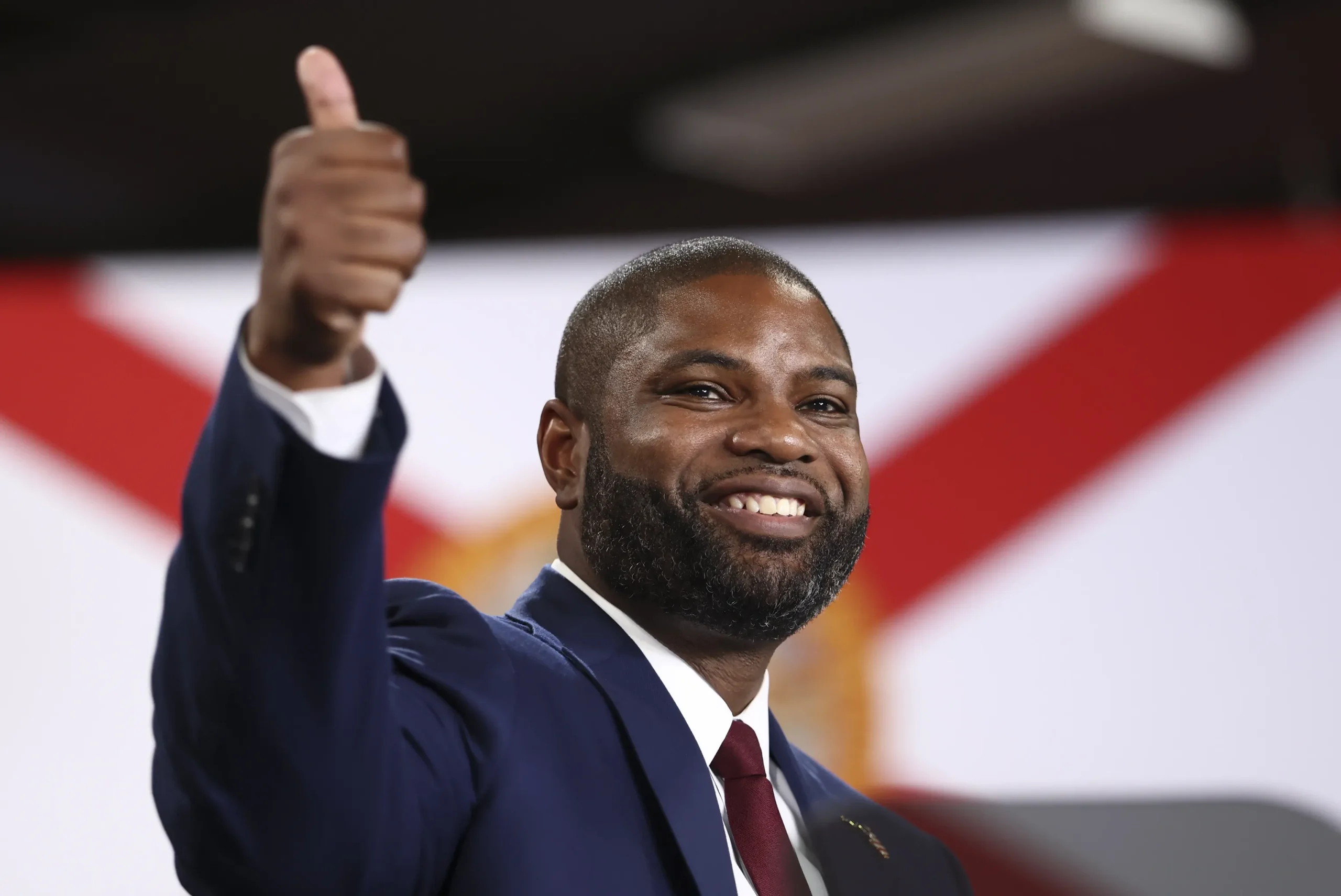
Republican Congressman Byron Donalds has made American political history after winning Florida’s November 3, 2026, gubernatorial election, becoming the first Black person elected governor of the Sunshine State. His victory over Democratic challenger David Jolly marks a significant political milestone for Florida and extends the Republican Party’s control of the governor’s office.
Florida has entered a new chapter in its political history following the election of Republican Congressman Byron Donalds as its next governor. Donalds, who represents Southwest Florida in the United States House of Representatives, defeated Democratic candidate and former Republican congressman David Jolly in a closely contested election that attracted considerable national attention.
The victory is historic not only because Donalds will become the first Black governor in Florida’s history, but also because he will become the first Black Republican elected governor in the United States.
The November 3 election was widely watched as an important test of the Republican Party’s political strength in one of America’s most influential states. Although Florida has increasingly become a Republican stronghold in recent years, the competitiveness of the gubernatorial contest demonstrated that Democrats remained determined to challenge the party’s dominance.
According to Florida’s unofficial election results, Donalds secured approximately 4.13 million votes, representing 50.02 per cent of the total, while Jolly received approximately 4.02 million votes, or 48.71 per cent. The Republican candidate established a lead of more than 100,000 votes, securing victory in a race that proved closer than some political observers had anticipated.
The outcome means Donalds will succeed outgoing Governor Ron DeSantis, who is unable to seek another consecutive term because of Florida’s gubernatorial term limits. His election also ensures that Republicans will retain control of the state’s highest executive office after nearly three decades of dominance.
A Historic Victory for Black Political Representation
Donalds’ election represents a landmark moment for Black political representation in Florida, a state with a long and complicated history of racial divisions, political struggles and debates about equal representation.
For generations, Black Americans have fought for greater participation in the country’s political institutions, including the opportunity to occupy some of the highest offices in government.
While Black politicians have made considerable progress in Congress, state legislatures, city administrations and other public institutions, the governorship has remained an important milestone in the broader struggle for political representation.
By winning the Florida gubernatorial election, Donalds has broken a historical barrier that has stood for the entire history of the state’s governorship.
His achievement is particularly significant because Florida is one of the largest and most politically influential states in the United States. With a population of millions, a major tourism industry, a powerful agricultural sector and considerable influence in national elections, decisions made by its governor often attract attention far beyond state borders.
Donalds’ victory will also place him in a distinctive position within the Republican Party. His emergence as Florida’s first Black governor and the first Black Republican elected governor in the country gives his administration historical significance beyond the state’s political boundaries.
The achievement is expected to generate conversations about race, political identity, representation and the changing composition of American political leadership.
However, Donalds’ election also highlights the diversity of political views within the Black American community. His Republican identity and conservative political positions demonstrate that Black voters and politicians do not belong exclusively to one political party or ideological movement.
Who Is Byron Donalds?
Byron Lowell Donalds is an American politician and Republican member of the United States House of Representatives. Before his election as Florida governor, he represented Florida’s 19th Congressional District, which covers parts of Southwest Florida.
Born on October 28, 1978, in Brooklyn, New York, Donalds developed an interest in public affairs and eventually established himself as a prominent figure in Republican politics.
His political journey took him from local and state-level political involvement to the national stage, where he became known for his conservative positions, outspoken support for Republican policies and close relationship with President Donald Trump.
Donalds served in the Florida House of Representatives before winning election to the United States Congress in 2020. He assumed office in January 2021 and subsequently became one of the more visible Republican lawmakers representing Florida in Washington.
During his time in Congress, he built a reputation as a strong supporter of conservative economic policies, limited government, border security and Republican efforts to advance their legislative agenda.
His political influence increased considerably through his relationship with Donald Trump and his participation in national Republican political activities.
As a three-term congressman, Donalds entered the gubernatorial contest with considerable political experience, a strong Republican support network and an established public profile.
His election victory now represents the most significant achievement of his political career, moving him from the legislative branch of the federal government to the executive leadership of one of America’s most important states.
Donalds Defeats David Jolly in a Closely Contested Election
The contest between Donalds and David Jolly was one of the most closely watched political battles in Florida during the 2026 election cycle.
Jolly, a former Republican congressman who later became a Democrat, presented himself as an alternative to the Republican administration and sought to attract voters concerned about the state’s economic challenges and political direction.
His background as a former Republican gave him an unusual political profile in a contest against Donalds. Having previously represented Florida in Congress as a Republican, Jolly attempted to build a coalition that extended beyond traditional Democratic voters.
However, Donalds benefited from the Republican Party’s considerable organisational strength in Florida, its voter-registration advantage and the support of influential conservative political figures.
The race also reflected the continuing political importance of President Donald Trump in Florida. As a close ally of the president, Byron Donalds was able to position himself as a candidate aligned with the Republican administration’s broader political priorities.
Despite these advantages, the election was not a straightforward victory. Jolly put up a strong challenge, and the final results demonstrated that Democrats remained competitive in parts of the state.
Donalds ultimately emerged victorious, securing the mandate required to take over the governor’s office in January 2027.
AP News+2
His Relationship with Donald Trump and the Republican Party

One of the defining features of Donalds’ political career has been his close relationship with President Donald Trump and his strong alignment with the modern Republican movement.
Donalds has consistently supported Trump’s political agenda and has become an influential conservative voice within the Republican Party. His political positions have generally reflected the party’s emphasis on economic conservatism, immigration enforcement, public safety, individual freedoms and reducing the size of government.
His association with Trump was an important feature of his gubernatorial campaign, particularly among voters who continue to support the president’s political leadership.
Trump’s influence in Florida has remained substantial, and his endorsement and political backing have helped strengthen the position of Republican candidates in the state.
For Donalds, the election victory provides an opportunity to translate his political relationship with the president into a governing partnership that could benefit Florida.
However, being elected governor will require him to represent all Floridians, including those who supported Jolly and those who hold political views different from his own.
His ability to balance his conservative political commitments with the needs of a diverse population will be an important measure of his leadership.
Making Florida More Affordable: A Major Campaign Promise
One of the most important issues Donalds highlighted during his victory message was the cost of living.
Florida has experienced considerable economic and population growth over the years, attracting residents, businesses, investors and tourists from different parts of the United States and other countries.
However, the state’s growing popularity has also contributed to concerns about housing affordability, rising insurance premiums, transportation expenses and the general cost of maintaining a household.
For many residents, particularly middle-income families, retirees and young people, the increasing cost of living has become a major concern.
Housing affordability is especially important in Florida, where demand for residential properties has remained strong in several metropolitan areas.
Homeowners have also faced concerns over rising property insurance costs because of hurricanes, flooding and other weather-related risks.
These challenges formed part of the wider economic debate surrounding the gubernatorial election.
In his victory statement, Donalds promised to work towards making life more affordable for Florida residents. His administration will therefore face pressure to develop policies that address household expenses, housing costs, insurance affordability and economic opportunities.
The extent to which he can deliver on these promises will be closely watched by residents and political observers.
Public Safety and Investment in Young People
Beyond economic affordability, Donalds identified public safety and youth development as major priorities for his incoming administration.
In his victory message, he pledged to keep Florida’s streets safe, reinforcing his campaign’s emphasis on law enforcement and public security.
Public safety remains a central issue in American state politics, with residents expecting their elected leaders to protect communities, strengthen law enforcement institutions and ensure that people can live and conduct business without fear.
Donalds’ position suggests that his administration will maintain a strong focus on supporting law enforcement and implementing policies aimed at protecting communities.
He also highlighted the importance of investing in young people, promising to create opportunities that would allow the next generation to achieve what he described as the Florida Dream.
This commitment is particularly important in a state with a growing population and a diverse economy that depends on skilled workers, entrepreneurs and professionals.
Investment in education, vocational training, technology, entrepreneurship and workforce development could help prepare young Floridians for future economic opportunities.
For families, the promise of a better future for their children remains one of the most important expectations they place on government.
Donalds will therefore have to demonstrate how his administration intends to turn its promises into practical programmes capable of improving educational outcomes and creating opportunities for young residents.
Florida’s Republican Dominance Continues
Donalds’ victory also carries considerable political significance because it extends the Republican Party’s long-standing control of Florida’s governorship.
Republicans have dominated the state’s gubernatorial politics since 1998, when Jeb Bush won election as governor. Since then, the party has maintained control through successive administrations, including those of Charlie Crist, Rick Scott and Ron DeSantis, although Crist was elected as a Republican before later changing political affiliation.
DeSantis, who became governor in 2019, strengthened Republican influence in the state and attracted national attention through his conservative policies and confrontations with the federal government.
His administration focused on issues including education, immigration, economic development, public health, environmental regulations and cultural debates.
By defeating Jolly, Donalds has ensured that the Republican Party will retain the governor’s office and continue shaping Florida’s political direction.
The result is also significant for Democrats, who had hoped to regain control of the governor’s office and challenge the Republican Party’s growing influence.
Although Jolly’s performance demonstrated that Democrats could still attract substantial support, the election ultimately confirmed the Republicans’ continued advantage in statewide politics.
What Donalds’ Victory Means for Florida’s Future

As Florida prepares for a new administration, attention will increasingly shift from the excitement of Donalds’ historic election to the responsibilities of governing.
Winning an election is one challenge; managing a state with millions of residents, a complex economy and competing political interests is another.
Donalds will inherit an administration dealing with several important issues, including housing affordability, insurance costs, infrastructure development, environmental protection, education and public safety.
Florida’s geographical location also makes it particularly vulnerable to hurricanes, flooding and other climate-related challenges. Preparing communities for natural disasters, improving infrastructure and ensuring that residents can recover after major storms will remain important responsibilities.
The state is also home to one of the world’s largest tourism economies. Its beaches, entertainment attractions, hospitality businesses and international reputation make tourism a major contributor to employment and economic activity.
Maintaining a business-friendly environment while addressing the needs of ordinary residents will be another important responsibility for the incoming governor.
Donalds will also need to work with the Florida Legislature, local governments, business organisations and community leaders to implement his policy agenda.
His success will ultimately depend on whether he can translate his campaign commitments into measurable improvements in the lives of Floridians.
Donalds Reacts to His Historic Election Victory
Following his victory, Donalds expressed gratitude to voters and promised to dedicate himself to serving the people of Florida.
In a message shared on X, he described the victory as a humbling experience and outlined some of the priorities he intends to pursue as governor.
He wrote:
“I am humbled and grateful beyond measure. As your Governor, I will give you everything I have. We are going to make life in Florida more affordable. We are going to keep our streets safe. We are going to invest in our young people so that they can attain the Florida Dream that all of us love so dearly. Florida is the envy of the nation. I will fight day and night to keep it that way and to lift our state to even greater heights.”
The statement reflected his determination to focus on affordability, public safety and opportunities for young people.
It also demonstrated his intention to build on Florida’s existing economic reputation while pursuing further development.
His remarks are particularly important because they provide an early indication of the issues his administration intends to prioritise.
As the first Black governor elected in Florida, Donalds will also face expectations that extend beyond ordinary political considerations. His leadership will be examined through the historical significance of his election, his policy decisions and his ability to represent the state’s diverse population.
A New Chapter in American Political History
Byron Donalds’ election represents a significant development in the continuing evolution of American politics.
His victory demonstrates that political representation in the United States continues to change, with candidates from historically underrepresented backgrounds increasingly securing positions of considerable influence.
For Black Americans, his election creates another important milestone in the history of participation in the country’s political institutions.
At the same time, Donalds’ Republican identity makes his achievement particularly notable in a political environment where Black voters have traditionally supported Democratic candidates by substantial margins.
His election reinforces the reality that political affiliation within Black America is not uniform and that candidates can build successful political careers through different ideological and party platforms.
Beyond the racial and political significance, his victory also presents an opportunity to assess how effectively a new administration can address the everyday concerns of ordinary citizens.
For Florida residents, the most immediate questions will concern whether Donalds can reduce financial pressures, improve public safety, strengthen educational opportunities and maintain the state’s economic competitiveness.
His inauguration will mark the beginning of a new chapter for Florida, with the incoming governor expected to take office on January 5, 2027.
Conclusion
Byron Donalds’ victory in the November 3, 2026, gubernatorial election will be remembered as one of the most significant moments in Florida’s political history.
By defeating David Jolly, Donalds has broken a longstanding historical barrier, becoming the first Black person elected governor of Florida and the first Black Republican elected governor in American history.
His achievement is a major milestone for political representation and an important development for the Republican Party, which has successfully maintained its control of Florida’s governor’s office.
However, the real test of his leadership begins after the celebrations.
With promises to make Florida more affordable, protect communities and invest in young people, Donalds now faces the responsibility of turning his campaign commitments into tangible results.
His administration will be judged not only by the historic nature of his election but also by its ability to improve the lives of the people he has been elected to serve.
For Florida, the election signals the beginning of a new political era. For Byron Donalds, it marks the transition from a prominent Republican congressman to a governor whose decisions will influence the future of millions of Americans.
One thing is certain: his name has now secured a permanent place in Florida’s political history.