

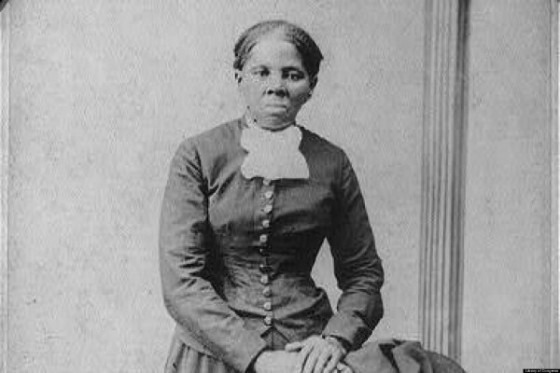
Throughout history, countless individuals have stood against injustice, oppression, and the denial of human rights. Some fought with weapons, others through political movements, and many risked their lives to protect those who were suffering. Among the most remarkable figures in the history of the fight against slavery in the United States was Harriet Tubman, a courageous Black woman whose extraordinary determination helped hundreds of enslaved African Americans escape bondage and pursue freedom.
Born into slavery in Maryland in the early nineteenth century, Tubman experienced firsthand the cruelty, humiliation, and brutality of America’s slave system. She endured physical violence, forced labour, family separation, and the constant threat of being sold away from loved ones. Yet, rather than allowing these experiences to destroy her spirit, she transformed her suffering into a powerful determination to fight for freedom.
Harriet Tubman became one of the most celebrated conductors of the Underground Railroad, a secret network of routes, safe houses, and abolitionist supporters that helped enslaved people escape from slaveholding states to free states and, in many cases, Canada. She repeatedly returned to dangerous slaveholding territories to rescue others, despite knowing that capture could result in torture, imprisonment, or death.
Her contributions extended beyond helping enslaved people escape. During the American Civil War, Tubman served the Union Army as a nurse, cook, scout, and intelligence operative. She also became the first woman known to have led an armed military expedition during the war, helping to liberate hundreds of enslaved people in the Combahee River Raid of 1863.
Today, Harriet Tubman remains an enduring symbol of courage, resistance, Black liberation, and the power of one individual to challenge an oppressive system. Her story is not simply about escaping slavery; it is about refusing to accept injustice and dedicating one’s life to the freedom of others.
Early Life: Growing Up in the Brutality of American Slavery
Harriet Tubman was born Araminta Ross around 1822 in Dorchester County, Maryland, into a family of enslaved African Americans. Her parents were Harriet Green and Ben Ross. Like millions of other Black people born into slavery in the United States, she was considered property under the law rather than a human being entitled to freedom and basic rights.
Her childhood was marked by poverty, hardship, and violence. Enslaved children were frequently forced to work from an early age, and Tubman was no exception. She performed different forms of labour, including domestic work, caring for children, and agricultural duties.
The conditions under which she lived were extremely harsh. Enslaved people were subjected to physical punishment, denied education, and deprived of control over their own lives. Their marriages and family relationships received little or no legal protection, while slaveholders could sell them whenever they wished.
Tubman’s childhood was particularly painful because she witnessed the suffering of her family and other enslaved people. She was separated from members of her family through the slave system, an experience that left a lasting impression on her.
One of the most significant events of her early life occurred when she was still a teenager. An enslaved man attempted to escape, and Tubman found herself caught in a confrontation involving an overseer. When the overseer threw a heavy metal weight at the fleeing man, it struck Tubman instead.
The injury caused severe and lifelong consequences. She suffered a serious head wound that reportedly resulted in recurring headaches, periods of unconsciousness, and sudden sleeping episodes.
Despite these physical challenges, Tubman developed extraordinary mental strength and determination. Her experiences exposed her to the cruelty of slavery and strengthened her desire to live as a free woman.
She later married John Tubman, a free Black man, around 1844. However, her marriage did not change her legal status as an enslaved woman. Under the laws of the time, the status of a child generally followed that of the mother, and enslaved women had very limited control over their family lives.
As she grew older, Tubman increasingly understood that remaining enslaved meant living under the constant threat of violence, separation, and exploitation.
Her Escape to Freedom in 1849
The turning point in Harriet Tubman’s life came in 1849, when she decided to escape slavery.
Following the death of her enslaver, Tubman feared that she and members of her family might be sold to different owners. The possibility of being separated from her loved ones made her determined to escape.
She initially attempted to flee with her brothers, but the journey was unsuccessful. Her brothers became frightened and decided to return. Tubman was forced to return with them.
However, she refused to abandon her dream of freedom.
Later in 1849, she made another attempt, this time travelling alone. She relied on her knowledge of the surrounding countryside, assistance from sympathetic individuals, and the network of people who opposed slavery.
Her escape was extremely dangerous. Enslaved people who attempted to flee faced the possibility of being captured by slave catchers, returned to their owners, and subjected to brutal punishment. Slaveholders also offered financial rewards for the capture of escaped enslaved people.
Nevertheless, Tubman continued travelling north until she reached Philadelphia, Pennsylvania, a free state.
For the first time in her life, she experienced the freedom that had been denied to her since birth.
However, rather than settling into her new life and forgetting those she had left behind, Tubman made a remarkable decision. She would return to Maryland to help her family and other enslaved people escape.
Her personal freedom became the beginning of a much larger mission.
Becoming a Conductor of the Underground Railroad
The Underground Railroad was not an actual railway system. It was a secret network of individuals and organisations that helped enslaved African Americans escape from slaveholding states.
The network included free Black communities, abolitionists, religious groups, sympathetic white Americans, and formerly enslaved people. Participants provided food, shelter, transportation, information, and guidance to those escaping slavery.
People who helped freedom seekers along their journeys were commonly known as conductors, while safe houses were sometimes referred to as stations.
Harriet Tubman became one of the Underground Railroad’s most famous and effective conductors.
After reaching freedom, she returned to Maryland repeatedly to guide enslaved people towards freedom. Her journeys required careful planning, secrecy, and extraordinary bravery.
She often travelled at night to avoid detection, using forests, waterways, back roads, and other hidden routes. She also relied on trusted individuals who provided temporary shelter and assistance.
One of the most remarkable aspects of Tubman’s work was her willingness to return to places where she could easily be recognised and captured.
Every journey placed her life in danger. Slaveholders and authorities were determined to prevent enslaved people from escaping, and the financial rewards offered for capturing fugitives created additional threats.
Despite these dangers, Tubman continued her rescue missions.
She eventually earned the nickname “Moses”, a reference to the biblical figure Moses, who led the Israelites out of slavery in Egypt.
The comparison reflected the extraordinary role she played in helping enslaved people escape oppression and seek a better future.
Rescuing Hundreds of Enslaved People
Harriet Tubman’s work on the Underground Railroad lasted for several years. Historians generally credit her with personally making approximately 13 rescue missions into slaveholding territory and helping around 70 enslaved people escape, including members of her own family.
She also provided instructions and guidance that helped many additional people escape independently.
Although popular accounts sometimes attribute the rescue of 300 people directly to Tubman, historians distinguish between the individuals she personally guided and the much larger number who benefited from the Underground Railroad network and her assistance.
Her courage was extraordinary because she understood the consequences of failure.
An enslaved person who escaped could face severe punishment if captured. Conductors who assisted fugitives could also be prosecuted, attacked, or imprisoned.
Tubman developed a reputation for being extremely determined during her rescue missions. She reportedly carried a firearm and was prepared to use it to defend herself and the people travelling with her.
She also understood the importance of maintaining discipline during dangerous journeys. According to accounts of her work, she sometimes warned frightened fugitives against turning back because doing so could expose the entire group to capture.
Her leadership was based on determination, practical knowledge, and an understanding of the terrible consequences of returning to slavery.
One of her most emotional rescue missions involved members of her own family.
In 1854, she helped three of her brothers escape from Maryland. Later, in 1857, she successfully brought her elderly parents out of the state and helped them settle in St. Catharines, Canada.
These missions demonstrated that her commitment to freedom was deeply personal. She was not simply fighting against an abstract political system; she was trying to protect families, reunite loved ones, and give people the opportunity to live without the constant threat of being sold or abused.
The Fugitive Slave Act of 1850: An Even More Dangerous Fight
Harriet Tubman’s work became more dangerous following the passage of the Fugitive Slave Act of 1850.
The law was part of the Compromise of 1850 and required authorities in free states to assist in the capture and return of people accused of escaping slavery.
It also imposed penalties on individuals who helped fugitives escape. Those accused of being escaped enslaved people were denied important legal protections, including the right to testify on their own behalf in the proceedings.
The legislation created serious problems for freedom seekers who had escaped to northern states.
Even when they reached places where slavery was illegal, they could still be captured and returned to slaveholders.
As a result, Canada became an increasingly important destination for Tubman and other conductors of the Underground Railroad.
In Canada, slavery had been abolished throughout the British Empire in 1834, although racial discrimination and other forms of inequality remained.
Tubman helped many freedom seekers travel farther north, where they had a better chance of avoiding recapture under American fugitive slave laws.
Her efforts also attracted the attention of prominent abolitionists, including William Still, Frederick Douglass, and Thomas Garrett.
These individuals and other supporters helped strengthen the wider movement against slavery.
Harriet Tubman and the Abolitionist Movement
Tubman’s activities were closely connected to the broader abolitionist movement, which sought to end slavery in the United States.
Abolitionists used different methods to challenge the institution. Some organised public meetings, published newspapers, supported political campaigns, or helped enslaved people escape.
Others, including formerly enslaved individuals, shared personal experiences to expose the brutality of the slave system.
Tubman became an important figure within this movement because she combined direct action with a powerful personal testimony.
Her experiences demonstrated that enslaved people were not passive victims waiting for others to rescue them. They were individuals who actively resisted oppression and fought for control over their own lives.
She developed relationships with prominent abolitionists and attended meetings where the fight against slavery was discussed.
In 1859, she met the famous abolitionist John Brown, who was planning an armed campaign against slavery.
Brown admired Tubman’s courage and reportedly referred to her as General Tubman.
Although she supported the struggle against slavery, she did not participate in Brown’s 1859 raid on Harpers Ferry. Her involvement with his plans and her knowledge of the antislavery movement reflected the growing willingness among some abolitionists to confront slavery more directly.
Tubman eventually became an internationally recognised symbol of resistance against slavery.
Her work also challenged the racial and gender prejudices of the nineteenth century. At a time when Black women were routinely denied opportunities and recognition, she demonstrated exceptional leadership, courage, and organisational ability.
Her Contribution During the American Civil War
When the American Civil War began in 1861, Harriet Tubman continued her fight against slavery by supporting the Union Army.
The war was fought between the Union, which largely opposed the expansion of slavery, and the Confederacy, whose political and economic system was deeply tied to the preservation of slavery.
Tubman travelled to South Carolina in 1862, where she initially worked as a nurse and cook for Union forces.
She provided medical assistance to sick and wounded soldiers, as well as formerly enslaved people who had escaped to Union-controlled areas.
Her knowledge of the South, understanding of local geography, and ability to communicate with formerly enslaved communities made her particularly valuable.
She later worked as a scout and intelligence operative, gathering information about Confederate positions and movements.
Her work involved using networks of Black men and women who understood the local environment and could provide valuable intelligence.
In June 1863, Tubman participated in one of the most remarkable military operations of the Civil War: the Combahee River Raid.
Working alongside Union Colonel James Montgomery and Black Union soldiers, she helped plan and guide a military expedition along the Combahee River in South Carolina.
The operation targeted Confederate positions, military supplies, and plantations where enslaved people were held.
Union forces used boats to move through the river, avoiding Confederate mines and other obstacles. Tubman’s knowledge of the area and intelligence gathered from local sources helped make the operation successful.
During the raid, Union forces destroyed Confederate supplies and liberated more than 700 enslaved people.
The operation was a major achievement in the fight against slavery and demonstrated the importance of Black intelligence, leadership, and military participation in the Civil War.
Tubman’s contribution was especially significant because women were rarely recognised as military leaders during that period.
Her role in the raid helped establish her place in American military history.
Fighting for Women’s Rights
Harriet Tubman’s commitment to freedom did not end with the abolition of slavery.
After the Civil War, she became involved in the struggle for women’s rights, particularly the campaign for women’s suffrage.
During the nineteenth century, women in the United States were largely excluded from voting and many forms of political participation.
Tubman believed that women deserved the same opportunities to participate in society and influence decisions affecting their lives.
She worked alongside prominent women’s rights activists, including Susan B. Anthony and other supporters of women’s suffrage.
She attended meetings and spoke about the importance of equality, freedom, and the rights of women.
Her involvement in the movement reflected her broader belief that freedom should not be limited to one group.
Having experienced racial oppression and gender discrimination, she understood the importance of challenging systems that denied people basic rights.
Her activism helped connect the struggle for racial equality with the wider campaign for women’s political and social empowerment.
Life After Slavery and Her Continued Service to Others
Despite her extraordinary contributions, Harriet Tubman did not become wealthy after the Civil War.
She faced financial difficulties and had to rely on support from friends, abolitionists, and other individuals who recognised her sacrifices.
She eventually settled in Auburn, New York, where she continued working to improve the lives of African Americans.
One of her most significant later contributions was her commitment to helping elderly and disadvantaged Black Americans.
Tubman supported the establishment of a home for elderly African Americans, which eventually became the Harriet Tubman Home for the Aged.
She also remained involved in religious and community activities.
Her commitment to helping others continued even as her health declined.
In 1869, she married Nelson Davis, a Civil War veteran, and the couple later adopted a daughter named Gertie.
Tubman’s later years were characterised by continued public service, financial challenges, and efforts to preserve the memory of those who had fought against slavery.
She died on March 10, 1913, in Auburn, New York, at approximately 91 years of age.
She was buried with military honours at Fort Hill Cemetery.
Her death marked the end of an extraordinary life dedicated to freedom, equality, and the protection of vulnerable people.
The Legacy of Harriet Tubman in American History
Harriet Tubman’s legacy remains deeply significant in the history of the United States and the global struggle against slavery.
She demonstrated that resistance to oppression could take many forms, including direct action, political activism, intelligence gathering, community organisation, and personal sacrifice.
Her work helped hundreds of enslaved African Americans escape bondage and contributed to the wider movement that eventually brought slavery to an end in the United States.
The Thirteenth Amendment to the United States Constitution, ratified in December 1865, formally abolished slavery throughout the country, except as punishment for a crime where the person has been duly convicted.
Although Tubman did not live to see all the civil rights victories that followed, her contribution helped lay the foundation for future generations of activists and freedom fighters.
Today, schools, museums, historical organisations, and public institutions across the United States recognise her achievements.
The Harriet Tubman Underground Railroad National Historical Park in Maryland preserves important locations associated with her early life and escape routes. The Harriet Tubman National Historical Park in Auburn, New York, also commemorates her life and work.
Her image and story have appeared in books, documentaries, films, and educational programmes, ensuring that younger generations understand the importance of her contribution.
In 2016, the United States Treasury announced plans to feature Tubman on the redesigned $20 bill. Although the proposed redesign has faced delays and changes, the announcement reflected growing national recognition of her historical importance.
Her story also has international significance because it represents the broader struggle of oppressed people to reclaim their dignity and humanity.
For people of African descent across the world, Tubman represents a powerful example of Black resistance, leadership, and determination.
Conclusion
Harriet Tubman’s life was an extraordinary demonstration of courage and selflessness.
Born into a system that denied her freedom, she refused to accept that her future had to be determined by the institution of slavery.
After escaping bondage in 1849, she could have chosen to remain safely in the North. Instead, she repeatedly returned to dangerous slaveholding territories to help others experience the freedom she had found.
Her work on the Underground Railroad, her contributions during the American Civil War, and her involvement in the women’s rights movement established her as one of the most remarkable figures in American history.
She risked her life to rescue family members, friends, and strangers, knowing that every successful escape represented another victory against an unjust system.
Her courage also challenged the belief that Black women were incapable of leadership, military intelligence, or political influence.
Harriet Tubman proved that determination and a commitment to justice could overcome seemingly impossible obstacles.
Perhaps the greatest lesson from her life is that freedom is not simply about securing personal comfort or escaping oppression. It is also about recognising the suffering of others and being willing to stand up for their rights.
More than a century after her death, Harriet Tubman’s name remains synonymous with courage, sacrifice, and the fight for human dignity.
She was once an enslaved woman who had no legal control over her own life. Yet she became one of the most influential freedom fighters in American history, helping hundreds of people move from bondage towards liberation.
Her story will continue to inspire generations because she did not merely dream of freedom. She dedicated her life to making that dream a reality for others.