

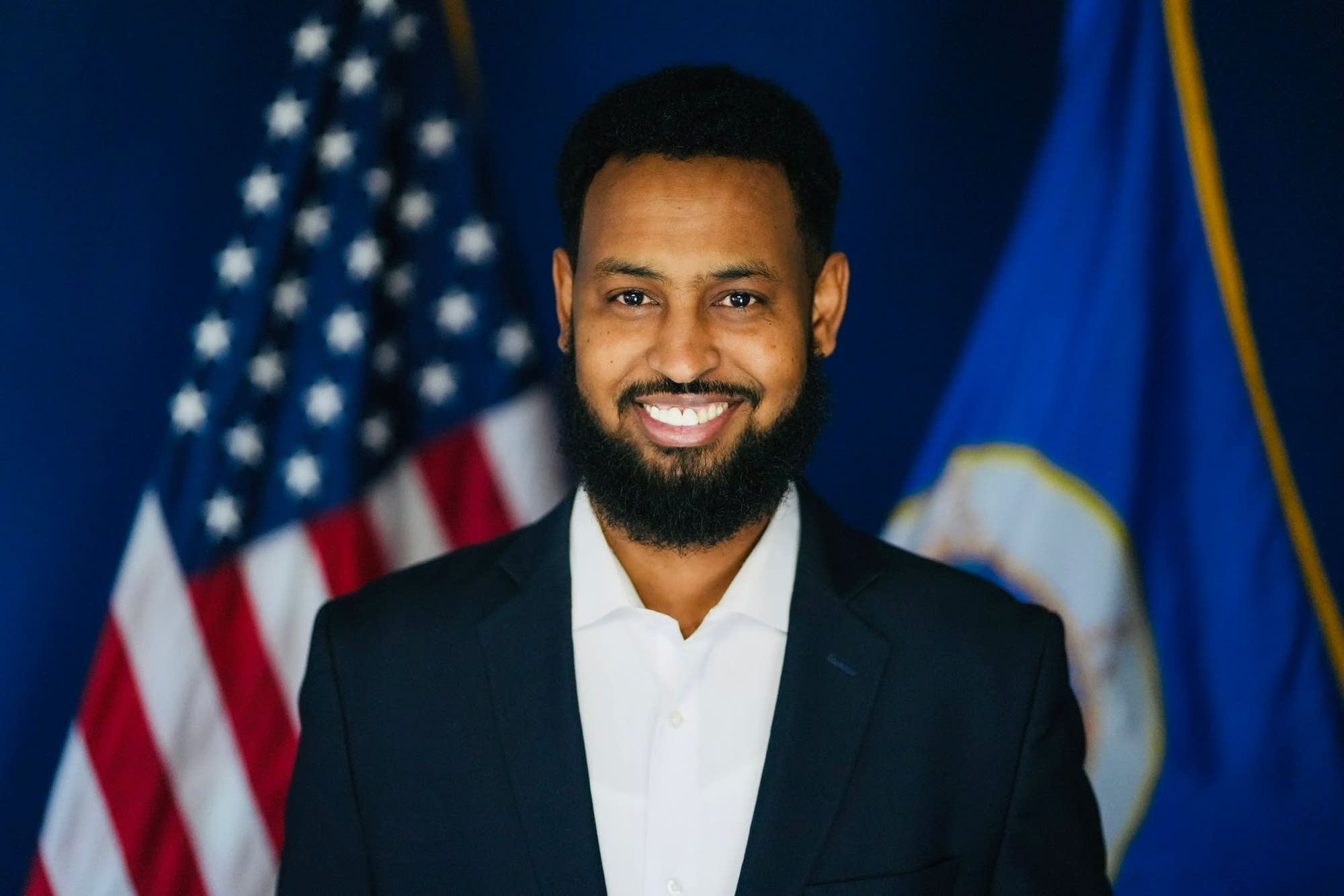
Somali-born businessman, refugee and community organizer Abdi Daisane has made history in American politics after winning Minnesota House District 14A in the November 3, 2026, midterm elections. His victory marks a significant milestone for Somali-American representation in central Minnesota, as he becomes the first Somali-American elected to represent the region in the Minnesota Legislature.
A remarkable political breakthrough has emerged from central Minnesota following the election of Somali-born businessman and community organizer Abdi Daisane to the Minnesota House of Representatives.
Daisane, a member of the Democratic-Farmer-Labor (DFL) Party, secured victory in the November 3, 2026, United States midterm elections, defeating Republican candidate Mike Conway, President of the St. Cloud City Council, in a closely contested race for House District 14A.
His victory is particularly significant because it represents a breakthrough for Somali-American political representation in a region that has traditionally leaned towards the Republican Party. Beyond the political implications, Daisane’s election represents an important moment for immigrant communities, particularly those who have rebuilt their lives in the United States after fleeing conflict, displacement and difficult circumstances in their countries of origin.
According to unofficial results published by the Minnesota Secretary of State, with all 18 precincts reporting, Daisane received 9,163 votes, representing 51.59 per cent of the total vote. His Republican challenger, Conway, secured 8,570 votes, equivalent to 48.25 per cent.
The result gave Daisane a narrow winning margin of 593 votes, demonstrating how competitive the contest was and how important grassroots campaigning and voter participation can be in determining the outcome of an election.
His success also delivered a political setback to Republicans, as Democrats successfully flipped a seat that had previously been held by the party.
A Second Attempt That Delivered a Historic Victory
For Abdi Daisane, the victory was not an overnight success. It was the result of persistence, determination and a second attempt at securing a seat in the Minnesota Legislature.
Daisane first contested House District 14A during the 2024 election cycle, when he challenged Republican incumbent Bernie Perryman. However, his first attempt ended in defeat after Perryman secured re-election.
Rather than abandoning his political ambitions, Daisane returned to the electoral contest in 2026 with renewed determination and a stronger grassroots campaign.
The political circumstances also presented a different opportunity. Perryman decided not to seek another term in the Minnesota House, choosing instead to pursue a seat in the State Senate. His decision created an open contest for District 14A, giving Daisane another opportunity to convince voters that he was the right candidate to represent their interests.
This time, he faced Mike Conway, an established local political figure who served as President of the St. Cloud City Council.
Despite the experience and local political profile of his opponent, Daisane managed to build sufficient support across the district to secure victory.
Reacting to his success, Daisane described the achievement as a rewarding experience after his previous electoral disappointment.
“It feels good to lose and then come back and win,” he told St. Cloud LIVE after the election.
He also credited his campaign’s door-to-door engagement and conversations with residents, explaining that the team had knocked on more doors, spoken with more people and developed stronger connections with voters.
His message was simple but powerful: persistence pays off.
The victory demonstrates that political setbacks do not necessarily mark the end of a candidate’s ambitions. With determination, community engagement and a clear understanding of voters’ concerns, an unsuccessful candidate can return stronger and achieve an important political breakthrough.
Who Is Abdi Daisane?
Abdi Daisane is a Somali-born American businessman, community organizer and political figure whose journey reflects the experiences of many immigrants who have sought new opportunities in the United States.
Having arrived in America as a refugee more than 15 years ago, Daisane gradually established himself in the St. Cloud community in central Minnesota.
His transition from refugee to small-business owner and, ultimately, an elected state lawmaker represents an important personal achievement.
Daisane owns Blooming Kids, a childcare business in St. Cloud. His involvement in the business community has helped shape his understanding of the challenges facing small-business owners, working families and residents who depend on affordable childcare services.
Running a childcare business also places him in direct contact with families and the practical concerns associated with raising children, accessing education and balancing employment with family responsibilities.
These experiences became relevant to his political campaign, which focused on issues including affordability, small-business advocacy and government accountability.
Rather than presenting himself exclusively as a political outsider seeking public office, Daisane positioned his campaign around his experience as a local businessman and community participant.
His story also carries symbolic significance for members of the Somali diaspora, particularly younger immigrants and refugees who aspire to participate in public service and leadership in their adopted countries.
Flipping a Traditionally Republican District
One of the most important aspects of Daisane’s victory is the political significance of the constituency he now represents.
Minnesota House District 14A covers parts of St. Cloud, Waite Park, St. Joseph, St. Augusta and Sauk Rapids, communities located in central Minnesota.
The district had historically leaned Republican, making the Democratic victory particularly noteworthy.
In the 2024 presidential election, President Donald Trump carried the district, demonstrating the political challenges Democrats faced when attempting to win support in the constituency.
However, the 2026 election produced a different outcome.
Daisane’s ability to defeat Conway suggests that local political dynamics can change when candidates successfully address the concerns of voters and build relationships beyond their traditional political bases.
His campaign’s emphasis on grassroots organizing, economic affordability, small-business support and government accountability appears to have resonated with enough voters to secure the seat.
The narrow margin also highlights the importance of every vote in competitive elections.
With just 593 votes separating the two candidates, the result illustrates how intensive local campaigning, voter mobilization and community engagement can influence political outcomes, even in districts that have traditionally supported the opposing party.
For the DFL Party, the victory represents more than an additional seat. It demonstrates the party’s ability to compete in areas where Republican candidates have previously enjoyed electoral advantages.
Somali-Americans Make Significant Political Gains in Minnesota
Daisane’s historic election was part of a broader wave of electoral success for Somali-American politicians during the November 3, 2026, elections.
Minnesota has one of the most prominent Somali-American communities in the United States, and members of the community have increasingly become involved in local, state and national politics.
Over the years, Somali-American politicians have moved from community advocacy and civic participation into elected positions, helping to shape discussions about education, immigration, healthcare, economic development and social policy.
The 2026 elections further strengthened that political presence.
Among the notable victories was that of Congresswoman Ilhan Omar, who secured a fifth term representing Minnesota’s 5th Congressional District in the United States House of Representatives.
Omar, who was born in Somalia and arrived in the United States as a refugee, made history in 2018 when she became the first Somali-American elected to the US Congress.
Her continued electoral success demonstrates the growing influence of Somali-American voters and political participation in Minnesota.
At the state level, Somali-American senators Omar Fateh and Zaynab Mohamed also retained their seats, representing Senate Districts 62 and 63, respectively.
Other Somali-American politicians who secured victories included:
- Mohamud Noor: Retained his seat in Minnesota House District 60B.
- Anquam Mahamoud: Successfully retained her position representing House District 62B.
- Samakab Hussein: Won another term representing House District 65A.
Together with Daisane’s victory, these results mean that Somali-Americans now hold six seats in the Minnesota Legislature, comprising four House members and two state senators. All six are members of the Democratic-Farmer-Labor Party.
This growing representation is significant because it demonstrates how immigrant communities can develop a stronger voice within democratic institutions and participate directly in the decisions that affect their everyday lives.
The Importance of Representation in American Politics
Daisane’s election raises an important discussion about political representation and the role immigrant communities play in shaping modern American democracy.
The United States is home to people from different ethnic, cultural, religious and national backgrounds. Its political institutions increasingly reflect the country’s changing population, with more immigrants and children of immigrants seeking elected office.
For Somali-Americans, political participation has become an important way of ensuring that their experiences, challenges and aspirations are represented in government.
Representation matters because elected officials have the opportunity to influence policies that affect education, employment, public safety, healthcare, housing, immigration and economic opportunities.
When people from immigrant backgrounds enter legislative institutions, they can bring additional perspectives shaped by their personal experiences and understanding of the communities they represent.
However, representation is not simply about ethnicity or national origin. It is also about accountability, competence, public service and the ability to develop policies that benefit the wider population.
Daisane’s responsibility will therefore extend beyond the Somali-American community. As an elected representative, he will be expected to serve every resident of District 14A, regardless of political affiliation, ethnicity, religion or background.
His success will ultimately be measured not only by the historic nature of his election but also by his performance in office and the impact of his legislative decisions.
Business Experience and Public Accountability
As Daisane prepares to enter the Minnesota Legislature, his background as a childcare business owner is likely to attract public attention.
Small businesses play an important role in local economies, providing employment, services and economic opportunities for families and communities.
Daisane’s campaign highlighted the need to support small businesses and address the financial pressures experienced by working families.
However, public accountability will also be an important part of his transition into elected office.
Reporting by Alpha News published after the election raised questions about the licensing history and public funding received by Blooming Kids Child Care Center. The report cited state licensing violations and records indicating that the centre had received more than $7.29 million through Minnesota’s Child Care Assistance Program since 2018.
It also reported concerns raised by a former neighbouring business employee about activity at the facility, while acknowledging that the employee could not observe its rear entrance. The report did not establish that Daisane had committed fraud.
These issues represent matters that require careful examination based on official records and any responses from the business or relevant authorities.
They also underline the importance of transparency, particularly when elected officials have business interests connected to publicly funded programmes.
As a lawmaker, Daisane will participate in decisions involving public spending, government oversight and the accountability of institutions. Maintaining public confidence will therefore be an important responsibility throughout his political career.
What Daisane’s Victory Means for the Somali Diaspora
Beyond Minnesota, Daisane’s achievement carries an important message for Somali communities across the world.
The Somali diaspora is spread across several countries, including the United States, the United Kingdom, Canada, Norway, Sweden and other European nations.
Many members of these communities have built new lives in countries that provided opportunities for education, employment, entrepreneurship and political participation.
Daisane’s journey from refugee to elected state representative offers an example of how immigrants can become active participants in the political and economic development of their adopted societies.
His achievement may also encourage younger Somali-Americans to become more involved in public service, community organizing and political leadership.
For people who have experienced displacement, the opportunity to participate in the democratic institutions of another country can represent an important milestone.
It shows that citizenship, civic engagement and public service can provide pathways to influence decisions and contribute to society.
Nevertheless, Daisane’s election should also be understood within the broader American democratic system, where candidates must earn the confidence of voters through their policies, character and ability to deliver results.
His Somali heritage is an important part of his personal story, but his new responsibility is to represent the diverse population of his constituency.
The Road Ahead: Expectations and Responsibilities
With the election behind him, attention will now turn to Daisane’s transition into the Minnesota House of Representatives and the priorities he intends to pursue when the new legislative session begins.
Residents of District 14A will expect him to address the issues that shaped his campaign, particularly the cost of living, support for small businesses and government accountability.
Affordable childcare is also likely to remain an important subject given his professional background in the sector.
Minnesota’s lawmakers face decisions involving education funding, healthcare, infrastructure, taxation, economic development and public services. These are issues that affect communities across the state, including the families and businesses of central Minnesota.
Daisane will also need to work with colleagues from different political parties to advance policies and secure outcomes for his constituents.
His election does not mean that every resident of District 14A shares the same political priorities. Indeed, the close result demonstrates that the district remains politically competitive.
Building relationships across political and cultural differences will therefore be essential.
His ability to deliver meaningful results could determine whether his historic victory becomes the beginning of a lasting political career.
Conclusion
Abdi Daisane’s election to the Minnesota House of Representatives represents an important chapter in the political development of the Somali-American community in the United States.
By defeating Republican Mike Conway in a closely contested race, Daisane has achieved a milestone that goes beyond party politics. He has become the first Somali-American elected to represent central Minnesota in the state legislature and helped flip a previously Republican-held district.
His journey from Somalia to the United States, from refugee life to entrepreneurship and from community organizing to elected office, offers a powerful example of political participation and determination.
His victory, alongside the re-election of other Somali-American politicians in Minnesota, reflects the growing role of immigrant communities in American public life.
However, the real test begins with his work in the legislature. Voters will expect him to translate campaign promises into practical policies, support local economic development, promote accountability and represent the interests of everyone in his district.
For the Somali diaspora, his achievement is undoubtedly a moment of pride. For central Minnesota, it marks a new chapter in its political representation. And for American democracy, it is another reminder that the country’s political landscape continues to evolve as people from different backgrounds take part in shaping its future.