

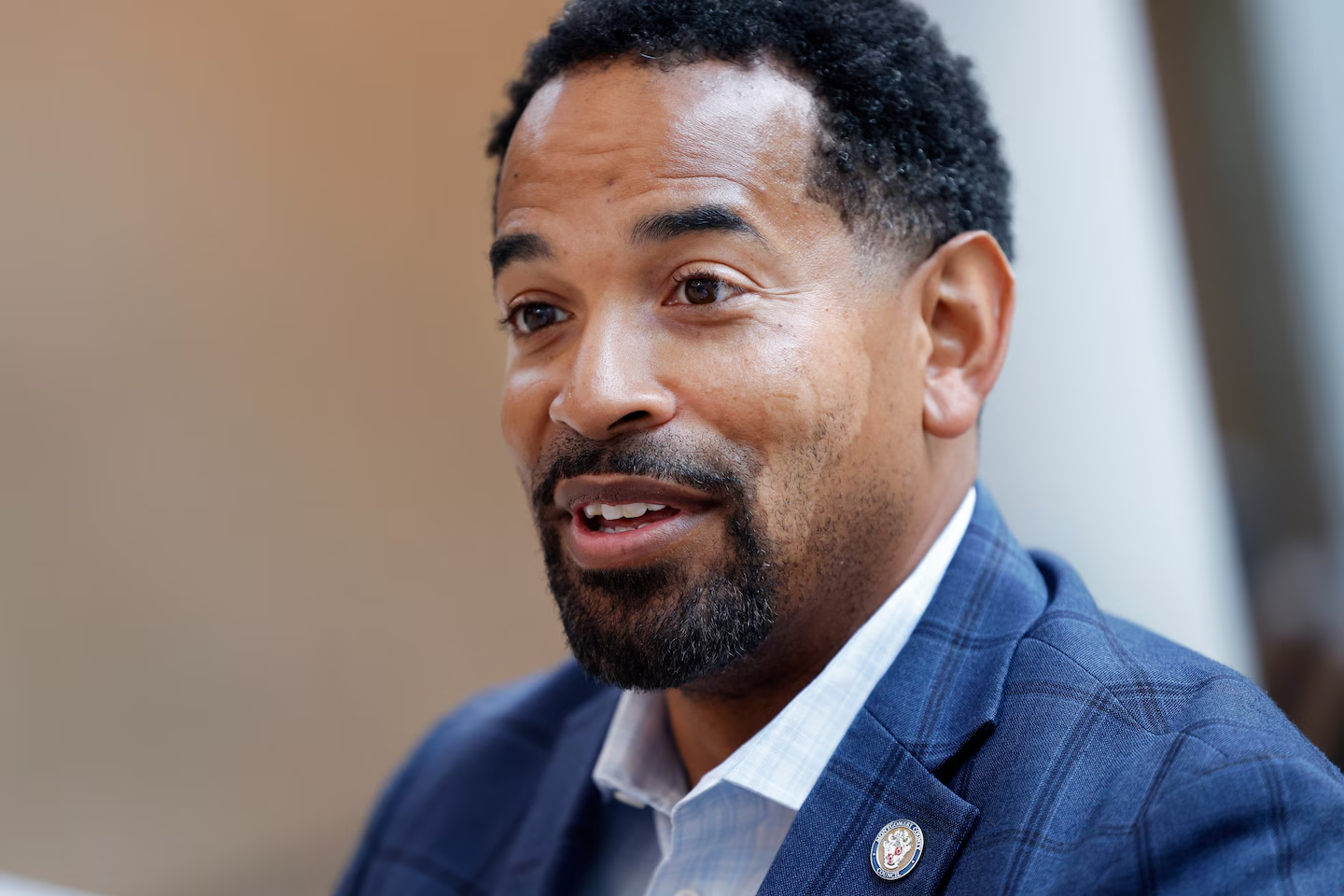
Nigerian-American politician Will Jawando has secured a landmark victory in the 2026 United States midterm elections, emerging as the next County Executive of Montgomery County, Maryland, after defeating Republican candidate Esther Wells in a decisive election. His victory represents another significant milestone for Nigerians in the diaspora and highlights the growing influence of people of Nigerian descent in American politics.
In an election that attracted considerable attention among Nigerians at home and abroad, Jawando’s victory on Tuesday, November 3, 2026, marked a major breakthrough for the Nigerian-American political community. His emergence as the head of one of Maryland’s most populous and economically influential counties places him in a position of considerable political responsibility and makes him one of the prominent Nigerian-descended public officials in the United States.
Running under the Democratic Party, Jawando secured a commanding lead over his Republican opponent, demonstrating strong electoral support across Montgomery County. Beyond the political significance of the result, his victory is also a story of heritage, public service, resilience and the increasing participation of immigrants and their descendants in shaping the political direction of the United States.
According to the Maryland State Board of Elections’ published results, Jawando received 242,676 votes, representing approximately 78.2 per cent of the votes recorded in the county executive contest, while Wells polled 67,640 votes, or approximately 21.8 per cent, in the reported tally. The final figures are higher than the preliminary numbers circulated during the early stages of counting.
Who Is Will Jawando?
Will Jawando, whose full name is William O. Jawando, is an American politician, lawyer and public servant of Nigerian heritage. He was born in 1983 in Silver Spring, Montgomery County, Maryland, to a Nigerian immigrant father, Olayinka Jawando, and an American mother, Kathy Jacob, who is originally from Kansas.
Although he was born and raised in the United States, Jawando’s Nigerian ancestry remains an important part of his personal identity and family history. His father’s journey from Nigeria to America in the 1970s in pursuit of educational opportunities helped shape the family’s story.
Growing up in Silver Spring, Jawando experienced the realities of life in a working-class family. His early experiences with financial difficulties, housing instability and the importance of education influenced his understanding of the challenges facing ordinary families.
His background also gave him a strong appreciation for the opportunities available through education, mentorship and community support. These experiences would later become important influences on his political philosophy and commitment to public service.
Jawando attended the Catholic University of America in Washington, D.C., where he obtained a bachelor’s degree in sociology in 2004. He subsequently attended the university’s Columbus School of Law, earning his Juris Doctor degree in 2007.
During his university years, he demonstrated an interest in social justice, equality and community participation. He helped establish the university’s first chapter of the National Association for the Advancement of Colored People (NAACP), an organisation known for its long-standing involvement in the struggle for civil rights and racial equality in America.
His educational background and early involvement in advocacy helped establish the foundation for a career that would eventually take him from Capitol Hill to the White House and, ultimately, to the highest executive office in Montgomery County.
From Capitol Hill to the Obama White House
Before becoming an elected official, Jawando built an impressive career working in American politics and public administration.
His professional journey included working with prominent Democratic political figures, including former United States President Barack Obama and former House Speaker Nancy Pelosi.
He served as a legislative aide to Barack Obama during his time as a United States senator and later worked with Senator Sherrod Brown of Ohio. These experiences exposed him to the legislative process and the development of public policies affecting millions of Americans.
Jawando’s career took another important turn when he joined the administration of President Barack Obama.
From 2010 to 2011, he served as Associate Director of the White House Office of Public Engagement. In that position, he worked on outreach initiatives, helping the administration engage with different communities and stakeholders across the country.
He subsequently worked at the United States Department of Education, where he held responsibilities involving strategic partnerships and advisory boards.
His experience in the federal government gave him valuable insight into how government institutions operate, how policies are developed and how public resources can be directed towards improving people’s lives.
He also worked as a civil rights attorney, further strengthening his involvement in issues concerning equality, justice and the protection of individual rights.
These professional experiences distinguished Jawando as more than a politician seeking electoral office. They gave him a background in law, policy development, community engagement and public administration.
His eventual election as Montgomery County Executive therefore represents the culmination of years of experience across different levels of American government.
His Political Journey in Montgomery County
Jawando’s connection with Montgomery County goes beyond his political career. It is the community where he was born, raised, educated and built his family life.
In December 2018, he officially became an at-large member of the Montgomery County Council after winning election earlier that year.
The County Council is responsible for making local laws, approving budgets, providing legislative oversight and addressing issues affecting residents throughout the county.
As an at-large council member, Jawando represented residents across Montgomery County rather than a single electoral district.
During his time on the council, he became particularly involved in education, housing, economic development and community welfare.
He also served as chair of the council’s Education and Culture Committee, a position that placed him in a significant role in discussions about educational opportunities and cultural development.
His work included advocating for stronger public education funding, expanding opportunities for young people and supporting policies aimed at making housing more affordable.
He was also involved in initiatives addressing employment opportunities for young people, including the Summer RISE programme, which connects students with work-based learning and professional experiences.
Another important aspect of his public service has been his involvement in housing policy. Having experienced housing instability during his childhood, Jawando has frequently highlighted the difficulties faced by working families struggling with rising rents and the increasing cost of living.
His political message has consistently focused on the idea that ordinary families should be able to afford to live, work, raise children and retire comfortably in Montgomery County.
His election as County Executive gives him an opportunity to move from helping formulate local legislation to taking responsibility for implementing policies and managing the county’s administration.
A Landslide Victory Over Esther Wells
The November 3, 2026, election was the defining moment of Jawando’s political journey.
After emerging as the Democratic Party’s candidate in the June primary, he faced Republican candidate Esther Wells in the general election.
The Democratic primary was competitive, with Jawando defeating fellow Montgomery County Council members Andrew Friedson and Evan Glass to secure his party’s nomination.
His victory in the primary demonstrated his ability to mobilise support within the Democratic Party and position himself as the preferred candidate for the county’s top executive office.
In the general election, he went on to secure a commanding victory over Wells.
The Maryland State Board of Elections’ published figures showed the following results:
Montgomery County Executive Election — November 3, 2026
Will Jawando
242,676
78.2% • Democratic Party
Esther Wells
67,640
21.8% • Republican Party
Based on the published Maryland election results; the reported totals may be updated as outstanding ballots and certification processes are completed.
elections.maryland.gov+1
The scale of the victory reflects the strong support Jawando received from voters across the county.
His performance was particularly significant because Montgomery County has a large Democratic voting population. Nevertheless, the result provides him with a substantial electoral mandate as he prepares to take responsibility for county government.
For his supporters, the victory represents an opportunity to continue the county’s focus on public education, affordable housing, economic development and social inclusion.
For the Republican opposition, the result means that the challenge will be to hold the incoming administration accountable for its policies, spending decisions and delivery of public services.
The election also brings an end to the political leadership of incumbent County Executive Marc Elrich, who cannot seek another consecutive term after serving two terms since 2018.
A Personal Battle With a Health Scare During the Campaign
One of the most remarkable aspects of Jawando’s 2026 campaign was his recovery from a heart attack.
In September 2026, while preparing for the November election, the politician suffered a heart attack during a regular weekend basketball game with friends.
The incident occurred on September 5, when he reportedly began experiencing chest pain and shortness of breath. He was rushed to George Washington University Hospital, where medical professionals treated him and inserted a stent.
News of his hospitalisation generated concern among supporters, political colleagues and residents of Montgomery County.
His office subsequently announced that the procedure had gone successfully and that doctors expected him to make a full recovery.
On September 29, approximately three weeks after the incident, Jawando returned to his duties at the County Council.
He also discussed the experience publicly, describing it as a wake-up call and highlighting the importance of paying attention to personal health, recognising warning signs and undergoing appropriate medical screenings.
His return to public duties and the campaign trail demonstrated his determination to continue pursuing his political ambitions despite the unexpected health challenge.
The episode added a deeply personal dimension to his election campaign. It was a reminder that political leadership often involves personal sacrifices, unexpected difficulties and the need for resilience.
His eventual victory therefore came after a campaign marked not only by political competition but also by a serious personal health challenge.
What His Election Means for Montgomery County
Jawando’s victory is significant because Montgomery County is one of the most important local government jurisdictions in the state of Maryland.
With a population of more than 1.1 million people, the county is home to diverse communities, including African Americans, immigrants, professionals, business owners, government employees and families from different parts of the world.
It is also an economically influential area within the Washington, D.C., metropolitan region.
As County Executive, Jawando will become the chief executive officer of the county government. His responsibilities will extend beyond political representation to include the administration of public services, supervision of government agencies, implementation of policies and preparation of the county’s annual budget.
The County Executive also plays an important role in public safety, infrastructure, transportation, economic development, environmental protection and the management of public resources.
This is particularly important because the county operates a multibillion-dollar budget and provides services to a population exceeding one million residents.
Jawando’s new position will therefore require him to balance competing interests while ensuring that public resources are distributed effectively.
His administration will also need to respond to the challenges of rising housing costs, economic uncertainty, education funding and the changing needs of the county’s diverse population.
The position is considerably more influential than that of an ordinary local legislator. It gives him executive authority over a major county administration and the opportunity to shape policies that directly affect residents’ everyday lives.
For a politician whose career began with community advocacy and legislative work, this represents a significant expansion of his responsibilities.
Education, Affordable Housing and Economic Development: His Priorities
One of the major issues that defined Jawando’s campaign was his commitment to improving the quality of life for ordinary residents.
His political agenda, which he has described through the concept of the Montgomery Promise, centres on creating a county where people can afford to live, raise families, access quality education and enjoy economic opportunities.
1. Improving public education
Education has been one of the most important areas of Jawando’s political involvement.
Having benefited from educational opportunities himself, he believes that every child should have access to quality education, regardless of their family’s financial circumstances or neighbourhood.
His proposed priorities include strengthening funding for public schools, reducing class sizes, expanding pre-kindergarten education and ensuring that students receive the resources needed to succeed academically.
As the incoming County Executive, he will have to work with the County Council and education authorities to determine how best to finance and implement these proposals.
2. Making housing more affordable
Affordable housing is another major component of his political agenda.
Montgomery County, like many communities around the Washington metropolitan area, faces the challenge of increasing housing costs.
Many working families struggle to keep up with rising rents, while young professionals and first-time homeowners face difficulties entering the property market.
Jawando has promised to support the development of affordable housing, protect renters from displacement and preserve existing affordable housing options.
His personal experience growing up in a family that struggled with housing instability has influenced his position on the issue.
3. Creating economic opportunities
Jawando also wants to strengthen the county’s economy by supporting working families, improving employment opportunities and creating an environment where businesses can thrive.
His agenda includes supporting living-wage employment, helping young people gain professional experience and ensuring that economic development benefits communities across the county.
4. Public safety and criminal justice reform
Another important aspect of his political outlook concerns public safety and criminal justice.
Jawando has advocated for accountability, transparency and community-based approaches to addressing crime.
His approach recognises the importance of effective policing while also emphasising investment in education, mental health services, youth programmes and other initiatives that address the underlying causes of crime.
These priorities will be among the major issues residents will use to evaluate his performance once he assumes office.
His Nigerian Heritage and Connection to His Father
Beyond his political achievements, Jawando’s Nigerian ancestry has attracted considerable attention, particularly among Nigerians living in the United States and other parts of the world.
His father, Olayinka Jawando, was a Nigerian immigrant who travelled to America in the 1970s in pursuit of educational opportunities.
His mother’s American background means that Jawando grew up within two cultural traditions.
He has publicly acknowledged the importance of his Nigerian roots, including through the way he has honoured his father’s heritage during significant moments in his public life.
One notable example occurred during his swearing-in as a Montgomery County Council member in 2018, when he wore a traditional Nigerian agbada in honour of his late father.
The gesture was a powerful expression of cultural identity and a reminder of the sacrifices made by immigrant parents in creating opportunities for their children.
His family story reflects a familiar experience among many Nigerian immigrants who travelled abroad in search of education, professional advancement and better opportunities for future generations.
For many Nigerians, particularly those in the diaspora, his election is an encouraging example of how children of immigrants can rise through education, professional development, community participation and democratic engagement to occupy influential positions in their adopted countries.
Jawando has also written a memoir titled My Seven Black Fathers, published in 2022. The book explores his childhood, experiences with mentorship, racial identity and the influential people who helped shape his life.
The memoir offers additional insight into the experiences that contributed to his understanding of leadership, community and personal development.
Other Nigerian-Americans Who Won in the 2026 US Midterm Elections
Jawando was not the only politician of Nigerian descent to record an electoral victory during the November 3, 2026, United States midterm elections.
Several other Nigerian-Americans also secured elective positions, demonstrating the growing participation of Nigerians and their descendants in American political institutions.
Among the six prominent winners highlighted in reports following the election were:
1. Will Jawando – Maryland
Jawando won the Montgomery County Executive election, defeating Republican Esther Wells. His victory places him at the head of one of Maryland’s most important county administrations.
2. Junior Ezeonu – Texas
Junior Ezeonu won election to the Texas House of Representatives for District 101, securing a position in the state legislature.
3. Dr. Oye Owolewa – Washington, D.C.
Dr. Oye Owolewa won another term as an at-large member of the Council of the District of Columbia. He has become a notable Nigerian-American figure in Washington, D.C., politics.
4. Carol Kazeem – Pennsylvania
Carol Kazeem retained her seat in the Pennsylvania House of Representatives, continuing her participation in state-level lawmaking.
5. Segun Adeyina – Georgia
Segun Adeyina secured victory in Georgia’s House District 110, adding another Nigerian-American voice to the state’s legislative institution.
6. Gabe Okoye – Georgia
Gabe Okoye also won his election to the Georgia House of Representatives, further strengthening Nigerian-American representation in the state’s political landscape.
These victories represent an encouraging development for Nigerians interested in political participation and public service beyond their country of origin.
Interestingly, the Nigerians in Diaspora Commission (NiDCOM), in its November 4 announcement, congratulated 14 Nigerian-Americans who won elective positions in the 2026 elections. Its wider list also included politicians such as Esther Agbaje in Minnesota, Phil Olaleye and Solomon Adesanya in Georgia, and Justin Onwenu in Michigan.
The commission described the victories as evidence of the growing role of Nigerians in diaspora communities in public leadership and democratic governance.
Why Will Jawando’s Victory Matters to Nigeria
The election of Will Jawando carries significance beyond the borders of the United States.
Nigeria has one of the world’s most widely distributed diaspora communities, with citizens and people of Nigerian ancestry contributing to different sectors across Europe, North America, Asia and other parts of Africa.
Over the years, Nigerians abroad have made notable contributions to medicine, technology, business, education, entertainment, sports and scientific research.
Political representation is another area where Nigerians and their descendants are increasingly making their presence felt.
Jawando’s emergence as Montgomery County Executive demonstrates that people of Nigerian descent can participate in democratic institutions, compete in elections and assume important public responsibilities in countries outside their ancestral homeland.
His victory could also inspire younger Nigerians living abroad to become more involved in civic activities, community leadership and public administration.
For Nigeria, such achievements provide an opportunity to strengthen relationships with successful members of its diaspora community.
Nigerians abroad can contribute to national development through professional expertise, investment, international partnerships, mentorship and knowledge exchange.
The growing political influence of Nigerian-Americans could also create opportunities for stronger engagement between Nigerian communities and American political institutions.
However, the importance of Jawando’s victory should not be measured only by his Nigerian ancestry. His greatest responsibility will be to serve the residents who elected him, regardless of their nationality, race, religion or cultural background.
His success in office will ultimately depend on his ability to deliver effective governance, maintain public trust and improve the lives of Montgomery County residents.
The Road Ahead for the New Montgomery County Executive
Following his victory, Jawando faces the task of transitioning from his legislative responsibilities on the Montgomery County Council to the executive leadership of the county government.
He will succeed Marc Elrich, who has served as County Executive since 2018 and is prevented from seeking another consecutive term.
The transition will require him to assemble an administrative team, establish working relationships with the County Council, review ongoing government programmes and prepare to address the county’s financial and policy challenges.
Among the issues awaiting his administration are the rising cost of living, the need to sustain public education funding, affordable housing, public safety and economic development.
He will also have to demonstrate that the ambitious promises made during his campaign can be translated into practical policies and measurable results.
His experience in the Obama White House, the Department of Education, civil rights advocacy and local government provides him with a considerable foundation for the responsibility ahead.
Nevertheless, leading a county of more than one million people will present challenges that require effective management, political cooperation and careful financial planning.
As he prepares to assume office in December 2026, expectations will be high among his supporters, political colleagues and members of the Nigerian diaspora who have followed his journey.
Conclusion
Will Jawando’s election as Montgomery County Executive is a remarkable achievement in the political history of Nigerian-Americans.
From his childhood in Silver Spring as the son of a Nigerian immigrant to his professional experience in the Obama White House, his years in local government and now his election to one of Maryland’s most influential executive positions, his journey illustrates the importance of education, perseverance, public service and community involvement.
His victory is also part of a broader story about the increasing visibility of Nigerians and people of Nigerian descent in international leadership.
For Nigerians at home, it is another reason to recognise the contributions of the diaspora and the opportunities created when people are encouraged to participate in the societies where they live.
For younger generations of Nigerian descent growing up in the United States, Jawando’s achievement provides an example of what sustained involvement in public life can accomplish.
Ultimately, the real test of his leadership will begin when he takes office and starts delivering on his campaign promises.
But one thing is already clear: his November 3 victory has secured him an important place in Montgomery County’s political history and added another significant chapter to the story of Nigerians making their mark around the world.