

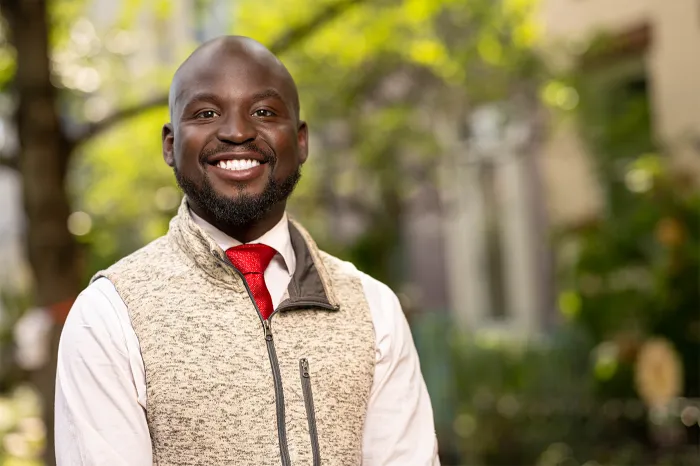
Nigerian-born heritage continues to make an impressive impact on the international stage, with members of the diaspora increasingly taking up influential positions in politics, business, science, education, entertainment and public service. One of the latest examples is Dr. Oye Owolewa, a Nigerian-American pharmacist and politician who has secured an at-large seat on the Council of the District of Columbia in Washington, D.C., following the November 3, 2026, United States midterm elections.
Owolewa’s electoral success represents a significant achievement, not only for his political career but also for Nigerians living in the United States and across the wider diaspora. His victory demonstrates the growing participation of people with Nigerian heritage in American public life and highlights how individuals from immigrant backgrounds are increasingly contributing to the political and democratic development of their adopted countries.
According to election figures reported by local publication The 51st and NBC Washington, Owolewa secured approximately 69.8 per cent of first-choice votes in the contest for two at-large positions on the District of Columbia Council. Independent incumbent Elissa Silverman followed with approximately 20.4 per cent.
The contest featured two available seats, with voters choosing among candidates seeking to represent the entire District of Columbia rather than a particular electoral ward. The ranked-choice voting system used in the District determines the final winners through successive rounds of vote counting.
For Owolewa, the result represents an important transition from his previous position as Washington, D.C.’s elected Shadow Representative to a council position with direct legislative responsibilities.
His new political role places him in a position to participate in decisions affecting the everyday lives of residents, including healthcare, housing, education, public safety, infrastructure, taxation and the city’s financial priorities.
Who Is Dr. Oye Owolewa?
Dr. Oye Owolewa is a Nigerian-American pharmacist and politician whose professional journey combines healthcare, community development and political advocacy.
Born in Boston, Massachusetts, in 1989, Owolewa grew up in a Nigerian immigrant household where education, hard work, community participation and service to others were important values.
His parents moved from Nigeria to the United States in pursuit of educational and professional opportunities. His father is from Kwara State, Nigeria, while his mother has family roots in southwestern Nigeria. The family raised their children in Boston, where Owolewa developed an interest in science, healthcare and community service.
His educational journey eventually took him to Northeastern University in Boston, where he earned a Doctor of Pharmacy degree in 2014.
His academic achievement provided the foundation for a career in pharmacy, a profession that would later become central to his political identity.
Owolewa’s experience as a healthcare professional exposed him to some of the challenges affecting ordinary Americans, particularly communities struggling with access to affordable medical services, prescription medications and preventive healthcare.
Rather than limiting his contribution to the healthcare sector, he gradually became involved in community development and political advocacy, recognising that public policies and government decisions have a direct impact on people’s health and quality of life.
His professional background as a pharmacist would eventually distinguish him from many other politicians and shape his approach to public service.
From Community Service to Politics
Before becoming a prominent political figure in Washington, D.C., Owolewa established himself through grassroots community engagement.
After completing his pharmacy education, he moved from Boston to Washington, D.C., where he began building relationships with residents and participating in local initiatives.
His early involvement in community affairs included working with neighbourhood organisations, supporting health-related programmes and advocating for policies that would improve the living conditions of residents.
In 2018, he became an Advisory Neighbourhood Commissioner in Ward 8, a position that allowed him to engage directly with residents on local concerns.
The experience provided valuable exposure to the practical responsibilities of government, including addressing neighbourhood challenges, communicating residents’ needs to public officials and advocating for improvements in local services.
His commitment to grassroots engagement also strengthened his interest in the political future of Washington, D.C.
One of the major issues he championed was the campaign for D.C. statehood, a long-running political movement seeking to make Washington, D.C., the 51st state of the United States.
The District of Columbia occupies a unique position in American politics. Although it is the nation’s capital and has an elected local government, it does not enjoy the same voting representation in Congress as the 50 states.
Residents elect a delegate to the House of Representatives, but that delegate cannot cast a final vote on legislation on the House floor. The District also has no voting senators in the United States Senate.
For years, advocates have argued that Washington, D.C., residents deserve full congressional representation and greater control over their political and economic affairs.
Owolewa became one of the voices championing this cause.
His Previous Role as Washington, D.C.’s Shadow Representative
Owolewa first entered district-wide electoral politics in 2020 when he was elected as the District of Columbia’s Shadow Representative to the United States Congress.
He subsequently secured another term in 2022, strengthening his position as an advocate for the District’s political rights.
The Shadow Representative position is different from that of an ordinary member of the US House of Representatives. Although the officeholder is elected by District residents and performs advocacy and lobbying functions, the position does not carry voting rights in Congress.
The primary responsibility is to campaign for greater political representation for Washington, D.C., particularly through the pursuit of statehood.
Owolewa used the position to promote the District’s interests, engage with political stakeholders and draw attention to the democratic limitations faced by residents of the American capital.
His experience in the office also provided an opportunity to understand the relationship between local government, federal authorities and national political institutions.
However, his 2026 election victory represents a considerably different level of political responsibility.
Unlike the Shadow Representative position, membership of the District of Columbia Council comes with direct legislative authority within the District’s local government structure.
As a councilmember, Owolewa will participate in debates, propose legislation, vote on policies, scrutinise government agencies and contribute to decisions affecting the city’s budget.
The transition therefore marks a major advancement in his political career, taking him from a position primarily focused on advocacy to one involving direct participation in local lawmaking and government oversight.
Healthcare, Affordable Housing and Better Living Conditions at the Centre of His Campaign
One of the major factors behind Owolewa’s political identity is his background in pharmacy and his understanding of the challenges facing ordinary people seeking quality healthcare.
His campaign for the Council’s at-large seat focused on issues that directly affect the economic and social wellbeing of Washington, D.C., residents.
Healthcare access was among his central priorities.
Drawing on his professional experience, Owolewa has advocated for policies that protect healthcare coverage, improve access to medical services and make prescription medications more affordable.
He has also emphasised the importance of protecting vulnerable residents who depend on public healthcare programmes.
Affordable housing was another significant issue in his campaign.
Like many major American cities, Washington, D.C., faces challenges involving rising housing costs, rental affordability, housing insecurity and the displacement of long-term residents.
For working families, young professionals, senior citizens and low-income households, the cost of maintaining a home can place considerable pressure on household finances.
Owolewa’s campaign called for stronger housing protections, affordable housing opportunities and policies that would help residents remain in their communities.
Education and making Washington, D.C., a more liveable city also featured in his broader political agenda.
His campaign positions included strengthening public education, improving opportunities for young people and supporting policies that would make the city more affordable for working families.
These priorities reflect an approach to politics that connects public administration with the everyday concerns of residents.
For Owolewa, the responsibility of elected leadership goes beyond occupying a political office. It involves ensuring that government decisions translate into meaningful improvements in people’s lives.
What His Election to the D.C. Council Means
Owolewa’s election to the Council of the District of Columbia is particularly significant because of the legislative responsibilities attached to the position.
The Council is the District’s principal legislative body. Its members consider and pass local laws, approve budgets, conduct oversight of government agencies and make decisions affecting public services.
The District’s government operates differently from that of a US state, but the Council nevertheless exercises substantial authority over local affairs.
As an at-large councilmember, Owolewa will represent residents across the entire District rather than a single ward.
This means his responsibilities will involve addressing concerns from different communities, neighbourhoods and socioeconomic groups throughout Washington, D.C.
He will also be expected to work with other councilmembers, the mayor’s administration, community organisations and relevant government agencies to advance policies and respond to public concerns.
His pharmacy background could prove particularly valuable when the Council considers public health programmes, healthcare funding, access to medication and the effectiveness of local health services.
At the same time, his experience in grassroots advocacy and the statehood movement could influence how he approaches questions involving local democracy, accountability and the District’s relationship with the federal government.
Ultimately, his success will be measured not simply by the number of votes he received but by the effectiveness of his contributions to the Council and the tangible results of his legislative work.
A Proud Nigerian Heritage: Representing Kwara and Osun Roots in America
Beyond the political implications, Owolewa’s achievement carries a special meaning for Nigerians who take pride in seeing people of Nigerian descent excel internationally.
Although born and raised in the United States, his family background connects him to Nigeria, particularly the country’s southwestern and north-central regions.
His father is from Kwara State, while his mother is associated with the Yoruba community in southwestern Nigeria.
His story reflects the experiences of many Nigerian-American families whose parents relocated abroad in search of better educational and economic opportunities while maintaining connections with their cultural heritage.
For the Nigerian diaspora, representation in public leadership is important because it provides opportunities to influence policies, contribute to democratic institutions and participate in decisions that affect local and national communities.
Owolewa’s journey from a Nigerian immigrant household in Boston to an elected leadership position in the American capital illustrates the possibilities that education, community engagement and public service can create.
It also reinforces the importance of encouraging young Nigerians, both at home and abroad, to participate in leadership, governance and other fields where their skills can make a difference.
Six Nigerians of American Descent Make Their Mark in the 2026 US Midterm Elections
Owolewa’s victory was part of a wider story of Nigerian participation in the 2026 United States midterm elections.
Reports emerging after the November 3 elections identified several politicians of Nigerian heritage who secured electoral victories across different levels of American government.
Among them was Will Jawando, who won the election to become the next Montgomery County Executive in Maryland. Jawando previously served on the Montgomery County Council and has been involved in public service, education advocacy and community development.
Another notable winner was Junior Ezeonu, who secured Texas House District 101. Ezeonu’s victory added to the growing number of Nigerians and Nigerian-Americans participating in state-level politics in the United States.
Carol Kazeem also retained her Pennsylvania House of Representatives seat for District 159, continuing her legislative career and representation of her constituents.
In Georgia, Segun Adeyina and Gabe Okoye were also identified among politicians of Nigerian descent who secured victories in their respective State House contests.
Together with Owolewa, these politicians demonstrate the expanding presence of Nigerian heritage in American political institutions.
Their achievements span different geographical locations and levels of government, from county administration to state legislatures and the District of Columbia’s local government.
This growing representation is particularly encouraging for younger generations of Nigerians abroad who aspire to pursue careers in politics, lawmaking, public administration and other leadership positions.
It also highlights the contributions of immigrant communities to the democratic and institutional development of their adopted countries.
NiDCOM Celebrates Nigerians’ Political Success in America
The electoral achievements of Nigerians in the United States attracted attention and congratulations from Nigeria’s government institutions and diaspora stakeholders.
The Nigerians in Diaspora Commission (NiDCOM), through its chairman, Abike Dabiri-Erewa, celebrated the successes of Nigerian-Americans who emerged victorious in the elections.
Dabiri-Erewa congratulated the winners, describing their achievements as evidence of growing diaspora participation in public leadership.
The recognition reflects Nigeria’s continued interest in the accomplishments of its citizens and people of Nigerian descent living abroad.
Over the years, Nigerians in the diaspora have built successful careers in medicine, engineering, technology, business, academia, entertainment and public administration.
Their growing involvement in politics adds another important dimension to this contribution.
Political representation gives diaspora communities an opportunity to participate directly in shaping public policies, influencing government decisions and advocating for the interests of their communities.
It can also strengthen international relationships and create additional opportunities for cooperation between Nigeria and countries where Nigerians have established themselves.
Owolewa’s election is therefore more than an individual political achievement. It is part of a broader narrative about the increasing visibility and influence of Nigerians in international leadership.
The Road Ahead: Expectations and Responsibilities
While Owolewa’s electoral victory is a major milestone, the responsibilities that come with his new position will be considerable.
Residents of Washington, D.C., will expect him to translate his campaign promises into practical policies and measurable improvements.
Healthcare affordability, housing insecurity, public education, government accountability and the cost of living are complex issues that require sustained legislative attention.
His professional background gives him a useful perspective on healthcare challenges, but success in the Council will also depend on his ability to negotiate, collaborate with colleagues, understand budgetary limitations and build support for legislation.
His at-large position presents both an opportunity and a challenge.
Representing the entire District means he must consider the interests of residents from different neighbourhoods, income groups, professional backgrounds and communities.
He will need to balance competing priorities while ensuring that vulnerable populations are not left behind in government decisions.
His previous experience as a Shadow Representative and neighbourhood commissioner could provide a foundation for this responsibility.
However, the transition to a legislative office requires a different level of political engagement, particularly because Council decisions can directly affect government spending, public programmes and the delivery of essential services.
For Nigerians following his journey, the coming years will be an opportunity to observe how he uses his new position to advance the interests of Washington, D.C., while continuing to represent the values of public service associated with his Nigerian heritage.
A New Chapter for Nigerian Representation in Global Leadership
Dr. Oye Owolewa’s emergence as an elected at-large member of the Council of the District of Columbia is an inspiring development for Nigerians at home and abroad.
His journey from a Nigerian immigrant family in Boston to the political leadership of the American capital illustrates the importance of education, professional development, community participation and determination.
It also shows that the influence of Nigerians abroad is no longer limited to business, entertainment, science and technology. Increasingly, Nigerians and people of Nigerian descent are finding opportunities to participate in the political systems of their adopted countries.
For Nigeria, these achievements represent an important source of international recognition. They also offer an opportunity to encourage stronger connections with successful members of the diaspora who can contribute knowledge, experience, investment and leadership to communities around the world.
Owolewa’s achievement is particularly noteworthy because of the transition from healthcare professional to community advocate, political campaigner and now legislator.
His new role provides an opportunity to make a direct contribution to the laws, policies and public institutions governing Washington, D.C.
As he begins this new chapter, attention will turn to how effectively he delivers on his promises, addresses the concerns of residents and uses his legislative influence to create lasting improvements.
For many Nigerians, however, the significance of his victory is already clear: a man raised by Nigerian immigrants has secured an influential position in the political administration of one of the world’s most recognisable cities.
It is another reminder that Nigerian excellence and ambition continue to cross borders, creating opportunities for greater representation and influence on the global stage.