

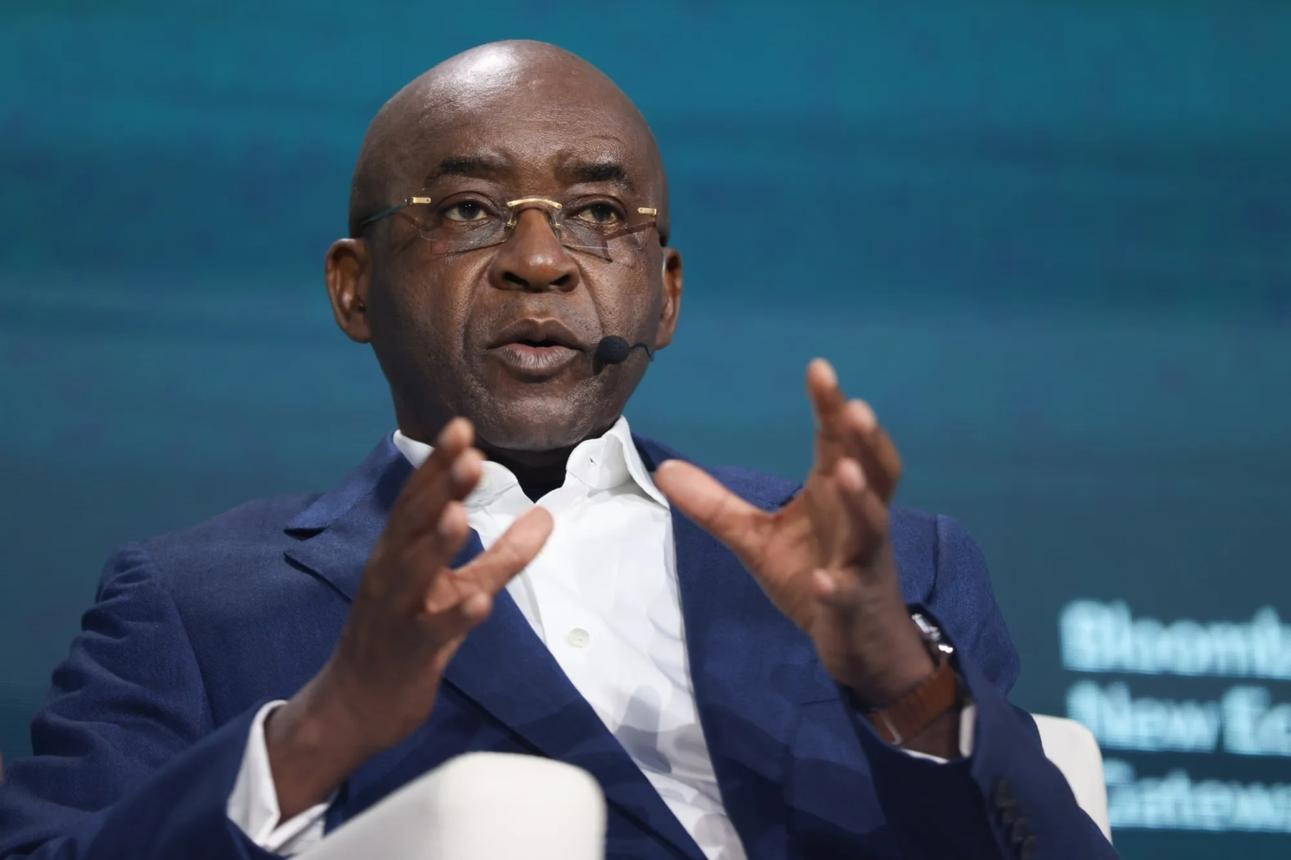
Africa’s economic transformation has been shaped by individuals who have dared to challenge conventional thinking, invest in ambitious ideas and create opportunities where others saw limitations. Among these remarkable personalities is Strive Masiyiwa, a Zimbabwean-born telecommunications entrepreneur, technology investor and philanthropist whose influence extends far beyond the African continent.
Masiyiwa is widely recognised as one of the pioneers of Africa’s mobile telecommunications revolution. Through the establishment and expansion of Econet, he helped change how millions of people communicate, conduct business and access information. His entrepreneurial journey also demonstrated that African businesses could compete internationally, develop sophisticated technological infrastructure and create solutions capable of serving markets across multiple continents.
However, his achievements are not limited to building successful businesses. Through his philanthropic initiatives, particularly the Higherlife Foundation and Delta Philanthropies, Masiyiwa and his wife, Tsitsi Masiyiwa, have supported hundreds of thousands of African children and young people through educational scholarships, healthcare interventions, leadership development and other community-focused programmes.
His story is one of ambition, perseverance, innovation and an enduring commitment to improving the lives of others. From his early experiences in Zimbabwe to his international business ventures, Strive Masiyiwa has become an important figure in discussions about African entrepreneurship, technological development and philanthropy.
Early Life, Education and the Foundation of His Ambition
Strive Thomas Masiyiwa was born on January 29, 1961, in Zimbabwe, which was then known as Rhodesia. His childhood experiences were shaped by the political and social circumstances of the country before independence.
When he was approximately seven years old, his family relocated to Zambia. He subsequently attended school in Scotland, where he completed his secondary education before pursuing higher studies in the United Kingdom.
His educational journey played an important role in preparing him for the technological and entrepreneurial career that would eventually make him internationally recognised.
Masiyiwa studied electrical and electronic engineering at the University of Wales, graduating in 1984. His technical training provided him with an understanding of electrical systems, telecommunications infrastructure and the engineering principles that would later become central to his business activities.
Following his studies, he worked briefly in the United Kingdom before returning to Zimbabwe in 1984, shortly after the country’s independence.
His decision to return home was significant. At a time when many African professionals were looking towards opportunities abroad, Masiyiwa was interested in contributing his technical knowledge to the development of his country.
He initially worked as a telecommunications engineer for Zimbabwe’s state-owned telephone company, Post and Telecommunications Corporation (PTC).
However, his ambitions extended beyond employment. He recognised the opportunities available in the emerging telecommunications and engineering sectors and eventually decided to establish his own business.
In 1986, he founded Retrofit, an electrical engineering and contracting company. The business provided him with valuable entrepreneurial experience and helped him understand the challenges of building and managing a company in a developing economy.
More importantly, it laid the financial and professional foundation for his eventual entry into the telecommunications industry.
The Birth of Econet and the Battle That Changed Zimbabwe’s Telecommunications Industry

One of the most remarkable chapters in Masiyiwa’s career was his determination to establish a privately owned mobile telecommunications network in Zimbabwe.
During the early 1990s, telecommunications services in the country were largely controlled by the government through its state-owned telephone company. Access to telephone services was limited, and obtaining a telephone connection could be difficult for ordinary citizens and businesses.
Masiyiwa recognised that mobile telecommunications could provide an alternative to the traditional telephone infrastructure. Rather than relying entirely on expensive fixed telephone lines, mobile technology offered the possibility of connecting people through wireless networks.
He believed Zimbabwe needed competition in its telecommunications sector and that private investment could accelerate the expansion of communication services.
With this vision, he began pursuing the establishment of Econet Wireless.
However, his ambitions encountered significant resistance.
The Zimbabwean government initially refused to grant his company the necessary licence to operate a mobile telecommunications network. Authorities maintained restrictions that prevented private companies from competing freely in the sector.
Rather than abandon his plans, Masiyiwa challenged the decision through the country’s legal system.
What followed was an extended legal battle lasting approximately five years. The dispute became one of the most important legal and business struggles in Zimbabwe’s telecommunications history.
Masiyiwa argued that the government could not legitimately prevent private businesses from participating in telecommunications when the law provided grounds for competition.
His determination eventually paid off when Zimbabwe’s courts ruled in his favour, paving the way for private participation in the country’s telecommunications industry.
The decision was significant not only for Masiyiwa but also for the wider business environment.
It demonstrated the importance of legal institutions in protecting entrepreneurial rights and challenging monopolistic business structures.
Following the legal victory, Econet Wireless Zimbabwe was established as a major private telecommunications operator, with mobile services launched in 1998.
The company subsequently became publicly listed on the Zimbabwe Stock Exchange.
Masiyiwa’s legal struggle is now frequently cited as an example of how persistence, innovation and the willingness to challenge established systems can create opportunities for economic transformation.

Expanding Econet Beyond Zimbabwe
After establishing Econet Wireless Zimbabwe, Masiyiwa began expanding his business ambitions beyond his home country.
He understood that Africa’s telecommunications challenges were not limited to Zimbabwe. Across many African nations, millions of people lacked reliable access to telephone services, while businesses struggled with inadequate communication infrastructure.
The expansion of mobile technology offered an opportunity to address these challenges while creating commercially sustainable businesses.
Econet consequently became an international telecommunications and technology group with investments and operations across several markets.
One of its notable investments was Mascom Wireless in Botswana, which helped expand mobile telecommunications services in that country.
The group’s activities also extended into other African markets, including Nigeria, where Econet Wireless Nigeria eventually became part of the business that is now Airtel Nigeria.
Beyond Africa, Masiyiwa’s entrepreneurial activities reached markets in Europe, the Middle East, Latin America, India, New Zealand and North America.
His investments have included telecommunications, digital infrastructure, financial technology, renewable energy and other technology-related businesses.
This international expansion established him as more than a telecommunications operator. He had become an investor interested in building an interconnected technology ecosystem capable of supporting economic activities across different markets.
According to his official biography, his global business portfolio spans more than 40 countries across four continents.
Cassava Technologies and His Vision for Africa’s Digital Future
While mobile telecommunications provided the foundation of Masiyiwa’s business success, his interests have increasingly expanded into the broader digital economy.
He recognises that the future of African economic development will depend heavily on reliable internet connectivity, data infrastructure, cloud computing, artificial intelligence and digital financial services.
This vision has influenced the development of Cassava Technologies, a technology group associated with Econet’s wider business ecosystem.
Cassava Technologies brings together several businesses operating in different areas of digital infrastructure and technology.
Among its important components are Liquid Intelligent Technologies, Africa Data Centres, Cassava AI, fintech businesses and cloud and cybersecurity services.
One of the group’s most significant contributions is its investment in fibre-optic infrastructure.
Fibre-optic networks are essential to modern digital communication because they allow large quantities of information to travel quickly between cities, businesses, institutions and countries.
For African economies seeking to participate more effectively in the global digital marketplace, such infrastructure is particularly important.
Businesses require reliable internet connections to communicate with international partners, process financial transactions, operate online platforms and access cloud-based services.
Similarly, educational institutions need digital connectivity to support online learning, research and access to international academic resources.
Healthcare providers increasingly depend on digital systems to manage patient information, coordinate services and improve access to medical expertise.
Through Liquid Intelligent Technologies and related investments, Cassava has developed an extensive cross-border fibre network spanning more than 110,000 kilometres.
The group has also invested in interconnected data centres, cloud computing, cybersecurity and renewable energy solutions.
These investments demonstrate Masiyiwa’s belief that Africa must develop the infrastructure necessary to support its digital future rather than depend entirely on technology developed elsewhere.
His approach goes beyond providing mobile telephone services. It involves building the underlying systems that allow modern economies to function in an increasingly connected world.
His Contribution to Nigeria and Other African Markets
Masiyiwa’s entrepreneurial activities have also had connections with Nigeria, Africa’s largest economy by population.
Econet Wireless Nigeria was among the telecommunications businesses associated with his wider international investment activities. The Nigerian operation later became part of the business that is now Airtel Nigeria.
This development reflects the changing ownership structures and evolution of telecommunications companies in the country.
Nigeria’s telecommunications industry has experienced significant growth since the introduction of mobile telecommunications services in the early 2000s.
Mobile connectivity has helped transform banking, commerce, education, entertainment and communication across the country.
Although no single entrepreneur can claim responsibility for this transformation, Masiyiwa’s investments and early involvement in African telecommunications helped demonstrate the commercial potential of privately operated mobile networks.
His business interests across the continent have also contributed to the expansion of telecommunications infrastructure and the development of technology-related employment opportunities.
For African entrepreneurs, his experience provides an important lesson: business opportunities should not necessarily be restricted by national borders.
An innovative idea developed in one African country can potentially be adapted to solve similar problems in other markets.
Strive Masiyiwa’s Commitment to Education and Philanthropy
Beyond his business achievements, one of the most important aspects of Masiyiwa’s legacy is his commitment to philanthropy.
He and his wife, Tsitsi Masiyiwa, established the organisation that became known as the Higherlife Foundation in 1996.
The foundation emerged from their desire to support children who had lost their parents and those who faced serious economic disadvantages.
They recognised that many talented African children were unable to access quality education because of poverty, family circumstances and limited opportunities.
Rather than viewing these challenges as individual problems, the couple approached them as broader social issues requiring sustained intervention.
Through Higherlife Foundation, they developed educational support programmes designed to help vulnerable and gifted children access learning opportunities.
The foundation’s work has expanded over the years to include scholarships, leadership development, mentorship and support for educational institutions.
Its programmes have reached beneficiaries in several African countries.
The scale of this intervention is significant. According to Econet’s official biography, the family’s philanthropic foundations have supported more than 400,000 scholarships for African children and young people.
These initiatives have helped beneficiaries access education from early childhood through higher education and, in some cases, doctoral studies.
The significance of such programmes extends beyond the individuals receiving financial assistance.
When a child receives the opportunity to complete an education, the benefits can extend to their families, communities and future generations.
Educated young people are better positioned to participate in the labour market, establish businesses, contribute to public institutions and develop solutions to social challenges.
By investing in education, Masiyiwa and his wife are helping to develop the human capital required for Africa’s long-term development.
Delta Philanthropies and a Wider Approach to African Development
In addition to Higherlife Foundation, Masiyiwa and his wife established Delta Philanthropies in 2017.
The organisation focuses on strategic social investments aimed at addressing some of Africa’s most pressing development challenges.
Its work includes education, healthcare, rural transformation, sustainable livelihoods, disaster preparedness and economic empowerment.
An important feature of this approach is the recognition that poverty cannot be addressed through isolated interventions.
For example, providing educational scholarships is important, but children also need access to healthcare, safe communities and supportive environments in which they can learn and develop.
Similarly, rural communities require more than temporary financial assistance. They need sustainable economic opportunities, improved infrastructure and access to essential services.
Delta Philanthropies therefore supports initiatives designed to strengthen communities and improve their long-term ability to become economically productive.
The organisation also places emphasis on women and children, recognising the importance of empowering vulnerable populations in the development process.
Masiyiwa’s philanthropic philosophy reflects a broader understanding of wealth creation.
For him, business success should not be measured exclusively by financial returns. It should also be evaluated by the positive changes that investments can produce in society.
This commitment is consistent with his and his wife’s participation in the Giving Pledge, an initiative through which wealthy individuals and families publicly commit to dedicating a substantial portion of their wealth to philanthropy.
Supporting African Entrepreneurs and the Next Generation of Business Leaders
Another important part of Masiyiwa’s contribution to Africa is his interest in mentoring young entrepreneurs.
He understands that the continent’s future will depend significantly on the ability of its young population to create businesses, develop innovative products and generate employment.
Africa has one of the world’s youngest populations, yet millions of young people face unemployment, limited access to finance and inadequate business development opportunities.
Masiyiwa has used his international business experience to encourage young Africans to approach entrepreneurship with discipline, creativity and determination.
Since 2013, he has shared business lessons and entrepreneurial advice through his Facebook platform, reaching millions of followers.
His posts frequently discuss subjects such as business planning, leadership, customer relations, financial management, innovation and the importance of building sustainable companies.
Rather than simply celebrating successful entrepreneurs, he often explains the difficult decisions and practical lessons involved in establishing and managing businesses.
His mentoring activities have also extended to youth entrepreneurship initiatives and programmes designed to encourage innovation across Africa.
He has been involved in Generation Africa’s GoGettaz Agripreneur Prize, which recognises and supports young entrepreneurs working in agriculture and related sectors.
The initiative is particularly relevant because agriculture remains an important source of employment and economic activity across many African countries.
By encouraging young people to explore opportunities in agribusiness, the initiative challenges the perception that agriculture is an outdated profession.
It instead presents the sector as an area where innovation, technology and entrepreneurship can create substantial economic value.
Masiyiwa’s mentorship efforts demonstrate his belief that Africa needs more than a small group of successful businesspeople. It needs a generation of entrepreneurs capable of creating businesses that solve local problems and compete internationally.
His Role During the COVID-19 Pandemic
Masiyiwa’s influence has also extended into public health and continental crisis response.
During the COVID-19 pandemic, African countries faced serious challenges in securing medical supplies, protective equipment and vaccines.
Many African governments struggled to compete with wealthier nations for access to essential medical resources.
The situation exposed weaknesses in global healthcare supply chains and highlighted the importance of coordinated African action.
In May 2020, the African Union appointed Masiyiwa as a Special Envoy to help coordinate private-sector efforts to support the continent’s COVID-19 response.
He subsequently headed the Africa Vaccine Acquisition Task Team (AVATT).
The initiative was established to help African countries secure vaccines through coordinated procurement arrangements.
His responsibilities included working with governments, international institutions, manufacturers and private-sector stakeholders to improve access to essential medical supplies.
The task was particularly important because vaccine procurement was not simply a matter of identifying available doses. It required negotiations, financing arrangements, logistics and coordination among different countries.
Masiyiwa’s experience in international business and negotiations made him a valuable figure in these efforts.
His involvement demonstrated how business leaders can contribute their expertise to addressing major public challenges.
He had previously participated in private-sector initiatives supporting the response to the Ebola outbreak in West Africa between 2014 and 2015.
These experiences reinforced his role as an African business leader whose activities extend beyond commercial interests.
International Recognition and Global Influence

Masiyiwa’s achievements have earned him recognition from several prestigious international organisations.
In 2019, he received the Norman E. Borlaug World Food Prize Medallion in recognition of his leadership and contributions to agricultural development through the Alliance for a Green Revolution in Africa (AGRA).
He served as chairman of AGRA, an organisation focused on improving agricultural productivity and supporting smallholder farmers across Africa.
In 2020, he was inducted into the Junior Achievement Global Business Hall of Fame, recognising his contributions to entrepreneurship and business development.
He was also recognised by international publications and institutions for his leadership and influence.
In 2023, he was elected an International Honorary Member of the American Academy of Arts and Sciences.
In 2024, Harvard University’s Hutchins Center for African and African American Research awarded him the W. E. B. Du Bois Medal.
The medal recognises individuals whose contributions have significantly advanced African and African American history and culture.
In May 2025, Strive and Tsitsi Masiyiwa received the David Rockefeller Bridging Leadership Award for their contributions to leadership and social development.
The same year, TIME recognised the couple among its TIME100 Philanthropy honourees, highlighting their commitment to improving opportunities for African communities.
Masiyiwa has also served on several influential international boards and advisory bodies, including the Bill and Melinda Gates Foundation, National Geographic Society and Netflix.
These positions reflect the international recognition he has earned through his experience in business, technology and philanthropy.
The Leadership Philosophy Behind His Success
One of the most interesting aspects of Masiyiwa’s story is the philosophy that has guided his business and philanthropic activities.
His journey demonstrates the importance of identifying problems and developing solutions that can serve large populations.
When he entered the telecommunications industry, he recognised that limited access to communication services was a significant obstacle to economic development.
Instead of accepting the situation as inevitable, he pursued a business model that could introduce competition and expand access.
His experience also highlights the importance of persistence.
The five-year legal battle over the establishment of Econet could easily have discouraged an entrepreneur with fewer resources or less determination.
However, Masiyiwa remained committed to his vision and used the legal system to challenge the restrictions he believed were preventing innovation.
Another important element of his philosophy is the importance of education and continuous learning.
His engineering background gave him a technical foundation, but his subsequent success required him to develop expertise in management, investment, international negotiations and leadership.
His mentorship activities suggest that he believes knowledge should be shared rather than kept exclusively among successful individuals.
His philanthropic work also demonstrates an understanding that economic progress must be accompanied by investment in people.
Businesses may create jobs and generate wealth, but societies also require educated citizens, effective healthcare systems and opportunities for vulnerable communities.
For Masiyiwa, these different areas of development are interconnected.
The Lasting Impact of Strive Masiyiwa on Africa and the World
Strive Masiyiwa’s impact can be understood through three major areas: technological development, economic empowerment and philanthropy.
First, his contribution to telecommunications helped demonstrate the possibilities of private-sector investment in Africa’s communication infrastructure.
The growth of mobile telecommunications has changed how Africans interact with one another and participate in economic activities.
Today, mobile phones are essential tools for banking, business transactions, education, entertainment and access to information.
Second, his investments in fibre-optic networks, data centres, cloud computing and other technologies are helping to strengthen the infrastructure required for Africa’s digital economy.
As artificial intelligence, digital financial services and online businesses continue to expand, the availability of reliable technological infrastructure will become increasingly important.
Third, his philanthropic initiatives have helped create educational and economic opportunities for hundreds of thousands of Africans.
Through Higherlife Foundation and Delta Philanthropies, he and his wife have demonstrated how private wealth can be directed towards addressing important social challenges.
His involvement in public health initiatives during the COVID-19 pandemic also illustrates how business leadership can contribute to continental development.
Perhaps one of the most significant aspects of his legacy is the example he provides to African entrepreneurs.
His story challenges the belief that major international businesses can only emerge from established economic powers.
He has demonstrated that African entrepreneurs can develop businesses that operate across continents, compete in international markets and influence global conversations about technology and economic development.
Conclusion
Strive Masiyiwa’s journey from a Zimbabwean-born engineering graduate to an internationally recognised telecommunications entrepreneur and philanthropist is one of the remarkable African success stories of modern times.
Through Econet, he helped challenge established telecommunications structures and contributed to the expansion of mobile connectivity across Africa and other international markets.
Through Cassava Technologies and its associated businesses, he has continued investing in the infrastructure that will shape the continent’s digital future.
Beyond business, his philanthropic commitment has supported hundreds of thousands of educational opportunities and contributed to healthcare, rural development, youth empowerment and other social initiatives.
His story is particularly important because it demonstrates that African entrepreneurship can extend beyond the pursuit of personal wealth.
It can also become a powerful instrument for technological innovation, job creation, human development and social transformation.
For young Africans aspiring to become entrepreneurs, his experience offers several lessons: identify problems worth solving, remain persistent when confronted with obstacles, invest in knowledge, think beyond geographical boundaries and recognise the importance of giving back.
Ultimately, Strive Masiyiwa’s legacy will not be measured only by the telecommunications companies he established or the investments he made across the world.
It will also be reflected in the millions of people whose lives have been influenced by improved connectivity, the young Africans who have received educational opportunities and the entrepreneurs inspired to believe that world-class businesses can emerge from Africa.
His journey reinforces an important message: Africa’s future can be shaped by Africans who are willing to think boldly, invest strategically and use their success to create opportunities for others.