

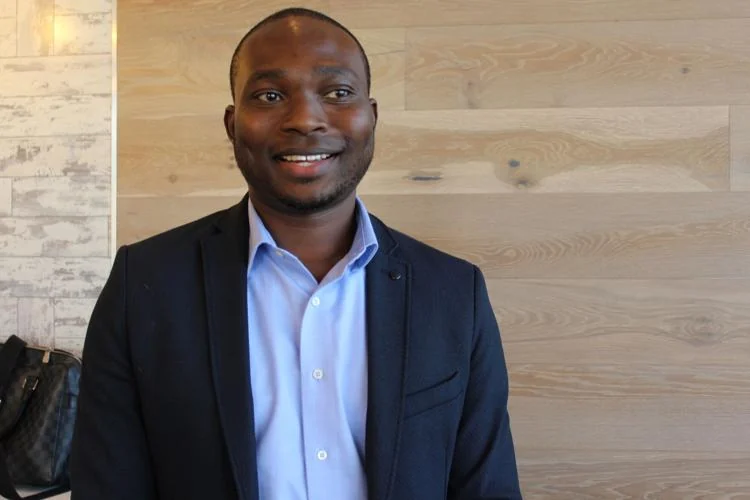
Nigerian-born politician Solomon Adesanya has secured another victory in American politics following his re-election to the Georgia State House of Representatives, where he will continue representing District 43 in Cobb County. His return to the state legislature marks another important milestone in his political journey and adds to the growing influence of Nigerians in American public service.
Adesanya, a member of the Democratic Party, emerged victorious in the November 3, 2026, United States midterm elections after running unopposed in his legislative district. According to the election information provided by Cobb County authorities, he was the only candidate listed on the ballot for District 43, effectively securing the Democratic Party’s hold on the seat.
The development marks another significant achievement for the Nigerian-born lawmaker, whose political journey reflects the increasing participation of immigrants and members of the African diaspora in the democratic and political processes of the United States.
His re-election also forms part of a remarkable electoral outcome for Nigerian-Americans in Georgia, where four politicians of Nigerian heritage have reportedly secured victories in the 2026 midterm elections. Their collective success represents a major moment for the Nigerian community in the United States and highlights the growing presence of people of Nigerian descent in American political leadership.
From Lagos, Nigeria, to the Georgia State Legislature
Solomon Adesanya’s journey from Lagos, Nigeria, to the political landscape of the United States is an inspiring example of how individuals with immigrant backgrounds can become influential participants in their adopted communities.
Born in Lagos to a Nigerian father, Adesanya eventually moved to the United States to pursue higher education and establish a career. Like many Nigerians who travel abroad in search of educational and professional opportunities, he built his life through a combination of academic development, professional experience and community involvement.
Before entering electoral politics, Adesanya developed a career in the financial services industry. His experience as a trained financial adviser gave him professional exposure to financial planning, economic development and the challenges individuals and families face when managing their resources.
He also became involved in small business activities, an experience that would later influence his political priorities and public policy interests.
Beyond his professional commitments, Adesanya reportedly developed strong connections with residents and community organisations in the Marietta area of Cobb County, Georgia. His involvement in local community activities helped him understand some of the concerns affecting ordinary residents, particularly in areas such as access to healthcare, education, economic opportunities and the survival of small businesses.
These experiences provided a foundation for his eventual transition into public service.
Making History in 2022: Flipping a Republican-Leaning District
Adesanya first attracted significant political attention in 2022 when he won election to represent Georgia’s House District 43, defeating the established political expectations surrounding a district traditionally considered Republican-leaning.
His victory was particularly important because it demonstrated the changing political dynamics in Georgia’s suburban communities. Cobb County, which has experienced significant demographic and political changes over the years, has become an important battleground in Georgia’s electoral landscape.
The district’s political significance made Adesanya’s victory more than an individual electoral achievement. It also represented the growing ability of Democratic candidates to compete successfully in areas that had historically favoured Republican candidates.
By winning the seat, Adesanya became part of a broader political transformation taking place across Georgia, where changing population patterns, increased civic participation and evolving voter preferences have influenced electoral outcomes.
His election also carried symbolic importance for Nigerian-Americans and other African immigrants who have increasingly become involved in American politics.
For many Nigerians living in the United States, seeing someone born in Lagos successfully enter a state legislature offered a powerful reminder that immigrant backgrounds do not necessarily limit political ambitions or opportunities for leadership.
A Second Electoral Victory and Renewed Mandate
Adesanya’s re-election in 2026 demonstrates the continued political presence of Nigerian-Americans in Georgia’s legislative affairs.
Running without opposition in the November 3 general election, he secured another term representing District 43. Although an unopposed election differs from a competitive contest, it remains an important part of the democratic process and reflects the absence of an opposing candidate on the ballot.
For Adesanya, the victory provides an opportunity to continue working on issues affecting his constituents while building on the experience he has gained since entering the Georgia legislature.
His political priorities have included improving access to healthcare, supporting small businesses and strengthening education funding. These are issues that affect households across Georgia, particularly communities dealing with the rising cost of living, healthcare expenses and the need for better educational opportunities.
As a financial adviser and small business owner, Adesanya brings professional experience that connects with some of the economic concerns facing his constituents.
Healthcare access, for instance, remains a major public policy concern in the United States, where the cost of medical treatment and health insurance can place considerable pressure on families. State lawmakers play an important role in shaping healthcare policies, approving budgets and supporting programmes that influence access to medical services.
Similarly, small businesses are important contributors to local economies. They create employment, provide essential services and support economic activities within communities. Policies that encourage entrepreneurship, improve access to business resources and reduce unnecessary barriers can help businesses grow and create more opportunities.
Education is another important area of legislative responsibility. Decisions concerning school funding, educational resources and opportunities for young people can have long-term consequences for communities and future generations.
Adesanya’s continued presence in the Georgia State House therefore gives him another opportunity to contribute to discussions and legislative decisions surrounding these important issues.
Four Nigerian-Americans Win Seats in Georgia
One of the most remarkable aspects of the 2026 US midterm elections was the reported success of four politicians of Nigerian descent in Georgia.
Alongside Solomon Adesanya, three other Nigerian-American politicians secured victories in their respective legislative districts, creating an impressive electoral outcome for the Nigerian community in the state.
The four politicians are:
1. Solomon Adesanya – Georgia House District 43
Adesanya retained his seat representing District 43 in Cobb County. A Democrat, he ran unopposed in the November 3 election, securing another term in the Georgia State House.
2. Segun Adeyina – Georgia House District 110
Segun Adeyina also secured re-election to represent District 110. He reportedly received 75.6 per cent of the votes, defeating Republican challenger Charles Lollar.
His victory further strengthens Nigerian-American representation in Georgia’s legislative assembly.
3. Gabe Okoye – Georgia House District 102
Gabe Okoye was also re-elected to represent District 102. Like Adesanya, he reportedly ran unopposed, retaining his position in the Georgia House of Representatives.
4. Phil Olaleye – Georgia House District 59
Phil Olaleye completed the quartet of Nigerian-American electoral winners in Georgia by securing another term representing District 59.
His victory adds to the growing number of Nigerian-descended politicians participating in Georgia’s political leadership.
Collectively, the four victories demonstrate the increasing visibility and participation of Nigerians in American public affairs.
They also provide an opportunity to examine the contributions of immigrant communities to the political development of their adopted countries. Nigerian-Americans are increasingly represented in different areas of public life, including business, education, healthcare, technology and government.
Their electoral achievements show that members of the Nigerian diaspora are not only contributing to the economic and social development of the United States but are also taking active roles in shaping public policy and governance.
14 Nigerian-Americans Reportedly Win in the 2026 US Midterm Elections
Adesanya’s re-election is part of a broader achievement involving Nigerian-Americans across several parts of the United States.
The Chairman of the Nigerians in Diaspora Commission (NiDCOM), Abike Dabiri-Erewa, congratulated 14 Nigerian-Americans who secured elective positions during the November 3, 2026, midterm elections.
In a statement issued on November 4, the commission described their victories as a reflection of the growing role of Nigerians in the diaspora in public leadership.
The winners represented different states and political jurisdictions, including Georgia, Texas, Maryland, Minnesota, Ohio, Connecticut, Michigan, New Mexico, Pennsylvania and Washington, DC.
The reported winners include:
- Will Jawando: Elected Montgomery County Executive in Maryland.
- Oye Owolewa: Elected to an at-large position on the Washington, DC, Council.
- Junior Ezeonu: Elected to represent District 101 in the Texas House of Representatives.
- Olaleye Onikuyide: Won a seat in the Connecticut House of Representatives.
- Ukeme Awakessien-Jeter: Won Ohio House District 7.
- Odus Evbagharu: Nigerian-American Makes History With Election To Texas State House: Won Texas House District 135.
- Carol Kazeem: Retained her seat in the Pennsylvania House of Representatives.
- Gabe Okoye: Re-elected to Georgia House District 102.
- Phil Olaleye: Re-elected to Georgia House District 59.
- Solomon Adesanya: Re-elected to Georgia House District 43.
- Segun Adeyina: Re-elected to Georgia House District 110.
- Esther Agbaje: Re-elected to the Minnesota House of Representatives, District 59B.
- Justin Onwenu: Won Michigan State Senate District 1.
- Janelle Anyanonu: Won New Mexico House District 19.
The victories attracted attention in Nigeria because they demonstrate the growing political influence of people with Nigerian heritage beyond the country’s geographical boundaries.
They also highlight the diversity of political responsibilities Nigerians in the diaspora are taking on, ranging from state-level lawmaking to local government administration.
For Adesanya and his fellow Georgian lawmakers, their victories are particularly significant because they contribute to a visible Nigerian-American presence in one of the country’s politically important states.
Why Nigerian-American Representation Matters
The increasing participation of Nigerian-Americans in American politics is significant for several reasons.
First, political representation provides communities with an opportunity to participate directly in decisions that affect their daily lives. Elected officials help shape policies on education, healthcare, infrastructure, economic development, public safety and other issues that determine the quality of life in their constituencies.
For immigrants and minority communities, having representatives who understand their experiences can also help strengthen their engagement with government institutions.
However, elected officials have a responsibility to represent all their constituents, regardless of nationality, ethnicity, religion or political affiliation. Their success should therefore be measured not simply by their backgrounds but by the effectiveness of their leadership and the impact of their decisions.
Second, Nigerian-American politicians can serve as examples for younger members of immigrant communities who may be interested in public service.
For many young Nigerians studying or living abroad, entering politics may appear difficult because of the challenges associated with navigating a different political system, building public recognition and securing the support needed to contest elections.
The achievements of politicians such as Adesanya demonstrate that individuals with Nigerian backgrounds can participate meaningfully in democratic institutions and pursue leadership positions in their adopted countries.
Their experiences can encourage greater interest in civic education, community development, political participation and public administration.
Third, increased representation can create additional opportunities for constructive engagement between Nigeria and the United States.
Although Nigerian-American politicians are primarily accountable to the people who elect them, their understanding of Nigerian culture and heritage may also provide useful perspectives when discussions involve immigration, education, trade, entrepreneurship, international cooperation and diaspora relations.
This does not mean that their political decisions will automatically favour Nigeria. Rather, their presence can contribute to stronger people-to-people connections between the two countries.
NiDCOM Celebrates the Electoral Achievements
The Nigerians in Diaspora Commission welcomed the reported victories, describing them as evidence of the increasing contributions of Nigerians abroad to leadership and public service.
Chairman Abike Dabiri-Erewa congratulated the successful candidates and expressed confidence in their ability to make meaningful contributions to the communities they represent.
The commission’s recognition is important because Nigerians living abroad remain an important part of the country’s global community.
Across different continents, Nigerians have established successful careers in medicine, engineering, finance, education, entertainment, business, technology and public administration.
Political achievements add another dimension to this contribution, demonstrating that Nigerians in the diaspora are also participating in the governance structures of their host countries.
The National Association of University Students (NAUS) also reportedly celebrated the achievements, describing the victories as a proud moment for Nigeria and an encouraging message to students at home and abroad.
The association’s message emphasised that excellence, leadership and achievement are not restricted by geographical boundaries.
For Nigerian students who aspire to become influential professionals, entrepreneurs, policymakers and public servants, the achievements of these politicians offer examples of what sustained commitment and participation can accomplish.
The Road Ahead for Solomon Adesanya
As Solomon Adesanya prepares to continue his work in the Georgia State House, expectations will naturally focus on how effectively he uses his position to serve the people of District 43.
Winning an election is an important achievement, but the responsibility that follows is even greater. Constituents expect elected representatives to listen to their concerns, participate actively in legislative proceedings, scrutinise government spending and support policies that improve their communities.
Adesanya’s background in financial services and small business ownership could continue to inform his approach to economic issues, particularly those involving entrepreneurship, financial opportunities and local business development.
His continued involvement in healthcare and education policy will also be important as Georgia addresses the needs of its growing and increasingly diverse population.
Beyond his immediate constituency, his political journey carries significance for Nigerians who follow the achievements of their compatriots abroad.
His story is a reminder that migration does not necessarily mean abandoning one’s roots. People can build successful lives in other countries while maintaining connections to their heritage and contributing to the societies in which they live.
At the same time, his re-election illustrates the importance of active participation in civic life. Building a political career requires more than professional qualifications or personal ambition; it involves community engagement, public accountability, an understanding of local concerns and the willingness to take responsibility for decisions that affect others.
Conclusion
Solomon Adesanya’s re-election to the Georgia State House of Representatives is another notable development in the growing story of Nigerian participation in international public life.
From his beginnings in Lagos to his emergence as an elected representative in Georgia, his journey highlights the opportunities available to people who pursue education, professional development and community involvement beyond their countries of birth.
His victory, alongside those of Segun Adeyina, Gabe Okoye and Phil Olaleye, gives Nigerian-Americans a reason to celebrate their growing presence in Georgia’s political landscape.
More broadly, the reported election of 14 Nigerian-Americans across different parts of the United States demonstrates the expanding role of the Nigerian diaspora in public leadership.
For Nigeria, these achievements represent an opportunity to celebrate the contributions of its people around the world. For young Nigerians, they offer encouragement to pursue excellence and become active participants in their communities, wherever life takes them.
Ultimately, Adesanya’s re-election is not just a story about retaining a political seat. It is also a story about representation, community participation, immigrant achievement and the growing influence of Nigerians in global affairs.