

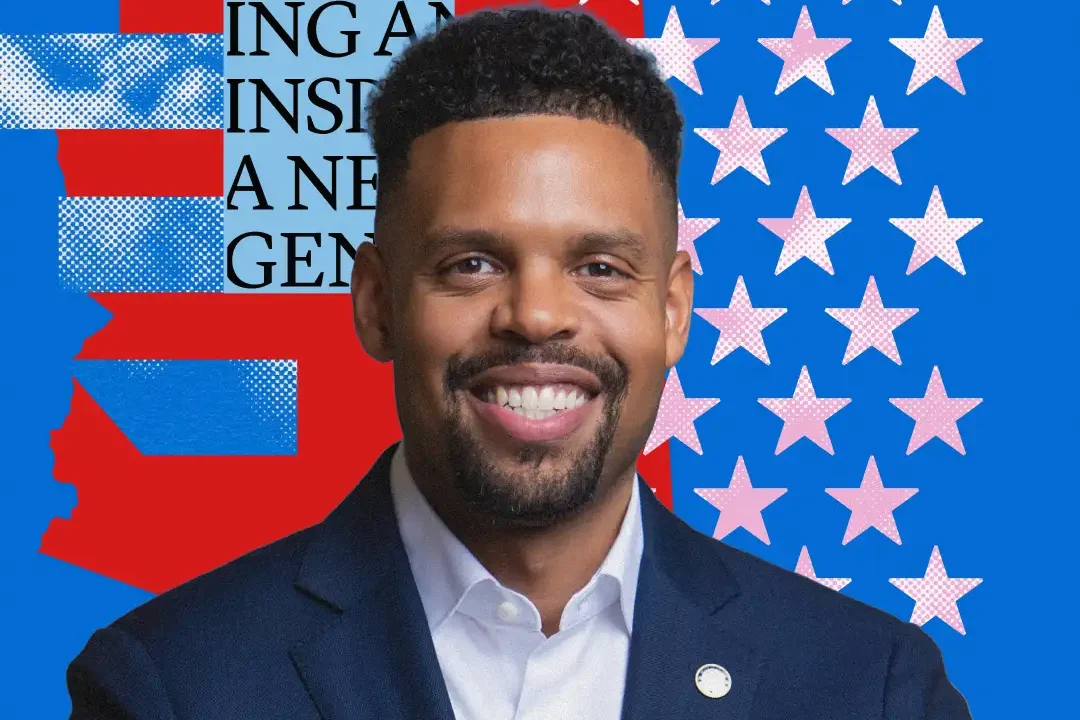
Nigerian-American politician Phil Olaleye has won re-election to the Georgia House of Representatives, retaining his seat in District 59 following the November 3, 2026, United States midterm elections.
Olaleye, a member of the Democratic Party, defeated Republican challenger Devanta “Sully” Sullivan in a decisive victory that extends his representation of the district and gives him another opportunity to advance policies affecting residents of Georgia.
According to the reported election results, Olaleye secured 21,600 votes, representing approximately 95 per cent of the total votes cast, while Sullivan received 1,130 votes, or about five per cent. The result represents a significant victory for the incumbent Democrat and reinforces the party’s hold on the district. The figures were reported as unofficial election results pending certification.
His victory is also significant for Nigerians at home and abroad, particularly the Nigerian-American community, which continues to make its presence felt in American political institutions. Olaleye is among a growing number of politicians of Nigerian heritage who have secured elective positions across the United States.
Georgia, in particular, has emerged as an important centre of Nigerian-American political representation, with four Nigerian-descent lawmakers reportedly winning or retaining seats in the state’s legislature during the 2026 election cycle.
For Olaleye, the victory is more than another electoral success. It represents an opportunity to continue building on the work he began when he first entered the Georgia legislature in 2022, while strengthening the political voice of immigrant communities and other underrepresented groups.
Who Is Phil Olaleye? A Nigerian-American Politician Making His Mark in Georgia
Phil Olaleye is an American politician of Nigerian and Colombian heritage whose career reflects the growing influence of immigrant families in the United States. He was born and raised in Georgia and grew up in a working-class immigrant household in Stone Mountain, a community in the Atlanta metropolitan area.
His upbringing played an important role in shaping his outlook on public service, education and economic opportunity. According to his official biography, his parents moved to Stone Mountain in search of affordable housing and better educational opportunities for their family. However, accessing quality public education was not always easy. As a young student, Olaleye had to travel approximately two hours each way to attend a school that could provide the educational opportunities he needed.
His parents’ experiences and sacrifices also influenced his understanding of the challenges confronting working-class families. Olaleye began working as a teenager, taking jobs at establishments including Waffle House and Best Buy to support his family.
These early experiences helped shape his commitment to policies that improve access to education, create employment opportunities and make life more affordable for ordinary people.
Rather than pursuing a career solely in the private sector, Olaleye developed an interest in community development, public policy and social change. His academic journey took him to Duke University, where he studied Public Policy and Economics, graduating in 2007.
He subsequently worked as a sales and trading analyst at Citigroup before joining the United States Peace Corps. His Peace Corps assignment took him to the Philippines, where he spent three years working with an indigenous community through youth and family development programmes.
After returning to the United States, he continued his education at Harvard University’s Kennedy School of Government, earning a Master in Public Policy in 2014, with a focus on social and urban policy.
His educational background, professional experience and exposure to different communities helped prepare him for a career focused on public administration and improving the quality of life of disadvantaged populations.
From Community Development to Political Leadership
Before becoming a state legislator, Olaleye established himself as a community development professional and advocate for young people.
He worked with WorkSource Atlanta, where he served as Director of Performance Management. His responsibilities included supporting workforce development initiatives designed to help job seekers acquire relevant skills, improve their employability and access better career opportunities.
He also became the Executive Director of Next Generation Men & Women (Next Gen), a nonprofit organisation committed to helping young people from underserved communities prepare for college and successful careers.
Under his leadership, the organisation expanded from serving approximately 50 students to reaching nearly 400 students across six Atlanta high schools. It also developed partnerships with around 70 colleges and businesses to provide mentorship, career exposure and opportunities for young people.
Olaleye’s community involvement extended beyond education and employment. He served as president of the Organized Neighbors of Summerhill, where he participated in neighbourhood improvement initiatives, including security projects, park development and efforts to protect residents from the negative effects of uncontrolled development.
These experiences gave him a practical understanding of the problems facing ordinary residents and strengthened his interest in becoming directly involved in government.
In 2022, he took that commitment into electoral politics, contesting for Georgia House District 59 as a Democrat.
He won the election and officially assumed office on January 9, 2023, becoming the representative for the district. His election was an important milestone in a political journey built around education, community engagement, economic opportunity and public service.
His Legislative Priorities: Education, Housing and Healthcare
Since entering the Georgia House of Representatives, Olaleye has consistently highlighted issues that directly affect working families.
Three major areas have featured prominently in his policy agenda: affordable housing, public education and healthcare access.
1. Affordable housing
Housing affordability remains a major concern for many families in Georgia, particularly in communities experiencing rising rents and property prices.
Olaleye has advocated policies that would make it easier for residents to rent or purchase homes without being forced out of their communities by increasing living costs.
His position recognises that housing is not simply a matter of providing shelter. It is also connected to economic stability, educational opportunities, employment and the ability of families to build long-term wealth.
He has supported stronger protections for renters and retirees, alongside measures that encourage the development of more affordable homes.
2. Better public education
Education is another major focus of his legislative work, reflecting his personal experience of overcoming obstacles to access quality schooling.
Olaleye believes that a child’s educational opportunities should not be determined by their family’s income or residential postcode.
He has advocated increased investment in public schools, stronger support for teachers, improved educational resources and expanded opportunities for students from disadvantaged backgrounds.
His legislative record also includes securing nearly $30 million for Atlanta Technical College, championing additional school funding for students living in poverty and advancing legislation supporting aspiring teachers.
These initiatives demonstrate his interest in connecting education with practical economic opportunities and preparing young people for the changing demands of the labour market.
3. Accessible and affordable healthcare
Healthcare is another important part of Olaleye’s agenda.
He has advocated expanding access to affordable healthcare services, including supporting Medicaid expansion in Georgia.
His position is based on the argument that families should not be denied essential medical services because they cannot afford insurance or treatment.
He has also highlighted the importance of keeping hospitals operational, strengthening the healthcare workforce and addressing disparities that prevent some communities from receiving quality medical attention.
These policy priorities have helped establish his public identity as a lawmaker focused on practical issues affecting families, rather than politics alone.
Georgia Emerges as a Stronghold for Nigerian-American Political Representation
One of the most remarkable aspects of Olaleye’s re-election is the growing number of Nigerian-Americans participating in political leadership in Georgia.
The state recorded four successful Nigerian-descent lawmakers in the November 2026 elections, making it a significant centre of Nigerian-American representation in the United States political landscape.
Alongside Olaleye, three other Nigerian-American politicians also secured victories:
-
Segun Adeyina – District 110: Adeyina retained his seat in the Georgia House of Representatives, defeating Republican challenger Charles Lollar. He reportedly secured 75.6 per cent of the votes.
-
Gabe Okoye – District 102: Okoye secured re-election to the Georgia House of Representatives without opposition in the general election.
-
Solomon Adesanya – District 43: Adesanya also retained his position in the Georgia legislature after running unopposed.
Together, these victories demonstrate the increasing participation of Nigerians and their descendants in American democratic institutions.
Their achievements are particularly significant because state legislatures play an important role in shaping policies that directly affect residents. State lawmakers debate and pass legislation covering education, healthcare, taxation, housing, employment, transportation and public spending.
For Nigerians living in Georgia, having lawmakers with Nigerian heritage in elected positions also provides an opportunity for greater cultural representation and engagement with government.
However, their responsibilities extend beyond the Nigerian community. As elected representatives, they are expected to serve all constituents, irrespective of their national origin, race, political affiliation or background.
14 Nigerian-Americans Celebrate Electoral Victories Across the United States
Olaleye’s victory is part of a wider success story involving Nigerians and people of Nigerian descent who contested elections across different parts of the United States in 2026.
The Nigerians in Diaspora Commission (NiDCOM), led by its Chairman and Chief Executive Officer, Abike Dabiri-Erewa, celebrated 14 Nigerian-Americans who reportedly secured elective positions during the November 3 midterm elections.
The winners were spread across several states and political jurisdictions, including Georgia, Maryland, Texas, Pennsylvania, Ohio, Connecticut, Michigan, Minnesota, New Mexico and Washington, DC.
Some of the notable winners include:
-
Will Jawando – Maryland: Elected Montgomery County Executive.
-
Oye Owolewa – Washington, DC: Secured an at-large seat on the DC Council.
-
Junior Ezeonu – Texas: Won a seat representing District 101 in the Texas House of Representatives.
-
Olaleye Onikuyide – Connecticut: Won election to represent House District 19.
-
Ukeme Awakessien-Jeter – Ohio: Secured victory in Ohio House District 7.
-
Odus Evbagharu – Texas: Won a seat representing House District 135.
-
Carol Kazeem – Pennsylvania: Retained her seat in Pennsylvania House District 159.
-
Esther Agbaje – Minnesota: Secured re-election to the Minnesota House of Representatives for District 59B.
-
Justin Onwenu – Michigan: Won Michigan State Senate District 1.
-
Janelle Anyanonu – New Mexico: Won New Mexico House District 19.
The other four successful candidates were Phil Olaleye, Segun Adeyina, Gabe Okoye and Solomon Adesanya, all of whom won legislative seats in Georgia.
NiDCOM’s announcement highlighted the achievements as evidence of the growing contributions of Nigerians in the diaspora to leadership, governance and public service in their countries of residence.
Dabiri-Erewa congratulated the winners, describing their accomplishments as a source of pride and a testament to the talent, resilience and leadership of Nigerians making meaningful contributions around the world.
Why Nigerian-American Political Representation Matters
The growing number of Nigerian-Americans winning elections in the United States carries significance beyond the individual politicians and their respective constituencies.
For decades, Nigerians have migrated to different parts of the world in pursuit of better educational opportunities, professional development, economic advancement and improved living conditions.
Many have established successful careers in medicine, engineering, technology, business, education, entertainment and other professional fields.
Increasingly, members of the Nigerian diaspora are also making their presence felt in politics and public administration.
Political participation provides an opportunity for Nigerians abroad to contribute directly to the development of the communities in which they live. It also allows individuals with immigrant backgrounds to bring their experiences and perspectives into conversations about public policy.
The success of Nigerian-American lawmakers is particularly encouraging for younger generations who may be interested in pursuing careers in public service.
Seeing individuals with Nigerian heritage occupy elected positions can inspire young people to understand that leadership opportunities are not restricted by their parents’ country of origin or cultural background.
It also demonstrates that immigrant families can contribute meaningfully to the political, economic and social development of their adopted countries.
For Nigeria, these accomplishments represent an opportunity to strengthen relationships with its diaspora population. Nigerians who hold public office abroad can contribute to international engagement, cultural exchange, investment opportunities and stronger connections between Nigeria and their countries of residence.
Nevertheless, their success should also be viewed through the responsibilities attached to democratic leadership. Winning an election is only the beginning. Delivering effective representation, developing inclusive policies and remaining accountable to constituents are essential measures of lasting political success.
What Next for Phil Olaleye After His Re-election?
With his third electoral victory, Olaleye is expected to continue representing Georgia House District 59 when the new legislative term begins in January 2027.
His next challenge will be to build on his legislative experience and continue addressing the issues that matter most to residents.
Affordable housing, access to quality healthcare, improved public education and economic opportunities are likely to remain central to his public policy agenda.
His experience in nonprofit management and workforce development also provides a foundation for continued advocacy on behalf of young people and working families.
As a member of the Georgia House of Representatives, he serves on committees dealing with education, governmental affairs, and information and audits. These responsibilities give him opportunities to participate in legislative discussions and oversight across important areas of state governance.
His re-election also places him in a position to strengthen his political influence and deepen his relationship with constituents throughout the district.
For Nigerian-Americans following his journey, his achievement represents an encouraging example of how education, community involvement, professional experience and political participation can create opportunities for leadership.
A Proud Moment for Nigeria and Its Diaspora
Phil Olaleye’s victory in Georgia is another reminder of the growing influence of Nigerians and people of Nigerian descent beyond the shores of their ancestral homeland.
From community development and education to legislation and public administration, Nigerians in the diaspora are increasingly occupying positions where they can influence decisions and contribute to society.
The victories recorded by Olaleye and the other Nigerian-American lawmakers in the 2026 US midterm elections provide further evidence of this progress.
Their achievements have also attracted congratulations from Nigerian organisations and stakeholders who recognise the importance of representation and leadership in international communities.
The National Association of University Students (NAUS) reportedly described the electoral successes as a “proud moment for Nigeria”, reflecting the sense of national pride associated with Nigerians making significant contributions abroad.
Ultimately, Olaleye’s re-election should be measured not only by the impressive margin of victory but also by what he accomplishes during his new term.
His journey from the son of Nigerian and Colombian immigrants to a three-term elected state representative offers an inspiring example of civic participation and public service.
As he prepares for another legislative term, Nigerians at home and abroad will be watching to see how he uses his position to improve lives, promote inclusive development and contribute to the future of Georgia.
His story is not simply about a Nigerian-American winning an election. It is also about the possibilities created when individuals from immigrant backgrounds participate actively in democracy and work towards shaping the future of the societies in which they live.