

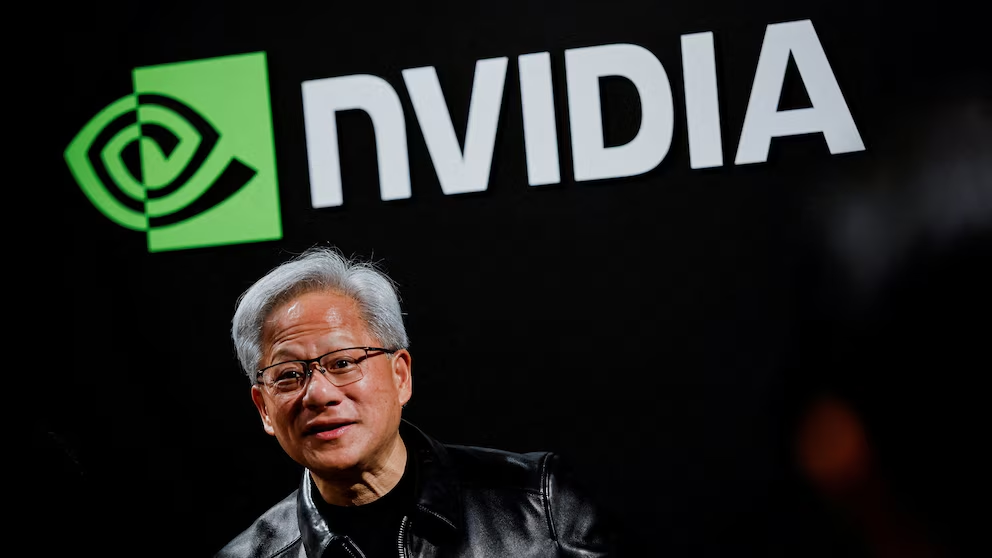
The story of Jensen Huang’s dramatic departure from Nvidia is one of the most consequential corporate leadership dramas of 2026. For more than three decades, Huang was the driving force behind one of the world’s most influential technology companies, transforming Nvidia from a relatively small graphics-chip manufacturer into the powerhouse at the centre of the global artificial intelligence revolution.
However, in November 2026, his remarkable career at the company took an unexpected turn. Following revelations about his alleged personal relationships, questions surrounding possible national security implications, and mounting pressure on the company’s leadership, Huang resigned as president and chief executive officer.
His departure has raised several important questions: What exactly happened? Why did the man who built Nvidia into a global technology giant leave so suddenly? Could he return? And what does the future hold for a billionaire entrepreneur whose influence on the technology industry extends far beyond the company he co-founded?
The following article examines Huang’s rise, the controversy surrounding his departure, the developments that followed, and the possibilities facing him in the next chapter of his life.
The Fall of a Technology Giant
Few technology executives have enjoyed the extraordinary influence and recognition that Jensen Huang achieved during his three decades at Nvidia. Known for his trademark black leather jacket, energetic public appearances and ambitious vision for artificial intelligence, Huang became one of the most recognisable personalities in Silicon Valley.
Under his leadership, Nvidia evolved from a company primarily associated with computer graphics and gaming into a global semiconductor powerhouse whose processors became essential to the development of artificial intelligence, autonomous vehicles, advanced computing and modern data centres.
His achievements also made him one of the wealthiest individuals in the world, with his fortune closely connected to Nvidia’s spectacular rise in market value.
But in a dramatic development that shocked the technology industry, Huang resigned as Nvidia’s president and chief executive officer on November 12, 2026, following a controversy involving allegations about his personal relationships and questions concerning possible connections to Chinese intelligence interests.
Although Nvidia described his departure as a voluntary resignation, reports characterised the development as an ousting by the company’s board.
His exit represents a major turning point for both Huang and Nvidia. It also raises questions about corporate accountability, the responsibilities of powerful technology executives, international security and the future of the artificial intelligence industry.

Who Is Jensen Huang?
Jensen Huang, whose Chinese name is Jen-Hsun Huang, was born on February 17, 1963, in Tainan, Taiwan.
He spent part of his childhood in Taiwan and Thailand before moving to the United States with his family. His journey from an immigrant child to one of the most influential figures in global technology is frequently cited as an example of determination, entrepreneurship and the opportunities associated with the American technology industry.
Huang attended Oregon State University, where he earned a bachelor’s degree in electrical engineering. He subsequently obtained a master’s degree in electrical engineering from Stanford University.
Before establishing Nvidia, he gained professional experience at Advanced Micro Devices (AMD) and LSI Logic, two companies involved in semiconductor technology.
His professional background gave him an understanding of computer architecture, chip development and the growing importance of specialised processors.
In 1993, Huang joined forces with Chris Malachowsky and Curtis Priem to establish Nvidia.
The founders recognised that specialised graphics processing technology could transform the way computers handled complex visual information.
Their vision eventually produced a company that would become central to the development of modern artificial intelligence.
Building Nvidia: From a Small Semiconductor Company to an AI Powerhouse
When Nvidia was founded in 1993, artificial intelligence was not the enormous commercial industry it is today.
The company’s early ambitions centred largely on computer graphics, particularly the technology needed to improve visual experiences in personal computers and video games.
Nvidia’s major breakthrough came in 1999 when it introduced the GeForce 256, which it promoted as the world’s first GPU, or graphics processing unit.
The GPU revolutionised computer graphics by allowing computers to handle multiple visual calculations simultaneously.
This development helped Nvidia establish a strong position in the gaming industry.
However, Huang understood that the potential of GPU technology extended beyond video games.
As scientists and researchers explored new applications for parallel computing, Nvidia’s processors became increasingly valuable for scientific research, data analysis and machine learning.
The company’s introduction of CUDA in 2006 was another important milestone.
CUDA allowed developers to use Nvidia GPUs for general-purpose computing rather than restricting them to graphics-related applications.
This strategic decision helped establish the technological foundation for Nvidia’s later dominance in artificial intelligence.
When generative AI applications began attracting worldwide attention, particularly following the emergence of ChatGPT in 2022, Nvidia was exceptionally well-positioned to benefit.
Its GPUs became essential infrastructure for companies developing and operating advanced AI models.
Technology companies, governments, research institutions and cloud computing providers increasingly competed for access to Nvidia’s powerful processors.
The result was an extraordinary commercial transformation.
Nvidia became one of the most valuable publicly traded companies in the world, while Huang emerged as a global technology celebrity.
His influence extended into international politics, particularly as the United States and China competed for supremacy in advanced semiconductor technology.
How Jensen Huang Became the Face of the Artificial Intelligence Revolution
Huang’s success was not simply the result of developing powerful computer chips.
One of his greatest achievements was recognising that the future of computing would require an entire ecosystem of hardware, software, developers and infrastructure.
Rather than concentrating exclusively on selling processors, Nvidia developed an integrated technology platform that made its products increasingly attractive to businesses and researchers.
Its GPUs, networking technology, software platforms and specialised AI systems became important components of the modern computing industry.
This strategy gave Nvidia a competitive advantage that extended beyond the technical performance of its chips.
Huang also became an effective communicator of the company’s ambitions.
His public presentations attracted enormous attention, while his distinctive leather jacket became a recognisable symbol of Nvidia’s corporate identity.
He cultivated relationships with major technology companies, investors, policymakers and international business leaders.
His appearances at major technology conferences often generated significant excitement among investors and industry observers.
By 2026, Huang was no longer simply a semiconductor executive. He had become one of the most influential personalities associated with the global AI revolution.
That makes his sudden departure particularly significant.
The Controversy That Changed Everything
The circumstances surrounding Huang’s resignation began attracting serious attention following reports about his alleged personal relationships.
According to Reuters and other international media organisations, reports emerged concerning relationships involving Huang and two women, including a former executive associated with Singapore-based technology company Megaspeed and another Nvidia employee.
One of the most controversial aspects of the unfolding story involved Alice Huang, a former executive at Megaspeed.
US intelligence officials reportedly suspected that Alice Huang had connections to Chinese intelligence services.
The allegations became particularly sensitive because Megaspeed was associated with Nvidia’s technology supply and access to its advanced processors.
Washington has been increasingly concerned about the possibility that advanced American semiconductor technology could reach Chinese companies or organisations despite export restrictions.
Nvidia has been caught in the middle of this geopolitical struggle because China represents an important potential market for advanced computing technology.
Consequently, reports connecting a person allegedly involved with Huang to a company facing scrutiny over possible diversion of restricted chips created a serious reputational and security challenge.
It is important, however, to distinguish between allegations and established facts.
The espionage accusations against Alice Huang have not been conclusively established in the publicly reported developments. Beijing has rejected the allegations, and US Attorney General Todd Blanche indicated that the Justice Department had not reached a conclusion on whether she was a spy.
Megaspeed has also disputed allegations concerning its operations.
Reuters additionally reported claims of another relationship involving an Nvidia employee who reportedly worked under Huang.
The combination of these revelations intensified scrutiny of the company’s leadership and raised questions about executive conduct, potential conflicts of interest and corporate governance.
For Nvidia, the controversy was particularly damaging because the company’s business had become closely connected to sensitive national security and international trade issues.

November 12, 2026: Jensen Huang Resigns from Nvidia
On November 12, 2026, Nvidia announced that Huang had resigned as president, chief executive officer and a member of the company’s board of directors, effective immediately.
The announcement marked the end of an extraordinary 33-year period during which he had led the company from its founding.
Nvidia’s board appointed its chief financial officer, Colette Kress, as interim chief executive officer while beginning the search for a permanent replacement.
Harvey C. Jones, a longtime Nvidia director and former technology executive, was appointed the company’s first-ever board chairman.
In its announcement, Nvidia acknowledged Huang’s enormous contribution to the organisation and described his impact on the company and the technology industry as profound.
The company also expressed confidence in its existing leadership team and indicated that its business operations, customer commitments and product roadmap would continue.
Although the company officially described Huang’s departure as a resignation, the circumstances surrounding the decision prompted widespread media descriptions of his exit as an ousting.
The departure was especially dramatic because Huang had remained Nvidia’s central leadership figure since its establishment in 1993.
Unlike companies that have experienced several changes of leadership over the years, Nvidia had become closely associated with one founder’s vision and management style.
His departure therefore represented more than an ordinary executive transition.
It marked the end of an era.
The Reaction from the Technology Industry and Political Establishment
Huang’s resignation generated considerable debate across the technology and investment communities.
Some observers expressed disappointment that a founder responsible for building one of the world’s most successful technology companies had left under such controversial circumstances.
Others argued that corporate accountability must apply equally to powerful executives, particularly those leading organisations involved in sensitive international technology transactions.
The controversy also attracted political attention.
President Donald Trump reportedly supported the possibility of Huang returning to his former position, while expressing doubts about the espionage allegations.
Several prominent technology personalities also expressed sympathy for Huang and recognised his contribution to the development of artificial intelligence.
An open letter calling for greater transparency around his departure attracted support from Nvidia employees, former employees, investors and prominent technology figures.
The central argument advanced by supporters was that the company should provide a clear, evidence-based explanation of its decision rather than allowing uncertainty to dominate the discussion.
However, others warned that Nvidia’s leadership had responsibilities beyond protecting its founder’s reputation.
The company’s position in the semiconductor industry means that questions about executive conduct, corporate security and export compliance carry consequences that extend well beyond its shareholders.
The Failed Comeback: Could Jensen Huang Return?
One of the most intriguing developments following Huang’s departure was his apparent willingness to return to Nvidia.
On November 17, 2026, Huang issued his first major public statement following his resignation.
He expressed gratitude to supporters who had contacted him and reflected on the significance of building Nvidia over more than three decades.
He also indicated that he would be honoured to return if the company’s board determined that his reinstatement was in the best interests of shareholders, employees and the organisation.
His statement encouraged speculation that the controversy might eventually result in a dramatic comeback.
However, Nvidia’s board quickly made its position clear.
During the company’s earnings conference call on November 17, chairman Harvey Jones said the board had unanimously accepted Huang’s resignation and did not intend to reinstate him as chief executive.
The statement effectively closed the door on an immediate return.
It was a significant development because it demonstrated that Nvidia’s board was prepared to move forward without the founder who had guided the company for more than three decades.
Although supporters continued to argue for his reinstatement, the board’s position suggested that the company wanted to establish a new leadership structure.
Colette Kress and the Future of Nvidia
With Huang no longer in charge, attention has shifted to Colette Kress, Nvidia’s interim chief executive.
Kress joined Nvidia in September 2013 and has served as its chief financial officer for more than a decade.
Her experience in corporate finance and technology management makes her an important figure in the company’s transition.
Her immediate responsibility is to maintain investor confidence, preserve relationships with customers and suppliers, and ensure that Nvidia continues executing its technology strategy.
The company must also identify a permanent chief executive capable of managing its complicated international business operations.
Replacing Huang will not be an easy assignment.
He was deeply involved in Nvidia’s technological direction, business relationships, strategic investments and public engagement.
The company’s next leader will therefore need more than conventional corporate management experience.
The individual must understand semiconductor technology, artificial intelligence, global supply chains, international trade restrictions and the competitive dynamics of the technology industry.
The challenge will be to preserve Nvidia’s competitive advantages without depending on the personality and leadership style of its former founder.
What the Future Holds for Jensen Huang
Despite losing his position at Nvidia, Huang’s departure does not necessarily mean the end of his influence in the technology industry.
At 63, he remains an experienced entrepreneur with an extraordinary understanding of semiconductor engineering, artificial intelligence and global technology markets.
His future could develop along several possible paths.
1. A Possible Return to Corporate Leadership
Although Nvidia’s board has rejected his immediate reinstatement, the possibility of Huang returning to a leadership position in another technology company cannot be entirely dismissed.
His experience, business connections and understanding of the AI industry would make him an attractive figure for organisations seeking experienced technology leadership.
However, any future executive appointment would likely depend on the outcome of investigations and the resolution of questions surrounding his departure.
For now, Nvidia’s board has made clear that it intends to move forward without him.
2. Becoming an Independent Technology Investor
Huang’s financial position provides him with considerable opportunities outside traditional corporate employment.
As one of Nvidia’s major shareholders, he has accumulated substantial wealth through the company’s growth.
He could use his resources and industry experience to invest in emerging technology businesses, particularly those involved in artificial intelligence, robotics, semiconductor manufacturing and advanced computing.
Such a move would allow him to remain influential without assuming responsibility for running a major publicly traded corporation.
3. Establishing a New Technology Venture
Another possibility is that Huang could eventually establish or support a new technology enterprise.
His understanding of the semiconductor industry and the infrastructure required to power artificial intelligence gives him considerable entrepreneurial experience.
However, competing directly with Nvidia would be a difficult undertaking.
Nvidia has developed a sophisticated ecosystem involving software, hardware, research partnerships and relationships with major technology companies.
Any new venture would need a compelling technological advantage to compete successfully.
4. Facing Congressional and Regulatory Scrutiny
Perhaps the most immediate challenge facing Huang is the possibility of further investigations into the circumstances surrounding his departure.
Reports indicated that he was expected to testify before Congress on December 1, 2026, amid questions about Nvidia’s relationships with China-linked businesses and the enforcement of semiconductor export restrictions.
His testimony could attract significant attention because of his former position and his knowledge of the company’s international operations.
Lawmakers may seek clarification about corporate relationships, export-control compliance and whether sensitive American technology was exposed to inappropriate foreign influence.
The outcome of these inquiries could influence how Huang is perceived by investors, policymakers and the wider technology industry.
It is important to emphasise that allegations do not establish wrongdoing. The relevant investigations and legal processes must determine whether any laws or regulations were violated.
5. Rebuilding His Personal and Professional Reputation
Beyond business and politics, Huang faces the challenge of rebuilding his public image.
For many years, his reputation was closely connected to Nvidia’s success.
He was celebrated as a visionary entrepreneur whose leadership helped create the technological foundation for the modern AI industry.
The controversy has introduced a different dimension to his public identity.
Rebuilding trust will require transparency, accountability and the ability to address legitimate questions surrounding the circumstances of his departure.
His professional achievements remain historically significant, but they will not automatically shield him from scrutiny.
How he responds to the controversy may ultimately determine how the next chapter of his career unfolds.
The Wider Implications for the Global Artificial Intelligence Industry
Huang’s departure is significant because Nvidia occupies a strategic position in the global artificial intelligence economy.
Its processors are used by major technology companies, cloud computing providers, research institutions and organisations developing advanced AI systems.
Consequently, a leadership crisis at Nvidia has implications beyond the company’s shareholders.
One immediate concern is whether the company can maintain its technological momentum without its founder.
Another is whether the controversy will affect the company’s relationships with governments and international business partners.
The United States has increasingly treated advanced semiconductor technology as a strategic national security asset.
Restrictions on the export of sophisticated AI processors to China have created a complicated business environment for Nvidia.
Huang previously advocated maintaining access to the Chinese market, arguing that American technology companies should remain competitive internationally.
His departure could influence how Nvidia approaches this issue under its new leadership.
There is also the question of competition.
Companies such as AMD and other semiconductor manufacturers are attempting to strengthen their positions in the AI computing market.
Meanwhile, major technology companies are investing in their own specialised processors to reduce their dependence on Nvidia.
A prolonged leadership transition could create opportunities for competitors, although Nvidia’s established technological ecosystem and customer relationships remain substantial advantages.
Nvidia’s Strong Financial Performance Despite Huang’s Exit
Interestingly, the leadership controversy has unfolded against the background of Nvidia’s continued commercial strength.
On November 18, 2026, reports surrounding the company’s latest quarterly performance indicated that Nvidia had generated approximately $115.8 billion in revenue, representing growth of 103 per cent compared with the corresponding period a year earlier.
Its net profit reportedly reached $64.9 billion, while the company projected fourth-quarter revenue of approximately $130 billion, plus or minus 3 per cent.
These figures demonstrate the extraordinary demand for AI computing infrastructure.
They also suggest that Nvidia’s business has developed substantial institutional strength beyond the influence of any single executive.
However, strong financial results do not eliminate the challenges associated with Huang’s departure.
Investors will still be interested in the company’s future leadership, export-control policies, technology roadmap and ability to maintain its competitive advantage.
The central question is whether Nvidia can preserve its remarkable growth trajectory while undergoing one of the most significant leadership transitions in its history.
Conclusion: The End of an Era, but Not Necessarily the End of Jensen Huang
Jensen Huang’s departure from Nvidia represents one of the most dramatic corporate developments in the technology industry in 2026.
For more than 33 years, he was the central figure behind a company that transformed computer graphics, accelerated computing and artificial intelligence.
His vision helped Nvidia become one of the most important businesses in the global technology economy.
However, his extraordinary achievements have now been overshadowed by a controversy involving personal relationships, corporate governance and questions about potential national security implications.
Although he has expressed willingness to return, Nvidia’s board has rejected the possibility of reinstating him, signalling its determination to begin a new chapter under different leadership.
For Huang, the immediate future will likely involve navigating the consequences of his departure, addressing outstanding questions and considering opportunities outside the organisation he helped establish.
Whether he eventually returns to corporate leadership, becomes an influential technology investor or takes a quieter role in the industry remains uncertain.
What is already clear is that his legacy will be complicated.
He will be remembered as one of the entrepreneurs who helped make the artificial intelligence revolution possible. At the same time, the circumstances of his departure will remain an important part of his corporate history.
His story is a reminder that building a successful global business requires more than technological brilliance. It also demands sound judgement, accountability, responsible leadership and public trust.
For Nvidia, the challenge is proving that the company can thrive without its founder at the helm.
For Jensen Huang, the challenge is demonstrating that his career and influence can survive the most difficult chapter of his professional life.
One era has ended at Nvidia. Whether another remarkable chapter awaits Jensen Huang remains to be seen.