

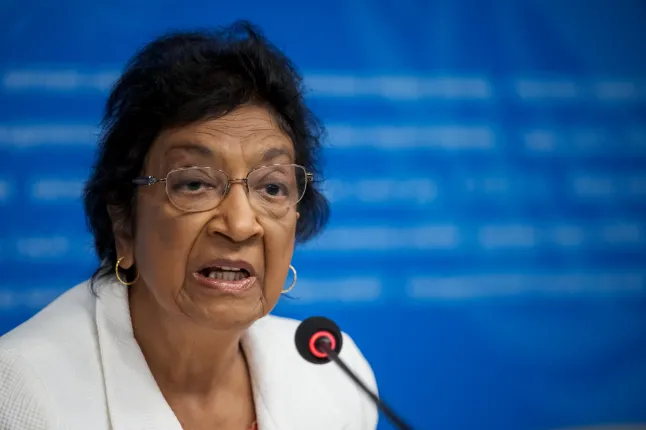
The Norwegian Nobel Committee announced the award on October 9, 2026, recognising Pillay’s contribution to strengthening international justice and ensuring that perpetrators of war crimes, crimes against humanity and genocide can be held accountable. The committee highlighted her commitment to universal legal principles and her determination to challenge injustice, from apartheid-era South Africa to international courtrooms.
At 85, Pillay has built a distinguished career spanning more than five decades, becoming one of the most influential South African jurists on the international stage. Her professional journey includes defending political activists under apartheid, serving as a judge in South Africa’s High Court, presiding over the International Criminal Tribunal for Rwanda and leading the United Nations’ human rights office.
From a Humble Durban Background to International Recognition
Born on September 23, 1941, in Clairwood, Durban, in what was then Natal, South Africa, Pillay grew up in an Indian Tamil family during the apartheid era. Her father was a bus driver, and her family lived under a system that enforced racial segregation and restricted the opportunities available to Black South Africans and other non-white communities.
Despite the social and economic barriers of the time, Pillay pursued higher education and a career in law. She attended the University of Natal, earning a Bachelor of Arts degree in 1963 and a Bachelor of Laws degree in 1965.
Her education laid the foundation for a career that would challenge racial discrimination and help establish legal protections for people whose rights were routinely violated under apartheid.
In 1967, Pillay opened her own law practice in Natal, becoming the first woman to establish a legal practice in the province. She was also a pioneering Black woman in a profession dominated by racial and gender inequality. Her decision to practise independently came at a time when apartheid laws and institutions continued to marginalise the majority of South Africa’s population.
Pillay subsequently became known for representing political detainees and activists who faced harassment, imprisonment and prosecution by the apartheid government.
Defending Political Prisoners Under Apartheid
Pillay’s early legal career was shaped by her determination to ensure that political detainees received legal representation and that abuses committed in custody were brought to public attention.
She represented activists from different anti-apartheid movements and challenged practices that denied detainees basic protections. Her cases helped expose the use of torture, the consequences of solitary confinement and the restrictions imposed on political prisoners.
Among the issues she pursued was the right of prisoners on Robben Island to obtain legal assistance and receive fair treatment in disciplinary proceedings.
Her legal work also involved the defence of people associated with anti-apartheid organisations, including activists connected to the Black Consciousness Movement and other groups opposed to the white-minority government.
Pillay’s work demonstrated how legal representation could challenge abuses even when the courts operated within a political system designed to preserve racial inequality. Rather than limiting her practice to routine litigation, she used the law to document abuses and defend the rights of people targeted by the state.
Her experience during apartheid would later inform her approach to international justice, particularly the need to protect vulnerable people and establish accountability for serious human rights violations.
Overcoming Discrimination and Advancing Her Legal Education
Pillay’s professional progress was not achieved without obstacles. She encountered racial and gender discrimination in a society where opportunities for women of colour were severely restricted.
She continued her academic development while building her legal career. In 1982, she obtained a Master of Laws degree from Harvard University in the United States. In 1988, she earned a Doctor of Juridical Science degree from Harvard, with research focused on the political role of the South African judiciary.
Her advanced studies strengthened her understanding of the relationship between law, political power and human rights. They also gave her an international academic foundation that would prove valuable when she began working in international criminal justice.
Pillay later worked as a lecturer at the University of KwaZulu-Natal and served as vice-president of the council of the University of Durban-Westville, contributing to higher education while maintaining her commitment to public service.
A Historic Appointment to South Africa’s High Court
In 1995, following the end of apartheid and South Africa’s transition to democratic government, Pillay was appointed an acting judge of the country’s High Court.
She became the first Black woman to serve as a judge on South Africa’s High Court, marking a significant milestone in the transformation of the country’s judiciary.
Her appointment represented a departure from the racial and gender exclusions that had characterised South African institutions for decades. It also demonstrated the growing recognition of lawyers who had challenged apartheid and defended the rights of disadvantaged communities.
However, her judicial career was soon to extend beyond South Africa. That same year, she was elected by the United Nations General Assembly to serve as a judge at the International Criminal Tribunal for Rwanda, placing her at the centre of one of the most consequential international criminal proceedings of the post-Cold War era.
The Rwanda Genocide and a Landmark in International Criminal Law
The 1994 genocide in Rwanda resulted in the killing of hundreds of thousands of people, predominantly Tutsi, alongside moderate Hutu and others targeted during the violence. The international community subsequently established the International Criminal Tribunal for Rwanda to prosecute individuals responsible for genocide and other serious violations of international humanitarian law.
Pillay joined the tribunal in 1995 and served for eight years, including four years as its president, from 1999 to 2003.
Her work at the tribunal helped shape international jurisprudence on genocide, sexual violence, hate propaganda and individual criminal responsibility.
One of the most significant cases was the prosecution of Jean-Paul Akayesu, a former mayor of Taba commune in Rwanda. In its landmark 1998 judgment, the tribunal recognised that rape and other forms of sexual violence could constitute acts of genocide when committed with the specific intention of destroying, in whole or in part, a protected group.
The judgment was historic because it explicitly recognised sexual violence as a potential instrument of genocide and helped establish that such crimes could be prosecuted under international criminal law.
Pillay’s contribution to the case became an important part of her international legacy. The proceedings demonstrated that sexual violence during armed conflict could not simply be dismissed as an incidental consequence of war, but could form part of a deliberate strategy to destroy a community.
Her work also contributed to the development of international legal approaches to hate speech and propaganda that incite violence against protected groups.
These legal principles continue to inform debates about accountability for mass atrocities, the protection of civilians and the prosecution of sexual violence in conflict.
A Judge at the International Criminal Court
In 2003, Pillay became a judge at the International Criminal Court (ICC) in The Hague, Netherlands. The court was established to prosecute individuals accused of genocide, crimes against humanity, war crimes and, under its jurisdiction, the crime of aggression.
Her appointment followed her years of experience at the Rwanda tribunal and reflected her growing stature in international criminal law.
At the ICC, she served in the court’s Appeals Division and contributed to the development of a permanent international judicial institution designed to address some of the gravest crimes recognised under international law.
The ICC differs from the Rwanda tribunal in its permanent institutional structure and the legal conditions governing its jurisdiction. Nevertheless, both institutions reflect the international community’s efforts to ensure that individuals responsible for mass atrocities can face judicial proceedings.
Pillay’s experience across national and international courts placed her among a generation of jurists who helped develop mechanisms for prosecuting crimes that transcend national borders.
United Nations High Commissioner for Human Rights
In 2008, the United Nations General Assembly approved Pillay’s appointment as UN High Commissioner for Human Rights. She assumed office on September 1, succeeding Louise Arbour, and served until August 31, 2014. Her mandate was extended for a further two years in 2012.
As High Commissioner, Pillay led the Office of the United Nations High Commissioner for Human Rights (OHCHR), which works to promote and protect human rights worldwide.
The position placed her at the centre of international debates over discrimination, political repression, civil liberties, gender equality, the rights of minorities and the treatment of vulnerable populations.
During her tenure, she advocated for the protection of fundamental freedoms and urged governments to meet their international human rights obligations. Her work involved engaging with states, supporting human rights monitoring and drawing attention to violations affecting civilians and marginalised groups.
The office also works with governments, civil society organisations and other United Nations bodies to strengthen national human rights institutions and improve implementation of international standards.
Pillay’s appointment was particularly significant because of her background as a lawyer who had confronted racial injustice at home before moving into international judicial service. Her career illustrated how experience gained in domestic human rights struggles could inform work at the global level.
A Longstanding Advocate for Women’s Rights
Women’s rights have been an important part of Pillay’s career. In 1985, she helped co-found Equality Now, an international human rights organisation focused on advancing the rights of women and girls.
The organisation campaigns against practices and laws that discriminate against women and seeks to promote legal protections and equal treatment.
Pillay’s advocacy has extended to sexual violence, gender discrimination and the need to ensure that women affected by conflict can obtain justice.
Her work at the Rwanda tribunal was particularly consequential in this area. By helping establish that sexual violence could constitute genocide under specific circumstances, the tribunal contributed to a broader shift in the international treatment of crimes committed against women during armed conflict.
The recognition of these crimes in international law has helped strengthen efforts to investigate sexual violence, protect survivors and hold perpetrators accountable.
Her career has also highlighted the importance of women’s participation in legal institutions and decision-making. Having overcome barriers to become a pioneering lawyer and judge herself, she has served as an example of how women can help shape the development of law and public institutions.
International Human Rights and Accountability
Pillay’s work has consistently focused on the principle that governments and individuals should be held accountable when they violate fundamental rights.
International human rights law establishes standards concerning dignity, equality, freedom and protection from abuse. International criminal law, meanwhile, provides mechanisms for holding individuals criminally responsible for certain grave violations.
Pillay has worked across both areas, combining her experience as a practising lawyer, national judge, international criminal judge and UN human rights chief.
Her career has also illustrated the difficulties of enforcing international law. International courts and human rights institutions operate within a system in which governments retain considerable political power, and their ability to act depends on jurisdiction, cooperation, evidence and institutional mandates.
Nevertheless, her contribution to international justice has helped reinforce the principle that political authority does not automatically place individuals beyond the reach of the law.
Her 2026 Nobel Peace Prize recognises this wider commitment to accountability and the role of international legal institutions in addressing atrocities.
Work on Gaza and the Debate Over International Law
Pillay’s more recent work has also placed her at the centre of contentious international debates.
In 2025, she chaired the United Nations Independent International Commission of Inquiry on the Occupied Palestinian Territory, including East Jerusalem, and Israel. The commission’s work examined alleged violations of international law in the context of the conflict following the Hamas-led attacks of October 7, 2023, and Israel’s subsequent military campaign in Gaza.
The commission concluded in a 2025 report that Israel had committed genocide in Gaza. Israel rejected the accusation.
The findings and the response to them form part of a wider international dispute over the legal characterisation of the conflict, the conduct of hostilities, civilian protection and the application of the Genocide Convention.
Such conclusions must be understood in their proper institutional context: a commission of inquiry investigates and reports on alleged violations, while determinations of criminal responsibility and the legal consequences of genocide allegations depend on the relevant judicial processes and legal standards.
Pillay’s involvement in this work reflects her continued engagement with questions of international accountability and civilian protection. It also demonstrates how the application of international law to contemporary conflicts can generate significant political disagreement.
Why the 2026 Nobel Peace Prize Matters
The Nobel Peace Prize is one of the world’s best-known international honours. Established through the will of Swedish industrialist Alfred Nobel, it recognises individuals and organisations whose work contributes to peace, international cooperation and the advancement of the prize’s stated objectives.
The Norwegian Nobel Committee selected Pillay for her efforts to promote peace and international law, highlighting her role in advancing accountability for war crimes, crimes against humanity and genocide.
Her award connects several stages of her career: defending political detainees under apartheid, helping establish international legal principles at the Rwanda tribunal, serving at the International Criminal Court and leading the United Nations’ human rights office.
It also draws attention to the relationship between human rights and peace. While peace is often associated with ending active hostilities, Pillay’s career reflects the argument that lasting peace also requires accountability, legal protections and institutions capable of addressing serious abuses.
Her recognition comes amid continuing international disputes over the effectiveness of international courts, the obligations of governments under humanitarian law and the difficulty of securing justice for victims of mass atrocities.
The Nobel Prize, Donald Trump and the 2025 Laureate
The announcement follows repeated public calls by US President Donald Trump for recognition of his efforts to resolve international conflicts. Trump has argued that he deserves the Nobel Peace Prize and has claimed credit for helping end several wars.
Such statements form part of the wider political discussion surrounding the award, although the Norwegian Nobel Committee makes its decision independently.
In 2025, Venezuelan opposition leader María Corina Machado received the Nobel Peace Prize for her work promoting democratic rights in Venezuela. Machado subsequently presented her medal to Trump as a gesture of recognition, according to reports about their meeting.
The Nobel Committee has clarified that the title of Nobel laureate cannot be transferred to another person. A medal may be given away, but doing so does not change the official recipient of the award.
The distinction is important because the Nobel Peace Prize is formally awarded to the individual or organisation selected by the committee, not to someone who later receives the medal.
The Nobel Peace Prize: History and Award
The Nobel Peace Prize was established under Alfred Nobel’s will, which specified recognition for the person who had done the most or best work for fraternity between nations, the abolition or reduction of standing armies, and the promotion of peace congresses.
The Norwegian Nobel Committee, comprising five members appointed by the Norwegian Parliament, selects the laureate.
The recipient traditionally receives a gold medal, a diploma and a monetary award. The amount can change over time, so the prize sum should be verified against the official announcement for the relevant year before publication.
The award is announced in October, following a nomination and selection process conducted under the Nobel system. Nominations are subject to eligibility rules, and the identities of nominators and other information about nominations are generally kept confidential for 50 years.
A Legacy of Courage, Equality and Justice
Navanethem “Navi” Pillay’s life and career illustrate the role that legal institutions can play in challenging discrimination and confronting serious human rights violations.
From her early work representing political detainees in apartheid South Africa to her service in international courts and at the United Nations, she has helped advance legal principles intended to protect individuals from abuses of power.
Her work on sexual violence and genocide at the Rwanda tribunal remains a landmark in international criminal jurisprudence. Her later leadership at the UN human rights office brought her experience to a global institution responsible for promoting fundamental freedoms and equality.
The 2026 Nobel Peace Prize places renewed attention on the contribution of international law to peace and accountability. For Pillay, it marks international recognition of a career built on the belief that justice must extend to those who are most vulnerable and that serious violations of human rights should not go unanswered.
Her legacy is not only one of personal achievement, but also of the legal principles and institutions she helped strengthen: equality before the law, protection from abuse, accountability for atrocities and the pursuit of justice across national borders.