

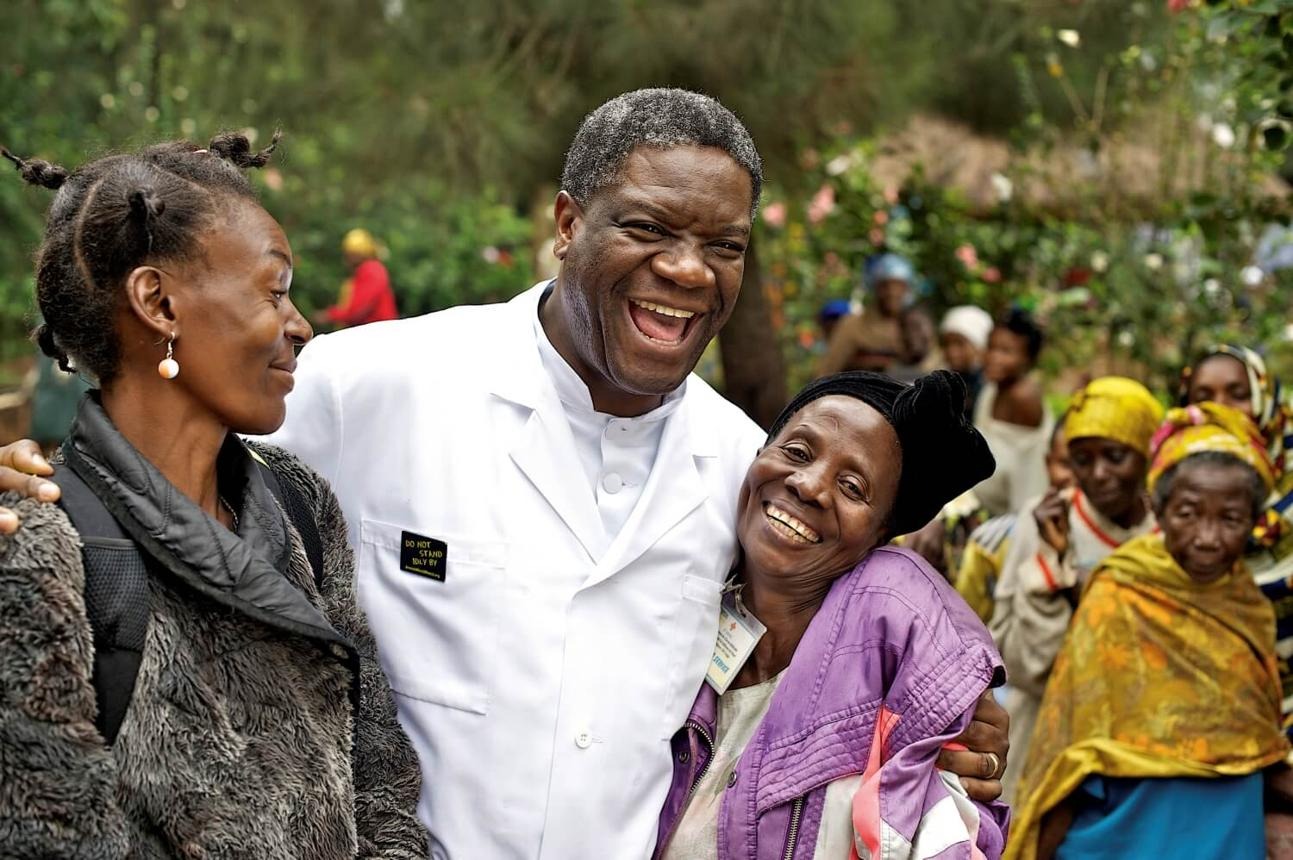
In a world where millions of people continue to suffer the devastating consequences of armed conflicts, some individuals distinguish themselves not through political power, military strength or financial wealth, but through their determination to protect human dignity and restore hope to vulnerable communities.
One such individual is Dr. Denis Mukwege, a Congolese gynaecologist and human rights activist whose extraordinary commitment to helping survivors of sexual violence has earned him international recognition.
Born in the Democratic Republic of the Congo, Mukwege has spent decades treating women and girls who have experienced some of the most horrific forms of violence associated with armed conflict. Through his medical expertise, humanitarian activities and fearless advocacy, he has become one of the world’s most influential voices against the use of sexual violence as a weapon of war.
His work goes far beyond performing medical operations. He has helped thousands of survivors recover from devastating physical injuries, access psychological support, rebuild their lives and seek justice against those responsible for their suffering.
In 2018, his extraordinary contributions were recognised when he jointly received the Nobel Peace Prize alongside Yazidi human rights activist Nadia Murad. The award acknowledged their efforts to end the use of sexual violence in armed conflict.
However, Mukwege’s greatest achievement is not simply the prestigious awards he has received. It is the countless lives he and his colleagues have helped save, the survivors they have empowered and the international attention they have brought to a crime that has devastated communities across the world.
His story demonstrates how one person’s dedication to humanity can transform lives and influence the global fight for justice.

Early Life and the Inspiration Behind His Medical Career
Denis Mukwege was born on March 1, 1955, in Bukavu, a city in the eastern Democratic Republic of the Congo, formerly known as Zaire.
He grew up in a religious family. His father was a Pentecostal pastor, and as a young boy, Mukwege occasionally accompanied him on visits to sick members of their community.
These experiences exposed him to the suffering of people who lacked access to adequate medical attention and helped shape his understanding of the importance of caring for others.
One particular experience influenced his decision to become a doctor. As a child, he witnessed his father struggling to help a seriously ill boy through prayer because he did not possess the medical knowledge required to treat the condition.
The experience reportedly inspired Mukwege to pursue medicine so that he could provide practical medical assistance to people in need.
He eventually studied medicine at the University of Burundi before specialising in obstetrics and gynaecology in France, where he received further professional training.
His initial interest was reportedly in paediatrics. However, his experiences working in medical facilities in the Democratic Republic of the Congo exposed him to the serious challenges facing women, particularly those experiencing complications during pregnancy and childbirth.
He became increasingly concerned about the inadequate medical facilities available to women in rural communities and the number of lives being lost because of preventable complications.
Rather than pursue a career elsewhere, Mukwege returned to his country, determined to contribute to improving women’s healthcare.
His decision would eventually place him at the centre of one of the world’s most important humanitarian struggles.
The Conflict in Eastern Congo and the Suffering of Women
To understand the significance of Denis Mukwege’s work, it is important to understand the devastating situation in eastern Democratic Republic of the Congo.
For decades, the country has experienced armed conflicts involving government forces, rebel movements, foreign armed groups and other military actors.
The eastern regions, particularly South Kivu, North Kivu and surrounding areas, have been affected by insecurity, displacement, killings and widespread human rights violations.
The region is also rich in valuable natural resources, including minerals that have contributed to the economic and political interests surrounding the conflict.
Unfortunately, civilians have frequently become victims of the violence.
Women and girls have been particularly vulnerable to sexual violence, including rape, gang rape and other forms of sexual abuse.
In many cases, these crimes have been used deliberately to terrorise communities, humiliate families, destroy social relationships and force people to abandon their homes.
Sexual violence in armed conflict is not simply an individual act of abuse. When systematically used as a weapon of war, it becomes a method of attacking entire communities and undermining their ability to survive and recover.
Survivors frequently suffer serious physical injuries, reproductive complications, psychological trauma, social rejection and economic hardship.
Some are abandoned by their husbands or families, while others experience discrimination within their communities.
Children born as a result of sexual violence may also face rejection and stigma.
It was against this background that Mukwege began confronting a humanitarian crisis that required more than conventional medical treatment.
He recognised that survivors needed specialised healthcare, psychological assistance, social protection and access to justice.
His response would eventually transform the way the world understands and approaches the treatment of survivors of conflict-related sexual violence.
Establishing Panzi Hospital: A Lifeline for Survivors

One of the most significant milestones in Mukwege’s humanitarian journey was the establishment of Panzi Hospital in 1999.
Located in Bukavu, in South Kivu Province, the hospital was initially established to provide maternal and reproductive healthcare to women in the region.
However, as armed violence intensified in eastern Congo, increasing numbers of women and girls who had experienced sexual violence began arriving at the facility for treatment.
Many of these survivors suffered devastating injuries that required specialised surgical procedures.
Mukwege and his medical team soon realised that they were dealing with a humanitarian emergency that demanded a dedicated response.
The hospital gradually became an important referral centre for survivors of sexual violence, with Mukwege developing considerable expertise in treating complex gynaecological injuries resulting from rape and other forms of sexual abuse.
He performed numerous reconstructive operations on survivors whose reproductive organs and other parts of their bodies had been severely damaged.
Some patients arrived with injuries so serious that they required several operations and long periods of medical supervision.
Despite the overwhelming number of cases, Mukwege remained committed to providing treatment to those who needed it.
His dedication was particularly remarkable because many survivors came from extremely poor backgrounds and could not afford the specialised medical attention required to recover.
Panzi Hospital therefore became much more than an ordinary medical facility. It developed into a place where survivors could receive treatment, find emotional support and begin rebuilding their lives.
According to a 2025 United Nations inquiry into conflict-related sexual violence in the Democratic Republic of the Congo, Mukwege told investigators that Panzi Hospital and its staff had treated more than 83,000 survivors since its establishment.
This figure illustrates the enormous scale of the humanitarian crisis and the importance of the institution he founded.
It also demonstrates the remarkable contribution of the medical professionals who have worked alongside him over the years.

Beyond Surgery: Introducing a Holistic Approach to Healing
One of Denis Mukwege’s most important contributions to global healthcare is his recognition that survivors of sexual violence need much more than physical treatment.
For many victims, the consequences of sexual abuse extend far beyond their immediate injuries.
Survivors may experience depression, anxiety, trauma, shame, isolation and difficulties returning to their normal lives.
Some lose their livelihoods, while others are rejected by their families or communities because of the stigma associated with sexual violence.
Mukwege understood that performing successful operations would not automatically resolve these challenges.
Consequently, the Panzi Hospital and its associated foundation developed a holistic approach to supporting survivors.
This approach is commonly described through four interconnected pillars:
1. Medical care
The first pillar involves providing specialised medical treatment to survivors.
This includes emergency treatment, gynaecological services, reconstructive surgery, reproductive healthcare and treatment for other injuries resulting from sexual violence.
The objective is to restore physical health, reduce suffering and help survivors regain control over their bodies.
2. Psychological support
Physical injuries are only part of the damage caused by sexual violence.
Many survivors experience serious psychological trauma that can affect their relationships, confidence, education and ability to participate in everyday activities.
Through counselling and psychological support, survivors are helped to process their experiences and gradually rebuild their emotional well-being.
3. Legal assistance
Another important aspect of Mukwege’s work is helping survivors understand and pursue their legal rights.
Many victims of sexual violence never receive justice because perpetrators are not investigated or prosecuted.
Panzi’s support programmes therefore include legal assistance intended to help survivors access justice and seek accountability.
4. Socioeconomic reintegration
Survivors also need opportunities to become financially independent and reintegrate into their communities.
Through socioeconomic support, vocational training and other empowerment programmes, survivors can develop skills, pursue economic opportunities and rebuild their lives.
This four-pillar approach is particularly important because it recognises survivors as individuals with rights, ambitions and the capacity to recover, rather than defining them exclusively by the violence they experienced.
The model has attracted international attention and influenced programmes supporting survivors in other countries.
It has also helped demonstrate that effective humanitarian intervention must address the medical, psychological, legal and economic consequences of violence simultaneously.
Speaking Out Against Sexual Violence as a Weapon of War

While continuing his medical responsibilities, Mukwege gradually became one of the most outspoken international advocates against sexual violence in armed conflict.
He recognised that treating survivors was essential, but that the suffering would continue unless governments, military commanders and other responsible individuals were held accountable.
He therefore began using international platforms to expose the scale of sexual violence in the Democratic Republic of the Congo and demand stronger action from the international community.
In 2012, he delivered an important speech at the United Nations, condemning the widespread violence against women and criticising the failure to adequately prosecute those responsible.
His message was straightforward: providing medical care to survivors was not enough if the perpetrators continued to operate without facing consequences.
He called for greater protection of civilians, stronger investigations into human rights abuses and accountability for individuals responsible for sexual violence.
His position challenged powerful political and military interests.
Rather than remaining silent because of the risks associated with speaking publicly, he continued advocating for survivors and demanding justice.
His activism also highlighted an important principle of international human rights: sexual violence committed during armed conflict must not be treated as an unavoidable consequence of war.
It is a serious crime that requires investigation, prosecution and appropriate punishment.
Under international law, rape and other forms of sexual violence can constitute war crimes and, depending on the circumstances, crimes against humanity or acts of genocide.
Mukwege’s advocacy has helped strengthen international recognition of the need to prevent these crimes and ensure that survivors receive justice.
His work has also encouraged governments and humanitarian organisations to pay greater attention to the long-term consequences of conflict-related sexual violence.
Surviving an Assassination Attempt: The Price of Speaking the Truth
Mukwege’s determination to challenge sexual violence and demand accountability came at a significant personal cost.
In October 2012, shortly after his outspoken criticism of the violence in eastern Congo, he survived an assassination attempt at his residence in Bukavu.
Armed attackers reportedly invaded his home and threatened his family.
During the incident, his trusted friend and security guard, Joseph Bizimana, was killed.
The attack was a devastating experience for Mukwege and his family.
Considering the nature of his humanitarian work and the powerful interests he had openly criticised, the incident raised serious concerns about the safety of human rights defenders working in the region.
Following the attack, Mukwege and his family left the country for their safety.
For many people, the experience would have been enough reason to abandon such dangerous activism permanently.
However, the response from the women he had treated at Panzi Hospital demonstrated how deeply his work had affected the community.
Survivors and supporters appealed for his return because they feared losing a doctor who had become an essential source of hope and protection.
His patients understood that his presence represented more than medical expertise. He was also a powerful advocate for their dignity and rights.
Mukwege eventually returned to Bukavu in January 2013 and resumed his work.
His decision to return despite the threats demonstrated extraordinary courage and commitment.
Rather than allowing intimidation to silence him, he continued treating survivors and speaking against the crimes taking place in his country.
His experience also drew greater international attention to the dangers faced by doctors, journalists, activists and humanitarian workers who challenge abuses committed during armed conflicts.
Winning the 2018 Nobel Peace Prize

One of the defining moments in Denis Mukwege‘s life came in October 2018, when he was announced as a joint recipient of the Nobel Peace Prize.
He shared the prestigious award with Nadia Murad, a survivor of sexual violence perpetrated by Islamic State militants who became an international advocate for victims of human trafficking and sexual abuse.
The Norwegian Nobel Committee recognised both individuals for their efforts to end the use of sexual violence as a weapon of war and armed conflict.
The award was particularly significant because it recognised not only Mukwege’s medical achievements but also his determination to challenge the conditions that allow sexual violence to continue.
For decades, he had treated women and girls whose lives had been devastated by conflict.
He had also repeatedly called on governments and international institutions to stop ignoring these crimes.
The Nobel Peace Prize brought renewed international attention to the experiences of survivors in the Democratic Republic of the Congo.
It also highlighted the importance of protecting medical professionals and human rights defenders working in dangerous environments.
Mukwege received the award while continuing his medical work in Bukavu.
His recognition was celebrated by people around the world, particularly women’s rights organisations, humanitarian groups and individuals campaigning against gender-based violence.
Importantly, the doctor dedicated the recognition to survivors of sexual violence, emphasising that their suffering and courage deserved international attention.
The award also reinforced the idea that peace cannot be achieved simply by ending fighting between armed groups.
A lasting peace must include justice, protection of civilians, respect for human rights and support for those whose lives have been destroyed by conflict.
International Recognition and Other Humanitarian Achievements
Although the 2018 Nobel Peace Prize remains one of his most prominent achievements, Mukwege’s contributions have received international recognition on several other occasions.
His work has earned him numerous prestigious awards, including:
2008 – United Nations Human Rights Prize: Recognised for his outstanding contribution to the protection and promotion of human rights.
2013 – Right Livelihood Award: Honoured for his courageous work supporting survivors of sexual violence and challenging impunity.
2014 – Sakharov Prize for Freedom of Thought: Awarded by the European Parliament in recognition of his defence of human rights and human dignity.
2016 – Seoul Peace Prize: Recognised for his contribution to peace and humanitarian work.
2018 – Nobel Peace Prize: Jointly awarded with Nadia Murad for their efforts to end sexual violence as a weapon of war.
2024 – Aurora Humanitarian Award: Recognised for his extraordinary humanitarian commitment and efforts to support survivors.
These awards reflect the international significance of his work and the growing recognition that medical professionals can play important roles in defending human rights.
His influence has also extended beyond the Democratic Republic of the Congo.
Through the Mukwege Foundation, established in 2015, his survivor-centred approach has helped inspire programmes supporting survivors of conflict-related sexual violence in other parts of the world.
The foundation works to ensure that survivors have opportunities to participate in decisions affecting their lives, influence policies and demand accountability.
His work has therefore contributed to a broader international movement seeking to prevent sexual violence and strengthen support for survivors.
His Influence on Women’s Rights and Global Humanitarian Efforts
Perhaps one of Mukwege’s greatest contributions is the way he has changed conversations about sexual violence and women’s rights.
Before the international attention generated by activists, survivors and organisations working in conflict zones, sexual violence was frequently hidden behind silence, shame and social stigma.
Many survivors were reluctant to report their experiences because they feared rejection, discrimination or further abuse.
In some communities, victims were blamed for the crimes committed against them, while perpetrators continued to enjoy protection or avoid prosecution.
Mukwege has consistently challenged these attitudes.
He has emphasised that survivors should never be blamed for the violence inflicted upon them and that society has a responsibility to support their recovery.
His work has also encouraged greater recognition of the importance of women’s participation in peacebuilding and post-conflict reconstruction.
Women should not merely be viewed as victims of war. They must also be recognised as leaders, decision-makers and active participants in rebuilding their communities.
Furthermore, his approach has demonstrated that healthcare facilities can play important roles in protecting human rights.
Hospitals and medical professionals are often among the first people to encounter survivors of violence. Their response can determine whether victims receive appropriate treatment, protection and access to justice.
Through Panzi Hospital, Mukwege has shown how medical institutions can become important centres of humanitarian intervention.
His example has influenced healthcare professionals, researchers, human rights organisations and policymakers around the world.
Continuing the Fight for Justice in the Democratic Republic of the Congo
Despite the international recognition he has received, Mukwege’s work remains closely connected to the continuing humanitarian challenges facing his country.
Eastern Democratic Republic of the Congo continues to experience insecurity, displacement and serious human rights violations.
Armed violence has repeatedly disrupted communities, destroyed livelihoods and placed civilians at risk.
Sexual violence also remains a serious concern.
Mukwege has consistently argued that lasting peace cannot be achieved without addressing the underlying causes of violence and ensuring that those responsible for atrocities face justice.
His position goes beyond demanding punishment for individual perpetrators.
He has advocated for stronger institutions, effective investigations, protection for civilians and greater international commitment to addressing impunity.
In 2023, he also entered the political arena by contesting the Democratic Republic of the Congo’s presidential election.
Although he did not win, his candidacy demonstrated his interest in addressing the country’s wider challenges through political and institutional reforms.
His participation reflected his belief that improving the lives of Congolese citizens requires more than medical intervention.
It also requires responsible leadership, stronger governance, economic development and a commitment to protecting human rights.
For Mukwege, the struggle for peace is inseparable from the struggle for justice and human dignity.
Conclusion
Dr. Denis Mukwege’s story is one of extraordinary courage, professional excellence and an unwavering commitment to humanity.
From his early experiences growing up in Bukavu to his medical training and eventual establishment of Panzi Hospital, his journey demonstrates what can happen when professional knowledge is combined with compassion and a determination to address society’s most difficult problems.
He could have chosen a more comfortable professional path, but instead dedicated much of his life to treating women and girls whose suffering had been largely ignored by the outside world.
Through thousands of medical interventions, psychological support programmes, legal assistance initiatives and international advocacy campaigns, he has helped restore hope to survivors of sexual violence.
His willingness to confront powerful interests, even after surviving an assassination attempt, further demonstrates the depth of his commitment.
The 2018 Nobel Peace Prize placed his achievements on the international stage, but his real legacy is found in the lives of survivors who have received treatment, regained their confidence and found opportunities to rebuild their futures.
For the Democratic Republic of the Congo, he represents a powerful example of national service and humanitarian leadership.
For Africa, he is a reminder that the continent possesses individuals whose contributions can influence global conversations and inspire meaningful change.
For the international community, his work serves as a reminder that sexual violence must never be accepted as an inevitable consequence of war.
Ultimately, Denis Mukwege is much more than a Nobel Prize-winning physician. He is a symbol of resistance against injustice, an advocate for the dignity of women and a humanitarian whose work has demonstrated that healing people must go hand in hand with fighting the systems that cause their suffering.
His greatest achievement may not be the awards displayed in his name, but the thousands of survivors who have been given another opportunity to live, heal and hope.