

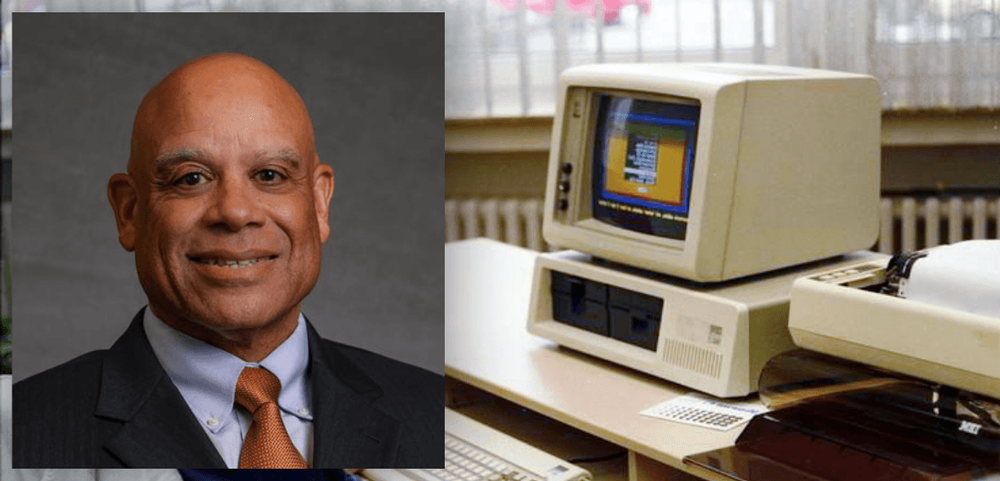
When people switch on their computers, browse the internet, create documents, conduct business online or communicate across continents, they are benefiting from decades of technological innovation. Yet, behind many of the devices and technologies that have transformed modern life are brilliant inventors whose contributions are not always widely recognised.
One of those remarkable individuals is Mark Dean, an African-American computer engineer, inventor and technology pioneer whose work at IBM helped shape the development of the modern personal computer.
Mark Dean is widely celebrated for his role in developing important computer technologies, including the IBM Personal Computer (PC), as well as innovations that helped make computers more powerful, accessible and practical for everyday use.
His achievements are particularly significant because he made history in an industry where Black engineers were historically underrepresented. Through intelligence, determination, creativity and an exceptional understanding of computer engineering, Dean became one of the most influential figures in the history of personal computing.
His story is not simply about designing computer hardware. It is about challenging limitations, breaking barriers, creating opportunities and demonstrating how one person’s ideas can influence millions of lives around the world.
Early Life and Education: A Young Boy with a Passion for Engineering
Mark Edward Dean was born on March 2, 1957, in Jefferson City, Tennessee, United States. From an early age, he demonstrated an unusual interest in mathematics, science, construction and problem-solving.
Growing up, Dean was fascinated by how things worked. He enjoyed building things and exploring ways to turn ideas into practical inventions. His interest in engineering was encouraged by his family, particularly his father, who worked with electrical equipment.
One of the stories that illustrates Dean’s creativity is his childhood experience of building a tractor with his father. Rather than simply playing with toys, the young Dean was interested in constructing things and understanding the mechanisms behind them.
He was also an exceptional student. His ability in mathematics became evident at a very young age, and he reportedly tutored older children in advanced mathematical subjects while still in primary school.
As he progressed through school, his ambition became increasingly clear: he wanted to become an engineer and work for IBM, one of the world’s leading technology companies.
Dean attended Jefferson City High School, where he excelled academically and participated in sports. His ability to combine academic excellence with practical interests helped prepare him for a career in engineering.
After completing secondary education, he enrolled at the University of Tennessee, where he studied electrical engineering. He graduated in 1979 with high honours.
However, Dean did not consider his undergraduate degree the end of his academic journey. He understood that the technology industry was developing rapidly and that continuous learning would be essential to remain competitive.
He subsequently earned a master’s degree in electrical engineering from Florida Atlantic University in 1982. He later obtained a PhD in electrical engineering from Stanford University in 1992.
His educational journey demonstrated the importance of discipline, curiosity and lifelong learning. These qualities would later become essential to his success at IBM.
Joining IBM: The Beginning of a Historic Engineering Career
In 1979, shortly after graduating from the University of Tennessee, Mark Dean joined IBM, a company that had long been at the forefront of computer technology.
For Dean, this was more than simply securing employment at a prestigious company. It was an opportunity to fulfil a childhood ambition and participate in the development of technologies that could change the world.
He initially worked on computer-related projects, including developing a word processor adapter for IBM’s Data Master computer.
His technical abilities and innovative thinking quickly attracted attention within the organisation. He was subsequently selected to join an important engineering initiative known as Project Chess.
Project Chess was an ambitious effort to develop a personal computer that could serve the needs of individuals, businesses and everyday users.
At the time, computers were generally expensive, complicated and largely associated with large organisations, research institutions and businesses. The idea of developing a relatively affordable computer that ordinary people could use at home was a major technological challenge.
IBM wanted to change that situation.
Dean became an important member of the team responsible for making this vision a reality. His contribution involved developing hardware components and systems that would help the computer operate effectively.
His achievements were particularly remarkable because he was still relatively young when he began taking on significant responsibilities.
By the age of 25, he had become chief engineer of IBM’s personal computer design team, a position that placed him among the important technical minds responsible for the company’s emerging personal computer business.
Mark Dean and the IBM Personal Computer Revolution

One of the most significant chapters in Mark Dean’s career was his contribution to the development of the original IBM Personal Computer, introduced in August 1981.
The IBM 5150, as the original model was officially known, became one of the most influential products in the history of computing.
Before the arrival of affordable personal computers, access to computing technology was limited for many individuals and small businesses. Computers were often large, expensive and required specialised knowledge to operate.
IBM’s new personal computer helped change this reality.
It offered a more practical computing solution for offices, educational institutions, small businesses and individuals. It also helped establish personal computing as an important part of everyday life.
Dean played a crucial engineering role in the development of the IBM PC. He holds three of the original nine patents associated with the computer, demonstrating the significance of his technical contribution.
His work was not limited to one component. He contributed to the architecture and design of the machine, helping create a system that could accommodate different hardware components and support future technological improvements.
The IBM PC also helped establish a wider market for compatible computer hardware and software. Manufacturers began developing products that could work with IBM-compatible computers, encouraging competition and innovation.

Today, the personal computer is used across virtually every major sector, including education, healthcare, finance, entertainment, government, engineering and communication.
Although no single engineer created the modern computer industry, Mark Dean’s contributions to the IBM PC represent an important part of the story.
His achievement demonstrates how engineering innovation can transform a product from a specialised machine into a technology that becomes central to everyday life.
The Industry Standard Architecture (ISA): An Invention That Changed Computer Connectivity

Among Mark Dean’s most important inventions was his work with fellow IBM engineer Dennis Moeller on the Industry Standard Architecture (ISA) system bus.
To understand the importance of this invention, it is necessary to consider how computers function.
A computer contains several components that must communicate with one another. These include the processor, memory, storage devices and other hardware.
It also needs to connect with external devices such as printers, monitors, keyboards, scanners and other accessories.
In the early development of personal computers, connecting different hardware components could be complicated. Compatibility and communication between devices presented significant engineering challenges.
Dean and Moeller helped address this problem by developing a microcomputer architecture that allowed peripheral devices to communicate with the computer through a common system bus.
In simple terms, the ISA architecture provided a standardised way for additional hardware components to connect to a computer and exchange information.
This made it easier for manufacturers to develop compatible products and for consumers to expand the capabilities of their computers.
Imagine purchasing a computer and being able to add a new sound card, graphics card, printer interface or storage controller without having to replace the entire machine.
That flexibility helped create opportunities for hardware manufacturers and contributed to the expansion of the personal computer industry.
Dean and Moeller received US Patent No. 4,528,626 for their invention in 1985. Their contribution was recognised when both engineers were inducted into the National Inventors Hall of Fame in 1997.
The ISA bus became an important foundation for the development of compatible computer hardware and helped establish an ecosystem in which different manufacturers could produce products designed to work together.
Its historical importance extends beyond the original invention. It helped demonstrate the value of standardisation and compatibility in technology development.
Developing the Colour PC Monitor
Another important aspect of Mark Dean’s work at IBM involved the development of graphics technologies for personal computers.
At a time when computer displays were still relatively limited, improving the way information appeared on screens was essential to making computers more useful.
Dean contributed to the development of the Color Graphics Adapter (CGA) and graphics-related hardware that helped make colour displays possible on IBM personal computers.
This innovation was important because visual information plays a major role in how people interact with technology.
Colour displays made computers more useful for presenting graphics, working with visual information and developing applications that required more sophisticated screen output.
Over time, improvements in computer graphics helped create the foundation for the visual experiences people now enjoy on laptops, desktops, tablets and other digital devices.
Modern computers can display high-resolution photographs, animated graphics, professional designs, films, games and complex visual presentations.
While these capabilities resulted from the contributions of many engineers and technological developments, Dean’s early work on computer graphics formed part of the evolution of personal computer displays.
Becoming the First African-American IBM Fellow

Mark Dean’s professional achievements went beyond developing computer hardware. He also broke important racial barriers within the technology industry.
In 1995, IBM named him an IBM Fellow, making him the first African-American to receive this prestigious recognition.
The IBM Fellow designation is one of the company’s highest technical honours. It recognises individuals whose exceptional contributions have advanced technology, engineering, scientific research and innovation.
For Dean, this recognition represented decades of hard work, creativity and commitment to technological advancement.
His appointment was particularly significant because the technology industry had historically provided limited opportunities for many Black engineers and scientists to reach its highest technical leadership positions.
By becoming IBM’s first Black American Fellow, Dean demonstrated that exceptional talent and innovation could break barriers and open doors for others.
His achievement also became an important source of inspiration for young African-American students interested in science, technology, engineering and mathematics (STEM).
In 1997, Dean received the Black Engineer of the Year President’s Award and was inducted into the National Inventors Hall of Fame alongside Dennis Moeller.
He was also recognised in 2001 through his election to the National Academy of Engineering, one of the most respected professional institutions in the engineering world.
The First Gigahertz Computer Processor: Another Major Technological Breakthrough
One of the most remarkable achievements associated with Mark Dean’s career was his involvement in the development and testing of a processor capable of reaching one gigahertz (1GHz).
During the late 1990s, computer engineers were working to increase processor speeds while improving efficiency and performance.
A processor is often described as the brain of a computer because it executes instructions, processes information and coordinates many of the machine’s operations.
The faster and more efficiently a processor can perform these tasks, the greater the potential computing capabilities of the device.
In 1998, a processor developed at IBM’s Austin Research Laboratory reached the historic speed of one billion cycles per second, equivalent to one gigahertz.
Dean played a leading role in the research and engineering environment that helped make this breakthrough possible.
At the time, reaching 1GHz represented an extraordinary achievement. It demonstrated how quickly processor technology was advancing and opened new possibilities for high-performance computing.
Today, gigahertz measurements are familiar to ordinary computer users. People routinely compare laptop and desktop processors based on their speed, number of cores and overall performance.
However, reaching the one-gigahertz milestone was an important moment in the history of microprocessor development.
It also demonstrated Dean’s ability to contribute to different generations of computing technology, from the early personal computer to advanced processor research.
His work at IBM showed that technological innovation does not stop after one successful invention. It requires continuous experimentation, research and the willingness to solve increasingly difficult problems.
Mark Dean and IBM’s Blue Gene Supercomputer Project

Another major chapter in Dean’s career involved his contribution to IBM’s Blue Gene supercomputer initiative.
While personal computers transformed individual and business computing, scientists and researchers needed machines capable of handling significantly more complex calculations.
Some scientific problems require enormous computing power. These include climate modelling, biological research, molecular simulations, advanced scientific calculations and complex engineering projects.
Traditional computers could take an extremely long time to process certain types of information. Researchers therefore needed more powerful machines that could perform vast numbers of calculations efficiently.
IBM began developing Blue Gene as an ambitious project to create a supercomputer with exceptional processing power while reducing energy consumption and physical space requirements.
In 1999, Dean assembled a team of engineers and scientists to explore the development of this new generation of supercomputing technology.
The project eventually became one of IBM’s most important contributions to high-performance computing.
Working with the United States Department of Energy’s Lawrence Livermore National Laboratory, IBM developed Blue Gene systems designed to tackle demanding scientific and computational challenges.
In September 2004, Blue Gene/L became the world’s fastest supercomputer, surpassing Japan’s Earth Simulator.
Its achievement was particularly impressive because it combined extraordinary computing performance with improved energy efficiency.
The project demonstrated that the future of computing would not depend solely on making processors faster. Engineers would also need to consider power consumption, scalability, system architecture and the ability to process enormous amounts of information.
Dean’s involvement in the Blue Gene initiative further established his reputation as a technology leader whose expertise extended far beyond personal computers.
In 2009, President Barack Obama recognised the Blue Gene family of supercomputers with the National Medal of Technology and Innovation, one of the United States’ highest honours for technological achievement.
Leadership Positions and Continued Contributions to IBM
Over the years, Mark Dean moved from hands-on engineering into senior research and technology leadership positions.
His understanding of computer architecture, hardware development and technological research made him a valuable leader within IBM.
He eventually became director of IBM’s Austin Research Laboratory, where researchers worked on advanced circuit design and high-performance microprocessors.
He later served in several senior positions, including vice president of worldwide strategy and operations for IBM Research.
In this position, he helped guide research strategy across IBM’s international laboratories and contributed to decisions about future technological development.
He also became Chief Technology Officer for IBM’s Middle East and Africa operations.
This role was particularly interesting because it connected his engineering background with the technological needs of developing markets.
Technology has enormous potential to address challenges in education, banking, healthcare, agriculture, communication and public administration.
Dean’s work in the Middle East and Africa involved exploring technological solutions that could support businesses and organisations across different sectors.
His career demonstrated that engineers can contribute to society in different ways: by inventing new technologies, leading research teams, developing business strategies and helping organisations use innovation to solve real-world problems.
Returning to the University of Tennessee: Investing in the Next Generation
In 2013, after a distinguished career at IBM, Mark Dean retired from the company and returned to the University of Tennessee, the institution where his engineering journey had begun.
He joined the university’s College of Engineering as the John Fisher Distinguished Professor.
His return was more than a professional appointment. It represented an opportunity to share the knowledge and experience he had accumulated throughout his career with young people preparing to enter the technology industry.
As an academic, Dean has been associated with research interests including advanced computer architecture, data-centric computing and computational sciences.
His experience working on personal computers, processors and supercomputers gives him a valuable perspective on how computing has evolved and where it may be heading.
For students, having access to someone who helped develop important technologies at IBM provides an opportunity to learn from practical experience rather than relying exclusively on textbooks.
Dean’s academic contribution also highlights the importance of mentorship.
A successful engineer can influence society through inventions, but that influence can become even greater when knowledge is transferred to the next generation of innovators.
His decision to return to his university therefore adds another important dimension to his legacy: the responsibility to educate, encourage and prepare future engineers.
Awards, Recognition and Major Achievements of Mark Dean
Mark Dean’s contributions to engineering have earned him recognition from prestigious academic, professional and scientific institutions.
Some of his most notable achievements include:
1. First African-American IBM Fellow (1995): He broke a significant racial barrier by becoming the first Black American to receive IBM’s prestigious technical distinction.
2. Three original IBM PC patents: He holds three of the original nine patents associated with the development of the IBM Personal Computer.
3. National Inventors Hall of Fame (1997): He was inducted alongside Dennis Moeller for their contribution to computer peripheral technology and the ISA system bus.
4. Black Engineer of the Year Award: He received the Black Engineer of the Year President’s Award in 1997 and was recognised again in 2000.
5. National Academy of Engineering (2001): He was elected to this prestigious institution in recognition of his engineering contributions.
6. More than 40 patents: His inventions and technological contributions have resulted in more than 40 patents.
7. Development of the first gigahertz processor: He helped lead research associated with the development and testing of IBM’s groundbreaking one-gigahertz processor.
8. Blue Gene supercomputer: He helped establish the engineering team responsible for developing IBM’s influential Blue Gene supercomputing technology.
9. Distinguished academic career: He returned to the University of Tennessee in 2013 to contribute to engineering education and research.
These accomplishments establish Mark Dean as one of the most influential Black technology pioneers in the history of modern computing.
The Lessons Young Africans and Aspiring Engineers Can Learn from Mark Dean
Mark Dean’s story carries important lessons, particularly for young people in Africa and across the Black diaspora who aspire to build successful careers in technology, science and engineering.
1. Great achievements can begin with childhood curiosity.
Dean’s interest in building things started when he was young. His curiosity about how machines worked eventually developed into a successful engineering career.
Young people should understand that asking questions, experimenting and learning how things function can be the beginning of extraordinary achievements.
2. Education creates opportunities.
Dean’s academic journey did not end with his first degree. He continued studying until he obtained a doctorate.
His example demonstrates that education, technical knowledge and continuous learning can help individuals compete in challenging industries.
3. Innovation requires solving real problems.
His work on the ISA bus addressed a practical challenge: connecting different computer components efficiently.
This is an important lesson for aspiring entrepreneurs and inventors. Successful innovations often begin by identifying a problem and developing a solution that makes life easier for others.
4. Representation matters.
Becoming the first African-American IBM Fellow was an important milestone.
His success challenged assumptions about who could become a leading engineer and demonstrated that Black professionals can occupy influential positions in global technology organisations.
5. Success should create opportunities for others.
Dean’s return to the University of Tennessee demonstrated his commitment to education and the development of future engineers.
Young professionals should recognise that success is not only about personal achievements but also about using their knowledge and experience to help others succeed.
6. Never stop innovating.
Dean’s career covered several generations of computing, from the original IBM PC to gigahertz processors and supercomputers.
His journey shows that remaining relevant requires continuous learning, creativity and the courage to embrace new challenges.
Mark Dean’s Legacy: An Engineer Whose Ideas Helped Change the World
Today, computers are central to almost every aspect of modern civilisation.
Students use them to access educational resources, businesses depend on them for daily operations, hospitals use them to manage information, banks rely on computer systems for financial transactions, and governments use digital technology to deliver public services.
The development of these technologies has involved thousands of scientists, engineers, researchers and inventors from different parts of the world.
Mark Dean deserves recognition as one of the important pioneers who helped make this technological transformation possible.
His contributions to the IBM Personal Computer, the ISA system bus, computer graphics, processor development and supercomputing represent significant milestones in the history of engineering.
Perhaps one of the most inspiring aspects of his story is that he achieved these milestones while breaking racial barriers in an industry where Black representation was historically limited.
He did not simply participate in technological progress; he helped create some of the foundations upon which future innovations were built.
For young Africans, particularly those interested in science, technology, engineering and mathematics, his story offers an important message: your background should not determine the limits of your ambition.
A young person growing up in Nigeria, Ghana, Kenya, South Africa or any other African country can develop the knowledge and skills required to contribute meaningfully to global technological advancement.
The world needs more innovators, researchers, engineers and problem-solvers who are willing to challenge existing limitations and develop solutions to humanity’s most pressing challenges.
Mark Dean’s journey is a powerful reminder that extraordinary achievements often begin with a simple idea, a curious mind and the determination to keep learning.
Conclusion
Mark Dean’s story is a remarkable account of intelligence, determination, innovation and historic achievement. From his childhood in Jefferson City, Tennessee, to becoming one of IBM’s most respected engineers, his journey demonstrates how dedication to education and problem-solving can lead to extraordinary accomplishments.
As an IBM engineer and co-inventor of important computer technologies, he helped shape the personal computing revolution and contributed to innovations that continue to influence the technology industry.
His legacy extends beyond patents, awards and professional titles. It lives on in the computers people use, the technologies engineers continue to develop and the young minds he inspires to pursue careers in science and engineering.
Mark Dean is not simply a name in the history of IBM. He is a symbol of Black excellence, technological innovation and the power of human creativity to change the world.