

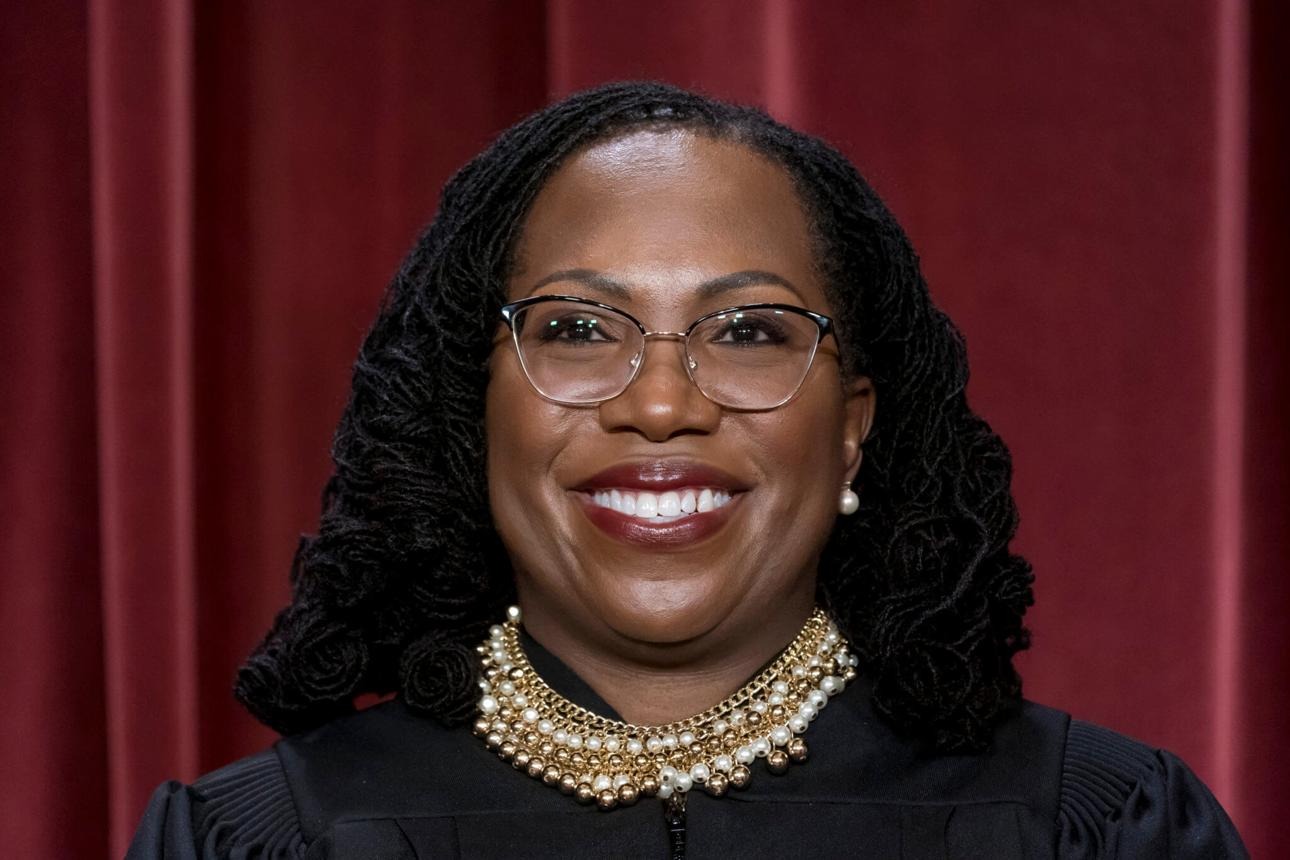
Ketanji Brown Jackson made history in 2022 when she became the first Black woman appointed to the Supreme Court of the United States. Her appointment represented a significant breakthrough in American history, marking a new chapter in the representation of Black women at the highest level of the country’s judicial system. Through her academic achievements, legal career, judicial service and commitment to constitutional interpretation, Jackson has become an influential figure in American law and an inspiration to generations of women and people from historically underrepresented communities.
The history of the United States Supreme Court is filled with important legal decisions and influential figures who have helped shape the country’s political, social and constitutional development. However, for much of American history, the highest court in the land did not reflect the racial and gender diversity of the population it served.
For more than two centuries, the Supreme Court was dominated by white men. Although the appointment of Justice Thurgood Marshall in 1967 broke an important racial barrier by making him the first Black person to serve on the court, Black women remained absent from the institution for decades.
That changed in 2022 when President Joe Biden nominated Ketanji Brown Jackson to become an associate justice of the Supreme Court. Following a historic confirmation process, she officially joined the court on June 30, 2022, becoming the first Black woman in American history to hold the position.
Her appointment was more than a personal achievement. It represented the culmination of generations of progress in the struggle for racial equality, women’s rights and equal opportunities in American public institutions.
Jackson’s journey from a young student with an interest in law to one of the most powerful judicial figures in the United States demonstrates the importance of education, determination, professional excellence and representation.
Early Life and Family Background
Ketanji Brown Jackson was born on September 14, 1970, in Washington, D.C., United States. She was raised in Miami, Florida, in a family that placed considerable importance on education, discipline and public service.
Her parents, Johnny Brown and Ellery Brown, were both public school educators. They had grown up during a period when racial segregation and discrimination significantly limited opportunities for Black Americans. Despite the challenges they experienced, they pursued higher education and built professional careers.
Her father eventually attended law school and became an attorney, while her mother worked as a school principal. Their educational and professional experiences played an important role in shaping Jackson’s ambitions.
Growing up, Jackson developed an interest in public speaking, debate and academic activities. She demonstrated considerable confidence in expressing her ideas and defending her arguments. These interests would later become important foundations for her legal career.
Her father’s decision to pursue law also influenced her interest in the profession. Jackson grew up watching him study legal materials, and the experience helped introduce her to the world of legal reasoning from an early age.
Her family environment encouraged her to believe that education could open doors that discrimination and historical inequalities had previously kept closed to many Black Americans.
Jackson attended Miami Palmetto Senior High School, where she participated in speech and debate competitions. She distinguished herself academically and became known for her ability to communicate complex ideas clearly.
Her achievements during these formative years demonstrated that she possessed the determination and intellectual ability required to pursue a demanding professional career.
Educational Journey at Harvard University
Jackson’s academic journey reached another important milestone when she gained admission to Harvard University, one of the most prestigious educational institutions in the United States.
She attended Harvard-Radcliffe College, where she studied government. Her undergraduate education provided her with an understanding of American political institutions, constitutional principles, public administration and the relationship between government and citizens.
In 1992, she graduated magna cum laude, an academic distinction awarded to students who achieve outstanding academic performance.
Following her undergraduate studies, Jackson spent approximately a year working as a reporter and researcher at Time magazine. This experience exposed her to journalism, public affairs and the importance of investigating information before presenting it to the public.
Her time in journalism also strengthened her research, writing and communication skills, which later became valuable in her legal work.
Jackson subsequently returned to Harvard to study law. At Harvard Law School, she continued to demonstrate academic excellence and became involved in the institution’s prestigious legal publication, the Harvard Law Review, where she served as a supervising editor.
In 1996, she graduated cum laude with a Juris Doctor degree.
Her educational accomplishments were particularly significant because they demonstrated her ability to excel in highly competitive academic environments. They also prepared her for a career that would eventually take her from legal practice to the federal judiciary and, ultimately, the Supreme Court.
Beginning Her Legal Career
After graduating from Harvard Law School, Jackson began building the professional experience that would establish her reputation as a capable and knowledgeable legal practitioner.
One of her earliest professional achievements was securing judicial clerkships with three respected federal judges.
Between 1996 and 1997, she worked as a law clerk for Judge Patti B. Saris of the United States District Court for the District of Massachusetts.
She subsequently clerked for Judge Bruce M. Selya of the United States Court of Appeals for the First Circuit between 1997 and 1998.
Her career reached another important stage when she secured a clerkship with Justice Stephen G. Breyer of the United States Supreme Court during the 1999–2000 term.
Working for a Supreme Court justice gave Jackson valuable exposure to the country’s highest judicial institution. She gained experience examining constitutional questions, researching complex legal disputes and understanding how Supreme Court decisions are developed.
Interestingly, more than two decades later, she would succeed Justice Breyer on the Supreme Court following his retirement.
After completing her clerkships, Jackson worked in private legal practice before moving into public service.
Her professional experience included working with the United States Sentencing Commission, an independent agency responsible for developing federal sentencing guidelines.
Between 2003 and 2005, she served as an assistant special counsel at the commission. She later returned to the institution as a commissioner and vice chair, serving from 2010 to 2014.
Her involvement with the commission gave her a deeper understanding of the American criminal justice system, particularly the policies and guidelines that influence sentencing decisions in federal criminal cases.
Experience as a Federal Public Defender
One of the most important aspects of Jackson’s professional background was her service as an assistant federal public defender in Washington, D.C., between 2005 and 2007.
Public defenders represent individuals who cannot afford private legal representation in criminal proceedings. Their responsibility is to ensure that defendants receive legal assistance and that their constitutional rights are respected throughout the judicial process.
This experience gave Jackson direct exposure to the challenges faced by individuals navigating the criminal justice system.
Unlike some legal professionals whose careers are concentrated primarily on representing corporations, government institutions or financially powerful clients, Jackson spent part of her career representing people who lacked the financial resources to secure private attorneys.
Her work as a public defender involved examining criminal cases, preparing legal arguments, representing defendants and challenging government actions where necessary.
The experience was particularly relevant to her later judicial responsibilities because it exposed her to the practical consequences of criminal laws and sentencing policies.
Her background as a public defender also distinguished her from many previous Supreme Court justices. Before joining the court, she had experienced the criminal justice system from the perspective of people accused of crimes and seeking legal protection.
In 2022, the National Museum of African American History and Culture highlighted another historic dimension of her appointment: Jackson became the first former federal public defender to serve on the Supreme Court.
This was an important professional milestone because it brought a perspective shaped by criminal defence work into an institution whose decisions frequently affect the rights and freedoms of people across the country.
Appointment to the Federal Judiciary
Jackson’s experience in private practice, public service and criminal defence helped establish her reputation as an accomplished legal professional.
In 2012, President Barack Obama nominated her to serve as a judge on the United States District Court for the District of Columbia.
Following Senate confirmation, she assumed the position in 2013.
As a federal district court judge, Jackson presided over a wide range of legal disputes involving individuals, government agencies, businesses and constitutional questions.
Federal district courts are important because they are generally where federal cases begin. Judges at this level examine evidence, hear arguments, interpret laws and issue decisions that can subsequently be reviewed by higher courts.
Jackson’s work required her to demonstrate impartiality, legal knowledge and the ability to evaluate complicated arguments from opposing parties.
She served on the District Court for approximately eight years, developing substantial judicial experience.
In April 2021, President Joe Biden nominated her to serve on the United States Court of Appeals for the District of Columbia Circuit.
The D.C. Circuit is one of the most influential federal appellate courts in the country. It frequently handles disputes involving federal agencies, administrative decisions and important questions of government authority.
The Senate confirmed Jackson’s appointment on June 14, 2021, by a vote of 53–44.
Her elevation to the appellate court placed her among the judges whose decisions help shape the interpretation of federal law and government regulations.
At this stage of her career, Jackson had already achieved something remarkable. She had served at several levels of the American legal system and accumulated experience in private practice, criminal defence, sentencing policy and federal judicial decision-making.
However, her greatest historic achievement was still ahead.
The Historic Supreme Court Nomination in 2022

On January 27, 2022, Supreme Court Justice Stephen Breyer announced his intention to retire at the end of the court’s term, creating an opportunity for President Joe Biden to nominate his successor.
During his 2020 presidential campaign, Biden had publicly committed to nominating a Black woman to the Supreme Court if given the opportunity.
The commitment was widely regarded as an important step towards addressing the historical underrepresentation of Black women in the country’s highest judicial institution.
On February 25, 2022, President Biden announced Ketanji Brown Jackson as his nominee to replace Justice Breyer.
The announcement immediately attracted national and international attention.
Jackson’s nomination was historic because, although Black men and white women had previously served on the Supreme Court, no Black woman had ever been appointed to the institution since its establishment in 1789.
Her nomination therefore represented a major development in American judicial history.
Speaking about her selection, Biden described Jackson as a highly qualified legal professional with extensive experience across different areas of the American justice system.
Her professional background was particularly notable because she had served as a public defender, a federal trial judge and an appellate court judge before receiving the nomination.
The nomination also attracted attention because Jackson had previously worked as a law clerk for Justice Breyer, the very justice she was selected to succeed.
Senate Confirmation and the Historic Victory

Following her nomination, Jackson appeared before the Senate Judiciary Committee for confirmation hearings held between March 21 and March 24, 2022.
The hearings provided senators with an opportunity to examine her professional qualifications, judicial philosophy, legal experience and approach to constitutional interpretation.
During the proceedings, senators questioned her about several important legal issues, including criminal sentencing, constitutional rights, federal authority and her previous judicial decisions.
The confirmation hearings attracted significant public attention, with Americans closely following the discussions surrounding her suitability for the Supreme Court.
Although the process involved intense political disagreements and challenging questions, Jackson defended her record and explained her approach to judicial responsibilities.
She maintained that judges must interpret and apply the law rather than simply impose their personal opinions or political preferences.
On April 7, 2022, the United States Senate voted to confirm her appointment by 53 votes to 47.
The vote included support from three Republican senators, alongside Democratic senators and the chamber’s two independents.
The confirmation made Jackson the first Black woman in American history to be approved for service on the Supreme Court.
It was a landmark moment for the country, particularly for Black women who had spent generations fighting for equal access to education, professional opportunities and positions of national leadership.
On June 30, 2022, Jackson officially took the oaths of office, becoming the 104th associate justice of the United States Supreme Court.
Her appointment was subsequently celebrated during a formal investiture ceremony held at the Supreme Court on September 30, 2022.
The National Museum of African American History and Culture described her appointment as a milestone in the representation of the country’s diversity within its federal judiciary.
Breaking Barriers and Changing the Face of American Justice
Jackson’s appointment represented a significant transformation in the history of the American judiciary.
For generations, Black women had been largely excluded from the highest levels of judicial decision-making. Although women gradually gained greater access to the legal profession and federal judicial appointments, the Supreme Court remained without a Black female justice until 2022.
Her arrival changed that history.
One of the most important implications of her appointment was the expansion of representation within an institution responsible for interpreting the United States Constitution and making decisions that affect millions of people.
The Supreme Court handles disputes involving civil rights, voting rights, freedom of expression, religious liberty, criminal justice, immigration, presidential authority and other fundamental issues.
Its decisions can influence the direction of American society for decades.
Having a Black woman serving on the court therefore carries historical and symbolic importance. It demonstrates that people from communities that experienced generations of discrimination can rise to positions of extraordinary responsibility.
Jackson’s appointment also expanded the range of professional experiences represented on the Supreme Court, particularly through her background as a federal public defender.
Her presence does not mean that she automatically represents the interests or opinions of every Black American or every woman. Supreme Court justices are expected to exercise independent judicial judgment.
Nevertheless, her life experiences and professional background provide an important additional perspective within an institution whose decisions affect people from different social, economic and cultural backgrounds.
Her Contributions to the Supreme Court
Since joining the Supreme Court in 2022, Jackson has participated in important legal proceedings involving some of the country’s most significant constitutional and public policy questions.
Her responsibilities include reviewing arguments presented by lawyers, examining constitutional provisions, interpreting federal legislation and participating in decisions that determine the outcome of cases brought before the court.
Like other Supreme Court justices, she studies extensive legal documents, participates in private conferences with fellow justices and writes judicial opinions.
She may also write concurring opinions when she agrees with the court’s final decision but wishes to explain her reasoning separately. When she disagrees with the majority, she can write dissenting opinions explaining her interpretation of the law.
Her judicial work has demonstrated her willingness to articulate her legal positions, particularly in cases involving the limits of government authority, individual rights and the interpretation of federal statutes.
An important feature of her approach is her extensive engagement with legal questions and the practical implications of judicial decisions.
Her background in different areas of law has provided her with experience that is relevant to the wide range of disputes considered by the Supreme Court.
Although justices do not always agree with one another, disagreements are part of the court’s constitutional responsibility. Jackson’s participation contributes to the legal debates and reasoning that shape its decisions.
Her Influence on Women and the Black Community
Beyond the courtroom, Jackson’s appointment has had a powerful impact on conversations about opportunity, equality and representation.
For many Black women, her achievement represents the breaking of a barrier that had remained in place for more than two centuries.
Her success demonstrates that historical exclusion does not have to determine the future of subsequent generations.
Young Black girls who aspire to become lawyers, judges, academics, politicians or public servants can now look at Jackson as an example of someone who reached the highest level of the American judicial system.
Her journey also provides an important lesson about the value of education and professional development.
Jackson did not become a Supreme Court justice overnight. Her achievement followed years of studying, professional experience, public service and judicial responsibilities.
From her education at Harvard to her work as a public defender and federal judge, every stage of her career contributed to her eventual appointment.
Her story also highlights the importance of creating institutions where talented individuals are evaluated fairly and given opportunities to contribute regardless of their racial or gender backgrounds.
For Black women who have historically faced barriers in professional environments, Jackson’s appointment serves as a reminder that leadership positions should be accessible to qualified people from all communities.
A Significant Milestone in the History of American Democracy
The United States has made considerable progress in expanding access to political and judicial institutions since the civil rights movement.
However, the country’s history demonstrates that representation has not always developed at the same pace across different institutions.
The Supreme Court is particularly significant because its justices are appointed for life, subject to constitutional provisions governing judicial service. Their decisions can influence the country’s legal direction for generations.
Before Jackson’s appointment, the court had already experienced several important historical milestones.
Thurgood Marshall became its first Black justice in 1967, while Sandra Day O’Connor became the first woman to serve on the institution in 1981.
Ruth Bader Ginsburg later became another influential female justice, recognised for her contributions to discussions surrounding gender equality and constitutional rights.
Sonia Sotomayor, appointed in 2009, became the first Latina justice.
Jackson’s appointment in 2022 added another important chapter to this history by ensuring that a Black woman would finally have a seat on the nation’s highest court.
These milestones demonstrate how the composition of American institutions has gradually evolved.
They also show that progress in representation often requires years of advocacy, institutional reforms and opportunities for qualified individuals to demonstrate their abilities.
Personal Life and Values
Outside her judicial responsibilities, Jackson is married to Patrick Jackson, a surgeon. The couple married in 1996 and have two daughters.
Her family has been an important part of her personal journey, supporting her through the demanding responsibilities associated with education, professional development and public service.
Jackson has also spoken about the influence of her parents and the importance of the opportunities they worked hard to provide.
Her upbringing in an educational household helped establish values that remained important throughout her career.
The determination demonstrated by her parents in pursuing education and professional advancement despite the racial barriers of their generation became part of the foundation upon which she built her own achievements.
Her story is therefore not simply about an individual reaching a prestigious position. It is also about the sacrifices, ambitions and aspirations of a family determined to create opportunities for the next generation.
Challenges and Responsibilities of Her Position
Although Jackson’s appointment was widely celebrated as a historic achievement, serving on the Supreme Court comes with enormous responsibilities and public scrutiny.
The court regularly considers controversial cases involving political disagreements, constitutional interpretation and competing understandings of individual rights.
Its decisions can affect the lives of millions of Americans and influence government policies at the national and state levels.
As a justice, Jackson must approach these disputes through legal reasoning, constitutional principles and the responsibilities of her office.
She is also expected to maintain judicial independence, even when her decisions attract criticism from political groups, public commentators or individuals who disagree with her legal conclusions.
Her position requires balancing the demands of constitutional interpretation with the responsibility to ensure that the law is applied fairly.
The challenges associated with the Supreme Court demonstrate that her historic appointment is only one part of her broader contribution. Her lasting influence will also be assessed through her judicial opinions, legal reasoning and participation in decisions that shape American constitutional law.
Legacy and Lasting Impact
Ketanji Brown Jackson’s legacy is already significant because she achieved something that no Black woman had accomplished in the more than 230-year history of the United States Supreme Court.
Her appointment demonstrated that professional excellence and determination can help overcome barriers that have existed for generations.
However, her influence extends beyond being the first Black woman to occupy a particular position.
She represents the achievements of generations of Black Americans who fought against racial discrimination and demanded equal access to education, employment and public institutions.
Her parents’ generation experienced the realities of segregation, while her generation benefited from opportunities created through decades of civil rights activism and gradual institutional change.
Her appointment therefore connects different periods of American history, demonstrating how progress achieved by previous generations can create opportunities for those who follow.
She has also become an important example for aspiring legal professionals who may come from backgrounds historically underrepresented in the judiciary.
Her professional journey shows that a successful legal career can involve different forms of service, including private practice, criminal defence, government work and judicial appointments.
Perhaps one of the most important lessons from her story is that representation and professional excellence can exist together. Her appointment was historically significant not simply because she was a Black woman, but because she arrived at the Supreme Court with extensive legal qualifications and years of experience across the American judicial system.
As her service continues, her opinions and participation in major cases will remain important parts of her contribution to American law.
Conclusion
Ketanji Brown Jackson’s appointment to the United States Supreme Court in 2022 was one of the most important milestones in the history of Black representation in American public institutions.
By becoming the first Black woman to serve on the country’s highest court, she broke a barrier that had remained unchallenged for more than two centuries.
Her journey from Washington, D.C., through her education at Harvard University and Harvard Law School, to her work as a public defender, federal judge and Supreme Court justice demonstrates the importance of determination, education and professional excellence.
Her achievement also represents the progress made by generations of Black Americans who struggled for equal opportunities and greater representation in institutions of national importance.
Although the Supreme Court’s decisions will ultimately determine much of her legal legacy, her place in history is already secure.
For millions of women and young people, particularly those from historically marginalised communities, Jackson’s story provides an inspiring example of what can be achieved when talent, hard work and opportunity come together.
Her historic appointment sent a powerful message to future generations: the highest positions of leadership and public service should not be limited by race or gender.
Ketanji Brown Jackson did not simply become a Supreme Court justice; she opened a new chapter in American judicial history and created a lasting symbol of progress, representation and possibility.