

The election of Barack Obama as the 44th president of the United States was one of the most historic political moments of the 21st century. On November 4, 2008, millions of Americans gathered around television screens, listened to radio broadcasts and followed election updates as the country prepared to make a decision that would change its political history forever. When the results became clear, Barack Obama had defeated Republican candidate John McCain, becoming the first African American to be elected president of the United States.
His victory represented far more than a change of political leadership. It marked a significant milestone in America’s long and difficult struggle against racial discrimination, segregation and unequal opportunities. For a country whose history was deeply connected to slavery, racial oppression and the exclusion of Black people from political power, the election of a Black president was an extraordinary achievement.
Obama’s presidency, which lasted from January 20, 2009, to January 20, 2017, inspired millions of people across the world, particularly young people and members of historically marginalized communities. His journey from a relatively modest background to the highest political office in the United States became a powerful example of ambition, determination, education and the possibilities of democratic participation.
Beyond making history through his election, Obama introduced significant domestic policies, including the Affordable Care Act, pursued diplomatic initiatives around the world, and helped redefine America’s image internationally. Although his administration faced criticism, political opposition and difficult national and international challenges, his influence on American politics and global conversations about race, leadership and representation remains significant.
Early Life and Background: The Making of Barack Obama
Barack Hussein Obama II was born on August 4, 1961, in Honolulu, Hawaii, United States. His background was unusual in many ways, reflecting a combination of African and American experiences that would later influence his understanding of identity, race and international relations.
His father, Barack Obama Sr., was from Kenya, while his mother, Ann Dunham, was an American from Kansas. His parents met while studying at the University of Hawaii, but their marriage did not last. Following their separation, Obama’s father returned to Kenya, leaving his mother to raise him largely on her own.
Obama spent part of his childhood in Hawaii and Indonesia. His mother later returned to Hawaii, where he continued his education and developed an interest in literature, politics and social issues.
Growing up in a multicultural environment exposed him to different traditions, cultures and perspectives. His experiences also influenced his understanding of the complexities surrounding race and belonging in American society.
After completing secondary education, Obama attended Occidental College in Los Angeles before transferring to Columbia University in New York, where he graduated in 1983 with a degree in political science.
Rather than immediately pursuing a conventional corporate career, he became involved in community organizing in Chicago, Illinois. This experience was particularly important in shaping his political philosophy.
Working with churches, community leaders and residents in economically disadvantaged neighborhoods, Obama helped organize efforts to improve employment opportunities, housing conditions and educational access.
The experience introduced him to the everyday challenges facing ordinary Americans and strengthened his belief that political and social change could be achieved through collective action.
He subsequently attended Harvard Law School, where he distinguished himself academically. In 1990, he became the first Black president of the prestigious Harvard Law Review, an achievement that attracted considerable national attention.
After graduating from Harvard in 1991, Obama returned to Chicago, where he worked as a civil rights lawyer, taught constitutional law at the University of Chicago Law School and became increasingly involved in politics.
His early experiences provided the foundation for the political career that would eventually take him to the White House.
The Journey into Politics
In 1996, he was elected to the Illinois State Senate, representing a district on Chicago’s South Side. During his time in the state legislature, he worked on issues involving healthcare, criminal justice, ethics reform and economic development.
His growing reputation as a thoughtful politician and effective communicator helped him attract attention beyond Illinois.
A major turning point came in 2004 when Obama delivered the keynote address at the Democratic National Convention in Boston. His speech, which emphasized national unity and the need to move beyond political and racial divisions, received widespread attention.
One of the most memorable messages from the speech was his argument that Americans were not fundamentally divided into opposing groups but shared common hopes and aspirations.
The address introduced him to a national audience and established him as one of the Democratic Party’s most promising emerging figures.
Later that year, he won election to the United States Senate, becoming only the third African American elected to the Senate by popular vote since the Reconstruction era.
His rapid political rise demonstrated his ability to connect with voters across different demographic and ideological backgrounds.
By 2007, Obama had developed the confidence and national recognition necessary to pursue an even greater ambition: becoming president of the United States.

The Historic 2008 Presidential Election: Breaking America’s Racial Barrier
On February 10, 2007, Obama officially announced his intention to contest the 2008 presidential election. His campaign was built around the message of hope, change, national unity and political participation.
At the time, the United States was experiencing serious political and economic challenges. The country was involved in military conflicts in Iraq and Afghanistan, while growing dissatisfaction with the administration of President George W. Bush had created an appetite for new leadership.
Obama’s campaign attracted enormous attention, particularly among young voters, African Americans, independent voters and Americans who wanted a different direction for the country.
However, his journey to the Democratic presidential nomination was not straightforward. He faced a powerful opponent in Hillary Clinton, a former first lady and experienced United States senator who was widely considered a leading candidate for the nomination.
The contest between the two politicians became one of the most closely watched Democratic primary battles in modern American political history.
Obama eventually secured the Democratic nomination, making history as the first African American to lead a major American political party’s presidential ticket.
In the November 4, 2008, general election, he faced Republican presidential candidate John McCain, a respected senator and former prisoner of war.
Obama won decisively, receiving approximately 53 percent of the popular vote and 365 electoral votes, compared with McCain’s 173 electoral votes.
His victory was celebrated across the United States and internationally. In Chicago’s Grant Park, thousands of supporters gathered to witness his historic victory speech.
For many African Americans, the result represented a powerful moment of recognition and achievement. It was particularly significant for descendants of enslaved Africans whose ancestors had been denied basic human rights, including voting rights, education and equal treatment under the law.
Just over a century and a half after the abolition of slavery, an African American had been elected to lead the country that once legally permitted the enslavement of millions of Black people.
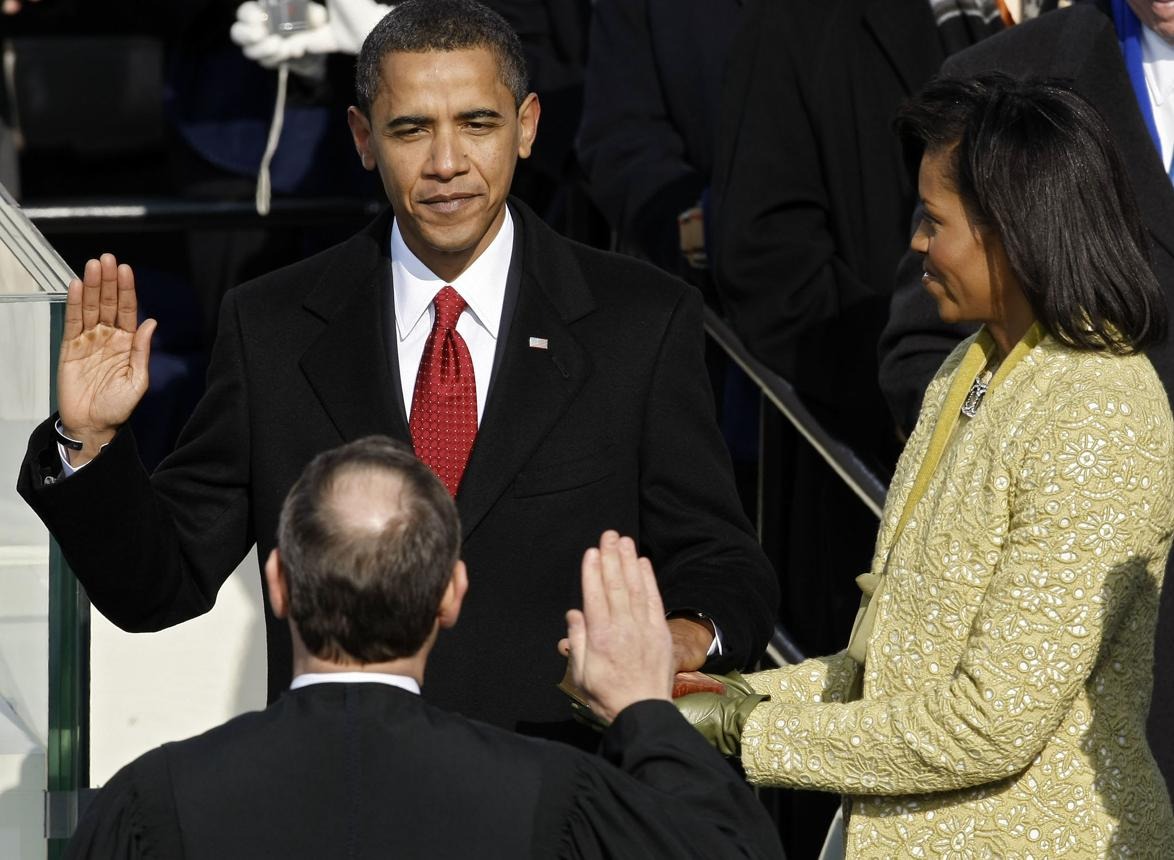
On January 20, 2009, Obama was inaugurated as the 44th president of the United States. His inauguration attracted an enormous crowd and became one of the most memorable political ceremonies in American history.
His election did not mean that racial discrimination had disappeared from American society. However, it demonstrated that the country’s highest political office was no longer beyond the reach of Black Americans.
Healthcare Reform: The Introduction of the Affordable Care Act
One of the most significant domestic achievements of Obama’s presidency was the introduction of the Affordable Care Act (ACA), popularly known as Obamacare.
Before the legislation was introduced, millions of Americans struggled to obtain affordable health insurance. Some people were unable to access coverage because of pre-existing medical conditions, while others could not afford expensive insurance premiums.
Obama considered healthcare reform an important part of his administration’s domestic agenda.
After months of political negotiations and disagreements, he signed the Affordable Care Act into law on March 23, 2010.
The legislation introduced major changes to the American healthcare system. Among its provisions were protections for people with pre-existing medical conditions, the expansion of Medicaid eligibility in participating states, subsidies to help eligible individuals purchase insurance and the establishment of health insurance marketplaces.
The law also allowed young adults to remain on their parents’ health insurance plans until the age of 26.
The Affordable Care Act significantly expanded access to health insurance, although its implementation faced legal challenges, political opposition and disagreements over costs and government involvement in healthcare.
Supporters considered it a major step towards making healthcare more accessible, while critics questioned its affordability, regulations and impact on the healthcare industry.
Nevertheless, Obamacare became one of the defining policy achievements of Obama’s administration and a major part of his presidential legacy.
Economic Recovery Following the 2008 Financial Crisis
Another major challenge Obama inherited was the global financial crisis of 2008.
When he assumed office in January 2009, the United States was experiencing one of its most serious economic downturns since the Great Depression.
Businesses were closing, unemployment was rising, financial institutions were under pressure and millions of Americans were facing difficulties with mortgages and household expenses.
Obama’s administration responded with the American Recovery and Reinvestment Act of 2009, an economic stimulus package designed to support economic recovery.
The legislation, signed on February 17, 2009, initially allocated approximately $787 billion, with the total estimated cost later revised upward.
The programme supported infrastructure development, education, healthcare, renewable energy projects, tax relief and unemployment assistance.
His administration also supported measures to stabilize the American financial system and prevent further economic deterioration.
Although economists and political commentators have debated the effectiveness and long-term consequences of some of these policies, the United States gradually recovered from the recession during Obama’s presidency.
The administration also introduced financial reforms through the Dodd-Frank Wall Street Reform and Consumer Protection Act of 2010, which strengthened financial regulation and established additional consumer protections.
These economic interventions formed an important part of Obama’s domestic policy record.
Advancing Civil Rights and Social Equality
Obama’s presidency carried enormous symbolic importance for racial equality, but his administration also pursued several policies related to civil rights and equal opportunities.
One of the earliest pieces of legislation he signed was the Lilly Ledbetter Fair Pay Act of January 29, 2009.
The law strengthened workers’ ability to challenge discriminatory pay practices and addressed limitations that had previously restricted certain wage discrimination claims.
His administration also supported the repeal of the military’s Don’t Ask, Don’t Tell policy, which had prevented openly gay and lesbian service members from serving in the United States armed forces.
The repeal was signed into law in December 2010 and took effect in September 2011.
Another important moment came in June 2015, when the United States Supreme Court legalized same-sex marriage nationwide in the landmark Obergefell v. Hodges decision. Obama publicly welcomed the ruling as a victory for equality.
However, racial inequality remained a significant issue throughout his presidency.
The deaths of several unarmed Black Americans, including Trayvon Martin, Michael Brown and Eric Garner, generated nationwide protests and renewed discussions about police conduct, racial profiling and the criminal justice system.
The Black Lives Matter movement also gained national and international prominence during this period.
Obama acknowledged the concerns surrounding racial injustice and spoke publicly about the need for stronger relationships between law enforcement agencies and minority communities.
His administration established the Task Force on 21st Century Policing in 2014 to examine ways of improving police-community relations and strengthening public trust.
While critics argued that his administration did not go far enough in addressing systemic racism, his presidency helped bring conversations about race, identity, policing and equality into the centre of American political debate.
International Diplomacy and America’s Global Influence
Obama’s influence extended beyond American borders. His presidency introduced a different diplomatic approach that emphasized international cooperation, negotiations and partnerships.
In 2009, he received the Nobel Peace Prize in recognition of his efforts to strengthen international diplomacy and cooperation between nations.
The award generated considerable debate because it came relatively early in his presidency, before many of his major diplomatic initiatives had been completed.
Nevertheless, it reflected the international expectations surrounding his leadership and the desire for a different American approach to global affairs.
One of his most notable diplomatic achievements was the restoration of diplomatic relations between the United States and Cuba.
For more than five decades, relations between the two countries had been characterized by hostility, economic restrictions and diplomatic isolation.
In December 2014, Obama announced an initiative to normalize relations with Cuba, working with Cuban leader Raúl Castro.
The United States subsequently reopened its embassy in Havana, and Obama became the first sitting American president to visit Cuba in nearly 90 years when he travelled there in March 2016.
Another major diplomatic initiative was the 2015 Iran nuclear agreement, formally known as the Joint Comprehensive Plan of Action (JCPOA).
The agreement involved Iran and six world powers, including the United States, United Kingdom, France, Russia, China and Germany.
Its central objective was to restrict Iran’s nuclear programme and establish international monitoring mechanisms in exchange for sanctions relief.
Although the agreement was controversial and later faced major political challenges, it represented an important attempt to resolve a potentially dangerous international dispute through negotiations rather than military confrontation.
Obama also played an important role in international climate diplomacy.
In December 2015, world leaders reached the Paris Agreement, a landmark international framework designed to address climate change by encouraging countries to reduce greenhouse gas emissions and strengthen climate resilience.
These diplomatic initiatives demonstrated Obama’s preference for multilateral engagement, although the results and long-term effectiveness of individual policies remained subjects of international debate.
The Fight Against Terrorism and the Death of Osama bin Laden
One of the most consequential security operations during Obama’s presidency occurred on May 2, 2011.
On that day, American special operations forces carried out a mission in Abbottabad, Pakistan, that resulted in the killing of Osama bin Laden, the founder and leader of Al-Qaeda.
Bin Laden had been responsible for orchestrating the September 11, 2001, terrorist attacks against the United States, which killed nearly 3,000 people and fundamentally changed American national security policy.
The operation followed years of intelligence gathering and international counterterrorism efforts.
Obama authorized the mission, and its successful completion was announced to the American public in a televised address from the White House.
The announcement generated celebrations in parts of the United States and was regarded as a major milestone in the country’s campaign against Al-Qaeda.
However, Obama’s administration also faced serious security challenges, including the rise of the Islamic State in Iraq and Syria, continuing instability in the Middle East and the prolonged conflict in Afghanistan.
His foreign policy record therefore included both significant security achievements and difficult unresolved conflicts.
Re-election in 2012: A Second Opportunity to Lead America
After four years in office, Obama sought re-election in 2012. Despite facing criticism over unemployment, government spending, healthcare reform and other domestic issues, he maintained considerable support among American voters.
His Republican opponent was Mitt Romney, the former governor of Massachusetts.
The presidential election took place on November 6, 2012, and Obama secured another victory, receiving 332 electoral votes against Romney’s 206.
His re-election demonstrated that his historic 2008 victory was not simply an extraordinary political moment but the beginning of a sustained period of leadership.
Obama was inaugurated for his second term on January 20, 2013.
During his second administration, he continued pursuing policies involving healthcare, immigration, climate change, education, economic development and international diplomacy.
His second term also included the restoration of diplomatic relations with Cuba, the Iran nuclear agreement and the Paris Climate Agreement.
By the time he left office in January 2017, Obama had completed eight years as president, becoming one of the most influential political figures of his generation.
His Influence on Black Representation and Future Generations
Perhaps one of Obama’s most enduring contributions was the impact his presidency had on perceptions of Black leadership and political representation.
For generations, African Americans had struggled against laws and social systems that prevented them from participating equally in American political life.
During slavery, Black people were treated as property and denied fundamental freedoms. Following emancipation in 1865, African Americans continued to experience segregation, racial violence, voter suppression and institutional discrimination.
Even after the civil rights movement of the 1950s and 1960s secured important legal victories, racial inequalities continued to affect American society.
Against this historical background, Obama’s election represented a remarkable transformation.
For many Black children, seeing an African American occupying the White House created a new sense of possibility.
It demonstrated that people from historically marginalized communities could aspire to positions of national leadership and influence.
His achievement also resonated beyond the United States, particularly across Africa and the African diaspora.
In countries such as Nigeria, Ghana, Kenya and South Africa, Obama’s presidency attracted considerable interest.
His Kenyan ancestry made him an especially significant figure for many Africans, who viewed his achievement as an inspiring connection between the African continent and American political history.
Young people across the world drew inspiration from his educational journey, public speaking abilities, political ambition and commitment to public service.
His presidency also encouraged greater conversations about diversity in leadership, the importance of democratic participation and the need to create opportunities for underrepresented communities.
However, Obama’s election should not be interpreted as evidence that racial discrimination had ended in America. Rather, it demonstrated how far the country had travelled while highlighting the work that remained.
Obama’s Relationship with Africa
Obama’s African heritage was an important part of his international identity.
His father was born in Kenya, and his family background gave him a personal connection to the continent.
During his presidency, he visited several African countries, including Ghana, Senegal, South Africa, Tanzania and Kenya.
His first presidential visit to sub-Saharan Africa took place in July 2009, when he travelled to Ghana.
During the visit, he delivered a major speech emphasizing democracy, good governance, economic development and the importance of accountable leadership.
He encouraged African countries to strengthen their democratic institutions, fight corruption and invest in education and economic opportunities.
In 2013, he launched the Young African Leaders Initiative (YALI), which aimed to support emerging African leaders through leadership training, networking and professional development.
The initiative subsequently became an important platform for young African entrepreneurs, civil society advocates and public-sector professionals.
Obama also introduced Power Africa in 2013, an initiative designed to expand access to electricity across sub-Saharan Africa through partnerships involving governments, businesses and development institutions.
In July 2015, he travelled to Kenya, becoming the first sitting American president to visit the country of his father’s birth.
The visit attracted enormous attention, with many Kenyans welcoming him as a historical figure whose family story connected Africa with the United States.
He subsequently visited Ethiopia, where he addressed the African Union in Addis Ababa, becoming the first sitting American president to do so.
His African engagements demonstrated the importance he attached to the continent’s development, although critics continued to debate the scale and long-term impact of American commitments to African economic and political priorities.
Life After the Presidency: Continuing His Global Influence
After leaving office on January 20, 2017, Obama did not disappear from public life.
Instead, he continued contributing to discussions about democracy, leadership, education, community development and international affairs.
Together with his wife, Michelle Obama, he established the Obama Foundation, an organization dedicated to developing future leaders and supporting initiatives that strengthen communities.
The foundation’s programmes include leadership development opportunities, civic engagement projects and international initiatives designed to empower young people.
One of its major programmes, the Obama Foundation Leaders initiative, supports emerging leaders from different countries by providing training, mentorship and opportunities to collaborate on solutions to social challenges.
Obama also became involved in media and storytelling through Higher Ground Productions, the production company he established with Michelle Obama.
The company has produced documentaries, films and television programmes, including projects examining history, culture, social issues and human experiences.
In November 2020, he published his presidential memoir, A Promised Land, which explores his political journey, election campaigns, presidency and experiences in the White House.
The book became an international bestseller and provided readers with an account of the challenges associated with leading one of the world’s most powerful nations.
He has also remained involved in American political discussions, occasionally supporting Democratic candidates and encouraging citizens to participate in elections.
His influence therefore extends beyond the eight years he spent in the White House.
Criticisms and Controversies Surrounding His Presidency
Although Obama’s presidency was historic and included significant achievements, it was not without controversy.
His administration faced criticism from both political opponents and some members of his own political coalition.
The Affordable Care Act, for example, generated intense political disagreements over government spending, insurance regulations and the role of federal authorities in healthcare.
His administration also faced criticism over its use of drone strikes in counterterrorism operations, particularly because of civilian casualties and concerns about accountability.
The military intervention in Libya in 2011, which contributed to the removal of Muammar Gaddafi, was followed by prolonged political instability and violence.
In Syria, the Obama administration struggled to respond effectively to the civil war and the humanitarian crisis that developed during the conflict.
His immigration policies also attracted criticism, including disagreements over deportations and executive actions designed to protect certain undocumented immigrants.
Furthermore, many African American activists and civil rights advocates argued that his administration should have taken stronger action against racial inequality and police misconduct.
These controversies demonstrate that historic representation does not automatically translate into the resolution of every social, economic or political problem.
Nevertheless, Obama’s presidency remains an important chapter in American history because of both its achievements and the debates it generated.
Awards, Recognition and Historical Legacy
Obama received several significant international honours during his political career.
In 2009, he was awarded the Nobel Peace Prize for his efforts to strengthen international diplomacy and cooperation between peoples.
He also received considerable recognition for his leadership, public communication and contributions to American political life.
His presidency helped change international perceptions of the United States, particularly during its early years, when many countries welcomed his emphasis on diplomacy and cooperation.
His historical significance, however, goes beyond awards and political achievements.
He demonstrated that an individual with African ancestry could rise through America’s political system and occupy the highest executive office in the country.
His election became a defining moment in the history of Black political representation.
Even after leaving office, Obama remains a prominent international figure whose views on democracy, leadership, race, education and public service continue to attract attention.
Conclusion
Barack Obama’s journey from Honolulu, Hawaii, to the White House remains one of the most remarkable political stories of modern history.
Born to a Kenyan father and an American mother, he grew up navigating different cultures and experiences before developing an interest in community service, law and politics.
Through education, public service, political determination and effective communication, he rose from community organizing in Chicago to the United States Senate and eventually the presidency.
His election in 2008 broke a major racial barrier in American politics and created a historic moment for African Americans and people of African descent around the world.
During his eight years in office, he introduced significant healthcare reforms, helped guide the American economy through a major financial crisis, pursued diplomatic agreements and supported initiatives involving civil rights, education and international development.
His administration also faced serious challenges, controversies and criticisms, reminding the world that even historic leadership cannot resolve every national or international problem.
Yet his symbolic achievement remains extraordinary.
For millions of young Black people, particularly those from communities where opportunities have historically been limited, Obama’s presidency provided a powerful example of what determination, education and political participation could make possible.
For Africa and the wider African diaspora, his Kenyan heritage created a historic connection that encouraged conversations about identity, international influence and the contributions of people of African descent to global leadership.
Ultimately, Barack Obama’s legacy is not defined solely by becoming the first Black president of the United States. It is also reflected in the generations he inspired, the policies he introduced, the international relationships he pursued and the political conversations his presidency helped shape.
His story stands as a reminder that history is not permanently fixed by the limitations of the past. Through determination, opportunity and collective participation, societies can make room for leaders and achievements that once seemed impossible.
Barack Obama did not simply make history by becoming America’s first Black president; he helped redefine what millions of people around the world believed was possible.