

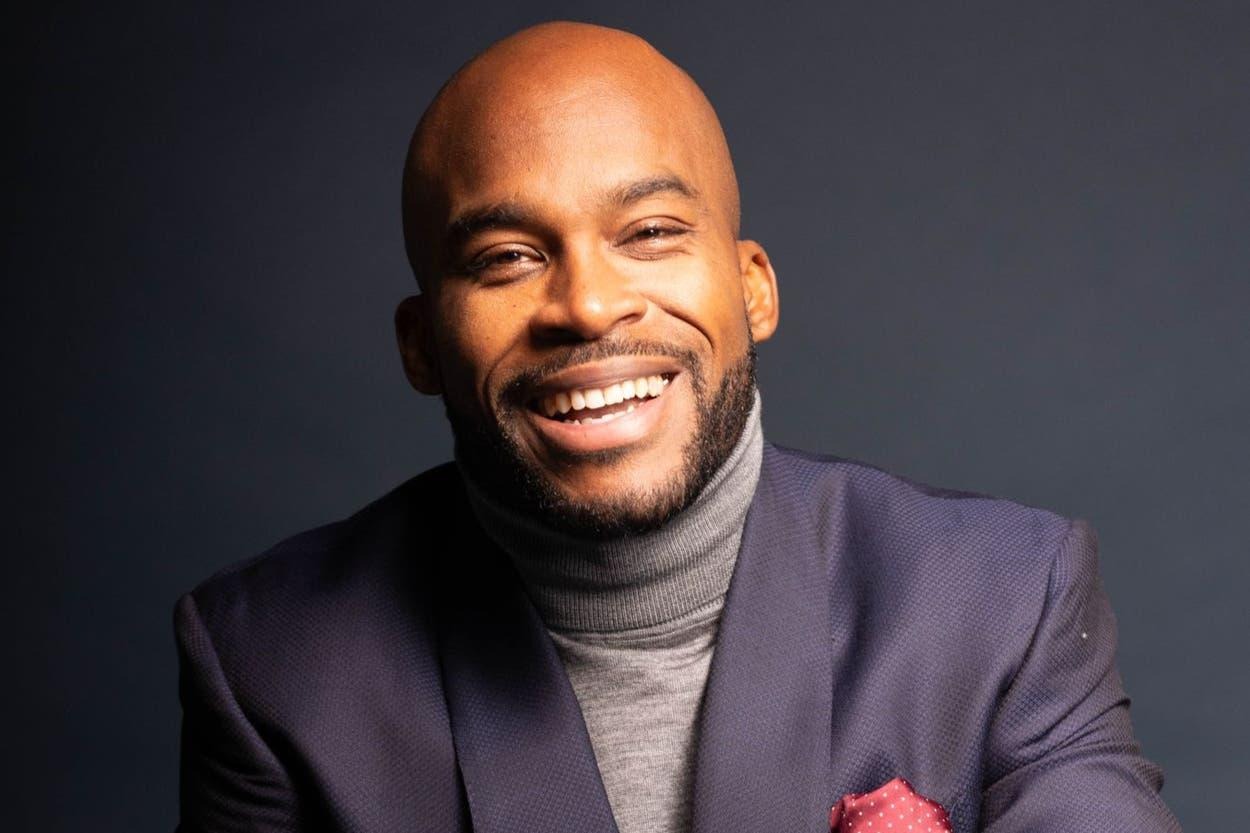
The journey from homelessness to the boardroom of some of the world’s most successful technology businesses is one that few people can imagine. For British business executive Dean Forbes, however, this remarkable transformation is a story of determination, resilience, ambition and an unwavering belief that difficult beginnings do not have to determine how a person’s life ends.
Growing up in southeast London under challenging financial and family circumstances, Forbes experienced homelessness twice as a teenager. At a time when many young people were concentrating on education, friendships and planning their futures, he was already dealing with responsibilities and difficulties that forced him to mature much earlier than his age.
His early ambitions of becoming a professional footballer also came to an unexpected end when he was released by Crystal Palace Football Club. With his sporting dreams shattered and financial difficulties mounting, Forbes found himself working in a call centre, undertaking telesales to earn a living and support himself.
Yet, rather than allowing these setbacks to define his future, he used them as motivation to pursue new opportunities. Over the years, he developed a successful career in the technology and enterprise software industry, eventually becoming the chief executive officer of Forterro, an international software business serving industrial and manufacturing companies.
His rise from a young man experiencing homelessness to a respected executive leading major technology businesses has made him an important example of what perseverance, opportunity and effective leadership can achieve.
Forbes’ story is not simply about personal financial success. It is also about social mobility, representation, mentorship and the responsibility of successful business leaders to create opportunities for people who come from disadvantaged backgrounds.

Early Life: Growing Up Amid Financial Difficulties
Dean Forbes grew up in southeast London in a working-class, single-parent household. His childhood was shaped by financial uncertainty and family responsibilities, which exposed him to challenges that many young people do not experience until adulthood.
His mother lived with muscular dystrophy, a condition that affected her physical abilities. Despite her health difficulties, she worked hard to provide for her children and ensure they had opportunities to build better futures.
Forbes assumed considerable family responsibilities at a young age. Reports about his upbringing describe how he helped care for his younger brothers while also supporting his mother.
His family experienced homelessness twice during his teenage years. The first episode occurred when he was approximately 14, following difficult circumstances at home. The family subsequently faced another period of housing insecurity after his mother lost her employment and they could no longer maintain their home.
These experiences were emotionally challenging. Losing a home meant more than simply finding somewhere else to sleep. It also meant losing the security, stability and sense of belonging that a family home provides.
The difficulties of his childhood helped shape his understanding of responsibility, perseverance and the importance of financial independence.
Despite the circumstances, his mother remained determined that her children should receive an education and have opportunities to achieve something meaningful in life. Her determination became an important influence on his outlook.
Forbes’ early experiences would later influence his approach to business leadership, particularly his interest in social mobility and helping people from disadvantaged communities gain access to opportunities.
The Football Dream That Did Not Work Out
Before becoming a prominent figure in the technology industry, Forbes had ambitions of making a career in professional football.
As a teenager, he joined Crystal Palace Football Club, one of England’s established football clubs. He invested considerable time and energy in pursuing his dream of becoming a professional player and was captain of many of the teams he represented.
For a young man growing up in difficult circumstances, football offered the possibility of a different future. It represented an opportunity to achieve financial stability, gain recognition and perhaps escape the economic difficulties that had affected his family.
Unfortunately, his football ambitions did not materialise. Injuries and his eventual release from Crystal Palace brought that chapter of his life to an end when he was around 17.
The disappointment was particularly painful because some of his former teammates continued pursuing successful football careers while he had to reconsider his future.
Rather than remaining discouraged, Forbes decided to redirect his ambitions towards the corporate world.
He began working in telesales at a Motorola call centre at approximately 18 years old. The job was far removed from the professional sporting career he had imagined, but it provided an opportunity to earn money and begin developing professional skills.
His financial difficulties also meant he took on additional work delivering pizzas at night. He has spoken about working late into the night several times a week while trying to establish himself in the employment market.
These experiences taught him the importance of discipline, hard work and financial responsibility.
More importantly, they helped him understand that success does not always follow the path people initially imagine. Sometimes, the end of one ambition can become the beginning of another.
His transition from football to telesales marked the beginning of a remarkable career in business and technology.

Breaking into the Technology Industry
Forbes’ entry into the technology industry did not happen through a traditional academic or professional route.
Instead, he gradually developed his career by identifying opportunities, learning new skills and demonstrating his ability to deliver results.
His early experience in sales helped him develop communication, negotiation and relationship-building skills. These abilities would later become essential to his work as a senior executive.
One of the most significant turning points in his career came when he joined Primavera Systems, an American software company specialising in project management solutions.
He joined the company around 2000 and became responsible for driving its international growth.
The position exposed him to the international technology market and provided an opportunity to work with major organisations across different geographical regions.
Under his leadership, Primavera expanded its international operations, with Forbes taking responsibility for business activities across Europe, the Middle East, Africa and Asia-Pacific.
His contribution to the company’s growth helped establish his reputation as a capable business executive who could identify opportunities, build teams and expand technology businesses beyond their original markets.
Primavera was eventually acquired by Oracle in 2009.
The acquisition represented a major milestone in Forbes’ professional development. Following the transaction, he was given a leadership position within Oracle, where he oversaw worldwide sales and marketing for a related business division.
According to Forterro’s official biography, he became the youngest vice-president at Oracle in nearly 30 years.
This achievement was particularly significant considering that only a few years earlier he had been working in a call centre, trying to overcome the challenges of his early adulthood.
His experience at Primavera and Oracle also introduced him to the importance of business ownership and equity participation.
Rather than viewing employment purely as an opportunity to receive a salary, Forbes increasingly understood how ownership stakes in growing businesses could create substantial long-term financial value.
That knowledge would become an important part of his approach to subsequent executive positions.
Transforming Technology Businesses Through Strategic Leadership
Following his success at Primavera Systems, Forbes continued building his reputation as an executive capable of transforming businesses and improving their commercial performance.
One of his major appointments came in 2011, when he became chief executive officer of KDS, a Paris-headquartered software company specialising in corporate travel and expense management.
The company operated in a competitive international market and needed effective leadership to expand its operations and strengthen its business position.
Forbes took on the responsibility of directing its growth strategy, improving its operations and expanding its international presence.
Under his leadership, KDS developed its business and strengthened its position in the corporate travel technology sector.
In 2016, the company was acquired by American Express Global Business Travel. The transaction represented another important achievement in Forbes’ career and demonstrated his ability to lead a technology company through expansion and a successful acquisition.
He subsequently moved to CoreHR, an organisation providing human resources and payroll software solutions.
He joined the business in 2017 and led its European growth and development.
At the time, CoreHR was working to strengthen its position in the human capital management software market, particularly as businesses increasingly adopted cloud-based technology to manage their employees and administrative operations.
Forbes helped guide the company’s expansion and transformation, positioning it for a successful acquisition by The Access Group.
Following the acquisition, he became president of The Access Group’s Access People division.
These experiences established a pattern in his professional career: taking leadership positions in technology businesses, identifying areas where they could improve, developing growth strategies and helping them achieve greater commercial value.
His success also demonstrated that executive leadership involves more than occupying an influential position. It requires the ability to understand a company’s challenges, motivate employees, communicate a clear vision and make difficult decisions.
Becoming CEO of Forterro

In March 2021, Forbes became the chief executive officer of Forterro.
His appointment marked another important chapter in his business career.
Forterro is a European enterprise software company that develops technology solutions for industrial businesses, particularly manufacturers and organisations operating in the industrial mid-market.
Its products help companies manage important business functions, including production, operations, finance, supply chains and other essential processes.
Enterprise software is particularly important in modern manufacturing because companies must coordinate complex activities while controlling costs, improving productivity and maintaining reliable operations.
Businesses that depend on outdated systems or disconnected software applications can experience inefficiencies, operational delays and difficulties accessing accurate information.
Forterro provides specialised software designed to address many of these challenges.
When Forbes joined the organisation, he was selected to lead its next phase of growth. His responsibilities included overseeing overall operations, commercial activities and the company’s wider strategic direction.
His previous experience transforming software companies made him well suited to the assignment.
Under his leadership, Forterro pursued an ambitious expansion strategy involving acquisitions, operational improvements, technological investment and the integration of different businesses into a more unified organisation.
A significant milestone came in 2022 when Partners Group acquired Forterro in a transaction valued at approximately €1 billion.
The transaction attracted considerable attention within the European technology and private equity industries.
Forbes’ role in positioning the company for the acquisition further strengthened his reputation as an executive capable of creating substantial business value.
However, his ambitions for Forterro extended beyond a single acquisition.
He focused on developing the company into a larger European software platform capable of serving more industrial businesses across different markets.
The strategy involved bringing together several software businesses, strengthening their technological capabilities and improving the customer experience.
According to a September 2025 profile published by Boardwave, Forterro’s expansion strategy involved integrating 12 group companies into a more unified technology business serving more than 25,000 industrial customers.
The company’s official website continues to identify Forbes as its chief executive officer. It also describes Forterro as a provider of software solutions to more than 25,000 customers in the industrial market.
Forbes’ work at Forterro demonstrates how technology leadership requires a combination of commercial understanding, strategic planning and the ability to manage organisations through periods of significant change.
His Approach to Business Leadership
One of the defining characteristics of Forbes’ career is his ability to lead businesses through challenging situations.
Rather than concentrating exclusively on companies that are already performing exceptionally well, he has often been attracted to organisations with good products, capable employees and promising markets that require stronger leadership or a clearer direction.
In an October 2025 interview with Investec, he explained that he finds it particularly motivating to identify businesses that have lost their way and help them rediscover their potential.
His approach to business growth is based on understanding the company’s products, identifying its customers, determining the problems it can solve and establishing what makes it competitive.
He also places considerable importance on communication.
Forbes recognises that even good business ideas can fail when leaders cannot explain their objectives effectively or convince employees and investors to support their implementation.
He believes that successful executives must understand the concerns of different stakeholders and communicate in ways that make sense to them.
This is particularly important when businesses undergo acquisitions.
Employees may become anxious when their organisation is purchased by another company because they are uncertain about their jobs, workplace culture and future responsibilities.
Forbes has emphasised the importance of integrity, transparency and keeping promises during such transitions.
His philosophy suggests that employees are more likely to trust management when leaders communicate honestly about changes and follow through on their commitments.
This approach is especially relevant in the technology industry, where acquisitions, restructuring and rapid market changes can significantly affect employees and customers.
Forbes Family Group: Using Success to Create Opportunities for Others
Beyond his corporate responsibilities, Forbes has demonstrated a strong commitment to supporting disadvantaged communities and helping people from underrepresented backgrounds gain access to business opportunities.
In 2020, he established the Forbes Family Group (FFG), an organisation through which he supports business development, investment opportunities, leadership coaching and mentorship.
He serves as its chairman and uses his business experience to help emerging entrepreneurs and leaders develop their ideas and build successful organisations.
Alongside his wife, Danielle, he has also supported the Forbes Family Foundation, which focuses on empowering underrepresented communities through funding and mentorship.
His interest in social mobility is closely connected to his personal experiences.
Having experienced homelessness and financial hardship during his formative years, Forbes understands that talented individuals do not always have equal access to opportunities.
Many young people from disadvantaged backgrounds possess the intelligence, determination and creativity required to become successful entrepreneurs or corporate leaders. However, they may lack the financial resources, professional networks, mentorship and exposure needed to turn their ambitions into reality.
Forbes believes that successful businesspeople have an important responsibility to help address this inequality.
His approach involves making corporate success more relatable to young people who might otherwise believe that senior executive positions are beyond their reach.
He also encourages established business leaders to invest their time, experience and resources in people who have the potential to achieve remarkable things but may not have access to traditional business networks.
This commitment to mentorship and community development has become an important part of his public profile.
His philosophy is that success should not be measured exclusively by personal wealth, company valuations or professional recognition. It should also be measured by the number of people whose lives and opportunities improve because of one’s achievements.
Breaking Barriers and Increasing Black Representation in British Business
Another important aspect of Forbes’ journey is his contribution to the visibility of Black professionals in Britain’s corporate and technology industries.
For many years, senior leadership positions in major technology companies and financial institutions have remained difficult for people from underrepresented backgrounds to access.
Although the situation has gradually improved, challenges involving recruitment practices, professional networks, workplace inclusion and access to mentorship continue to affect opportunities for talented individuals.
Forbes’ rise to executive leadership demonstrates the importance of creating a corporate environment where people can advance based on their abilities, contributions and potential.
In October 2024, he received significant recognition when he was named the most influential Black person in Britain on the Powerlist 2025.
The annual ranking recognises influential individuals of African, African-Caribbean and African-American heritage who have made significant contributions across different sectors of British society.
His selection reflected not only his achievements in the technology industry but also his commitment to social mobility, mentorship and community development.
He had previously appeared prominently on the Powerlist, but reaching the number-one position represented a particularly important milestone.
The recognition also carried a wider message about representation.
Forbes has spoken about the importance of young Black people seeing successful professionals in corporate leadership positions rather than believing that opportunities for achievement are limited to entertainment, sports or other highly visible industries.
His own career provides an alternative example: someone who began working in a call centre after his football ambitions ended and eventually became the chief executive of a major European technology company.
His achievement sends an important message to young people from minority communities that professional success is possible in industries where they may not traditionally see many people who share their backgrounds.
His Views on Creating Opportunities for Underrepresented Talent
Forbes’ commitment to diversity goes beyond encouraging companies to employ people from different backgrounds.
He believes organisations must reconsider how they identify, recruit, develop and retain talented individuals.
In his October 2025 interview with Investec, he outlined several important considerations for businesses seeking to support underrepresented talent.
First, companies must expand where they search for potential employees.
Traditional recruitment methods sometimes concentrate on established universities, professional networks and corporate environments. However, talented individuals from disadvantaged backgrounds may not have access to those networks.
Therefore, organisations must become more creative in identifying capable people outside conventional recruitment channels.
Second, employers must recognise that individuals entering corporate environments from different backgrounds may need additional support.
Someone who has never worked in a large corporation may be unfamiliar with certain professional expectations, workplace structures and business networks.
Rather than interpreting this unfamiliarity as a lack of ability, employers should provide the necessary guidance and development opportunities.
Third, Forbes encourages organisations to understand the different financial and family responsibilities employees may carry.
For example, some professionals from disadvantaged communities may have significant responsibilities supporting extended family members.
Consequently, two employees receiving the same salary may experience very different financial circumstances.
His argument is that effective inclusion requires employers to understand these differences rather than assuming everyone begins from the same position.
These observations demonstrate that his commitment to diversity is rooted in practical business decisions, not simply public statements.
He believes companies become stronger when they recognise talent wherever it exists and create environments where people from different backgrounds can contribute meaningfully.
Conclusion
Dean Forbes’ journey from experiencing homelessness as a teenager to becoming one of Britain’s most recognised technology executives is an extraordinary example of personal resilience and professional determination.
His early life was marked by financial instability, family responsibilities and the disappointment of seeing his football ambitions come to an end.
However, these experiences did not prevent him from building a successful career.
Through hard work, professional development and the ability to recognise opportunities, he progressed from a junior sales position to senior leadership roles in some of the technology industry’s most important organisations.
His achievements at Primavera Systems, Oracle, KDS, CoreHR and Forterro demonstrate his ability to lead businesses through expansion, transformation and major corporate transactions.
His recognition as the most influential Black person in Britain on the 2025 Powerlist further highlighted the significance of his professional achievements and his contribution to representation in British business.
Nevertheless, his legacy extends beyond corporate success.
Through the Forbes Family Group and his wider philanthropic activities, he has demonstrated a commitment to supporting disadvantaged communities, encouraging entrepreneurship and creating opportunities for people who may otherwise struggle to access professional networks and financial resources.
His story carries an important message for young people across Britain, Africa and other parts of the world: where you begin in life does not have to determine where you eventually finish.
For aspiring Nigerian and African entrepreneurs in particular, Forbes represents an example of how determination, professional development, strategic thinking and access to opportunities can transform an individual’s circumstances.
His journey also reminds governments, businesses and established entrepreneurs that talent exists in every community, including those that are frequently overlooked.
Ultimately, Dean Forbes’ success is not simply the story of a man who overcame homelessness to become a wealthy business executive. It is the story of someone who turned personal adversity into professional motivation and is using his achievements to help create opportunities for others.
That combination of resilience, business leadership and social responsibility makes his journey worthy of recognition.