

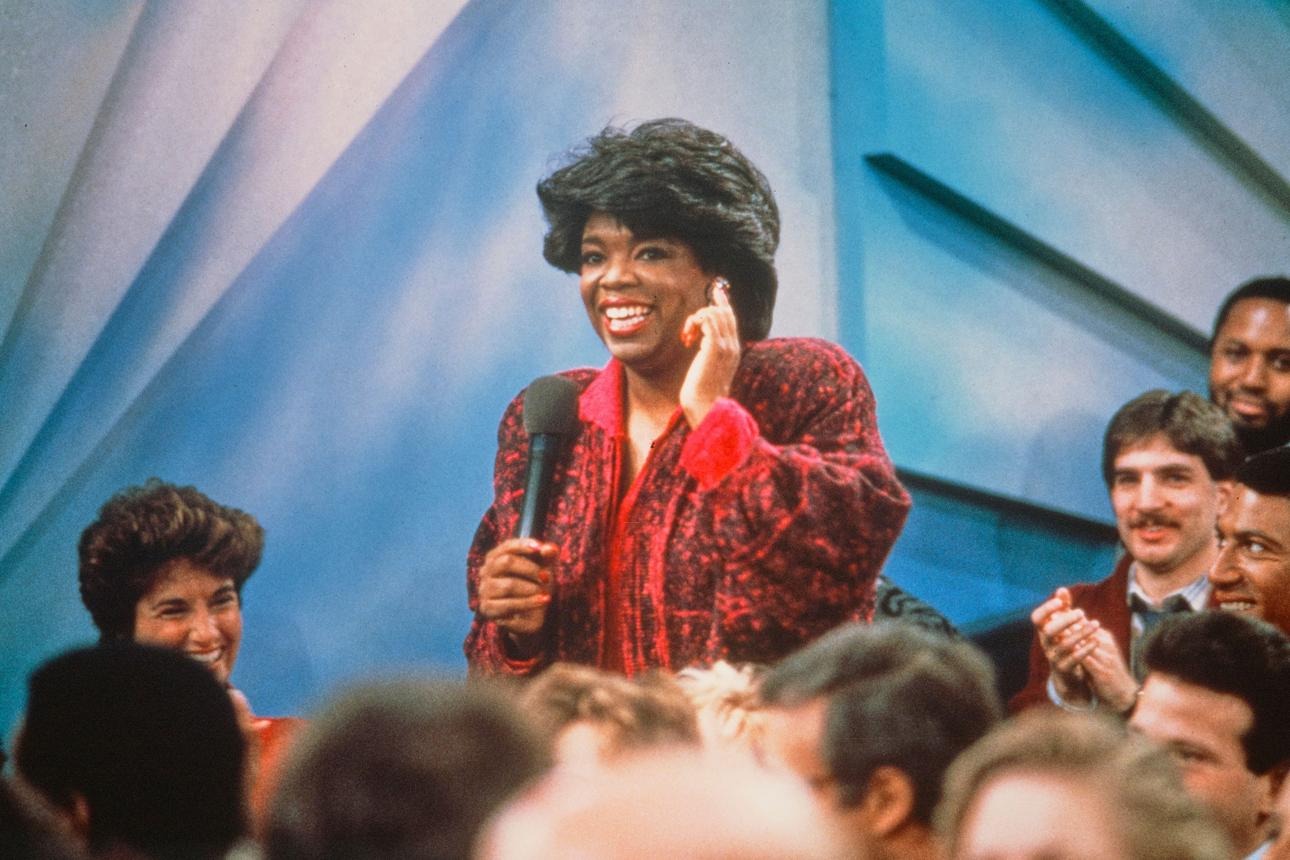
Few individuals in modern entertainment history have influenced television, popular culture, business, education and philanthropy as profoundly as Oprah Winfrey. From humble beginnings in rural Mississippi, she rose to become one of the most recognised media personalities in the world, transforming her personal experiences, communication skills and entrepreneurial ambitions into an extraordinary global empire.
Widely celebrated as a television pioneer, businesswoman, actress, producer, author and philanthropist, Winfrey has spent decades using her influence to encourage conversations about personal development, education, social responsibility, emotional well-being and the challenges affecting ordinary people.
Her extraordinary journey is particularly significant because she achieved success in an entertainment industry where African-American women historically faced considerable barriers to ownership, representation and leadership.
Through her legendary television programme, The Oprah Winfrey Show, she established a new standard for daytime television by combining entertainment with meaningful conversations about real-life experiences. Her influence eventually extended beyond television into film production, publishing, digital media, business investments and international humanitarian initiatives.
Today, Oprah Winfrey’s legacy is not simply defined by her wealth or celebrity status. It is also reflected in the opportunities she has created for others, the social issues she has brought into public discussions and her long-standing commitment to improving access to education.

Early Life: Growing Up in Poverty in Mississippi
Oprah Gail Winfrey was born on January 29, 1954, in Kosciusko, Mississippi, United States. Her early childhood was marked by poverty, instability and difficult family circumstances.
She was born to Vernita Lee, a young domestic worker, and Vernon Winfrey, who later worked as a barber and became involved in local public service.
During her early years, Oprah lived with her maternal grandmother on a farm in rural Mississippi. Although the family experienced significant financial hardship, her grandmother recognised her intelligence and encouraged her to read from an early age.
By the time she was three years old, Oprah could reportedly recite Bible verses and poems. Her early exposure to reading and public speaking helped develop communication abilities that would later become central to her professional career.
Her childhood, however, was not without painful experiences. She experienced periods of separation from her parents and faced significant personal difficulties while growing up.
These experiences would eventually influence the subjects she discussed openly during her television career, particularly childhood trauma, family relationships, abuse, emotional struggles and the importance of personal healing.
As a young girl, she demonstrated an exceptional ability to communicate with people. Her confidence, intelligence and interest in storytelling distinguished her from many of her peers.
Her educational journey eventually took her to Tennessee, where she attended East Nashville High School and later Tennessee State University, studying communication.
Her early interest in broadcasting became an important stepping stone towards a career that would eventually change the entertainment industry.
According to her official biography, Winfrey began working in radio while still in high school before progressing into television journalism.
Breaking Barriers in Television Broadcasting

Oprah’s professional broadcasting career began in Nashville, Tennessee, where she worked at WVOL radio station.
Her talent quickly attracted attention, and she eventually moved into television broadcasting.
At just 19 years old, she became the youngest person and the first African-American woman to anchor the news at Nashville’s WTVF-TV.
This achievement was particularly significant during a period when African-American women had limited opportunities in mainstream American television journalism.
Her broadcasting career later took her to Baltimore, Maryland, where she worked for WJZ-TV. She initially co-anchored the evening news before moving into the station’s daytime talk-show programme, People Are Talking.
Although her emotional and conversational presentation style was not always considered conventional for traditional television news, it proved particularly effective in talk-show broadcasting.
Instead of maintaining the distance associated with conventional news presentation, Oprah demonstrated an unusual ability to connect with interviewees and audiences.
She listened carefully, responded emotionally and encouraged guests to discuss their personal experiences.
These qualities helped her develop a distinctive broadcasting identity.
Her growing popularity eventually attracted opportunities beyond Baltimore, setting the stage for the career-defining move that would take her to Chicago.
The Oprah Winfrey Show: A Television Revolution

In 1984, Oprah moved to Chicago to host a struggling local morning television programme called AM Chicago, broadcast on WLS-TV.
At the time, the programme was competing against established daytime television personalities and had experienced difficulties attracting viewers.
However, Oprah’s approach quickly transformed its fortunes.
Within a month of her arrival, the programme had become the highest-rated local talk show in Chicago, surpassing its competitors.
Its growing popularity encouraged the television station to expand the programme, which was eventually renamed The Oprah Winfrey Show.
In 1986, the programme entered national syndication, making Oprah a household name across the United States.
For the next 25 years, she hosted and produced the programme, which became one of the most successful daytime television shows in history.
Unlike many traditional talk shows that focused primarily on celebrity interviews and entertainment, Oprah developed a format that explored a wide range of subjects affecting everyday life.
Her programme discussed relationships, parenting, education, domestic violence, childhood abuse, discrimination, addiction, personal development, financial difficulties and emotional well-being.
She also interviewed prominent political leaders, entertainers, business executives, authors and influential personalities from different parts of the world.
One of the programme’s greatest strengths was its ability to make complex social issues understandable to ordinary viewers.
People who had previously been uncomfortable discussing their personal struggles found opportunities to share their experiences before millions of viewers.
The programme also featured emotional reunions, inspirational stories, charitable initiatives and discussions designed to encourage audiences to reconsider their attitudes towards themselves and others.
At its height, The Oprah Winfrey Show reached more than 40 million viewers weekly in the United States and was distributed internationally to approximately 150 countries.
It remained on television until May 2011, concluding a remarkable 25-year run.
The programme established Oprah as much more than a television presenter. She became a powerful cultural influence whose recommendations, interviews and public conversations could affect consumer behaviour, reading habits and public attitudes.
Building a Business Empire Through Harpo Productions
One of Oprah’s most remarkable achievements was her decision to move beyond being an employee in the entertainment industry and become an owner and producer.
In 1988, she established ownership of Harpo Studios, her production company, which became the foundation of her expanding media business.
The name Harpo is Oprah spelled backwards.
Through Harpo, she gained greater control over the production and creative direction of her television projects.
This decision represented an important milestone, particularly for African-American women seeking greater ownership and influence within the entertainment industry.
Rather than depending entirely on external production companies, Oprah created a business structure through which she could develop, finance and distribute entertainment content.
Her company expanded into television production, film projects, publishing and other media-related ventures.
Harpo Productions was also involved in producing successful television programmes, including projects associated with Dr. Phil, Rachael Ray and Dr. Oz.
Her business strategy demonstrated that television personalities could transform their popularity into long-term commercial opportunities by building companies and controlling valuable media properties.
Harvard Business School recognises her as an influential American business leader whose success through Harpo Productions helped establish a multimedia empire.
Expanding into Film and Hollywood

Beyond television, Oprah established herself as an accomplished actress and film producer.
Her major acting breakthrough came in 1985 when she appeared in Steven Spielberg’s film adaptation of Alice Walker’s celebrated novel, The Color Purple.
She played Sofia, a strong-willed African-American woman who experiences racism, domestic violence and other forms of oppression.
Her performance received widespread recognition and earned her nominations for both the Academy Award for Best Supporting Actress and the Golden Globe Award.
The film was particularly important because it explored the lives and struggles of African-American women in the early twentieth century.
Her involvement in the production helped establish her presence in Hollywood and demonstrated that her talents extended beyond television.
She subsequently appeared in and supported several other film projects.
Among the notable productions associated with her career were Beloved (1998), based on Toni Morrison’s acclaimed novel, and The Great Debaters (2007), which explored the experiences of a historically Black college debate team.
She also served as an executive producer of Precious (2009), a film that examined poverty, abuse, educational disadvantage and the struggles of a young African-American girl.
These projects reflected her interest in films that explored important social and cultural experiences.
Her involvement in the film industry earned her further recognition, including the Academy of Motion Picture Arts and Sciences’ Jean Hersholt Humanitarian Award in 2011.
The award acknowledged her contributions to humanitarian causes and her efforts to use entertainment as a platform for social awareness.
Publishing and the Promotion of Literacy
Another important dimension of Oprah’s influence has been her contribution to literature and reading culture.
In 1996, she introduced Oprah’s Book Club as a segment of her television programme.
The initiative encouraged viewers to read selected books and participate in discussions about their themes, characters and messages.
What began as a television segment eventually developed into an internationally recognised literary movement.
Her recommendations frequently generated significant interest in selected books, introducing millions of viewers to authors and literary works they might otherwise never have discovered.
Some books experienced substantial increases in sales after being selected for the club.
Her influence also helped introduce important literary discussions into mainstream popular culture.
Authors from different backgrounds gained exposure through the platform, while viewers were encouraged to make reading a regular part of their lives.
The initiative became particularly important in promoting literature written by women and African-American authors.
Oprah also expanded her publishing interests through O, The Oprah Magazine, launched in April 2000 in partnership with Hearst Magazines.
The publication covered subjects including personal development, fashion, relationships, health, lifestyle, spirituality and professional growth.
Its success further strengthened her position as a media entrepreneur.
Her publishing activities demonstrated that television influence could be extended into other forms of communication, creating a broader platform for education, inspiration and cultural engagement.
Today, her media brand also includes OprahDaily.com, which continues to provide lifestyle and personal development content.
Oprah Winfrey Network: Expanding Her Global Influence
In 2011, Oprah expanded her media empire with the launch of OWN, the Oprah Winfrey Network.
The network emerged from a partnership between Harpo, Inc. and Discovery Communications.
Its establishment represented another significant achievement because it allowed Oprah to develop a television platform carrying her creative vision and programming interests.
OWN focused on lifestyle, entertainment, personal development, relationships, inspirational storytelling and reality television.
The network also provided opportunities for new television personalities and programme creators.
Although the network experienced business challenges during its early years, it gradually established a stronger identity and attracted audiences through original programming.
OWN demonstrated Oprah’s determination to remain involved in the media industry even after ending her flagship daytime talk show.
Her continued leadership helped preserve her influence in television and digital entertainment.
She also developed online platforms that allowed her to maintain contact with audiences beyond traditional broadcasting.
Her media activities have increasingly included digital publishing, podcasts and online conversations, reflecting the changing ways people consume information and entertainment.
Promoting Mental Health and Personal Development
One of Oprah’s most significant cultural contributions has been her willingness to bring personal and emotional struggles into mainstream conversations.
For decades, discussions about mental health, childhood trauma, emotional abuse, addiction, depression and relationship difficulties were often treated as private matters that people were reluctant to discuss publicly.
Through her television programme, Oprah encouraged guests to share their experiences and invited experts to discuss issues affecting individuals and families.
Her own experiences also influenced these conversations.
By speaking openly about difficult moments in her life, she helped create an environment in which audiences could recognise that personal struggles were not necessarily signs of weakness or failure.
Her programmes frequently explored the importance of self-awareness, emotional resilience, healthy relationships and seeking appropriate support.
She also introduced audiences to psychologists, therapists, authors and other professionals who discussed human behaviour and emotional well-being.
Her personal development programmes encouraged viewers to examine their beliefs, habits, ambitions and relationships.
However, it is important to distinguish her role as a media personality from that of a medical professional. Her contribution has primarily been in increasing public awareness, encouraging discussion and helping audiences become more receptive to conversations about emotional health.
Her influence in this area illustrates the potential of mass media to make sensitive subjects more visible and accessible.
Philanthropy and Educational Development

Beyond her achievements in business and entertainment, Oprah has developed a substantial philanthropic legacy.
One of her strongest beliefs is that education provides individuals with opportunities to improve their circumstances and contribute meaningfully to society.
She has supported educational programmes, scholarships, charitable organisations and initiatives designed to improve the lives of disadvantaged children and families.
Through the Oprah Winfrey Foundation, she has provided financial assistance to organisations involved in education and the empowerment of women, children and families.
She also established Oprah’s Angel Network, a charitable initiative inspired by a television programme in which she encouraged viewers to use their resources and abilities to help others.
The network raised more than $80 million and supported charitable projects in different parts of the world.
Its activities included helping establish schools, providing scholarships, supporting women’s shelters and funding youth development initiatives.
One of its major achievements was supporting the establishment of dozens of schools across 13 countries.
Her philanthropic activities demonstrated how a media platform could mobilise audiences and resources to address social problems.
The Oprah Winfrey Leadership Academy for Girls in South Africa
Perhaps one of Oprah’s most important international educational projects is the Oprah Winfrey Leadership Academy for Girls in South Africa.

Her commitment to establishing the institution developed following a meeting with former South African President Nelson Mandela in 2000.
Inspired by the country’s educational challenges and the potential of young girls, Oprah pledged to support the creation of a school that would provide quality education and leadership opportunities to academically promising students from disadvantaged backgrounds.
The academy officially opened in January 2007 in Henley-on-Klip, south of Johannesburg.
The institution was designed to provide a supportive educational environment for talented girls from economically disadvantaged communities.
It offers opportunities for students to develop academically, socially and personally while preparing them for future leadership responsibilities.
The academy’s mission extends beyond classroom education.
It seeks to encourage confidence, discipline, critical thinking, community service and responsible leadership among its students.
The institution serves girls from all nine South African provinces, offering opportunities to students who might otherwise struggle to access comparable educational resources.

Oprah committed substantial personal financial resources to establishing and supporting the academy.
The project has become a symbol of her belief that investing in girls’ education can create long-term benefits for families, communities and entire societies.
Its importance also extends beyond South Africa because it demonstrates how wealthy individuals and international philanthropists can support educational development in countries outside their own.
For many observers, the academy represents one of the clearest examples of Oprah translating her personal beliefs about education into a lasting institution.
Recognition and International Achievements
Oprah’s achievements have attracted considerable recognition from governments, academic institutions, entertainment organisations and humanitarian groups.
In 2011, she received the Jean Hersholt Humanitarian Award from the Academy of Motion Picture Arts and Sciences in recognition of her philanthropic contributions.
In 2013, former United States President Barack Obama awarded her the Presidential Medal of Freedom, the country’s highest civilian honour.
The award recognised her contributions to American society and her influence across entertainment, media and philanthropy.
In 2018, she became the first African-American woman to receive the Cecil B. DeMille Award at the Golden Globe Awards.
The honour recognised her outstanding contribution to entertainment.
She has also received numerous other awards for her television achievements, acting performances, business leadership and humanitarian work.
Her recognition reflects the extraordinary range of industries in which she has established a lasting presence.
Her Influence on African-American Representation and Women in Business
Oprah’s success carries particular historical significance for African-American women.
For generations, Black women in the United States encountered significant discrimination in employment, education, entertainment and business ownership.
The entertainment industry was no exception.
Oprah’s rise from a young broadcaster to the owner of a major production company demonstrated that African-American women could occupy influential positions in industries traditionally dominated by established media organisations.
Her achievements challenged assumptions about who could become a successful television personality, media executive or entertainment entrepreneur.
She also created opportunities for other people, particularly women and individuals from underrepresented communities, to participate in television and film production.
Her career helped expand the visibility of African-American experiences in mainstream entertainment.
Furthermore, her success inspired aspiring entrepreneurs to recognise the commercial possibilities of building personal brands, developing original content and investing in business ownership.
Her influence therefore extends beyond her individual achievements.
She has become an important example of how representation, professional ambition and economic independence can help reshape opportunities for future generations.
Challenges, Criticism and Lessons from Her Career
Despite her extraordinary accomplishments, Oprah’s career has not been without criticism.
Her enormous influence has sometimes attracted public scrutiny, particularly regarding the responsibility that comes with recommending books, interviewing controversial personalities and discussing health-related subjects.
Some of her television discussions and endorsements have generated debates about the accuracy of information presented to audiences and the influence of celebrity recommendations.
Her business ventures have also encountered difficulties, including the challenges associated with establishing a new television network in a competitive media environment.
Nevertheless, her ability to adapt, learn and remain relevant has been a major feature of her career.
One important lesson from her journey is that success requires more than public recognition.
It also requires the ability to identify opportunities, develop valuable skills, build partnerships and create sustainable business structures.
Her decision to establish Harpo Productions demonstrated the importance of ownership.
Her expansion into publishing, film and television demonstrated the value of diversification.
Her philanthropic activities illustrated the importance of using personal success to create opportunities for others.
These lessons continue to make her career relevant to aspiring entrepreneurs, broadcasters, business leaders and young people around the world.
Conclusion
Oprah Winfrey’s journey from poverty in rural Mississippi to international prominence is one of the most remarkable success stories in modern American history.
Through determination, talent, business intelligence and an extraordinary ability to connect with people, she transformed herself from a young radio broadcaster into a global media entrepreneur and philanthropist.
Her contributions to television revolutionised daytime broadcasting, while her work in film and publishing expanded opportunities for storytelling and cultural expression.
Through Oprah’s Book Club, she encouraged millions of people to embrace reading. Through her television programmes, she brought attention to issues involving mental health, personal development, discrimination, family relationships and social responsibility.
Her investments in education, particularly the establishment of the Oprah Winfrey Leadership Academy for Girls in South Africa, demonstrate her commitment to creating opportunities for young people beyond the United States.
Perhaps the most important aspect of her legacy is the way she has used her influence to encourage people to recognise their potential and pursue opportunities for personal and professional growth.
Her story also carries an important message for African-American women and aspiring entrepreneurs across the world: one’s circumstances at birth do not necessarily determine the limits of one’s future.
Although her achievements have been extraordinary, her lasting influence will not be measured solely by the size of her business empire or the number of awards she has received.
It will also be measured by the lives she has touched, the conversations she has helped bring into public view, the educational opportunities she has supported and the generations of women and young people inspired by her example.
Oprah Winfrey has demonstrated that media can be more than a source of entertainment. When used responsibly, it can educate, inspire, challenge social attitudes and encourage meaningful change.
For these reasons, she remains one of the most influential women in global media history and an important figure in the continuing story of Black excellence, entrepreneurship and philanthropy.