

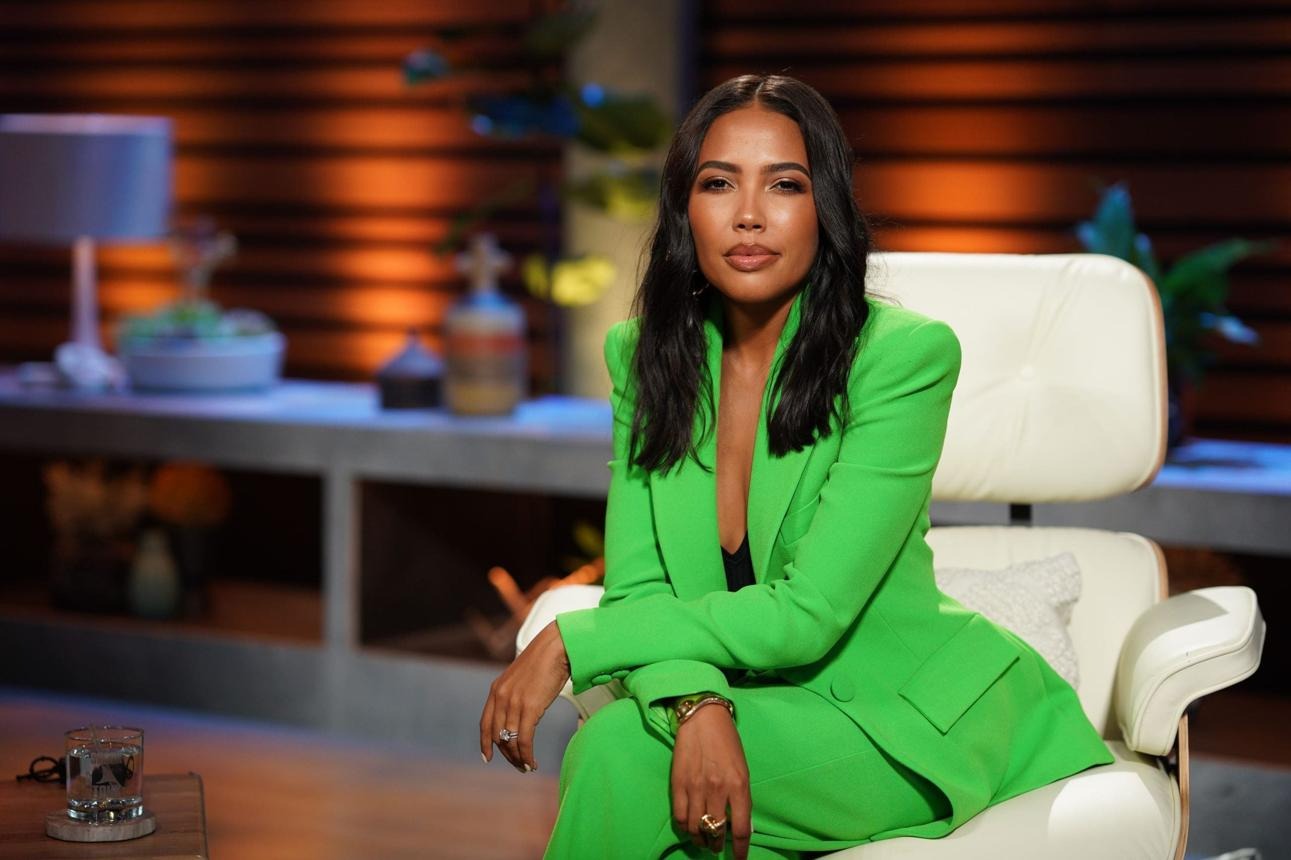
In an industry historically dominated by established fashion houses, powerful luxury conglomerates and a relatively narrow definition of beauty, British entrepreneur Emma Grede has emerged as one of the most influential businesswomen reshaping the global fashion and consumer-brand landscape.
Born and raised in East London, Grede has built an impressive business career through strategic partnerships, entrepreneurial ambition and an understanding of what modern consumers want. Her contributions to the fashion industry extend beyond the creation of commercially successful brands. She has helped challenge traditional expectations surrounding women’s bodies, clothing sizes and representation while demonstrating that Black women can occupy influential positions in the leadership of billion-dollar consumer businesses.
Grede is widely recognised as the co-founder and chief executive officer of Good American, the inclusive fashion company she established alongside American television personality and entrepreneur Khloé Kardashian in 2016. She is also a founding partner of SKIMS, the hugely successful shapewear, underwear and clothing company launched with Kim Kardashian.
Her business interests, however, extend beyond these two internationally recognised brands. Through her involvement in other consumer businesses, entrepreneurship initiatives and organisations promoting economic opportunities for underrepresented communities, Grede has established herself as more than a fashion executive. She represents a new generation of business leaders who combine commercial ambition with a commitment to changing the industries in which they operate.
Her journey from East London to the highest levels of international business provides an important example of determination, strategic thinking and the growing influence of Black women in global entrepreneurship.

Early Life and Background: Growing Up in East London
Emma Grede was born and raised in Plaistow, East London, in the United Kingdom. She grew up in a single-parent household with her mother and three sisters, an experience that helped shape her outlook on life, independence and ambition.
Unlike individuals who enter the fashion industry through wealthy family connections or established business networks, Grede did not begin her journey with access to significant financial resources. Her upbringing exposed her to the realities of working-class life, but it also encouraged her to develop a strong sense of determination.
From an early age, she was fascinated by fashion. Magazines, models, designer collections and the glamour surrounding the fashion industry captured her imagination. She became interested not only in clothing but also in the business activities behind fashion shows, marketing campaigns, brand partnerships and celebrity endorsements.
Although London is one of the world’s most important fashion capitals, the glamour associated with the industry was not necessarily part of her everyday experience growing up in East London. Fashion became a source of inspiration and a vision of the professional world she wanted to enter.
Grede attended the London College of Fashion, where she developed her understanding of the industry. However, her educational journey was not straightforward. She eventually left her studies before completing her degree, choosing instead to pursue practical opportunities that would help her gain experience and establish professional relationships.
Her decision demonstrated an important aspect of her approach to entrepreneurship: she believed in acquiring practical knowledge, developing useful skills and identifying opportunities that could translate into business success.
According to profiles published by British and international fashion publications, her early experiences in retail, fashion production and marketing helped prepare her for the entrepreneurial challenges that would later define her career.

Building a Career in Fashion and Entertainment Marketing
Before becoming associated with some of the world’s most recognisable consumer brands, Grede spent several years learning how the fashion and entertainment industries operated.
She began her professional career working in fashion show production, where she gained experience organising events, coordinating commercial relationships and understanding the importance of presentation and publicity in the fashion business.
She subsequently worked with Inca Productions, a company involved in fashion shows, entertainment and brand partnerships. Her responsibilities eventually expanded into sponsorships and endorsements, allowing her to understand how fashion companies could use influential personalities to strengthen their public image and attract customers.
This experience proved particularly valuable.
Grede recognised that celebrity influence could be an important commercial asset when used strategically. Fashion companies were not simply selling clothes; they were selling lifestyles, aspirations, identities and cultural relevance.
She understood that connecting a respected personality with the right product could generate attention, strengthen consumer confidence and create new commercial opportunities.
In 2008, she established ITB Worldwide, a talent management and entertainment marketing agency. Through the company, she helped connect celebrities, designers, fashion houses and major commercial brands.
Her agency worked with influential names in the fashion industry, including Dior, Calvin Klein, Vivienne Westwood and Christopher Kane.
One of the important aspects of her work involved creating mutually beneficial relationships between celebrities and businesses. Rather than treating endorsements as simple advertising arrangements, Grede approached them as strategic partnerships capable of generating long-term value.
ITB Worldwide became an important stepping stone in her entrepreneurial journey. It helped her build relationships with influential personalities, entertainment executives and fashion industry leaders.
The business was eventually acquired by Rogers & Cowan, marking another significant achievement in her career.
The experience gave Grede something that would later become central to her success: an understanding of how to combine celebrity influence, product development, marketing and commercial strategy to build successful consumer businesses.
Good American: Challenging Traditional Fashion Standards
One of the most significant milestones in Grede’s career came in October 2016, when she co-founded Good American alongside Khloé Kardashian.
The idea behind the company emerged from conversations about women’s experiences with fashion, particularly the difficulties many women encountered when searching for fashionable clothing that accommodated their body types.
For decades, much of the mainstream fashion industry had concentrated on relatively narrow body measurements. Women who did not fit conventional sizing standards often struggled to find stylish clothing from major fashion labels.
Even when brands offered larger sizes, the available collections were sometimes limited in design, quality or variety.

Grede and Kardashian recognised an opportunity to challenge this situation by creating a fashion company that placed inclusivity at the centre of its business model.
Good American was established to provide high-quality clothing for women across a broad range of body sizes, with particular attention to denim.
The company launched with a strong emphasis on jeans, one of the most commercially important categories in the fashion industry.
Its opening attracted considerable attention, with the brand reportedly generating approximately $1 million in sales on its first day. The launch was also described as the largest denim launch in history.
The achievement demonstrated that inclusive fashion was not simply a social message or a marketing slogan. It represented a commercially significant market opportunity.
Rather than expecting women to adjust their bodies to fit traditional fashion standards, Good American sought to design clothing that accommodated different body shapes.
The company subsequently expanded beyond denim into several categories, including:
Ready-to-wear clothing.
Dresses and fashionable everyday outfits.
Swimwear.
Activewear.
Footwear.
Other fashion essentials.
Good American’s growth helped establish it as an internationally recognised inclusive fashion brand.
Grede’s position as co-founder and chief executive officer has been particularly important. While Kardashian brought substantial public recognition and celebrity influence, Grede contributed business experience, operational leadership, strategic planning and an understanding of consumer behaviour.
Their partnership demonstrated how celebrity visibility and experienced entrepreneurial leadership could work together to build a successful company.

Making Size Inclusivity a Business Priority
One of Good American’s most important contributions has been its approach to clothing sizes.
Instead of developing a collection around a limited number of standard measurements and introducing additional sizes as an afterthought, the company made inclusive sizing a central consideration from the beginning.
This approach challenged an established business practice in which larger sizes were sometimes treated as separate or less important categories.
It also helped draw attention to the fact that millions of women were underserved by mainstream fashion companies.
For Grede, the issue was both commercial and social. Businesses could not claim to serve women effectively while ignoring a substantial proportion of potential customers.
Good American helped demonstrate that a wider customer base could be reached through thoughtful product development, appropriate sizing and attractive designs.

The company’s success also encouraged broader conversations about representation in fashion advertising, modelling and retail.
Women with different body shapes and sizes became more visible in campaigns that traditionally favoured a narrow image of the ideal fashion consumer.
However, the importance of Good American goes beyond advertising. Its business model challenged other fashion companies to reconsider how they approached product development and customer inclusion.
SKIMS: Becoming a Major Force in the Global Fashion Business

Another major chapter in Grede’s entrepreneurial career is her involvement in SKIMS.
Founded in 2019 by Kim Kardashian and Grede, SKIMS was created to address consumer needs in the shapewear, underwear and loungewear markets.
At the time, shapewear was already an established fashion category. However, many existing products were associated with uncomfortable materials, limited shades and designs that did not adequately accommodate different skin tones and body types.
The founders recognised an opportunity to rethink the category.
SKIMS introduced products designed to combine functionality, comfort, contemporary styling and a broad range of colours and sizes.
The brand attracted considerable attention through its marketing strategy, product development and association with Kim Kardashian, whose international celebrity profile provided substantial visibility.
Grede’s role as a founding partner and chief product officer has been important in shaping the company’s commercial and product strategy.
Her experience in fashion marketing, brand development and consumer relationships helped create a business structure capable of turning a recognisable concept into a major international company.
SKIMS subsequently expanded beyond its original shapewear offering to include:
Bras and underwear.
Loungewear.
Sleepwear.
Everyday clothing.
Men’s collections.
Sportswear and other lifestyle products.

The company also developed a significant international retail and online presence.
Its growth has been remarkable. In November 2025, SKIMS raised $225 million in new funding at a reported $5 billion valuation, demonstrating the enormous investor interest surrounding the company.
The funding was expected to support further expansion, including the development of physical retail stores.
SKIMS has also demonstrated that consumer brands can achieve significant commercial success by identifying overlooked customer needs and developing products around them.
For Grede, the company’s growth represents another example of how a strong understanding of consumers, combined with effective partnerships and disciplined business execution, can transform an ordinary product category into a major commercial opportunity.

The Power of Celebrity Partnerships in Building Global Brands
One of Grede’s most important business strengths is her understanding of celebrity partnerships.
Her professional background in entertainment marketing taught her that celebrity influence could help businesses reach consumers faster, but she also understood that fame alone was not enough to sustain a company.
A successful consumer brand requires products that customers genuinely want, effective distribution, consistent quality, financial discipline and the ability to respond to changing market conditions.
Her partnerships with the Kardashian family illustrate this philosophy.
Through Good American, she worked with Khloé Kardashian, while her involvement in SKIMS brought her together with Kim Kardashian.
She also worked with Kris Jenner on Safely, a consumer cleaning-products company co-founded by Grede, Jenner and Chrissy Teigen.
These partnerships demonstrate her ability to work with personalities who already have established audiences and turn their cultural influence into commercially valuable businesses.
However, Grede’s contribution is particularly significant because she operates beyond the conventional role of a celebrity business partner.
She has been involved in developing products, shaping company strategies, identifying market opportunities and building the organisational structures required to sustain growth.
Her experience demonstrates that celebrity-led businesses need experienced operators who understand the complicated process of converting attention into revenue.
It also challenges the assumption that successful fashion businesses must necessarily be founded by traditional designers.
In Grede’s case, her strongest contribution has been the combination of commercial intelligence, consumer understanding, marketing experience and entrepreneurial leadership.
Safely and Other Business Ventures

Grede’s entrepreneurial interests are not restricted to fashion and clothing.
She also co-founded Safely alongside Kris Jenner and Chrissy Teigen.
The company entered the household cleaning market with products positioned around plant-powered ingredients and a more attractive approach to everyday cleaning essentials.
The idea was to make household cleaning products that combined practical functionality with appealing fragrances, packaging and contemporary branding.
Safely demonstrated Grede’s ability to apply her consumer-brand development experience to an industry outside fashion.
Her involvement also reflected a broader business philosophy: established product categories can offer substantial opportunities when companies identify weaknesses in existing consumer experiences and develop better alternatives.
In addition to Safely, Grede has continued to explore other opportunities in the fashion and lifestyle industries.
In 2025, she teamed up with fashion designer Kristin Juszczyk, the National Football League and Fanatics to launch Off Season, a sports apparel venture that sought to connect fashion with the growing market for sports-related lifestyle clothing.
She has also been associated with the development of other consumer-brand ventures, including Khy, the fashion brand connected to Kylie Jenner.
These activities demonstrate that her business interests are becoming increasingly diversified.
Rather than concentrating exclusively on one company, Grede has developed a portfolio of businesses and partnerships that allow her to participate in different areas of the consumer economy.
Her strategy reflects the changing nature of modern entrepreneurship, where successful business leaders increasingly build networks of complementary companies rather than relying on a single source of commercial success.
Making History on Shark Tank and Dragons’ Den

Grede’s achievements have also extended into television, where she has used her business experience to support emerging entrepreneurs.
She became the first Black woman to serve as an investor on the American television programme Shark Tank.
The programme gives entrepreneurs an opportunity to present their business ideas to a panel of wealthy investors, commonly known as Sharks, who decide whether to invest in promising companies.
Grede’s participation was significant because Black women have historically been underrepresented in prominent investment and business decision-making positions.
Her presence on the programme helped broaden the representation of business leaders who could influence investment decisions and support new entrepreneurs.
She brought her experience in consumer products, fashion, marketing, brand development and commercial partnerships to the investment process.
Her interest in businesses founded by women and underrepresented entrepreneurs has also been an important part of her public identity.
In the United Kingdom, she made another significant television appearance when she became the first Black female guest Dragon on the BBC’s Dragons’ Den.
The programme provides entrepreneurs with the opportunity to pitch their businesses to experienced investors in exchange for potential financial investment and business support.
Her appearance was particularly symbolic because it demonstrated that a British-born Black woman who built her career internationally could return to a major British business platform as an influential investor.
It also provided an opportunity to share practical business lessons with aspiring entrepreneurs.
Through these television appearances, Grede has helped make entrepreneurship more accessible to viewers who may not traditionally have seen themselves represented among influential investors.
Her participation sends an important message: successful business leadership is not restricted by race, gender, educational background or social class.
Championing Black Economic Empowerment Through the Fifteen Percent Pledge

Beyond her commercial achievements, Grede has become an important advocate for economic inclusion and greater representation of Black-owned businesses.
One of the organisations through which she has pursued this objective is the Fifteen Percent Pledge.
The initiative was established by fashion designer Aurora James in 2020.
Its central argument is that Black Americans account for a substantial share of the population and consumer economy, yet Black-owned businesses have historically received a disproportionately small share of retail opportunities.
The initiative encourages major retailers to commit at least 15 per cent of their shelf space to Black-owned businesses.
The idea is to address economic inequality by creating more opportunities for Black entrepreneurs to access major retail platforms, reach new customers and grow their businesses.
Grede became closely involved with the organisation and served as its chairwoman.
Her involvement was particularly important because she understood the challenges of building consumer brands and securing commercial partnerships.
She also recognised that Black entrepreneurs often face barriers involving access to capital, retail distribution, professional networks and industry influence.
The Fifteen Percent Pledge seeks to address some of these challenges by encouraging major corporations to make measurable commitments to economic inclusion.
Grede’s involvement reflects her belief that representation must go beyond advertisements and public statements.
For her, meaningful inclusion should also involve ownership, investment, access to commercial opportunities and participation in the economic systems that determine which businesses succeed.
Her position as a successful Black entrepreneur gives her an influential platform from which to advocate for these changes.
The organisation’s work also highlights an important distinction between celebrating diversity and creating economic opportunities. While visibility is important, businesses need access to the financial and commercial resources that make long-term success possible.
Grede’s involvement in the initiative demonstrates how successful entrepreneurs can use their influence to support the development of other businesses.
Supporting Women and Children Through Philanthropy
Grede has also been involved in organisations working to improve the lives of women and children.
She has served as a trustee and board member of Women for Women International.
The organisation supports women affected by conflict and poverty by providing programmes designed to strengthen their economic independence, social participation and ability to rebuild their lives.
Her involvement reflects an interest in improving opportunities for women beyond the commercial world.
She has also served on the board of Baby2Baby.
Baby2Baby provides essential items, including diapers, clothing and other basic necessities, to children living in poverty across the United States.
These activities demonstrate that Grede’s understanding of empowerment extends beyond business ownership.
Economic independence, access to essential resources and opportunities for women and children are important parts of the broader social issues she supports.
She has also been involved with the Obama Foundation, serving on its board of directors. Her participation reflects her growing influence in conversations about leadership, public service and the development of future generations of leaders.
Emma Grede and the Growing Influence of Black Women in Global Business
One of the most important aspects of Grede’s success is what it represents for Black women in international business.
For many years, the fashion and luxury industries were criticised for their limited representation of Black professionals in senior executive positions.
Although Black consumers contributed significantly to the global fashion economy, Black executives and entrepreneurs were often underrepresented in the boardrooms and leadership structures of major companies.
Grede’s rise challenges that historical imbalance.
She has demonstrated that Black women can play leading roles in the development, ownership and management of globally recognised consumer brands.
Her achievements are especially important because she operates in a business environment where commercial influence is measured not only through public visibility but also through company performance, investment decisions, product strategy and market expansion.
Her position in Good American and SKIMS demonstrates that Black women can participate directly in the creation of major consumer businesses rather than being restricted to supporting roles.
She also provides an example of how international business partnerships can create opportunities for entrepreneurs who may not initially have access to the same resources as established corporate leaders.
However, Grede’s success should not be viewed as evidence that the barriers facing Black women in business have disappeared.
Challenges involving access to capital, professional networks, executive representation and economic inequality remain significant.
Her career instead demonstrates what can be achieved when entrepreneurial talent, strategic relationships, determination and commercial opportunities come together.
It also highlights the importance of creating pathways for other Black women to enter business leadership and investment.
For young women in the United Kingdom, Nigeria, the United States and other parts of the world, her story offers an example of how professional ambitions can extend beyond geographical boundaries.
Recognition, Wealth and International Influence
Grede’s business achievements have attracted considerable recognition from international business and fashion organisations.
She has been featured on Forbes’ lists of America’s richest self-made women, including its 2025 ranking. Her inclusion reflects the financial success associated with her business interests and her growing influence in the consumer-brand industry.
Her companies have also received recognition for innovation and their contributions to changing traditional fashion standards.
Good American, for example, became a certified B Corporation, reflecting its commitment to meeting recognised standards of social and environmental performance, accountability and transparency.
SKIMS has also attracted significant international investment and recognition as one of the most influential contemporary consumer brands.
Another important achievement was her appointment to the board of directors of the Obama Foundation, an organisation focused on developing future leaders and supporting positive social change.
Her growing influence demonstrates that her career is no longer confined to fashion entrepreneurship. She has become a prominent figure in discussions about business leadership, investment, financial independence and the future of consumer markets.
In 2026, her influence was further reflected in her participation in major business discussions, including a conversation hosted by Goldman Sachs about building iconic brands and the importance of financial knowledge for women.
She also published her book, Start With Yourself, in which she discusses ambition, financial literacy, entrepreneurship and the importance of taking responsibility for one’s professional development.
The book reflects many of the principles that have shaped her career, particularly the importance of understanding money, recognising opportunities and developing the confidence to pursue ambitious goals.
Challenges and the Future of Emma Grede’s Business Empire
Despite her impressive achievements, Grede operates in highly competitive industries that face significant challenges.
The global fashion industry is constantly changing. Consumer preferences evolve, new brands enter the market, production costs fluctuate and companies must continually find ways to remain relevant.
For brands such as Good American and SKIMS, maintaining customer loyalty will require continued investment in product development, quality control, marketing and international distribution.
There is also the challenge of maintaining meaningful inclusivity as fashion trends and consumer expectations change.
Size inclusivity, for example, requires more than advertising campaigns featuring models with different body shapes. It involves ensuring that customers can consistently find suitable products across the entire collection.
Good American has made this principle central to its business, but maintaining it as the company expands will remain an important responsibility.
SKIMS also faces growing competition in the shapewear, underwear and lifestyle clothing markets.
As more companies recognise the commercial potential of these categories, the brand will need to continue differentiating itself through innovation, product quality and customer experience.
Another important issue concerns the relationship between celebrity influence and long-term brand identity.
Celebrity partnerships can create substantial visibility, but successful businesses must eventually establish their own identities and maintain strong relationships with customers independently of the personalities associated with them.
Grede’s experience in business development gives her a strong foundation for addressing these challenges.
Her continued involvement in consumer ventures, investment activities and entrepreneurship initiatives suggests that she intends to remain an influential figure in the global business environment.
Her future may involve expanding existing brands, supporting new entrepreneurs, developing additional consumer products and creating opportunities for women who want to enter business leadership.
Conclusion
Emma Grede’s story is one of ambition, strategic thinking, determination and the ability to recognise opportunities where others may see limitations.
From her upbringing in Plaistow, East London, to her emergence as a leading figure in the international fashion and consumer-brand industries, she has built a career that challenges traditional expectations about who can occupy positions of commercial power.
Her achievements through Good American and SKIMS have helped reshape conversations about inclusivity, body representation and the business potential of underserved consumer markets.
Her involvement in Safely and other consumer ventures demonstrates her ability to apply entrepreneurial experience across different industries.
Meanwhile, her participation in Shark Tank and Dragons’ Den has strengthened her position as an influential voice in entrepreneurship and investment.
Perhaps even more importantly, her advocacy through the Fifteen Percent Pledge highlights the need to create greater economic opportunities for Black-owned businesses.
For Black women around the world, particularly aspiring entrepreneurs in Africa, the Caribbean, the United Kingdom and the United States, Grede represents an example of how determination, professional knowledge and strategic partnerships can translate into international business success.
Her journey also carries an important message for the Nigerian business community.
Nigeria has a growing population of fashion designers, beauty entrepreneurs, content creators and consumer-product manufacturers. Many possess the creativity and ambition required to establish internationally competitive brands, but they often need stronger business structures, access to investment, effective marketing and international partnerships.
Grede’s career demonstrates the importance of combining creativity with commercial knowledge.
A successful business is not built on a good product alone. It also requires an understanding of customers, effective management, strong relationships, financial discipline and the ability to recognise changing market opportunities.
Ultimately, Emma Grede’s influence goes beyond the clothing and consumer products associated with her name.
She has helped demonstrate that Black women can be architects of major global businesses, influential investors and powerful voices in the decisions shaping the modern economy.
Her legacy will therefore be measured not only by the financial value of the companies she has helped establish but also by the opportunities she creates for the next generation of entrepreneurs.
Emma Grede is a powerful example of how a woman from a modest background in East London can build an international business presence, challenge established industry standards and help redefine the meaning of leadership in global fashion.