

The conflict between Israel and Iran is one of the most consequential and dangerous rivalries in the modern Middle East. It involves far more than disagreements between two governments. At its heart are competing national interests, religious and ideological differences, regional power struggles, military deterrence, nuclear ambitions, intelligence operations, and the long-standing question of who will shape the future of the Middle East.
For decades, Israel and Iran fought primarily through indirect means. They supported opposing armed groups, conducted intelligence operations, exchanged threats, and targeted each other’s interests without consistently engaging in open, large-scale warfare. This form of confrontation is commonly called a shadow war.
However, the conflict escalated dramatically in 2024, when the two countries launched direct attacks against each other. In June 2025, Israel and Iran fought a major, direct military confrontation involving Israeli strikes on Iranian nuclear and military facilities, Iranian missile and drone attacks, and the direct intervention of the United States against Iranian nuclear sites.

These events changed the nature of their rivalry. What had long been a conflict conducted mainly through intermediaries became an open military confrontation between two regional powers.
An important note about current events: This article is based on established historical information and developments that can be described reliably, including the major confrontation of June 2025. I cannot independently verify the latest battlefield situation, ceasefire arrangements, casualty figures, or diplomatic developments as of October 18, 2026. Therefore, I will distinguish established events from strategic analysis and avoid presenting unverified developments as facts.
To understand the Israel–Iran war properly, it is necessary to examine how the relationship began, why it deteriorated, what happened during the major confrontations, how the nuclear issue fits into the conflict, and what the war means for the rest of the world.
1. Understanding Israel and Iran

Israel
Israel is a country in the eastern Mediterranean region of the Middle East. It was established in 1948 and has a highly developed military, advanced intelligence services, a sophisticated technology sector, and strong security cooperation with the United States.
Its government considers Iran’s nuclear programme, missile capabilities, and support for armed groups hostile to Israel major national security threats.

Iran
Iran is a large country in Western Asia, with its capital in Tehran. It has a population of many tens of millions, substantial energy resources, a sizeable military, ballistic missile capabilities, and considerable regional influence.
Since the 1979 Islamic Revolution, Iran’s Islamic Republic has defined Israel as an adversary and supported Palestinian and other armed groups that oppose Israeli policies and regional influence.
Although Israel and Iran are frequently discussed in religious terms, their conflict cannot be explained by religion alone. Iran is predominantly Shia Muslim, while Israel has a Jewish majority. However, their confrontation is also driven by state security, political ideology, historical events, regional alliances, military strategy, and competition for influence.
Neither population should be confused with its government. Israelis and Iranians are diverse societies, and ordinary civilians are not collectively responsible for the decisions of their leaders.
2. The Historical Relationship: When Israel and Iran Were Allies
One of the most important facts about this conflict is that Israel and Iran were not always enemies.
Before Iran’s 1979 Islamic Revolution, the two countries maintained a largely cooperative relationship under Iran’s monarch, Mohammad Reza Shah Pahlavi.
Israel established itself as a state in 1948. Although Iran did not become a close public ally in the manner of some Western states, the Shah’s government developed practical relations with Israel, including cooperation in areas such as trade, security, and intelligence.
Their cooperation was based partly on strategic interests. Both governments were concerned about hostile regional forces, and both had relationships with Western powers, particularly the United States.
Iran also supplied oil to Israel during periods when Israel faced regional restrictions on oil supplies.
This relationship illustrates an important principle of international politics: countries can cooperate when their interests align and become adversaries when their political systems and strategic objectives change.
The 1979 Islamic Revolution
In 1979, a revolution overthrew the Shah and brought Ayatollah Ruhollah Khomeini to power. The new Islamic Republic transformed Iran’s foreign policy.
The revolutionary leadership rejected the Shah’s close relationship with the United States and opposed Israel’s existence as a Jewish state. Iranian leaders began supporting Palestinian causes and presenting opposition to Israel as a central part of their regional ideology.
Iran severed its official relationship with Israel and transferred the former Israeli diplomatic mission in Tehran to representatives of the Palestine Liberation Organization.
This was a fundamental turning point.
Israel lost a strategically valuable regional partner, while Iran began to develop a foreign policy that treated opposition to Israel as both an ideological commitment and a way to increase Iranian influence across the Middle East.
The consequences of that revolution continue to shape the conflict today.
3. Why Israel and Iran Became Enemies
The hostility between Israel and Iran developed over decades. Several major issues explain why their relationship became increasingly dangerous.
A. Iran’s opposition to Israel
Since the 1979 revolution, Iran’s leadership has opposed Israel’s regional policies and rejected the legitimacy of Israel as a Jewish state. Iranian leaders have supported Palestinian political and armed movements, including groups that have carried out attacks against Israel.
Israel, in turn, views Iran’s anti-Israel rhetoric, military capabilities, and support for armed organizations as serious security threats.
This disagreement is not merely symbolic. It influences military planning, intelligence operations, regional alliances, and diplomatic decisions.
B. Iran’s nuclear programme
Iran’s nuclear programme is among the most important sources of tension.
Iran maintains that its nuclear activities are intended for peaceful purposes, including electricity generation, scientific research, and medical applications. However, Israel and several Western governments have expressed concern that Iran could use its nuclear expertise and enriched uranium to develop nuclear weapons.
The distinction between possessing nuclear technology and possessing a nuclear weapon is important.
Uranium enrichment is a process that increases the concentration of uranium-235. Low-enriched uranium can be used for civilian purposes, while highly enriched uranium can be used in nuclear weapons. The level of enrichment, the quantity of material, and the time required to produce weapons-grade material are important factors in assessing nuclear risk.
Iran’s enrichment activities, restrictions on international inspections, and the accumulation of enriched uranium have repeatedly raised international concerns.
Israel has long argued that a nuclear-armed Iran would represent an unacceptable threat. Iran argues that it has a right to a peaceful nuclear programme and has rejected accusations that it intends to build a nuclear bomb.
These opposing positions have made nuclear negotiations difficult.

C. Iran’s support for regional armed groups
Iran has developed relationships with several armed organizations across the Middle East. Its Islamic Revolutionary Guard Corps, particularly its Quds Force, has played a significant role in supporting allied groups.
These relationships have allowed Iran to influence regional conflicts without relying exclusively on direct attacks by Iranian forces.
Important examples include:
-
Hezbollah in Lebanon: An armed and political organization that has received substantial Iranian support and has fought repeated conflicts with Israel.
-
Hamas in Gaza: A Palestinian Islamist organization that has received Iranian support, although its relationship with Tehran is not identical to Iran’s relationship with Hezbollah.
-
The Houthis in Yemen: An armed movement that has received Iranian military and other support and has attacked shipping and launched attacks against regional adversaries.
-
Armed groups in Iraq and Syria: Various organizations have received Iranian assistance and have opposed US military presence or threatened Israeli interests.
The level and nature of Iran’s support differ between organizations. These groups also have their own leadership, domestic interests, and decision-making processes.
Israel argues that Iran uses this network to surround it with potential threats. Iran views its partnerships as part of its regional defence strategy and support for movements resisting Israel and US influence.
D. Israel’s military doctrine
Israel has repeatedly used military force to prevent what it considers the emergence of major strategic threats.
Its security doctrine includes maintaining military superiority, collecting intelligence on adversaries, developing missile-defence systems, and conducting operations against weapons transfers and military infrastructure.
Israel has previously carried out strikes against suspected nuclear-related facilities in other countries, including Iraq in 1981 and Syria in 2007.
Israeli governments have argued that they cannot wait until an adversary acquires capabilities that could make a future attack more destructive.
Iran, however, regards Israeli military operations on its territory as violations of its sovereignty and evidence of an aggressive regional policy.
This disagreement over what constitutes legitimate self-defence has become central to the war.
E. Competition for regional influence
Israel and Iran also compete over the political and military balance of power across the Middle East.
Iran has sought influence in Iraq, Syria, Lebanon, Yemen, and the Palestinian territories. Israel has maintained close security ties with the United States and has developed diplomatic relationships with several Arab countries.
The two countries consequently see one another as obstacles to their strategic objectives.
The conflict is therefore a combination of ideology, security concerns, nuclear uncertainty, regional competition, and historical mistrust.
4. The Shadow War Before Open Warfare
For many years, Israel and Iran fought indirectly rather than through sustained, declared warfare.
The shadow war involved alleged sabotage operations, cyberattacks, intelligence activities, targeted killings, attacks on shipping, and strikes against military facilities.
Iranian nuclear scientists were killed in incidents that Iranian officials attributed to Israel. Israel did not publicly acknowledge responsibility for every alleged operation.
Iranian nuclear facilities also experienced unexplained incidents and cyber-related disruption. The Stuxnet computer worm, discovered in 2010, damaged industrial control systems associated with Iran’s uranium-enrichment programme. The operation was widely attributed to US-Israeli cooperation, although neither government publicly confirmed every aspect of responsibility.
Israel also carried out operations against Iranian-linked targets in Syria, where Iranian forces and allied organizations established a presence during the Syrian civil war.
Iran and its partners, meanwhile, threatened Israeli interests and supported attacks against Israeli or US-linked targets.
This pattern created a dangerous cycle:
-
One side carried out an attack or covert operation.
-
The other side retaliated directly or indirectly.
-
Both governments attempted to avoid a larger war.
-
Further attacks gradually weakened the restraints preventing open confrontation.
For years, both countries appeared to believe that limited conflict was preferable to a full-scale war. However, the calculations became increasingly unstable as their attacks grew more direct and damaging.
5. The Major Turning Point in 2024

April 2024: Iran’s direct attack on Israel
On April 1, 2024, a strike hit a building in the Iranian diplomatic compound in Damascus, Syria, killing senior Iranian military officers. Iran blamed Israel for the attack.
On April 13–14, Iran launched a large barrage of drones and missiles toward Israel. This was a significant departure from the previous pattern because Iran openly launched a major attack directly from its own territory.
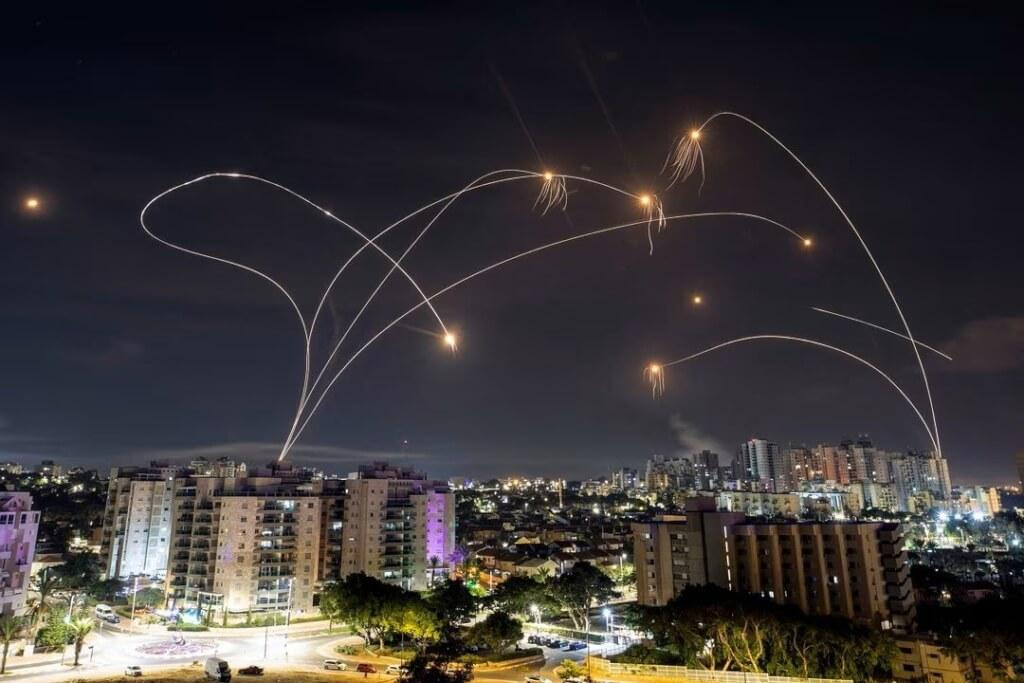
Israel, supported by the United States and other partners, intercepted many incoming weapons. The attack caused relatively limited damage compared with the scale of the barrage.
The incident demonstrated both Iran’s ability to launch long-range attacks and the value of coordinated air defence.
It also revealed the danger of miscalculation: a large attack could have caused much greater destruction if more weapons had penetrated Israel’s defences.
October 2024: Another Iranian missile attack

On October 1, 2024, Iran launched another major missile attack against Israel.
The attack followed escalating regional violence, including Israeli operations against Iranian-aligned armed groups and the killing of senior figures associated with Iran and its allies.
Israel subsequently conducted strikes against Iranian military targets on October 26, 2024.
The exchanges showed that the conflict had entered a new phase. Both countries were increasingly willing to strike directly at one another, even though each still had reasons to avoid an unlimited war.
These events laid the groundwork for the much larger confrontation that followed.
6. The June 2025 Israel–Iran War
The June 2025 war was one of the most significant direct military confrontations between the two countries.
On June 13, 2025, Israel launched a major operation against Iran. Israeli attacks targeted nuclear-related facilities, senior military commanders, nuclear scientists, air-defence systems, and other military infrastructure.
Israel described its operation as a necessary response to the Iranian nuclear threat and argued that Iran was approaching a dangerous threshold in its nuclear programme. Iran rejected Israel’s justification and retaliated with missile attacks.
The confrontation rapidly expanded into sustained exchanges of long-range attacks.

What Israel targeted
The Israeli campaign focused on several categories of targets.
Nuclear facilities: Israel attacked sites connected to uranium enrichment and nuclear research, including facilities associated with Natanz and other elements of Iran’s nuclear infrastructure.
Military leadership: Senior commanders and officials associated with Iran’s military establishment were targeted, including members of the Islamic Revolutionary Guard Corps.
Air-defence infrastructure: Attacks sought to weaken Iran’s ability to detect and intercept Israeli aircraft and missiles.
Missile capabilities: Israel also targeted facilities and infrastructure connected to Iran’s ballistic missile forces.
The objective was to damage Iran’s capacity to threaten Israel, weaken the nuclear programme, and reduce the ability of Iranian forces to retaliate.
Iran’s response
Iran retaliated with waves of ballistic missiles directed at Israel.
Some missiles were intercepted, while others reached their targets. The attacks caused deaths, injuries, and damage to buildings and infrastructure in Israel.
Iran’s ability to launch repeated missile barrages demonstrated that its long-range strike capability remained a significant threat, even when its military infrastructure was being attacked.
Israel’s missile-defence systems helped reduce the impact of incoming attacks, but interception is not guaranteed, and even a relatively small number of missiles penetrating defences can cause serious harm.
The United States enters the war
The United States became directly involved on June 22, 2025, when American forces attacked three Iranian nuclear-related sites: Fordow, Natanz, and Isfahan.
The operation involved B-2 stealth bombers and powerful penetrating munitions designed to attack hardened underground targets. The United States said its objective was to severely damage Iran’s nuclear programme.
Iran responded by launching an attack against the Al Udeid US air base in Qatar on June 23. No casualties were reported from that attack, according to the UK Parliament’s briefing on the confrontation.
The June 2025 ceasefire
On June 23, 2025, US President Donald Trump announced a ceasefire between Israel and Iran. The ceasefire took effect after further exchanges and brought the intense 12-day confrontation to an end.
However, a ceasefire did not resolve the underlying disputes.
Questions remained about the condition of Iran’s nuclear programme, the long-term effectiveness of the attacks, the future of international inspections, the possibility of renewed hostilities, and whether diplomacy could produce a durable agreement.
The war demonstrated that neither country could assume it would remain safe from direct attacks by the other.
It also raised the possibility that future confrontations might involve not only Israel and Iran, but the United States and other countries hosting American military facilities.
7. The 2026 War: A Much Wider Regional Conflict
The conflict entered a more dangerous phase on February 28, 2026, when Israel and the United States launched a new series of strikes against Iran.
This was a major escalation beyond the June 2025 confrontation. The stated objectives included attacks on Iranian military infrastructure, its nuclear and ballistic missile programmes, and a push for a change in Iran’s political leadership. Iran’s Supreme Leader, Ayatollah Ali Khamenei, was killed in the strikes, according to the UK House of Commons Library’s 2026 briefings.
The attacks triggered Iranian retaliation against Israel, US military bases in the region, and targets in neighbouring countries. The conflict consequently expanded from a primarily bilateral confrontation into a regional war with international consequences.
Why the February 2026 strikes were significant
The attacks represented a new level of military intervention for several reasons.
First, the United States was not simply helping Israel defend against Iranian missiles. It was participating directly in attacks on Iranian territory.
Second, the targeting of senior leadership raised the stakes considerably. Killing a supreme leader does not automatically eliminate a state’s institutions, armed forces, or political ideology. However, it can create uncertainty over succession, military command, and the future direction of government.
Third, the attacks took place after earlier efforts to constrain Iran’s nuclear programme had failed to produce a lasting settlement.
Finally, Iran’s retaliation affected countries beyond Israel. This increased the risk of further states being drawn into the conflict, whether through direct attacks, defensive military operations, or protection of their territory and shipping.
Iran’s retaliation and the regional consequences
Iran launched attacks against Israeli targets, US bases, and locations in neighbouring Middle Eastern countries. Some of these countries host American military forces, but they were not necessarily participants in the initial strikes against Iran.
This distinction matters. A country may host foreign military bases while opposing the use of its territory for offensive operations. When missiles or drones strike such locations, the country hosting the base can face a security crisis even if it did not choose to enter the war.
The attacks therefore put additional pressure on Gulf governments to protect their populations, maintain diplomatic relationships, and prevent their territories from becoming permanent battlefields.
The UK House of Commons Library reported that a conditional ceasefire was declared on April 8, 2026, with Pakistan mediating negotiations. However, that arrangement did not produce a durable end to the conflict.
The ceasefire, blockade, and stalled negotiations
By August 2026, the conflict remained unresolved. A UK parliamentary briefing published on August 27 reported that the United States was imposing additional economic sanctions, that the parties had not reached a final settlement, and that a memorandum of understanding had followed Pakistani-led mediation in June.
The same briefing described a US counter-blockade of Iranian ports and Iran’s announcement that it would close the Strait of Hormuz. It reported that both blockades remained in place, with only a limited number of ships continuing to pass through the strait.
By October 18, 2026, the situation remained tense. Reuters reported that Iran was urging the United States to accept a proposal under which the Strait of Hormuz could reopen within seven days, subject to Iranian conditions. The dispute included sanctions, the US blockade of Iranian ports, security arrangements, and the sequencing of nuclear negotiations.
The central disagreement is that the United States wants significant restrictions on Iran’s nuclear programme to be addressed, while Iran has pushed for the lifting of the blockade and the restoration of maritime security to receive priority.
These competing demands have made negotiations difficult. Each side wants concessions that the other may view as surrendering an important strategic advantage.
The situation as of October 18, 2026, should therefore be understood as an unresolved conflict, not a settled peace. The April ceasefire and subsequent diplomatic efforts have not eliminated the possibility of renewed military operations.
8. Why the Strait of Hormuz Matters So Much

The Strait of Hormuz is one of the world’s most important maritime chokepoints. It lies between Iran and Oman and connects the Persian Gulf to the Gulf of Oman and the wider Arabian Sea.
Large quantities of oil and liquefied natural gas normally travel through this narrow passage. Countries that rely heavily on energy exports from the Gulf depend on the strait remaining accessible to commercial shipping.
Iran’s threats to close the waterway, together with the reported restrictions on shipping in 2026, have consequently turned the strait into a major economic and military pressure point.
What happens if the strait is disrupted?
The consequences can spread far beyond the Middle East.
-
Oil prices may rise: Traders may anticipate shortages or higher transportation costs.
-
Shipping becomes more expensive: Shipowners and insurers may charge more to account for war risks.
-
Fuel-importing countries face pressure: Governments may have to spend more foreign currency on petroleum products.
-
Inflation may increase: Higher energy and transport costs can affect food prices, manufacturing, electricity, and household budgets.
-
Global trade becomes less predictable: Delays and rerouting can disrupt supply chains.
A prolonged disruption would be particularly damaging for economies that depend on imported fuel and have limited financial resources to absorb higher prices.
The strategic importance of Hormuz also gives Iran leverage in negotiations. However, disrupting the strait can damage Iran’s own economic interests, harm neighbouring countries, and provoke stronger international military responses.
It is therefore both a potential bargaining tool and a source of enormous risk.
9. The Nuclear Question: What the War Can and Cannot Achieve
The nuclear issue remains one of the central reasons for the conflict.
Iran has developed substantial nuclear expertise and enrichment infrastructure. The International Atomic Energy Agency has monitored aspects of its programme, although disagreements over access, transparency, and safeguards have complicated international oversight.
Israel fears that Iran could eventually develop nuclear weapons or move close enough to weaponisation that the time available to respond would become dangerously short.
Iran denies seeking nuclear weapons and argues that it has a right to peaceful nuclear technology.
Can airstrikes destroy a nuclear programme?
Military attacks can damage facilities, destroy equipment, kill specialists, interrupt electricity supplies, and delay the operation of enrichment plants.
But nuclear knowledge cannot be eliminated simply by destroying buildings.
A nuclear programme involves technical expertise, trained personnel, scientific records, industrial supply chains, and accumulated knowledge. Some facilities may also be buried underground or protected by hardened structures.
Consequently, even a highly successful military campaign might delay a programme without permanently eliminating the underlying capacity to rebuild it.
There is another problem: attacking nuclear facilities may reduce the incentive for an adversary to cooperate with inspectors or pursue diplomatic restrictions.
If a government concludes that only a nuclear deterrent can protect it from future attacks, military pressure could strengthen arguments in favour of acquiring nuclear weapons rather than abandoning that ambition.
This does not mean that every military strike necessarily produces that result. It means the long-term consequences are uncertain.
Why inspections and diplomacy remain important
A negotiated agreement can establish limits on enrichment, restrictions on nuclear material stockpiles, monitoring requirements, and procedures for investigating suspicious activities.
Such arrangements can provide information that military operations cannot reliably deliver.
However, agreements require political commitment, verification, and a willingness to comply. They can also break down when governments disagree about sanctions, security guarantees, or the meaning of compliance.
The challenge is to develop an arrangement that reduces the risk of nuclear proliferation while addressing the security concerns of Israel, Iran, and other countries.
10. The Military Strengths of Israel and Iran
Israel and Iran possess different military advantages. A direct comparison cannot be reduced to the number of soldiers or weapons each country has.
Israel’s main military advantages
Advanced air power
Israel operates modern combat aircraft, including US-built F-15 and F-16 variants and F-35 stealth fighters. These provide long-range strike, intelligence, and air-superiority capabilities.
Layered air defence
Systems such as Iron Dome, David’s Sling, and Arrow are designed to intercept different categories of incoming rockets and missiles. No defensive system can guarantee interception of every attack.
Intelligence and external support
Israel has sophisticated intelligence capabilities and a close security relationship with the United States, which provides important military equipment, technology, and support.
Iran’s main military advantages
Ballistic missiles and drones
Iran has invested heavily in missiles and unmanned aerial vehicles that can strike targets over substantial distances.
Geography and strategic depth
Iran is geographically large, with mountainous terrain and facilities that can be difficult to attack or monitor comprehensively.
Regional partnerships
Iran has historically relied on allied armed groups to expand its influence and create pressure on adversaries across several countries.
Israel’s advanced aircraft and intelligence capabilities give it significant advantages in conducting precision strikes. Iran’s geographical size, missile arsenal, and capacity for prolonged retaliation make it difficult to neutralise through airstrikes alone.
The United States adds another major dimension to the military balance because of its advanced aircraft, surveillance systems, logistical capabilities, and ability to strike hardened targets.
However, superior technology does not automatically translate into a decisive political victory. A country can destroy military facilities without achieving its broader political objectives.
The real question is not simply which side can inflict the most damage, but which side can achieve a sustainable outcome at an acceptable human, economic, and strategic cost.
11. The Human Cost of the War
Behind military announcements, maps, and political speeches are ordinary people whose lives have been disrupted or destroyed.
Wars involving long-range missiles, drones, airstrikes, and urban targets can cause extensive civilian harm, even when governments claim that their operations are directed at military objectives.
In the Israel–Iran conflict, civilians face several dangers:
-
Death and injury from missiles, falling debris, and airstrikes.
-
Damage to homes, hospitals, schools, roads, electricity networks, and water supplies.
-
Displacement as families leave areas considered unsafe.
-
Psychological trauma, especially among children exposed to repeated air-raid warnings.
-
Disruption to employment, education, healthcare, and family life.
-
Rising prices and shortages of essential goods during prolonged instability.
Iran’s large population means that attacks on densely populated areas can have severe consequences. Israel’s population is much smaller, but repeated missile attacks can also cause substantial casualties, infrastructure damage, and psychological distress.
The wider region is vulnerable as well. Attacks involving US bases, shipping routes, or neighbouring countries can expose people who have no direct role in the conflict.
It is important to distinguish military claims from independently verified casualty figures. Numbers may differ between governments, hospitals, international organisations, and news agencies, particularly during active hostilities.
International humanitarian law requires parties to distinguish civilians from combatants, prohibits deliberately targeting civilians, and restricts attacks expected to cause excessive civilian harm in relation to the concrete and direct military advantage anticipated. All parties are required to respect these rules.
The suffering of civilians does not become less important because they live in a country considered an enemy.
12. The Role of the United States
The United States is central to the conflict because of its alliance with Israel, its military presence in the Gulf, and its longstanding confrontation with Iran.
Washington provides Israel with substantial military assistance, equipment, and technological cooperation. It also has forces stationed in several countries across the Middle East.
The United States has three major interests in this conflict.
First, preventing nuclear proliferation. American administrations have opposed Iran acquiring nuclear weapons and have used sanctions, diplomacy, and military threats to pursue that objective.
Second, protecting regional allies. The United States has security relationships with Israel and several Gulf countries. Iranian attacks against these countries or US bases create pressure for an American response.
Third, protecting international commerce. The security of oil shipments and other commercial traffic through the Strait of Hormuz is important to the global economy.
However, direct US participation in the war creates risks for American forces, regional partners, and the wider international system. It also raises questions about whether military action can produce a stable political settlement.
The difficulty is that Washington wants to restrict Iran’s strategic capabilities without becoming trapped in an indefinite regional war.
By October 2026, the continued dispute over nuclear restrictions, sanctions, and maritime access demonstrated how difficult that balance has become.
13. What the War Means for Nigeria and Africa
Although Nigeria is geographically far from Israel and Iran, the conflict can affect the country through energy prices, foreign exchange, trade, and inflation.
Fuel prices and the cost of living
Nigeria produces crude oil but also relies heavily on domestic refining capacity and, depending on market conditions, imported petroleum products and other energy-related inputs.
A disruption to international oil supply can raise global prices. That may increase the value of Nigerian crude exports, but it can also increase domestic fuel costs and transport expenses.
The overall impact depends on production volumes, exchange rates, government policies, refining capacity, and the duration of the disruption.
Inflation and food prices
When fuel and freight become more expensive, the cost of transporting food and manufactured goods can rise.
For Nigerian households already dealing with high living costs, an extended energy shock can put additional pressure on food budgets, transport fares, and small businesses.
Foreign exchange and government revenue
Higher international oil prices can potentially increase Nigeria’s export earnings and government revenue. However, the benefit is not guaranteed. Production disruptions, higher import bills, currency pressures, and economic uncertainty can offset some gains.
African economies more broadly
Countries that depend heavily on imported petroleum products may experience particularly severe pressure when energy prices rise. Countries that export oil or gas may benefit from higher export prices, although they can still suffer from inflation and disrupted international trade.
For Nigeria and other African countries, the key economic concern is not only the price of oil but also whether the conflict disrupts shipping for a prolonged period.
14. The Wider International Response
The conflict has generated difficult diplomatic questions for the United Nations, European governments, Gulf states, China, Russia, and other international actors.
The UN has a central role in discussions about international peace and security, nuclear non-proliferation, civilian protection, and the legality of military action.
European governments have generally faced a difficult balancing act: opposing nuclear proliferation, maintaining relations with Israel and the United States, and seeking to prevent a broader war.
Gulf countries have their own security concerns. They want to avoid Iranian attacks, but they also have strong reasons to prevent their territories and commercial infrastructure from becoming targets in a prolonged confrontation.
China has significant economic interests in the Gulf and relies on energy supplies from the region. Russia also has strategic interests in the Middle East.
Nevertheless, international influence does not automatically produce an agreement. Different governments disagree over the causes of the war, responsibility for escalation, sanctions, nuclear restrictions, and the conditions under which hostilities should end.
Diplomacy becomes especially difficult when each side believes that stopping the war without securing concessions would leave it more vulnerable to future attacks.
15. Who Is Winning the Israel–Iran War?
This question is understandable, but it requires a distinction between military performance and political success.
A country may destroy aircraft, missile launchers, nuclear infrastructure, or command centres and still fail to achieve its political objectives.
Israel’s advantages include advanced air power, intelligence, precision-strike capabilities, and cooperation with the United States. Iran’s advantages include its large territory, missile capabilities, strategic depth, and ability to impose costs through regional instability.
The 2025 confrontation demonstrated Israel’s ability to strike Iranian military and nuclear-related targets, while Iran’s missile retaliation demonstrated that it retained the capacity to inflict damage.
The 2026 war subsequently widened the confrontation, bringing in direct American military action, Iranian attacks across the region, and the struggle over the Strait of Hormuz. The ongoing blockade and unresolved negotiations show that military damage has not, by itself, delivered a lasting settlement.
To assess who is winning, analysts must consider several questions:
-
Has Iran’s nuclear programme been permanently eliminated, significantly delayed, or merely disrupted?
-
Can Israel defend its population against continued missile attacks?
-
Can Iran maintain its military capabilities and political institutions?
-
Has either side achieved its stated political objectives?
-
Can either country sustain the economic and human costs of continued warfare?
-
Can a negotiated agreement prevent another major confrontation?
Without clear answers to these questions, declaring an outright winner would be premature.
A military advantage in one phase of the conflict does not necessarily determine the final outcome.
16. What Could Happen Next?
As of October 18, 2026, several broad scenarios are possible. These are analytical possibilities, not confirmed predictions.

Scenario 1: A negotiated settlement
Pakistan or other intermediaries could help secure a more durable agreement. Such a settlement might address maritime access, sanctions, nuclear restrictions, security guarantees, and the cessation of attacks.
This would offer the best opportunity to reduce the danger of a wider war, but difficult disagreements would remain.

Scenario 2: Renewed direct military strikes
If negotiations fail or either side believes the other is preparing a major attack, military operations could resume or intensify.
Such a development could further damage infrastructure, increase casualties, and put neighbouring countries at risk.

Scenario 3: A prolonged economic and maritime confrontation
Even without constant large-scale airstrikes, sanctions, port restrictions, shipping attacks, and limits on passage through Hormuz could keep the region unstable.
This scenario could continue to affect oil prices, insurance costs, global supply chains, and energy-importing economies.
The eventual outcome will depend on military calculations, domestic politics, leadership decisions, economic pressure, international mediation, and the willingness of the parties to accept compromises.
17. What Would a Lasting Peace Require?
A durable settlement would need to address more than the immediate cessation of missile attacks.
Potential elements include:
-
A verifiable end to direct attacks on Israeli and Iranian territory.
-
An agreed framework for Iran’s nuclear programme and international inspections.
-
Measures to reduce the risk of attacks on neighbouring countries.
-
Clear arrangements for commercial shipping through the Strait of Hormuz.
-
Negotiations over sanctions and the future of Iranian trade.
-
Protection of civilians and essential infrastructure.
-
Reliable communication channels to prevent accidental escalation.
-
Security arrangements that reduce incentives for either side to launch another preventive attack.
These goals would be difficult to achieve because the parties do not share the same understanding of security.
Israel wants credible guarantees that Iran cannot develop a nuclear weapon or maintain capabilities that threaten its survival. Iran wants guarantees against further attacks, relief from economic restrictions, and recognition of its security interests.
The United States and regional governments also have their own requirements.
Any agreement would therefore need monitoring, enforcement mechanisms, and political support strong enough to survive future crises.
Conclusion
The Israel–Iran war is not simply a dispute between two countries. It is the result of decades of ideological hostility, competing security interests, nuclear uncertainty, regional power struggles, and repeated cycles of retaliation.
The 1979 Iranian Revolution transformed the relationship between the two countries. Years of covert operations and proxy confrontations followed, before direct attacks in 2024 and the major war of June 2025 brought their rivalry into the open.
The new war that began on February 28, 2026, widened the conflict further. Direct US involvement, the killing of Iran’s supreme leader, Iranian retaliation across the region, the April ceasefire, and the subsequent dispute over the Strait of Hormuz have made the crisis more consequential for international security and the world economy. As of October 18, 2026, the conflict remains unresolved, and negotiations face substantial obstacles.
The most important lesson is that military superiority and the ability to inflict damage do not automatically create lasting security. Destroyed facilities can sometimes be rebuilt, military campaigns can generate new grievances, and economic pressure can harm civilians without producing a political settlement.
Ultimately, the future of Israel and Iran will depend on whether their leaders can find a way to address their security concerns without continuing a cycle of attacks and retaliation.
For the rest of the world, including Nigeria, the stakes are significant: energy security, international trade, the cost of living, nuclear non-proliferation, and the protection of civilian lives are all affected by the outcome.
A lasting peace will require more than a temporary pause in fighting. It will require verifiable agreements, sustained diplomacy, respect for international law, and a willingness to prevent future disputes from becoming another devastating war.