

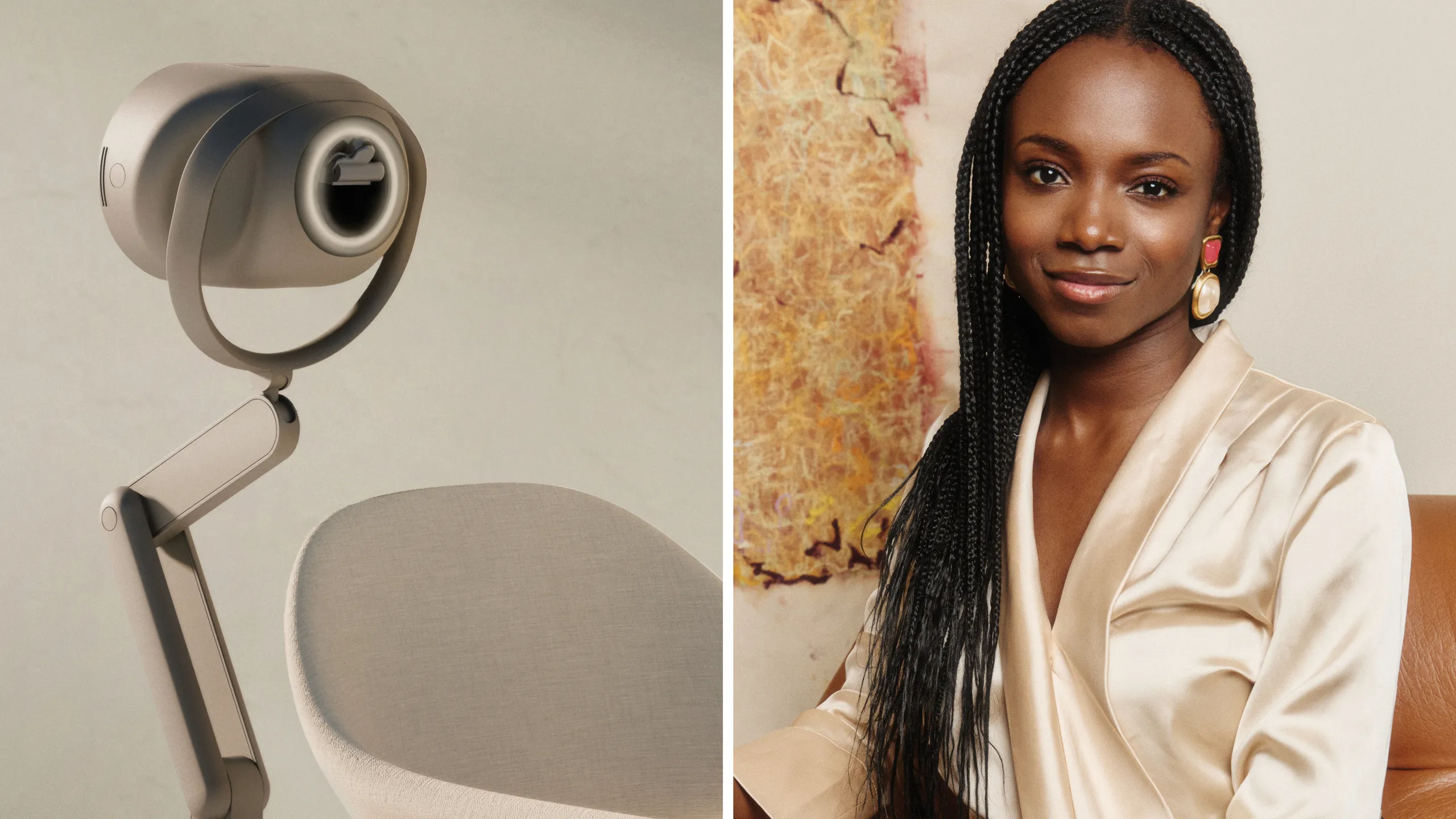
Her creation, HaloBraid, is designed to help professional hairstylists braid hair faster, reduce the physical strain associated with repetitive hand movements, and give clients more time back in their day. With $7 million in seed funding and more than 7,000 professional salons reportedly on its waitlist, the company is positioning itself at the intersection of robotics, beauty, entrepreneurship, and the growing global market for textured hair care.
But behind the impressive funding figure and the promise of a robotic hairstyling assistant is a story about an everyday problem that technology had largely overlooked, the cultural importance of Black hair, and the determination to build a solution that works for both hairstylists and their clients.
The Four-Day Hair-Braiding Experience That Sparked an Idea
In 2020, as the COVID-19 pandemic forced businesses to close and people around the world adjusted to life under lockdown, everyday routines became unexpectedly difficult. For millions of people, getting a haircut or visiting a professional hairstylist was no longer an option.
For Ogunbiyi, the challenge became particularly personal when she attempted to braid her own hair.
Like many women who regularly wear braids, she understood the time, patience, and physical effort required to achieve the style. However, doing the work herself was a different experience entirely. What might have been a long but familiar appointment at a salon turned into a four-day undertaking in her London flat.
The experience exposed a problem that many people who wear braids understand but rarely consider from an engineering perspective: why does a hairstyle that has existed for thousands of years still require so many hours of repetitive manual labour?
Ogunbiyi began thinking about the possibilities. If engineers could develop autonomous vehicles, robotic surgical systems, and machines capable of performing complex industrial tasks, why had braiding remained so dependent on human hands?
The question was not whether braiding was an art worth preserving. It was whether technology could take over some of the repetitive work without destroying the artistry, cultural significance, or personal connection that make the process special.
That distinction would become central to her vision for HaloBraid.
Rather than treating hair braiding as an outdated practice that needed to be replaced, Ogunbiyi approached it as a complex physical task that could benefit from carefully designed engineering. Her experience became the starting point for a mission to make the braiding process more efficient while keeping professional stylists at the centre of the experience.
Who Is Yinka Ogunbiyi?

Yinka Ogunbiyi is a Nigerian-American biomechanical engineer whose background brings together engineering, human movement, and practical problem-solving. Her Harvard education and technical training provided a foundation for examining a familiar beauty routine through the lens of robotics.
Biomechanical engineering applies engineering principles to biological systems and human movement. It can involve studying how forces act on the body, designing devices that assist physical activity, and developing technologies that improve performance or reduce strain.
That perspective is particularly relevant to hair braiding.
A professional braider must coordinate both hands, manage tension, separate and manipulate strands, maintain consistency, and repeat intricate movements over extended periods. Depending on the style and the client’s hair, a single appointment can require thousands of individual motions.
For an engineer interested in the relationship between human movement and technology, the task presents an intriguing challenge. The goal is not simply to make a machine that can move strands of hair. It is to create a system that can perform a repetitive part of the process reliably while allowing a trained stylist to retain control over the overall hairstyle.
Ogunbiyi’s personal experience also gave her an understanding of the people who would ultimately use the technology. She was not approaching the problem as an outsider looking for a market opportunity. She had experienced the frustration of spending days braiding her own hair and understood the value of professional braiders who dedicate hours to their craft.
This combination of personal motivation and engineering knowledge helped shape the concept behind HaloBraid.
Her story is also a reminder that innovation does not always begin in a laboratory or a corporate research centre. Sometimes, it begins with a problem at home, a frustrating experience, and a question that refuses to go away.
HaloBraid: Bringing Robotics Into the Beauty Industry
HaloBraid is the company behind Halo, a patented braid-assist robot designed to collaborate with professional hairstylists.
The distinction between a braid-assist robot and a fully automated hairstyling machine is important. Halo is not intended to independently manage every stage of a braiding appointment. Instead, it is designed to handle a specific, repetitive part of the process while the stylist performs the tasks that require human judgement, experience, and creativity.
The approach reflects a broader direction in modern robotics: collaborative automation.
In manufacturing, collaborative robots are designed to work alongside people, helping them complete particular tasks more efficiently. The same principle can be applied to the beauty industry, where technical precision, physical labour, and personal interaction all play important roles.
For HaloBraid, the central idea is straightforward. A stylist should not have to perform every repetitive movement manually if a properly designed machine can assist with part of the work.
The technology is intended to reduce the time required for braiding, improve workflow within salons, and help professionals serve their clients without sacrificing the quality and individuality of the final style.
The company’s patented technology also signals an effort to protect its approach to robotic braid assistance as it develops its commercial offering. However, the ultimate test will be how effectively the system performs in real salon environments, where hair textures, braid sizes, stylist preferences, and customer expectations can vary considerably.
How Halo Works: A Robot Designed to Assist, Not Replace, Stylists

One of the most significant aspects of HaloBraid’s approach is that it keeps human hairstylists involved throughout the process.
A traditional braiding appointment involves several stages, including consultation, preparation, sectioning, anchoring, weaving, finishing, and styling. Each stage contributes to the final result, but not all require the same level of creative decision-making.
According to the company’s described workflow, Halo is designed to take over the repetitive weaving stage rather than the entire appointment.
The process begins with the stylist consulting the client and understanding the desired hairstyle. The professional then prepares the hair, creates the sections, applies the appropriate products, and establishes the anchor knot or starting point for the braid.
These early steps are important because they determine the foundation of the hairstyle. Section size, hair distribution, tension, and the client’s preferences all influence the finished result.
Once the braid has been prepared for the machine-assisted stage, Halo takes over the repetitive weaving motion along the length of the braid. The stylist can then concentrate on other parts of the appointment or prepare the next section, depending on the system’s workflow and operating requirements.
After the weaving stage is complete, the professional returns to finish the braid, seal or trim the ends where appropriate, and style the hair according to the client’s wishes.
The human stylist therefore remains responsible for the overall look and the personalised service that customers expect.
HaloBraid says its system can braid up to five times faster than human hands during the relevant weaving task. That figure is a company-reported performance claim and should not be confused with a guarantee that an entire appointment will always be five times faster. The actual time saved will depend on the hairstyle, preparation requirements, number of braids, and the way the equipment is integrated into the salon’s workflow.
Even with that distinction, the underlying proposition is compelling: if a machine can accelerate a major repetitive stage, it may substantially reduce the total time required for some appointments.
Why Hair Braiding Takes So Long
To understand the potential impact of HaloBraid, it is necessary to understand why professional braiding can be such a demanding service.
Styles such as knotless braids, box braids, and other intricate protective hairstyles require precision and consistency across many individual sections of hair. The stylist must repeatedly divide, cross, and incorporate strands while maintaining the desired size, shape, and tension.
For a client requesting a full head of long braids, the process can extend over six to twelve hours, depending on the style, hair length, density, braid size, and the professional’s speed.
During that time, the stylist must maintain concentration and perform repetitive movements while working in a physically demanding position. The client, meanwhile, must remain seated for much of the appointment.
The experience can be rewarding, but it also comes with practical costs.
For clients, a long appointment can mean taking time away from work, family responsibilities, education, or other activities. For stylists, the same appointment occupies a substantial portion of the working day and limits the number of customers they can serve.
If a salon can shorten the repetitive part of the process, it may be able to improve scheduling, reduce bottlenecks, and create a more manageable experience for both parties.
This is the problem HaloBraid is trying to address. Rather than changing the hairstyle itself, the company wants to change how much time and physical effort are required to create it.
The $7 Million Investment That Could Change Beauty-Tech Forever
HaloBraid’s vision has attracted significant investor interest. The company has reportedly raised $7 million in seed funding, led by Seven Seven Six, the venture capital firm founded by Alexis Ohanian, co-founder of Reddit and husband of tennis legend Serena Williams.
Other investors named in the funding round include AlleyCorp and Bling Capital.
The investment is significant because it demonstrates that investors are increasingly willing to explore opportunities beyond conventional software businesses. Robotics, consumer services, and specialised technologies can also offer opportunities for companies that identify a genuine problem and develop a practical solution.
For HaloBraid, the funding could help support product development, engineering improvements, operational expansion, and the establishment of partnerships with professional salons.
Building a robot that works with human hair presents challenges that differ from those encountered in many industrial environments. Hair is flexible, easily tangled, and highly variable. Different clients have different hair textures, densities, lengths, and styling requirements.
A machine designed for this environment must be able to operate consistently without compromising the quality of the braid or the comfort of the client. It must also fit into a professional stylist’s workflow rather than introduce additional complexity.
Investment can provide the resources needed to address these challenges, test the technology, improve its reliability, and prepare it for broader commercial use.
However, funding alone does not guarantee success. HaloBraid’s long-term performance will depend on whether salons find the robot reliable, affordable, easy to operate, and capable of delivering the results their customers expect.
The reported $7 million seed round nevertheless gives the company an opportunity to pursue its ambitions with financial backing and a growing network of industry supporters.
More Than 7,000 Salons Are Reportedly Waiting
Another notable figure associated with HaloBraid is the reported waitlist of more than 7,000 professional salons.
That level of interest suggests that the problem the company is trying to solve resonates with professionals in the hair-braiding industry. For salon owners, the prospect of reducing the time required for certain services could have implications for daily operations, customer satisfaction, and business growth.
Imagine a stylist who spends most of a working day completing one complex braiding appointment. If a machine-assisted process can meaningfully reduce the time spent weaving, that professional may have more flexibility to schedule additional appointments, take breaks, or devote greater attention to consultation and finishing.
The actual benefit will depend on how much time Halo saves across the entire service, rather than just one stage. Nevertheless, even a partial reduction could be valuable in a business where time directly affects earning potential.
The company has indicated plans to introduce the technology through salon partnerships in the northeastern United States, with a rollout planned for the autumn referenced in its announcement. Such partnerships could help the business understand how the robot performs under real working conditions and what adjustments professional users need.
A waitlist, however, is not the same as thousands of completed installations or paying customers. Its significance lies in the level of interest it may represent, not proof that every salon will ultimately adopt the technology.
For HaloBraid, converting that interest into successful deployments will be an important step in determining whether its innovation can move from an exciting concept to an established part of the beauty industry.
Celebrity Hairstylist Vernon François Joins the Mission
HaloBraid has also brought celebrity hairstylist Vernon François into the project as Creative Engineer.
His involvement is notable because the success of beauty technology depends on more than mechanical performance. The system must also respect the techniques, aesthetics, and practical realities of professional hairstyling.
A robot might be able to execute a repetitive motion quickly, but speed alone is not enough. The resulting braid must meet the stylist’s standards and fit the client’s desired appearance.
The involvement of an experienced hairstyling professional can help bridge the gap between engineering and the creative demands of the beauty industry.
This collaboration reflects the broader philosophy behind HaloBraid: technology should support professional expertise rather than disregard it.
For an emerging company, bringing together engineers, investors, and established industry professionals can also help create a stronger foundation for product development and adoption.
Protecting Stylists From the Physical Cost of Braiding
The potential benefits of HaloBraid extend beyond clients who want to spend less time in a salon chair.
Professional braiders perform repetitive hand and finger movements for hours at a time. Depending on their working conditions, posture, appointment schedules, and technique, they may experience discomfort or strain affecting their wrists, hands, shoulders, necks, and backs.
Over time, the physical demands of the profession can become a serious concern, particularly for stylists who rely on braiding as their primary source of income.
HaloBraid’s stated aim of taking over a substantial portion of repetitive weaving could help reduce some of that workload.
The company describes the weaving stage as accounting for approximately 80% of the physical work involved in the relevant braiding process. That figure should be understood as its characterisation of the task rather than a universal measurement for every hairstyle or appointment.
Even so, the principle behind the technology is worth considering. If repetitive movements can be reduced, stylists may be able to direct more of their effort towards consultation, hair preparation, creative decisions, and finishing.
It is important not to assume that using a robot will automatically eliminate occupational injuries. The overall effect would depend on how the technology changes a stylist’s movements, workload, posture, and daily schedule. Its benefits would need to be evaluated in actual salon settings.
Still, an innovation that considers the well-being of the professional as well as the convenience of the customer addresses an important issue in an industry built on skilled manual labour.
Why Black Hair Care Is an Important Market for Innovation
HaloBraid’s emergence also highlights the importance of innovation within the textured-hair care industry.
Braiding has deep cultural significance across many African societies and the wider African diaspora. Hairstyles can communicate creativity, identity, heritage, personal taste, and community belonging. Braiding techniques have evolved across generations, with different traditions and styles reflecting the diversity of the people who practise them.
Today, braids are worn by people across different countries and backgrounds, while professional braiders and textured-hair specialists serve a substantial and diverse customer base.
Despite this demand, many braiding services remain labour-intensive. The skill of the professional is central to the outcome, and long appointments continue to be a familiar feature of the industry.
This creates opportunities for entrepreneurs who understand both the cultural context and the practical challenges involved.
The most effective innovation in this space will not necessarily be the technology that automates the most tasks. It may be the technology that solves a specific problem while preserving the parts of the experience that customers value.
For many clients, a salon appointment is not merely a transaction. It can be a social experience, an opportunity to connect with a trusted stylist, and a way to express personal identity.
By concentrating on repetitive weaving while leaving consultation and finishing to the professional, HaloBraid is attempting to preserve that human element.
Its approach could also encourage further investment in tools, equipment, and services designed specifically for textured hair, an area where the needs of customers and professionals deserve sustained attention.
Will HaloBraid Replace Human Hairstylists?
One question surrounding any new automation technology is whether it will take jobs away from the people it is designed to assist.
HaloBraid presents itself as a collaborative tool, not a replacement for professional braiders.
The distinction matters. A hairstylist does much more than repeat a physical movement. Professionals assess a client’s preferences, prepare the hair, select techniques, determine section sizes, manage tension, identify problems, and make creative decisions throughout the appointment.
A braid-assist robot is designed to perform a narrower task within that larger process.
If the technology proves effective, it could change how some stylists organise their work. Rather than spending the same amount of time manually weaving every braid, they may be able to focus on tasks that require professional judgement while the machine assists with the repetitive stage.
However, the long-term effects on employment and salon operations remain to be seen. The cost of the equipment, training requirements, maintenance, and the types of braids it can handle will all influence how businesses use it.
The central opportunity is to make professional braiding more efficient without treating human skill as expendable.
For HaloBraid to fulfil that promise, stylists will need to see tangible benefits in their daily work, and customers will need to trust the quality and consistency of the results.
What HaloBraid Could Mean for the Future of Hair Salons
If HaloBraid succeeds commercially, its influence could extend beyond a single robotic device.
The company could help demonstrate that specialised robotics can solve problems in industries traditionally viewed as too personal, creative, or unpredictable for automation.
Hair salons are particularly interesting environments because they combine technical skill, customer service, personal relationships, and physical work. Technologies introduced into these settings must deliver practical benefits while fitting naturally into existing routines.
For salon owners, potential advantages could include more flexible scheduling, improved workflow, and opportunities to serve clients more efficiently. For stylists, the technology could reduce some repetitive tasks and allow greater attention to the creative and interpersonal aspects of their profession.
For customers, the possibility of shorter appointments could make protective hairstyles more convenient for people balancing work, education, family life, and other responsibilities.
There are still important questions to answer. How much will the equipment cost? Which braid styles will it support? How much training will stylists require? How consistently will it work across different hair types? And will the time saved justify the investment for smaller salons?
These questions will become increasingly important as the company moves from development towards commercial adoption.
Its reported funding, salon waitlist, and industry partnerships offer reasons to pay attention, but the real measure of success will be the quality of the product and the value it delivers to the people using it.
An Innovation With Nigerian Roots and Global Potential
Yinka Ogunbiyi’s story carries a particularly meaningful message for aspiring African entrepreneurs, engineers, and innovators.
Her journey illustrates how a personal experience can become the foundation of a business idea with international relevance. A problem encountered while trying to braid her own hair became a question about robotics, labour, and the future of a traditional industry.
That question led to HaloBraid, a venture that has reportedly secured $7 million in seed funding and attracted interest from thousands of salons.
The significance of the story is not simply that a Nigerian-American engineer has developed a robotic innovation. It is that she identified an overlooked challenge in a culturally important industry and set out to address it through engineering.
For young innovators in Nigeria and across Africa, the lesson is powerful: opportunities can emerge from familiar problems in everyday life. Innovation does not always require inventing something entirely new. Sometimes, it means finding a better way to perform a task that people have been doing for generations.
Africa’s entrepreneurial future will depend partly on the ability of its innovators and diaspora communities to combine technical knowledge, cultural understanding, and business expertise to solve problems that matter.
Ogunbiyi’s work offers an example of how those elements can come together to produce a technology with potential applications far beyond its original inspiration.
Conclusion
The journey from spending four days braiding her own hair during the 2020 lockdown to building a company backed by millions of dollars illustrates the power of recognising a problem and refusing to accept that it cannot be solved.
With HaloBraid, Yinka Ogunbiyi is challenging the assumption that a traditional beauty practice must remain entirely dependent on repetitive manual labour. Her approach combines robotics with the expertise of professional hairstylists, aiming to make braiding faster while preserving the human creativity that defines the service.
The reported $7 million seed funding, more than 7,000 salons on the waitlist, and the involvement of established industry professionals suggest that the idea has attracted considerable attention. Its ultimate success, however, will depend on practical performance, affordability, reliability, and the willingness of stylists and salon owners to adopt the technology.
For now, HaloBraid represents an intriguing possibility for the future of textured hair care: a world in which technology helps professionals work more efficiently, customers spend less time in the chair, and the artistry of braiding remains firmly in human hands.
What began as a frustrating experience in a London flat could become a defining example of how everyday challenges inspire ambitious technological solutions.
And for Ogunbiyi, the mission is about more than building a robot. It is about giving time back to clients, supporting the people whose hands make beautiful hairstyles possible, and proving that even industries rooted in centuries of tradition can benefit from thoughtful innovation.
Editorial note: These details are presented as claims attributed to the company.